Home Blog Page 100

Metro Atlanta inflation hits 40-year high as price hikes continue

0

Inflation has a mix of impacts. It is typically painful for people on fixed incomes and businesses that cannot raise their prices, but it also hurts banks and other lenders who receive payments in dollars that are worth less than those lent out earlier. That means it can be good for borrowers or companies with freedom to lift their prices.

In general, inflation signals that demand for goods and services is growing faster than their availability, yet not all inflation is the same. There were huge price spikes after World War II when millions of soldiers returned to the workforce — but the economy adjusted and inflation abated.

Inflation in metro Atlanta jumped to a yearly rate of 9.8% in December, the highest price increase the region has seen since late 1981, the government reported Wednesday, according to AJC.

Rising costs for housing, cars, trucks and food fueled the year’s gains, overriding the impact of declining energy prices and moderating food costs in the calculation of the Consumer Price Index, according to the Bureau of Labor Statistics.

The numbers reflect changes in consumer and company behavior, injections of federal stimulus money and the continuing effects of a deadly, global pandemic, said economist Jason Delaney of Georgia Gwinnett College.

Both rents and home prices saw double-digit growth last year in metro Atlanta. And the housing component accounts for about one-third of the CPI calculation.

Most other measures were also up, but not equally.

With many consumers shying away from in-person contact, while job growth padded paychecks, spending on goods has far outpaced the demand for services. The surge of purchases has overwhelmed production of many items at the same time that many Asian factories have been intermittently shuttered to fight COVID-19 and many U.S. companies struggle to find enough truck drivers and other workers.

The result has been a smattering of shortages along with higher costs of shipping, ground transport and storage.

In metro Atlanta during 2021, the average price of new vehicles in metro Atlanta rose 33%, while used vehicles were up 37% and apparel 14%. Despite a significant drop in gas prices the past two months, the cost of fuel was still 56% higher over the year.

Not everything rose so fast. The price of food at home edged up just 2%, and tuition climbed 5%, while dairy prices were down.

More persistent was the price escalation of the 1970s and early 1980s, when expectations of higher prices became embedded in wages and company planning. That spiral was stifled only when the Federal Reserve ratcheted interest rates high enough to strangle growth, causing a recession that cut demand.

Optimists had hoped that this bout of price hikes would — like that of the 1940s — be temporary. So far they have been wrong, although inflation is nowhere near the heights it reached decades ago.

Inflation in metro Atlanta was in double digits in the late 1970s, peaking at 15.8% in late 1980. It was even higher after World War II, hitting nearly 23%.

But the current rate is still high enough to provide political ammunition against the Biden Administration, while generating more pressure on the Federal Reserve to raise interest rates soon.

As the pandemic hit, the Fed kept short-term interest rates near zero to spur business investment and protect consumers from crushing debts. Meanwhile, Congress passed a series of huge packages that provided money to unemployed workers and to many parents.

It is that financial “liquidity” that is behind the higher prices, shortages of some products and some of the supply chain bottlenecks, said economist and supply chain expert Aleksandar Tomic at Boston College.

More money means more spending.

“There are the manifestations of the underlying liquidity in the economy,” he said. “It will persist until the government and the Federal Reserve do something about it.”

Yet the pandemic is still key, said economist Caroline Fohlin of Emory University.

The newest wave of the virus has meant disrupted supply chains, especially in China, while also causing school closures and worker shortages in the United States, she said. “We can only hope that this wave ends soon, and that we can move to the much-awaited next phase, whereby we learn to live with COVID without serious disruption to daily life.”

Free remittance service for Chinese New Year

0

Each bank has different free remittance schedules, so you need to check in advance, up to $1,000 for individual accounts

24th ~ 27th: First IC Bank

25th~28th: ​​Promise One Bank

26-28: Metro City Bank

Korean-managed banks such as Promise One Bank, First IC Bank, and Metro City Bank are offering free remittance services for the upcoming Chinese New Year (February 1).

Promises One Bank allows individual account customers to receive free remittance services at bank branches located in Georgia and Texas without a remittance fee. The free remittance event is from the 25th (Tuesday) to the 28th (Friday). You can remit up to $1,000 per customer to any foreign country, including Korea, without commission.

From the 24th (Mon) to the 27th (Thu), First IC Bank can remit up to $1,000 free of charge to any bank in Korea, China or the United States, only to customers with personal accounts.

In addition, Metro City Bank can send up to $1,000 USD to any foreign country, including Korea, from the 26th (Wed) to the 28th (Fri) only for individual accounts, and can receive a free remittance service only once.

Logos for each bank. From left: Promis One Bank, First IC Bank, and Metro City Bank

China sends people to ‘quarantine camps’ ahead of Winter Olympics

0

China announced 166 new cases of COVID-19 in the 24 hours before Wednesday — with just eight in Xi’an.

Still, the ruling party has defended its harsh measures, insisting they are the key reason for the nation largely avoiding the millions of infections seen elsewhere.

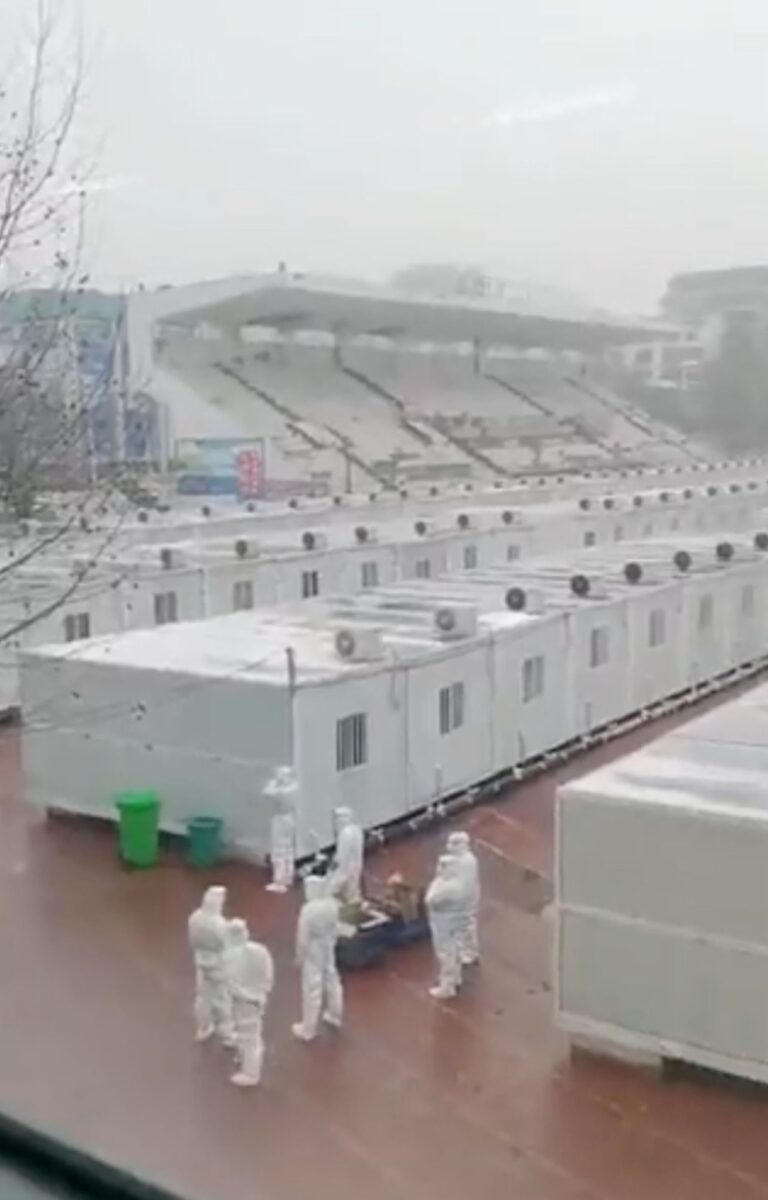
According to NYPOST, China has reportedly set up brutal, eerie-looking “quarantine camps” as at least 20 million people are in restrictive lockdowns weeks ahead of the Winter Olympics.

Video posted to Twitter shows staff fully covered in white protective clothing standing near row upon row of small white cubicles lined up on the grounds of what appears to be a sports stadium.

Other footage claims to be from within one of the cell-like temporary buildings, with the occupant showing just a bare-framed bed and dirty-looking small bathroom.

Another clip going viral on Chinese social media shows staff — again fully decked out in protective clothing — going around leaving trays of food on shelves outside the prefab units.

One Twitter user claimed “millions” have been moved to the camps, mostly in Xi’an.

The major industrial city of 13 million has been completely locked down since before Christmas — even though 95 percent of its adults are fully vaccinated and it has reported just three COVID-related deaths throughout the pandemic, the New York Times noted.

As of Monday, Xi’an had reported no deaths in the latest wave of cases, with the last one in March 2020 — yet still more than 45,000 people have been moved to quarantine facilities, the paper said.

“There is nothing here, just basic necessities… Nobody has come to check up on us,” one person wrote on Weibo from inside one of the units according to the post seen by the BBC.

The poster claimed that “more than a thousand people” were forced into the camps in the middle of the night, including kids and pregnant women, the outlet said.

Oreo is trying something totally new for its 110th birthday

0

Oreo is trying something totally new for its 110th birthday.

For the celebratory occasion, Oreo is releasing a special flavor it calls Chocolate Confetti Cake. It has sprinkles galore. The cookies themselves are filled with sprinkles and have two layers of filling: the signature creme flavor, pumped with sprinkles, and a chocolate-cake flavored creme.

Oreo said that it’s the first-time it has used sprinkles both in and on the cookie, according to CNN. Retailers will start selling the celebratory treats January 31 for a limited time.

Oreo will mark its birthday on March 6. The popular snack was first sold on that date in 1912 by the National Biscuit Company to a grocery store in Hoboken, New Jersey.

Owned by Mondelez (MDLZ), Oreo continues to be a money maker. The latest limited-edition flavor is part of the company’s goal to increase sales by $1 billion in the next year. In its November 2021 earnings call, Mondelez said that Oreo “continues to be a standout performer” and that its Pokémon Oreo was the company’s fastest-selling flavor in the United States.

Twin panda cubs made their first public appearance in Tokyo

0

The twins, male cub Xiao Xiao and its sister Lei Lei, which were born at Tokyo’s Ueno Zoo in June, took their first steps as beaming fans held up their smartphones to film the cuddly pair as they played together.

Twin panda cubs made their first public appearance Wednesday before devoted fans in Tokyo, but they will be on display only briefly for now — over three days — due to a spike in COVID-19 cases driven by the omicron variant, according to AP.

During her turn, the cubs were pretending to eat bamboo and “that was just adorable,” said Tanaka, whose hat and bag were decorated with panda-motif ornaments. “It’s so comforting to see them.”

The twins, which were palm-sized pink creatures when they were born, now weigh as much as a toddler each and have developed black-and-white fur. They enjoy climbing trees and playing together on the wood chips on the ground, according to the zoo.

In preparation for their debut, the twins and their mother were placed in a shared living quarter where they were exposed to sounds from a radio to get used to noise and voices from visitors.

The zoo has been closed since Tuesday as the highly transmissible omicron variant spreads rapidly across Japan. The zoo is open only for the twin panda exhibit until Friday, with 1,080 visitors who won slots in a competitive lottery granted access each day.

China supports Russian-led forces deployed to Kazakhstan to help quell unrest

0

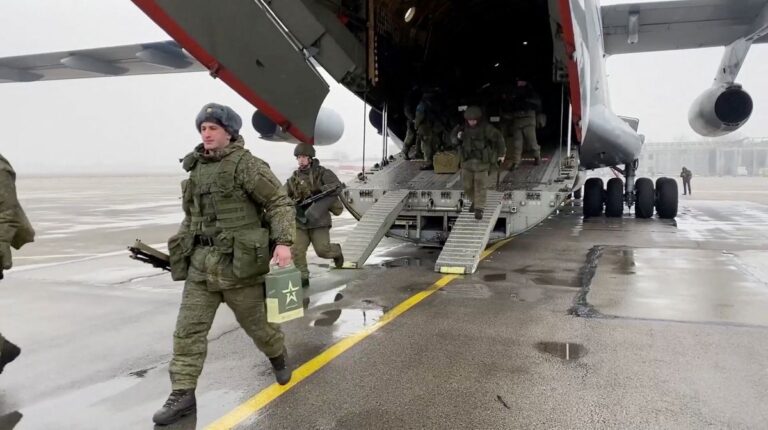
Government buildings in Kazakhstan were briefly captured or torched in several cities last week as initially peaceful protests against fuel price increases turned violent. Troops were ordered to shoot to kill to put down a countrywide uprising.

China supports Russian-led forces deployed to Kazakhstan to help quell unrest, China’s Foreign Minister Wang Yi told Russian Foreign Minister Sergei Lavrov late on Monday, according to Reuters.

In a phone call held between the two parties and summarised by Chinese state media, Wang said that China supports the Kazakhstan president’s assessment that the source of the unrest was terrorist activity.

Wang added that China and Russia should “oppose external forces interfering with the internal affairs of central Asian countries”, and prevent “colour revolutions” and the “three evil forces” from causing chaos, the readout stated.

China defines the “three evil forces” as religious extremism, territorial secessionism and violent terrorism and has described them as the cause behind the instability in Xinjiang province.

Authorities have blamed the violence on “extremists” including foreign-trained Islamist militants.

Authorities also asked a Russian-led military bloc to send in troops, who the government says have been deployed to guard strategic sites.

China’s President Xi Jinping on Friday told Kazakhstan President Kassym-Jomart Tokayev that China resolutely opposed any force destabilising Kazakhstan, Chinese state television said.

‘Zero-Covid’ China fights as restrictions tighten in major city

0

China’s northern port city of Tianjin and central province of Henan have further tightened Covid restrictions as the highly contagious Omicron variant continues to spread, posing the gravest challenge yet to the country’s zero-Covid strategy.

Tianjin, which detected China’s first community spread of Omicron on Saturday, is rolling out a second round of mass testing on its 14 million residents on Wednesday. As of noon Tuesday, 97 people had tested positive, according to CNN.

The outbreak has already spread to Anyang, a city in Henan province some 300 miles (482 kilometers) away, prompting a full lockdown. On Wednesday, the city of Dalian in northeastern China said two recent returnees from Tianjin had tested positive — raising fears that the new variant has spread to another city.

The Omicron outbreak is particularly worrying to officials in Beijing, which lies about 80 miles northwest of Tianjin — and about 30 minutes away by high-speed rail. The Chinese capital is due to host the Winter Olympics on February 4.

Tianjin officials said at a news conference Tuesday that all bus services to Beijing had been suspended. Train tickets from Tianjin to Beijing have been closed for purchase online since Sunday evening.

On Wednesday, 425 flights were canceled at Tianjin Binhai International Airport, accounting for 95% of all scheduled flights, according to flight tracking app VariFlight.

Tianjin authorities on Sunday ordered citizens not to leave the city unless absolutely necessary. Those who want to leave must present a negative Covid test taken within 48 hours and obtain approval from their employer or local government offices.

On Tuesday, Anyang city in Henan province was placed under strict lockdown, after two Omicron cases linked to the Tianjin outbreak were identified over the weekend. The city has reported a total of 123 cases.

Across China, about 20 million people are now under strict lockdown, including 13 million residents of the northwestern city of Xi’an, who are entering their third week of home confinement.

The arrival of Omicron has again raised concerns about the effectiveness of China’s domestically made vaccines such as Sinovac and Sinopharm.

Apple submits plans to allow third-party payment systems in S.Korea

0

Google announced its plans to allow alternative payment systems in South Korea in November to comply with the amended Telecommunication Business Act, dubbed the “anti-Google law“.

“We look forward to working with the KCC and our developer community on a solution that benefits our Korean users,” Apple said in a statement, but did not provide details such as timeline of when the new payment systems will take effect or commission fee rates.

South Korea’s telecommunications regulator said on Tuesday Apple Inc (AAPL.O) had submitted plans to allow third-party payment systems on its App Store to comply with a law banning major app store operators from forcing software developers to use their payments systems, according to Reuters.

The Korea Communications Commission (KCC) had requested Apple and Alphabet’s (GOOGL.O) Google to submit compliance plans after the bill was passed in August last year and went into effect in September.

It plans to discuss further details with the KCC, the regulator said. The KCC said Apple plans to allow alternative payment systems for a lower service fee versus the current 30% commissions.

In the United States, the iPhone maker is wading through a lawsuit brought by “Fortnite” creator Epic Games in 2020 when the game maker tried to get around Apple’s 30% fee on in-app purchases by launching an in-app payment system of its own.

A U.S. judge last year ordered Apple to change its App Store rules, which ban developers from including links in buttons to outside payment systems over using Apple’s own.

“I hope Apple’s move here (in South Korea) isn’t another fake opening of payment systems as Google recently announced,” Epic Games CEO Tim Sweeney said in a tweet.

North Korea Kim Jong Un observed latest missile launch

0

North Korean leader Kim Jong Un called for strengthening the country’s strategic military forces as he observed the test of a hypersonic missile, state media said on Wednesday, officially attending a missile launch for the first time in nearly two years.

It was the first time since March 2020 that Kim had officially attended a missile test, according to NBC news.

“While Kim probably unofficially attended other tests in the interim, this appearance and its Page One feature on Rodong Sinmun is important,” said Chad O’Carroll, chief executive of Korea Risk Group, which monitors North Korea. “It means Kim is not concerned about being personally associated (with) tests of major new tech. And doesn’t care how the U.S. sees this.”

On Tuesday authorities in South Korea and Japan detected the suspected launch, which drew condemnation by authorities around the world and prompted an expression of concern from the United Nations secretary-general.

The second test of a “hypersonic missile” in less than a week underscored Kim’s New Year’s vow to bolster the military with cutting-edge technology at a time when talks with South Korea and the United States have stalled.

After watching the test, Kim urged military scientists to “further accelerate the efforts to steadily build up the country’s strategic military muscle both in quality and quantity and further modernize the army,” KCNA news agency reported.

“His presence here would suggest particular attention on this program,” Ankit Panda, a senior fellow at the U.S.-based Carnegie Endowment for International Peace, posted on Twitter.

Talks aimed at persuading North Korea to surrender or limit its arsenal of nuclear weapons and missiles have stalled, with Pyongyang saying it is open to diplomacy but only if the United States and its allies stop “hostile policies” such as sanctions or military drills.

Michelle Kang Appointed as Representative of KAPAC Atlanta Branch

0

KAPAC American Democratic Participation Forum, Non- profit Voter Peace Organization

Recruitment of members of the Atlanta branch , campaign to sign the Korean Peninsula Peace Act

Michelle Kang, Korean Voter Director of the Asian American Action Fund (AAAF), has been appointed as the head of the Atlanta branch of the Korean American Public Action Committee (KAPAC).

Michelle Kang has worked with Congress woman Carolyn Bourdeaux to sign the first Georgia lawmaker to sign the Korean Peninsula Peace Act, and Senators Jon Ossoff and Raphael Warnock have maintained lasting ties with the Korean and Asian communities and close ties with Georgian politicians. It has been representing the voices of Koreans and Asians.

Representative Kang said, “I think the first thing is to support Koreans in the southeast region so that they can sympathize with the need for the Korean Peninsula Peace Act, and further ask the federal representatives of the district to sign as supporters. We will work to improve our political power and nurture the next generation of politicians.”

She added, “In the future, Koreans will participate in racial discrimination and social justice movements and work together to create a society where immigrants and their descendants can express their will. everything.”  

KAPAC (CEO Choi Kwang-chul) is a non-profit voter peace organization that works to promote peace on the Korean Peninsula and the political power of Korean Americans based on the universal value of ‘justice, fairness, peace, unification, and participation in democracy’ established in 2017.

Headquartered in Buena Park, California, with offices in New York, Boston, Washington DC, Seattle, San Francisco, San Diego, Orange County, Los Angeles, Houston, Dallas, and Chicago, branch established in Atlanta with the appointment of Michelle Kang as CEO done.

Meanwhile, the Atlanta branch of KAPAC is looking for members, and any Korean who wants to work for peace on the Korean Peninsula, voter solidarity and Korean-Americans political power can apply.

(Inquiry) 678-951-3167, kapac.atlanta2022@gmail.com