Home Blog Page 95

Australian Open forbids ‘Where is Peng Shuai?’ T-shirts

0

Peng, 36, has won doubles titles at Wimbledon and the French Open. But she fell out of public view in November, after she accused a former Communist Party official of sexual assault. Peng said her encounters with Zhang Gaoli began 10 years ago, when Zhang was one of the most powerful people in China.

Peng’s post to social media was soon deleted, and after weeks of silence, she emerged in late December to deny ever making such an accusation. Her well-being became a cause for concern beyond the sports world, with both the Women’s Tennis Association and Amnesty International speaking out on her behalf. WTA officials received an email in mid-November that was purportedly from Peng, but they said they doubted its authenticity.

Australian Open organizers have blocked a protester wearing a T-shirt asking “Where is Peng Shuai?” from attending the event. But activists who are concerned for the Chinese athlete’s safety are doubling down on their efforts, and they’re drawing support from some current and former players, according to NPR.

“I find it really, really cowardly,” tennis great Martina Navratilova said on the Tennis Channel. “This is not a political statement, this is a human rights statement.”

Peng’s status has been an open question since November, when she accused a man who was once in the inner circle of China’s ruling Communist Party of sexual assaulting her.

Tournament security personnel in Melbourne confiscated a banner with the message and told a woman to change her T-shirt on Friday, stating that the message was political — and thus not allowed into the arena where the Grand Slam event is being played. Activist Drew Pavlou says a new fundraising campaign aims to pay for a thousand of the shirts to be distributed at the arena.

Tennis Australia said the security guards acted correctly by not allowing the banner and shirts, citing its longstanding policy barring political messages. But the explanation quickly triggered criticism that organizers are bowing to China’s influence by categorizing a question about Peng’s whereabouts as a political statement.

French player Nicolas Mahut asked whether organizers’ views might be tainted by a lucrative sponsorship deal with a Chinese liquor brand — a high-profile court is currently named 1573 Arena, and the logo is plastered on walls around the venue.

“It’s just been absolutely heartbreaking to see what has happened” to Peng, retired U.S. player Lindsay Davenport said on the Tennis Channel. She added, “People in tennis, we want to see her. She was a real part of this Tour. But most importantly, we want to know she’s OK.”

The dispute over the Peng T-shirts comes after the Australian Open’s first week was overshadowed by superstar Novak Djokovic’s legal battle to compete in the tournament despite not being vaccinated — a fight that resulted in his deportation.

COVID-19 cases in the South and the West continue to hit record highs

0

New COVID-19 cases are declining sharply in parts of the Northeast and Midwest, while many places in the South and the West continue to hit record highs.

NPR reports declines are most significant in places across the country that were the first to see a surge in omicron cases, including New York City and Washington D.C. Falling case numbers there could indicate those areas have already reached their peak. But in places such as Utah, Tennessee and Alabama, cases remain high.

Even with cases appearing to peak in some areas of the country, the level of loss of life is still extraordinarily high and deaths continue to rise, reports Aubrey. The U.S. is averaging just under 2,000 deaths a day from the coronavirus, up from 1,200 in early January, and hospitals in many areas are so packed they’re turning away patients.

Some models suggest deaths will begin to decline soon in the coming weeks, signaling the worst could be behind us. Even so, millions have been sickened during the omicron surge of the coronavirus and more variants could emerge in the future. There is room for optimism, though.

While the coronavirus isn’t going away, new therapies to treat COVID might make future outbreaks more manageable, as well as novel developments in how scientists track the virus.

Meanwhile, Pfizer and Moderna are both working away at a vaccine for kids under 5 in the hopes of submitting it for FDA authorization in the coming months. NPR spoke to pediatricians for advice on how to keep unvaccinated young ones safe until those vaccines are widely available.

Maryland man found dead in home with 125+ snakes

0

“I do want to assure the community, [and] anybody living in this neighborhood, we have not seen that any of the snakes were not properly secured or could have escaped,” she told the outlet. “I know people were worried that there could be some danger to people living nearby, but at this point, we have not uncovered or determined that any of the snakes actually were not secured after this gentleman’s death.

According to NYPOST, a Maryland man was found dead in his home surrounded by over 100 venomous and nonvenomous snakes, officials said Thursday.

Police had responded to the 49-year-old man’s home after a neighbor reported he saw the man lying on the floor unconscious after he went to check on him after not seeing him for more than a day, the Charles County Sheriff’s Department said in a statement

EMS and fire officials forced their way through the front door of the home, where they pronounced the man dead. Police said there was no evidence of foul play and the man’s body was transported to the Office of the Chief Medical Examiner in Baltimore for an autopsy. Officials have not yet released the man’s identity.

Police discovered over 100 snakes of several varieties inside the home, which the man’s neighbors were unaware of. Charles County Animal Control was working to rescue the reptiles with experts from North Carolina and Virginia, police said.

Jennifer Harris, a spokesperson for Charles County Animal Control, told WUSA9 that the department had “tagged and bagged” over 125 snakes. Harris told the outlet that neighbors should not be concerned.

A 14-foot Burmese python was the biggest snake in the home, according to animal control.

Harris said it was the biggest collection of snakes the county’s animal control chief had ever seen in over 30 years of experience.

Girls on Top: K-Pop’s New Female ‘Super Group’

0

SM Entertainment gave fans an extra surprise with the unveiling of a new “supergroup” dubbed Girls on Top.

Girls on Top (or “GOT” for short) will feature rotating units that combine top female artists from SM’s star-studded roster. The first unit, dubbed GOT the Beat, features BoA, Girls’ Generation’s Taeyeon and Hyoyeon, Red Velvet’s Seulgi and Wendy, and Aespa’s Karina and Winter.

“Step Back” is the first release from GOT the Beat, and is now available digitally to purchase and stream. SM says to expect other sub-units under the Girls on Top umbrella, to be created from other artists and around specific themes and genres.

The new act comes on the heels of “SuperM,” the all-male “supergroup” that was formed by SM in 2019. Often referred to as “the Avengers of K-pop,” SuperM has since released a debut EP as well as one full-length album.

The group debuted their first single, “Step Back,” during SMTOWN LIVE 2022, with a performance video that has already amassed almost 10 million views on YouTube in less than two days.

The bass-heavy track incorporates elements of dubstep, hip-hop, and electro house with the seven members alternating between singing, rapping, and a cheerleader chant-style chorus. The song was written and produced by SM’s Yoo Young Jin, and American producer Dem Jointz, who most recently worked with Kanye on his Donda album.

At 35, BoA is the veteran of Girls on Top. The singer and songwriter made her debut in 2000 at the age of 13 and has since gone on to become one of the biggest Asian acts in the world (Weezer even covered BoA’s Japanese holiday hit, “Meri Kuri,” on the Japanese edition of their Red Album).

Girls’ Generation, meantime, debuted under SM in 2007, and both Taeyeon and Hyoyeon have found solo success outside of the group as well. The lineup for Red Velvet was unveiled in 2014 (with the current lineup including Yeri finalized a year later) and the group’s latest EP, Queendom, was one of the best-reviewed K-pop albums of 2021. And then there’s Aespa, who debuted in November 2020 with a futuristic-inspired image and sound. Aespa was SM Entertainment’s first new girl group since Red Velvet debuted six years earlier.

Omicron pushes Japan to consider the virus as no different than the flu

0

While Western countries worry that removing the Covid stigma will discourage people from taking precautions like mask-wearing, that’s unlikely in Japan. Broad public cooperation and cultural norms have meant that people never stopped sanitizing their hands or wearing masks in public, even when new cases dropped. 

During virus surges, many people canceled travel plans voluntarily, perhaps partly explaining why the country has escaped high fatalities. Almost 80% of residents are fully vaccinated with two shots, making Japan one of the most immunized among developed nations. 

Calls are growing in Japan to treat Covid-19 as endemic, adding to a global chorus pushing for a return to normal life as people tire of pandemic restrictions, vaccines become more accessible and virus deaths remain low, according to Bloomberg.

Drawing on data that shows omicron posing a less severe risk than previous variants, public figures from Tokyo’s governor to former Prime Minister Shinzo Abe have signaled their support for downgrading the legal status of the virus in Japan. The change would widen access to health care for patients, effectively casting the virus as no different than the flu.

It is a debate playing out around the world, particularly in the West. Spanish Prime Minister Pedro Sanchez called on Europe to treat the virus as a constant of everyday life in a recent interview on the radio station Cadena Ser. And countries everywhere from India to the U.K. are resisting reverting to lockdowns despite the swift onset of omicron as politicians lose appetite for mass disruptions.

In Asia, which has generally been far tougher on containment of the virus since the pandemic began, Japan is in many ways the most likely to shift. Officials never deployed mandatory lockdowns, in part because the constitution doesn’t include the right to take emergency measures during crises. Even as infections climbed, Japan distinguished its policies from iron-fisted ones in places like China. Many of the requests for businesses to restrict opening hours or require vaccination can simply be ignored.

Downgrading Covid’s status would also have the immediate impact of freeing up medical resources at hospitals that are currently refusing to treat infected patients because they say they’re not equipped to manage the disease.

Even so, Prime Minister Fumio Kishida has urged caution and pushed back against his predecessor, who made the call for going endemic in an interview earlier this month with a local news outlet. Kishida told reporters last week that it’s still too early to downgrade the virus given the omicron caseload. 

Japan reported more than 40,000 new cases on Wednesday, though “severe” ones rose by just 20, according to national broadcaster NHK. Broadly speaking, the public has supported efforts to keep the virus out: After the government barred new foreign arrivals in November, an opinion poll found that almost 90% of people approved the measure.

Nevertheless, the topic has growing resonance in Japan, with Abe one of the highest-profile backers of softening curbs.

“Why don’t we go further this year and change the legal position of the coronavirus,” he said in an interview with Yomiuri. “As the default policy is to hospitalize those who are infected, the burden on medical institutions and health centers is heavy. We need to be cautious of omicron, but if drugs and vaccines can prevent the disease from becoming severe, we could treat Covid like seasonal influenza.”

A bigger shift in how Japan treats the virus may change public perception about the threat of infection, as well as help to diffuse the impact of future mutations. 

Currently, Japan draws on 450 or so public health centers to contact trace and hospitalize people with the virus. Space is limited because hospitals, especially small or privately owned ones, can refuse to take patients unless they are severely ill.

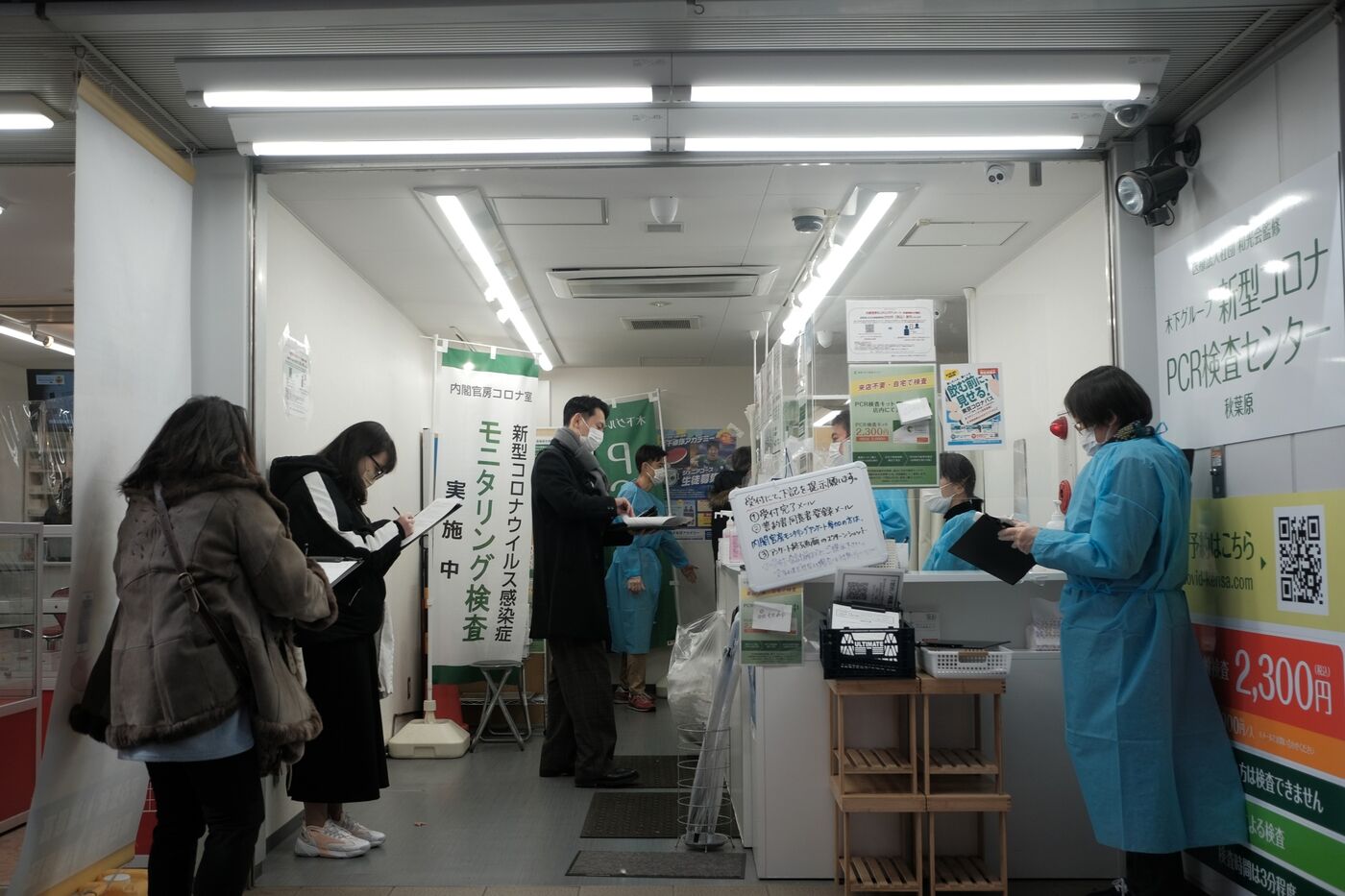
PCR Testing Sites As Government Considers Stronger Covid Curbs
Members of the public visit a PCR testing site in the Akihabara district of Tokyo, on Jan. 18.Photographer: Soichiro Koriyama/Bloomberg

Though deaths have remained low in Japan throughout the pandemic, despite the country’s large elderly population, scores of people have still been turned away from hospitals during previous waves. Hundreds were left to die at home without seeing a doctor.

Read: Thousands of Covid Patients Turned Away from Japan Hospitals

Some countries have already started to see omicron waves peak. In South Africa, where the variant was first reported almost two months ago, the omicron death rate topped out at 15% of the delta wave, according to the National Institute of Communicable Diseases. The strain causes less severe disease, even in those who are unvaccinated or who haven’t had a prior infection, according to the latest South African research.

Japanese officials seem aware that forcing the infected into hospitals or quarantines might do more harm than good. As health facilities continue to fill up, Japan plans to impose a state of quasi emergency in Tokyo and several other parts of the country starting Friday but requests for bars and restaurants to shorten their hours are still non-compulsory.

A panel of experts advising Tokyo’s government raised its Covid-19 infection alert level to the highest of four stages, citing the possibility of social disruption on Thursday. The panel also boosted the health system alert to the second-highest level, saying it’s time to limit normal medical care and focus on strengthening the system. 

“We will stop the infection. We will not stop the society,” Yuriko Koike, Tokyo’s governor, told reporters last week. “We have to do both.”

Financial woes have weighed on Japan. The country’s economy was projected to grow by 1.8% in 2021, compared to 5.9% globally. Over the course of the pandemic, Japan has declared a state of emergency four other times, slowing the recovery of the world’s third-largest economy. 

Japan has sent mixed messages about a broader relaxation, partly because the previous administration was ousted for a slow response to tackling infections. Kishida’s administration may be worried that downgrading the legal status of the virus could be perceived as weak. The dilution would also free the government from covering the cost of Covid hospital stays, putting the burden of payment on patients, a potentially unpopular proposition.

Tucker received $1.5M for building the trail from downtown to Northlake Mall

0

Tucker residents may soon be able to jog or bike from the city’s downtown the mall and vice versa.

The city received nearly $1.5 million in funding for a proposed three-mile trail, which will span from the city’s downtown to Northlake Mall, which is undergoing its own redevelopment. The first segment of the trail is envisioned to become part of a sprawling 32-mile network of interconnected paths throughout the city, according to AJC.

The city applied for the federal funds through the Atlanta Regional Commission in 2019, but the trail network has been discussed for the area since 2005, well before Tucker incorporated as a city in 2016.

The first segment of the trail network will cut through Tucker along Main Street and continue alongside the CSX railroad tracks. The city also proposed a greenspace area near the entrance to the trail.

“With Council approval, this project will help close the gaps between residential and commercial property in Tucker and provide an opportunity for regional connectivity,” Tucker-Northlake CID Executive Director Matthew Lee said.

The city said preliminary engineering work could begin later this year, and right-of-way acquisition could begin in 2023.

“Anytime your city is awarded this kind of grant, it’s a big deal,” Tucker Mayor Frank Auman said in a news release. “… It’s a project that, when the time comes, our Council will look forward to gathering public input and making a decision on how to proceed.”

Roughly $1 million from the federal grant will be used for right-of-way acquisition, while Tucker will contribute $350,000. Tucker recently paid $1.2 million to purchase nearly two acres off Railroad Avenue as part of the project. The Tucker-Northlake CID also dedicated $50,000 toward engineering costs.

Tucker Trail Plan by Zachary Hansen

Biden-Kishida talks to touch on North Korea, China

0

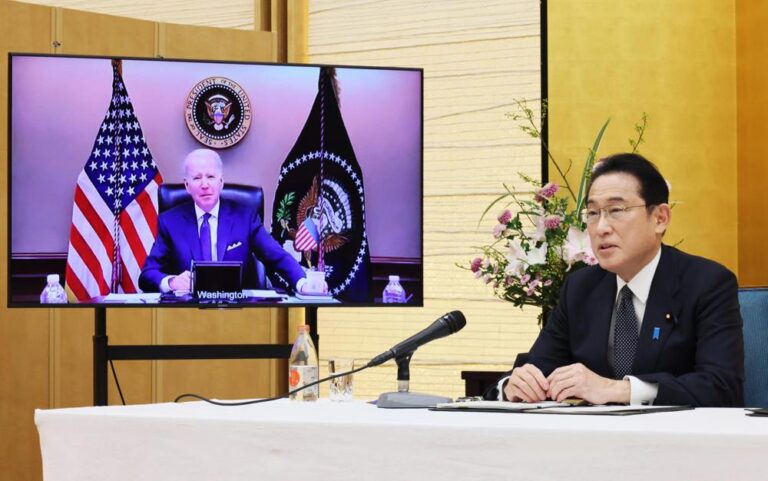
President Joe Biden and Japanese Prime Minister Fumio Kishida on Friday used their first formal meeting to discuss concerns about China’s growing military assertiveness that’s spurring increasing disquiet in the Pacific.

The two leaders discussed ongoing efforts in the COVID-19 pandemic and the brewing crisis in eastern Europe, where Russia has massed some 100,000 troops near its border with Ukraine. Biden earlier this week said he believed Russian President Vladimir Putin is likely to order a further invasion of Ukrainian territory but he did not think Putin wanted an all-out war.

Kishida, who is from Hiroshima, on which the U.S. dropped an atomic bomb at the end of the World War II, also said he raised to Biden concerns about nuclear security and the idea of achieving “a world without nuclear weapons.”

Biden and top aides have sought to rally the support of NATO partners and other allies to respond with harsh sanctions against Russia if it moves forward with military action.

Kishida said that the two leaders spent a “significant amount” of their 80-minute call on issues surrounding China, including shared concerns about China’s increasing aggression toward Taiwan. China claims self-governing Taiwan as its own territory, to be annexed by force if necessary. In recent months, China has stepped up military exercises near Taiwan, frequently sending warplanes near the island’s airspace.

Biden and Kishida also discussed the situations in Hong Kong and China’s Xinjiang province. Biden has repeatedly called out Beijing over its crackdown on democracy activists in Hong Kong and forced labor practices targeting China’s Uyghur Muslims and other ethnic minorities in Xinjiang.

“President Biden and I were able to exchange views frankly, in a very calm and quiet manner, about how Japan and the United States together cooperate and lead the international society, which I believe will lead to further strengthening of the Japan-U.S. alliance,” Kishida said after the meeting.

Japan remains concerned about China intentions in the South China Sea, where it has stepped up its military presence in recent years, and the East China Sea, where there is a long-running dispute about a group of uninhabited islets administered by Tokyo but claimed by Beijing.

Kishida said after the meeting that he expressed his determination to drastically strengthen Japan’s defense power while Biden spoke of the U.S. commitment to abiding by the 1960 Japan-U.S. security treaty and made it clear it covers the Japanese-controlled disputed islands of Senkaku, which China refers to as Diaoyu.

Later, Japanese Deputy Chief Cabinet Secretary Seiji Kihara said Kishida explained his commitment to strengthening Japan’s military capability, saying that the prime minister would consider “all options including acquiring preemptive strike capability.”

The virtual meeting came as North Korea earlier this week suggested it might resume nuclear and long-range missile testing that has been paused for more than three years.

North Korea’s Kim Jong Un on Thursday presided over a Politburo meeting of the ruling Workers’ Party at which officials set policy goals for “immediately bolstering” military capabilities to counter what were described as the Americans’ “hostile moves,” according to the Korean Central News Agency.

World latest to get hit with omicron surge

0

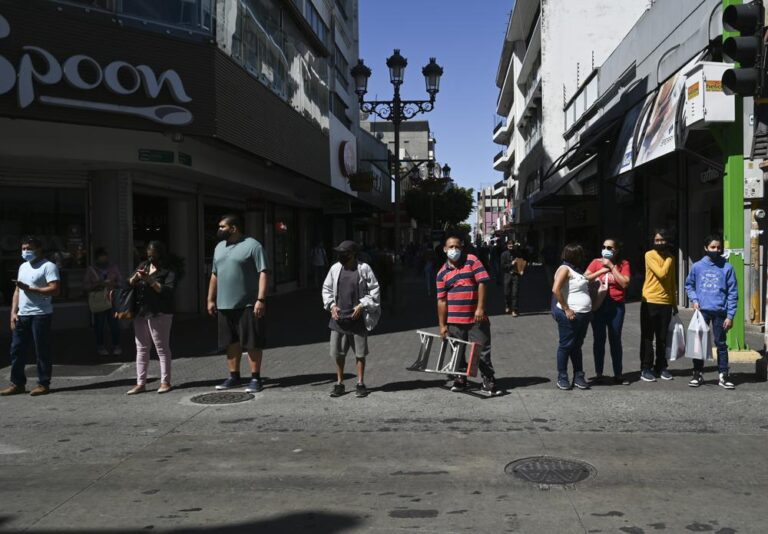
In Costa Rica, officials are encouraging those infected with the coronavirus to skip voting in upcoming national elections. On the other side of the world, Beijing is locking down residential communities as the country anxiously awaits the start of the Winter Olympics on Feb. 4, according to AP.

In Latin America and Asia, where the omicron variant is making its latest appearance, some countries are imposing such restrictions while others are loath to place new limits on populations already exhausted by previous constraints.

Omicron quickly swept through the places it first hit, such as South Africa, the U.K. and the United States, pushing daily cases far higher than at any time during the pandemic.

The Americas reported nearly 7.2 million new COVID infections and more than 15,000 COVID-related deaths over the past week, the Pan American Health Organization said Wednesday. Coronavirus infections across the Americas almost doubled between Jan. 1 and Jan. 8, from 3.4 million cases to 6.1 million, PAHO said.

Infections are accelerating in Bolivia, Brazil, Colombia and Peru, and hospitalizations are rising in Argentina, Paraguay and Uruguay, said PAHO Director Carissa Etienne. The Caribbean islands are experiencing their steepest increase in COVID-19 cases since the start of the pandemic, Etienne noted.

“Although omicron infections appear to be milder, we continue to urge caution because the virus is spreading more actively than ever before,” Etienne said.

Infections are also increasing in Asia, including in the Philippines, which has seen its worst coronavirus outbreak in recent weeks.

Countries in both regions are searching for a mix of restrictions that their exhausted populations will accept and that won’t inflict undue damage on their economies.

“We’re already going on three years of the pandemic and the population is tired,” said Brazil’s president of the Council of State Health Secretariats, Carlos Lula. “There is no space for many restrictions. We’re going to have to face a third wave with precautions like masking, distancing and vaccination.”

Argentina and Mexico also have largely ruled out imposing any national restrictions, instead banking on their vaccination campaigns and the apparently less severe symptoms of the omicron variant.

Mexico President Andrés Manuel López Obrador, having just emerged from a week of isolation after his second coronavirus infection in the past year, downplayed the threat. “It is demonstrable that this variant does not have the same seriousness as the earlier, the delta,” López Obrador said this week.

In Asia, South Korea actually eased its restrictions on gatherings slightly this week. But officials have expressed concern about a surge in infections over the Lunar New Year holiday, which begins at the end of the month, when millions of people usually travel across the country to meet relatives.

In China, Beijing has moved classes online and locked down some office buildings. Japan, meanwhile, is maintaining strict border controls as infections surge, but otherwise doing little more than shortening business hours for restaurants and bars.

Hong Kong authorities have banned indoor dining after 6 p.m. and ordered certain businesses, such as museums and gyms, to close until at least early February. The city is also culling small animals including hamsters and chinchillas and halting their import and sales after several hamsters in a pet shop tested positive for the coronavirus.

In the Philippines, officials this week started banning commuters who have not been fully vaccinated from riding public transportation in greater Manila, a region of more than 13 million people. The move sparked protests from human rights groups. Daily confirmed infections soared from a few hundred last month to more than 30,000 in recent days.

Roman Catholic Church leaders in the Philippines capital were forced to cancel the Jan. 9 procession of the Black Nazarene, a centuries-old black statue of Jesus Christ, for a second year. Because the event is one of Asia’s biggest religious festivals, drawing millions of mostly barefoot pilgrims, officials feared it could become a superspreader during the omicron surge.

Warning that the sometimes-weaker omicron variant can still kill, President Rodrigo Duterte implored people to get fully immunized.

“If you’re vaccinated, you have a fighting chance. If not, we’ll be burying, filling our cemeteries,” Duterte said in televised remarks.

Supply chain get worsen as China imposes new Covid lockdowns

0

So far, the effects of the lockdowns on Chinese factory production and deliveries have been limited. Four of China’s largest port cities — Shanghai, Dalian, Tianjin and Shenzhen — have imposed narrowly targeted lockdowns to try to control small omicron outbreaks. As of this past weekend, these cities had not locked down their docks. Still, Volkswagen and Toyota announced last week that they would suspend operations in Tianjin because of lockdowns.

If lockdowns become more widespread, their effects on supply chains could be felt across the United States. And major new disruptions could exacerbate inflation, which is at a 40-year high.

“Will the Chinese be able to control it or not I think is a really important question,” said Craig Allen, president of the U.S.-China Business Council. “If they’re going to have to begin closing down port cities, you’re going to have additional supply chain disruptions.”

Companies are bracing for another round of potentially debilitating supply chain disruptions as China, home to about one-third of global manufacturing, imposes sweeping lockdowns in an attempt to keep the omicron variant at bay, according to Economictimes.

The measures have confined tens of millions of people to their homes in several Chinese cities and contributed to a suspension of connecting flights through Hong Kong from much of the world for the next month. At least 20 million people, or about 1.5% of China’s ..

The country’s zero-tolerance policy has manufacturers — already on edge from spending the past two years dealing with crippling supply chain woes — worried about another round of shutdowns at Chinese factories and ports. Additional disruptions to the global supply chain would come at a fraught moment for companies, which are struggling with rising prices for raw materials and shipping along with extended delivery times and worker shortages.

China used lockdowns, contact tracing and quarantines to halt the spread of the coronavirus nearly two years ago after its emergence in Wuhan. These tactics have been effective, but the extreme transmissibility of the omicron variant poses the biggest test yet of China’s system.

NYC subway station death of Michelle Go leaves Asian Americans reeling

0

Go’s family said Monday that they were in a “state of shock.” 

“We hope Michelle will be remembered for how she lived and not just how she died. She was a beautiful, brilliant, kind, and intelligent woman who loved her family and friends, loved to travel the world and to help others,” the family said in a statement. “Her life was taken too soon in a senseless act of violence, and we pray that she gets the justice she deserves.” 

Martial, 61, who had been determined to be unfit to stand trial after a 2019 psychiatric evaluation involving a drug possession charge, turned himself in later that day. He is currently being held at Bellevue Hospital in Manhattan. Experts previously told NBC Asian America that the term hate crime should be used only when a suspect is charged, as it has dangerous implications — particularly for communities of color — when applied to cases that do not involve racial animus. 

Groups are heeding that warning, and at the same time acknowledging that some Asian Americans are saying that their daily fears were realized in the attack and that they saw themselves in Go — particularly women. 

Go, who worked at the consulting firm Deloitte, had been an avid volunteer at the New York Junior League, a women’s organization. She had just celebrated her 40th birthday, and reminded some women of any one of “our sisters,” said Jo-Ann Yoo, executive director of NYC-based nonprofit Asian American Federation. 

Yoo said that the Asian community had already been on high alert since the start of the pandemic, when many had been blamed or scapegoated for the virus. NYPD crime statistics released in December showed a 361 percent increase in anti-Asian attacks compared to the year before. Yoo said that she’s talked to countless Asian New Yorkers who have had to steel themselves for potential harassment or violence, sometimes planning their days to better avoid interactions. 

But Yoo added that Go’s attack represents another chilling layer of fear that Asian women in particular have always contended with while using public transit. 

“I’m so tired of being constantly looking around and constantly making sure that nobody’s behind me — is this a potential attacker?” Yoo said. “We just have to mentally prepare that, you can’t ever let your guard down the minute you step out of your house.” 

According to NBC NEWS, the death of Michelle Go, who was fatally shoved in front of a New York subway car on Saturday, has left the Asian American community feeling a sense of tragic loss, groups say. 

Go, who was attacked by a homeless man, Simon Martial, had been waiting for a train at the Times Square station when she was pushed from behind. Though the incident is not being investigated as a hate crime, the community is reeling, mourning and on edge against a backdrop of increased hate crimes and attacks, Asian American advocacy organizations say.

“Whether it was a hate crime or not, the reality is, Asian Americans, especially Asian American women, every time we see an incident like this, our anxiety goes up,” Sung Yeon Choimorrow, executive director of the National Asian Pacific American Women’s Forum, told NBC Asian America. “Regardless of what the correlation is, we see ourselves in these pictures.”

Choimorrow said Asian women might be uniquely vulnerable to harassment because of the stereotype that they are timid and docile, therefore making them “an easy target.” So the incident should not be discussed as an outlier, Choimorrow said, but as a systemic one. 

“It’s only scratching the surface, when you start talking about the specific incident as if our country doesn’t have a problem with women not having safety in public places in general,” Choimorrow explained. “Why does it take the murder of women before we talk about these issues that impact us every day?” 

Connie Wun, co-founder of nonprofit AAPI Women Lead, echoed Choimorrow, saying that for women of color and non-binary people in particular, “being afraid or being subjected to harassment and violence” is a daily experience. And because of that, it’s necessary for the issue of public safety to be folded into policy agendas, educational narratives, and political movements, with solutions that involve those most heavily impacted. 

“You have to center the women, the femmes and the non-binary folks because we have the experiences that will tell the accurate story of what it’s like every day,” Wun said. 

Wun said that it’s also critical to call out the possible patriarchal violence that potentially contributed to Go’s death, one that’s also been responsible for the lack of safety and constant anxiety in so many others’ lives. Martial had allegedly approached another woman, who moved away from him, before attacking Go, NYPD said.

“It’s really important to implicate patriarchy. And that’s patriarchy across races, and ethnicities,” Wun said. 

On the topic of moving forward, Choimorrow said that she and many others continue to derive strength from their heritage and community. 

“I think about who I come from, I’m talking very specifically, particularly from my place as a Korean American — the things that my grandmother endured during the Korean War. And her mother during Japanese occupation,” Choimorrow said. “I think about the ways that the women in my family have not only survived but managed to thrive and find joy.”