Home Blog Page 89

Putin talks with Xi to bolster ties amid Ukraine tensions

0

American and European officials may be staying away from the Beijing Winter Olympics because of human rights concerns, but Russian President Vladimir Putin will be on hand even as tensions soar over his buildup of troops along his country’s border with Ukraine.

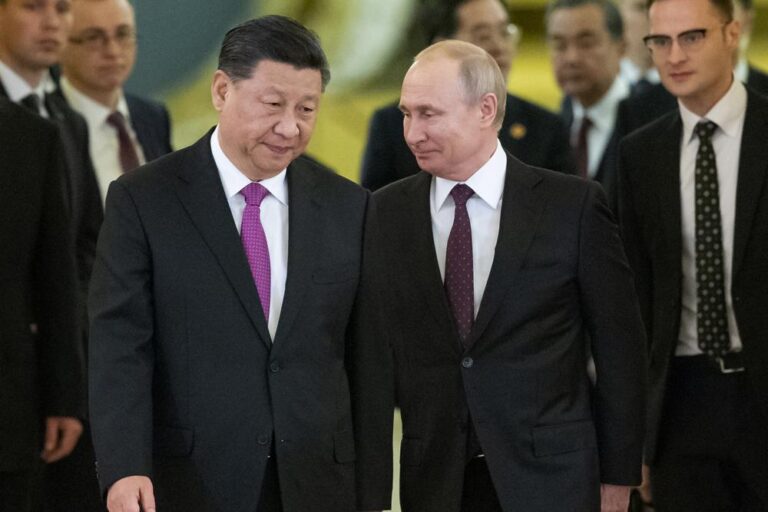
Putin’s talks with Chinese President Xi Jinping on Friday will mark their first in-person meeting since 2019 and are intended to help strengthen Moscow’s ties with China and coordinate their policies in the face of Western pressure. After, the two will attend the Games’ opening ceremony.

According to AP, Putin on Tuesday accused the U.S. and its allies of stonewalling Russia’s security demands but held the door open for more talks. He argued that NATO’s expansion eastward and a potential offer of membership to Ukraine undermine Russia’s security and violate international agreements endorsing “the indivisibility of security,” a principle meaning that the security of one nation shouldn’t be strengthened at the expense of others.

The Russian leader has warned that if the West refuses to heed Russian demands, he could order unspecified “military-technical moves.” Other than a full-fledged invasion in Ukraine that the West fears, Putin could ponder other escalatory options, including beefing up already extensive military ties with China.

Russia and China have held a series of joint war games, including naval drills and patrols by long-range bombers over the Sea of Japan and the East China Sea. In August, Russian troops for the first time deployed to Chinese territory for joint maneuvers.

Even though Moscow and Beijing in the past rejected the possibility of forging a military alliance, Putin has said that such a prospect can’t be ruled out. He also has noted that Russia has been sharing highly sensitive military technologies with China that helped significantly bolster its defense capability.

In an article published Thursday by the Chinese news agency Xinhua, Putin wrote that Moscow and Beijing play an “important stabilizing role” in global affairs and help make international affairs “more equitable and inclusive.”

The Russian president criticized “attempts by some countries to politicize sports to the benefit of their ambitions,” an apparent reference to a diplomatic boycott of the Olympics by the U.S. and some of its allies.

EU spokeswoman Nabila Massrali reacted to that by stating that “we are, of course, fully committed to contribute to promoting and protecting sports integrity and to strengthening universal respect for human rights.”

“Big sports events such as the Olympic Games often have a universal audience,” Massrali said. “They can be instrumental for spreading positive values and promoting freedom and human rights at the global level. However, such platforms should not be used for political propaganda.”

Many Western officials are skipping the Beijing Games in protest of China’s detention of more than 1 million Uyghur Muslims in the northwestern region of Xinjiang. But leaders of the ex-Soviet Central Asian nations, which have close ties with both Russia and China, all followed Putin’s lead and attending.

In an interview with China Media Group also released Thursday, Putin emphasized that “we oppose the attempts to politicize sport or use it as a tool of coercion, unfair competition and discrimination.”

Putin’s meeting with Xi and attendance at the opening ceremony “announces the further promotion of the China-Russia relationship,” said Li Xin, director of the Institute of European and Asian Studies at Shanghai’s University of Political Science and Law.

China and Russia have increasingly found common cause over what they believe is a U.S. disregard for their territorial and security concerns, Li said. Both their governments have also taken to mocking the U.S. over its domestic travails, from last year’s Capitol riot to its struggle to control COVID-19.

“The U.S. and the Western countries, on the one hand, are exerting pressure against Russia over the issue of Ukraine, and on the other hand, are exerting pressure against China over the issue of Taiwan,” Li said, referring to the self-governing island democracy and U.S. ally that China claims as its own territory. “Such acts of extreme pressure by the West will only force China and Russia to further strengthen cooperation.”

Yuri Ushakov, Putin’s foreign affairs adviser, said that Putin’s visit would mark a new stage in the Russia-Chinа partnership that he described as a “key factor contributing to a sustainable global development and helping counter destructive activities by certain countries.”

He said that Moscow and Beijing plan to issue a joint statement on international relations that will reflect their shared views on global security and other issues, and officials from the two countries are set to sign more than a dozen of agreements on trade, energy and other issues.

Ushakov noted that Moscow and Beijing have close or identical stands on most international issues. He particularly emphasized that China backs Russia in the current standoff over Ukraine.

“Beijing supports Russia’s demands for security guarantees and shares a view that security of one state can’t be ensured by breaching other county’s security,” Ushakov said in a conference call with reporters.

A buildup of more than 100,000 Russian troops near Ukraine has fueled Western fears that Moscow is poised to invade its neighbor. Russia has denied planning an offensive but urged the U.S. and its allies to provide a binding pledge that NATO won’t expand to Ukraine and other ex-Soviet nations or deploy weapons there and roll back its forces from Eastern Europe — the demands firmly rejected by the West.

Some observers suggested that Beijing is closely watching how the U.S. and its allies act in the standoff over Ukraine as it ponders further strategy on Taiwan, arguing that indecision by Washington could encourage China to grow more assertive.

Two robots completed an underwater torch relay in Beijing

0

For the first time in Olympic history, two robots completed an underwater torch relay on Wednesday afternoon in Beijing.

The torch relay for the Beijing 2022 Winter Olympic Games started on Wednesday, just two days before the official opening of the Games. Some 1,200 participants will carry the flame across three competition zones from Wednesday to Friday.

According to the developers, the special underwater torch looks very much like the Feiyang torch design. The Beijing 2022 Olympic torch, named “Flying” (Fei Yang in Chinese), features a striking inner red “blazing ribbon” that contrasts with a second ribbon that is silver-plated on the outer edge of the torch.

According to CGTN,at the Beijing Winter Olympic Park, torchbearer No. 254 An Guoyu handed the flame to an amphibious robot shaped like a curling stone, which then moved to a hole in the frozen Yongding River, descended into the water, “swam” to another submersible robot and passed the flame to it.

An amphibious robot, one of the two robots to perform the underwater torch relay, moves on the frozen Yongding River in the Beijing Winter Olympic Park, February 2, 2022. /CFP

The second robot then lifted the flame out of the water and passed it to the 255th torchbearer, An Yixiang, marking a successful operation.

The second robot passes the flame to the 255th torchbearer, An Yixiang, in the Beijing Winter Olympic Park, February 2, 2022. /CFP

The underwater flame of the torches in the Beijing Olympic relay adopted a special smoke-free environmental-friendly gaseous fuel, and designers with the 31 Research Institutes of the Third Academy of state-owned space giant China Aerospace Science and Industry Corporation (CASIC) said that it is just another example of the high-tech and green and clean characteristics that China has promised to the world for the 2022 Beijing Olympics.

Compared to the foreign underwater torches that were lighted with polluting solid fuel, the one for Beijing 2022 Winter Olympics overcame designing difficulties and adopted gaseous fuel that is smokeless and free of pollution, they said. 

An amphibious robot, holding the Olympic torch, descends into the water in the Beijing Winter Olympic Park, February 2, 2022. /CFP

Li Chunguang, director of a key laboratory with the research institute who oversaw the project, said that to enable the flame to keep burning when the torch goes underwater, the designers had to overcome challenges such as sustaining the temperature and pressure differences between the two different mediums of burning. 

Li and the designing team compared the special combustors inside the torch for the underwater relay to those in a small liquid or gas propellant rocket.

The amphibious robot passes the flame to another submersible robot in the water in the Beijing Winter Olympic Park, February 2, 2022. /CFP

Zhang Bo, torch team technical leader with the CASIC, said that the gaseous fuel torch has two advantages. Primarily, it is clean and does not produce a lot of white pollutants like solid fuels, making it environmentally friendly. 

The second is that the gaseous fuel torch has a floating feeling, presenting a tongue of flame. Its form and color are closer to a normal flame. So, the effect of this flame will float more than the previous underwater torch, making it more agile and beautiful, he noted.

Japan became one of the world’s most difficult countries to enter

0

More than a year ago Sebastian Bressa finished his paperwork to become a language teacher in Tokyo and made plans to quit his job in Sydney. His life has been in limbo ever since, according to AP.

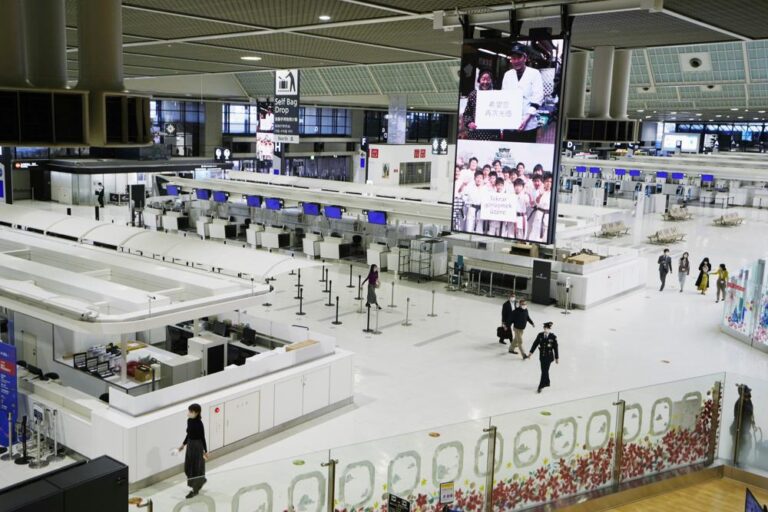
Japan has kept its door closed to most foreigners during the pandemic, and the 26-year-old Australian is one of hundreds of thousands denied entry to study, work or see their families.

Japan has become one of the world’s most difficult countries to enter and some are comparing it to the locked country, or “sakoku,” policy of xenophobic warlords who ruled Japan in the 17th to 19th centuries. The current border rules allow in only Japanese nationals and permanent foreign residents, and have raised the ire of foreign students and scholars who say the measures are unfair, unscientific and force talented visitors to go to other countries. Critics say the rules are also hurting Japan’s international profile and national interest.

About half a million foreigners — including academics, researchers and others with highly skilled jobs and 150,000 foreign students — have been affected, various statistics show.

On Wednesday, Japan reported nearly 95,000 new confirmed cases, a record, and Tokyo’s cases exceeded 20,000 for the first time. Some pandemic restrictions are now in effect in much of Japan, including Tokyo and other big cities like Osaka and Kyoto, for the first time since September.

Phillip Lipscy, a political science professor at Toronto University in Canada who is part of the petition drive, said he was denied entry despite his Japanese roots and his dedication to the study of Japan.

“I grew up in Japan. I am a native speaker of the language, my mother is Japanese and she lives in Tokyo. But under the current policy I cannot enter Japan because of the color of my passport,” Lipscy told an online meeting.

With the outlook uncertain, many people are changing their studies or careers, he said.

“These are fateful decisions with long term consequences,” he said. “The border closure is depriving Japan of a generation of admirer, friends and allies.”

“I think the most difficult thing for me has been this state of living in standby,” Bressa said. He has been unable to commit himself to any long-term plans with his family, friends or even at work. “I can’t plan that far ahead in the future, just not knowing where I end up the next month or two.”

Frustrated students have gathered near Japanese diplomatic compounds around the world to protest.

In Spain’s second-largest city of Barcelona, Laura Vieta stood outside of the Japanese Consulate last week, holding up a sign saying “Stop Japan’s Travel Ban.”

“I gave up my job because I thought I was going to Japan in September,” said Vieta, 25, who wants to study Japanese at a private school for six months or longer. “As you can see, I’m still here.”

Japan plans to keep the border measures in place through the end of February as it copes with a record surge of cases in Tokyo and other major cities. Makoto Shimoaraiso, a Cabinet official working on Japan’s COVID-19 response, said the situation is painful but he asked for patience, noting much higher infection levels overseas.

Japan recently decided to let nearly 400 students enter, but many others including those on foreign government-sponsored scholarships still cannot get in.

A letter to Prime Minister Fumio Kishida, signed by hundreds of academics and Japan experts and submitted last month in a petition drive, called for a relaxation of the border controls to enable educators, students and scholars to pursue their studies and work in Japan. It said many already have given up Japan studies, opting to focus elsewhere, such as South Korea.

“They become the bridges between Japan and other societies. They are future policymakers, business leaders, and teachers. They are the foundation of the U.S.-Japan alliance and other international relationships that support Japan’s core national interests,” the letter said. “The closure is harming Japan’s national interests and international relationships.”

Japan is not the only country imposing strict border controls, but the policy is drawing criticism from within Kishida’s governing party and from the business community.

Taro Kono, an outspoken lawmaker who has studied at Georgetown University and served as foreign and defense minister, urged that the government “reopen the country so that students and others waiting for an entry can have a future outlook and make plans.”

Masakazu Tokura, head of Japan’s powerful business organization Keidanren, recently said the border measures were “unrealistic” and are disrupting business. He called for a quick end to “the locked country situation.”

On Thursday, The American Chamber of Commerce in Japan, the European Business Council in Japan and the International Bankers Association of Japan, in a joint statement, said the entry ban “has imposed real and increasing economic and human costs.” They urged the government to “quickly adopt a science-based entry policy” to accept vaccinated business travelers, students, teachers and separated family members.

However, the border controls have wide public support. Many Japanese tend to think troubles such as the pandemic come from outside their island nation.

Tightening border controls quickly after omicron outbreaks began overseas may have been unavoidable, Nippon University crisis management professor Mitsuru Fukuda said, but the decision to exclude only foreigners appears aimed at rallying public support. With careful preventive measures, Japan could allow foreign visitors just as many other countries are doing, he said.

“Crisis management is for the protection of people’s daily lives and happiness, and people should not have to compromise their freedom and human rights in exchange for their lives,” Fukuda said.

Japan’s coronavirus cases plunged as delta variant infections subsided in the fall, and Kishida has said closing the border to most foreign travelers in late November helped delay the latest surge in infections. He contends that overreacting is better than doing too little, too late.

He was likely taking a lesson from his predecessor, Yoshihide Suga, who stepped aside after only a year in office partly due to his administration’s perceived weak handling of the pandemic.

Japan has just begun giving booster shots, but only 3.5% of the population have received them, and the medical system has been inadequately prepared for the latest huge wave of cases, leaving many sick with COVID-19 to isolate at home.

The border closures did not keep omicron out of U.S. military bases, where Japan has no jurisdiction, including troops that fly directly into the country without observing Japanese quarantine requirements. They were not tested for weeks, until Tokyo asked them to.

Clusters of cases among U.S. troops rapidly spread into neighboring communities including those in Okinawa, home to the majority of the 50,000 American troops in Japan, beginning in late December. Infections at U.S. bases exceeded 6,000 last month.

IS leader killed during US raid in Syria

0

According to AP, the leader of the violent Islamic State group was killed during an overnight raid in Syria’s northwestern Idlib province, President Joe Biden said Thursday.

Last month, it carried out its biggest military operation since it was defeated and its members scattered underground in 2019: an attack on a prison in northeast Syria holding at least 3,000 IS detainees. The attack appeared aimed to break free senior IS operatives in the prison.

It took 10 days of fighting for U.S.-backed, Kurdish-led forces to retake the prison fully, and the force said more than 120 of its fighters and prison workers were killed along with 374 militants. The U.S.-led coalition carried out airstrikes and deployed American personnel in Bradley Fighting Vehicles to the prison area to help the Kurdish forces.

A senior SDF official, Nowruz Ahmad, said Monday that the prison assault was part of a broader plot that IS had been preparing for a long time, including attacks on other neighborhoods in Kurdish-run northeastern Syria and on the al-Hol camp in the south, which houses thousands of families of IS members.

The U.S.-led coalition has targeted high-profile militants on several occasions in recent years, aiming to disrupt what U.S. officials say is a secretive cell known as the Khorasan group that is planning external attacks. A U.S. airstrike killed al-Qaida’s second in command, former bin Laden aide Abu al-Kheir al-Masri, in Syria in 2017.

The raid targeted Abu Ibrahim al-Hashimi al-Qurayshi, who took over as head of the militant group on Oct. 31, 2019, just days after leader Abu Bakr al-Baghdadi died during a U.S. raid in the same area. A U.S. official said he died as al-Baghdadi did, by exploding a bomb that killed himself and members of his family, including women and children, as U.S. forces approached.

He is also known as Amir Muhammad Sa’id Abdal-Rahman al-Mawla.

The operation came as IS has been trying for a resurgence, with a series of attacks in the region, including a 10-day assault late last month to seize a prison.

U.S. special forces landed in helicopters and assaulted a house in a rebel-held corner of Syria, clashing for two hours with gunmen, witnesses said. Residents described continuous gunfire and explosions that jolted the town of Atmeh near the Turkish border, an area dotted with camps for internally displaced people from Syria’s civil war.

First responders reported that 13 people had been killed, including six children and four women.

Biden said in a statement that he ordered the raid to “protect the American people and our allies, and make the world a safer place.” He planned to address the American public later Thursday morning.

“Thanks to the skill and bravery of our Armed Forces, we have taken off the battlefield Abu Ibrahim al-Hashimi al-Qurayshi — the leader of ISIS,” Biden said in a statement. He said all Americans involved in the operation returned safely.

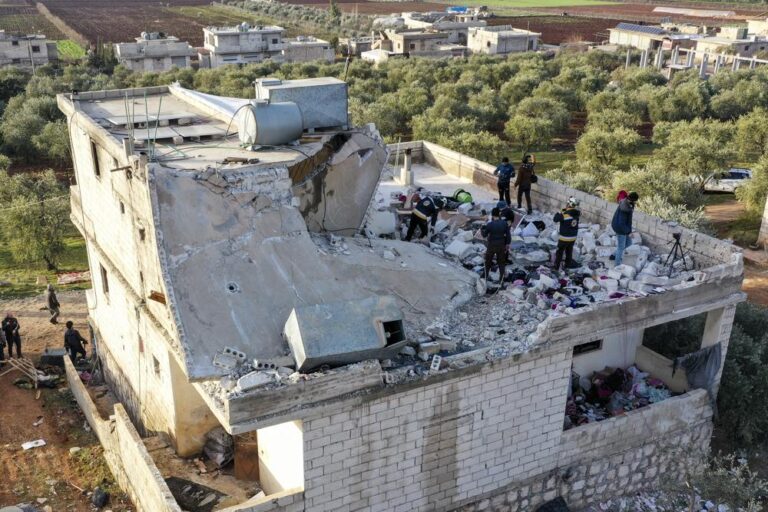
The two-story house, surrounded by olive trees in fields outside Atmeh, was left with its top floor shattered and blood spattered inside. A journalist on assignment for The Associated Press and several residents said they saw body parts scattered near the site. Most residents spoke on condition of anonymity for fear of reprisals.

The Pentagon did not initially identify the target of the raid. “The mission was successful,” Pentagon press secretary John Kirby said in a brief statement. “There were no U.S. casualties.”

Idlib is largely controlled by Turkish-backed fighters but is also an al-Qaida stronghold and home to several of its top operatives. Other militants, including extremists from the rival IS group, have also found refuge in the region.

“The first moments were terrifying, no one knew what was happening,” said Jamil el-Deddo, a resident of a nearby refugee camp. “We were worried it could be Syrian aircraft, which brought back memories of barrel bombs that used to be dropped on us,” he added, referring to crude explosives-filled containers used by President Bashar Assad’s forces against opponents during the Syrian conflict.

The top floor of the low house was almost totally destroyed; a room there had collapsed, sending white bricks tumbling to the ground below.

Blood could be seen on the walls and floor of the remaining structure. A wrecked bedroom had a child’s wooden crib and a stuffed rabbit doll. On one damaged wall, a blue plastic baby swing was still hanging. The kitchen was littered with debris, with a blood splatter on the wall where the door was blown off its hinges. Religious books, including a biography of Islam’s Prophet Mohammad, were in the house.

The opposition-run Syrian Civil Defense, first responders also known as the White Helmets, said 13 people were killed in shelling and clashes that ensued after the U.S. commando raid. They included six children and four women, it said.

The Britain-based Syrian Observatory for Human Rights, an opposition war monitor, also said the strike killed 13 people, including four children and two women. Ahmad Rahhal, a citizen journalist who visited the site, reported seeing 12 bodies.

The Pentagon provided no details on casualties in the raid.

The Observatory said the troops landed in helicopters. Residents and activists described witnessing a large ground assault, with U.S. forces using megaphones urging women and children to leave the area.

Omar Saleh, a resident of a nearby house, said he was asleep when his doors and windows started to rattle to the sound of low-flying aircraft at 1:10 a.m. local time. He ran to open the windows with the lights off, and saw three helicopters. He then heard a man, speaking Arabic with an Iraqi or Saudi accent through a loudspeaker, urging women to surrender or leave the area.

“This went on for 45 minutes. There was no response. Then the machine gun fire erupted,” Saleh said. He said the firing continued for two hours, as aircraft circled low over the area.

Taher al-Omar, an Idlib-based activist, said he witnessed clashes between fighters and the U.S. force. Others reported hearing at least one major explosion during the operation. A U.S. official said that one of the helicopters in the raid suffered a mechanical problem and had to be blown up on the ground. The U.S. official spoke on condition of anonymity to discuss details of the military operation.

The military operation got attention on social media, with tweets from the region describing helicopters firing around the building near Atmeh. Flight-tracking data also suggested that multiple drones were circling the city of Sarmada and the village of Salwah, just north of the raid’s location.

The U.S. has in the past used drones to kill top al-Qaida operatives in Idlib, which at one point was home to the group’s biggest concentration of leaders since the days of Osama bin Laden in Afghanistan. The fact that special forces landed on the ground suggest the target was believed to be of high value.

A similar attack in Pakistan, in 2011, killed bin Laden.

The Islamic State group has been reasserting itself in Syria and Iraq with increased attacks.

Beijing says COVID-19 situation ‘controllable,’ ‘safe’

0

China has been able to keep the virus from transmitting widely within its borders through a costly and strict strategy that relies on lockdowns and mass testing.

According to AP, Beijing reported three new COVID-19 cases on Wednesday as officials said the virus situation was under control with the Olympic Games set to open later in the week.

The three cases reported in the 24-hour period from Tuesday to Wednesday all involved people under some sort of quarantine.

“The current pandemic situation in the capital is overall controllable and it’s headed in a good direction,” said Xu Hejian, a spokesman for the city government, at a daily press briefing. “Beijing is safe.”

The Chinese capital has been on high-alert as it prepares to host the Winter Olympics starting Friday.

Since Jan. 15, Beijing has reported a total of 115 locally transmitted cases of COVID-19, including six cases of the highly contagious omicron variant. In response, the city has mass tested millions of people and sealed off several neighborhoods in different parts of the city while avoiding a strict lockdown for the entire capital.

The restrictions meant that many families had to spend their Lunar New Year’s Eve and New Year’s Day, which were celebrated on Monday and Tuesday, cooped up in their homes. Local government officials and volunteers sent families packages of fruit, milk and nuts, according to Beijing News, a city-backed newspaper.

Everything is in a name for Taiwan’s Olympics team

0

For Taiwan, every appearance on the global stage is fraught with politics — and even more so when that stage is China.

The four Taiwanese athletes competing in Beijing at the Winter Olympics, which open Friday, can’t use Taiwan’s flag. They have long competed under a name — Chinese Taipei — that is rarely used and was forced on the team by a geopolitical divide that predates the Cold War, according to AP.

The name issue surfaced at the 1980 Olympics in Lake Placid, New York. Taiwanese athletes had competed as the Republic of China in the previous two Winter Games, under its red flag with a white sun on a blue rectangle in one corner.

It was communist China’s first time at the Olympics, and the government successfully protested the island’s participation under the Republic of China, Taiwan’s formal name. The athletes got the bad news after arriving in Lake Placid, said Thomas Liang, a cross-country skier who competed in the 1972 and 1976 Games.

Maggie Lee, a 19-year-old slalom skier, found herself giving people an impromptu lesson in the name as she traveled across Europe for training and competitions ahead of the Olympics.

“When I’m meeting people, I’ll tell them I’m from Taiwan, because if you tell people you’re from Chinese Taipei, nobody knows where you’re from, you can’t find it on Google,” she said.

Taiwan is an island of 24 million people off China’s east coast. It functions in many ways like a country with its own government and military. But China claims Taiwan as its territory, and only 14 countries recognize Taiwan as a nation. Most of the world, including the United States, have official ties with China instead.

The divide was born of a civil war in the late 1940s in which the Communists toppled the Republic of China’s government and founded the People’s Republic of China that rules to this day. China’s former Nationalist leaders fled to Taiwan and set up a rival government in the city of Taipei.

Both claimed to represent China, and the U.S. among others sided with the government in Taipei. But a growing number of countries shifted to Beijing over the next two decades. The U.N. switched in 1971, forcing Taipei out of the organization. U.S. President Richard Nixon visited China the next year and the United States established ties with Beijing in 1979.

“We all went to the U.S., but they wouldn’t let us on the playing field,” he said. “I was sad because I couldn’t compete. Losing this opportunity was such a shame.”

The next time Liang went to the Olympics, he was a coach, and his team was known as Chinese Taipei.

A 1981 agreement with the International Olympics Committee created the name and allowed athletes to compete under a newly designed white flag with a flower outline around a sun and the Olympic rings in the middle. A flag-raising song is played at medal ceremonies instead of the anthem.

Postpone ‘Buckhead City’ vote VS keep $5B district in the city

0

A group of the city’s largest property owners, hotel companies and apartment developers is urging state legislators to postpone the proposed Buckhead cityhood bill or keep Buckhead’s nearly $5 billion commercial district inside the city of Atlanta, accoding to Bizjournals.com

The group includes real estate companies whose projects have filled the Atlanta skyline for decades including Cousins Properties, Selig Enterprises and Portman Holdings. Jamestown LP, the owner of the upscale development Buckhead Village, and hotels including the Grand Hyatt Buckhead and JW Marriott Atlanta, are also included in the list of businesses.

In a letter to legislators Tuesday, the business leaders say the Buckhead property holdings represent $4.7 billion in real estate value. The properties also generate about $57 million in annual property taxes to the city of Atlanta, according to the letter. Simon Property Group, owner of Lenox Square and Phipps Plaza malls, did not sign the letter.

Simon Property Group could not immediately be reached for comment.

The movement is spearheaded by business consultant Bill White and backed primarily by Republican legislators from municipalities outside of Atlanta. Before the movement began to take shape in 2021, the influential Buckhead Coalition and its partnering organizations took a stance against cityhood, as did Mayor Andre Dickens. 

In the new letter to legislators, business leaders say the proposed Buckhead City will increase upfront costs for city operations and weaken economic development opportunities across Atlanta and Georgia. Site selection experts outside of Atlanta agree.

“Uncertainty directs companies elsewhere,” global site selection firm Hickey & Associates President Jason Hickey told Atlanta Business Chronicle. “It sends a message that companies should hold off until it becomes more stable.” 

The leaders also say the movement will put Atlanta Public Schools in a state of disarray. An early feasibility study conducted by KB Advisory Group estimated the school system would lose $232 million from its operating budget — or around 28% of its 2020 annual budget — if Buckhead were to secede.  Cityhood will also set a “dangerous precedent” for other neighborhoods considering secession, they say. A coalition to form unincorporated areas in south DeKalb into a city with roughly the same land area as Atlanta came forward late last year.

A bill that would put the proposed Buckhead City on the 2022 ballot currently sits in the Democratic-majority Senate Urban Affairs Committee. The proposal could still move forward during the legislative session. It has been opposed by top Atlanta business leaders, including those in the hospitality industry.

Historically, business leaders can have significant influence in state politics. The signees also include prominent Buckhead commercial property owners such as Highwoods Properties, Piedmont Office Realty Trust, The Ardent Cos. and Granite Properties. Atlanta Tech Village, a center for startups in a city that just posted a record year for raising venture capital, is also joining opposition to a new Buckhead City.

The business leaders request the General Assembly table the bill. If unwilling, however, they ask legislators to carve out the commercial district of Buckhead from a “start-up city with no experience.” 

The push for the city’s wealthiest enclave to secede emerged in late 2020, as a response to perceived surges in crime and lags in city services. Legislation calling for citywide zoning reforms to densify neighborhoods also played a part, though it failed to pass the Atlanta City Council in 2021.

The pro-cityhood Buckhead City Committee says crime is negatively affecting Atlanta’s business prospects and leading companies to relocate to the suburbs. Leasing activity in Buckhead’s commercial and residential real estate markets are telling a different story. Buckhead had the second-highest sales transaction volume for intown apartments in 2021, and major investment firms are buying up trophy office properties. 

Overuse of masks: WHO cites glut of waste from COVID response

0

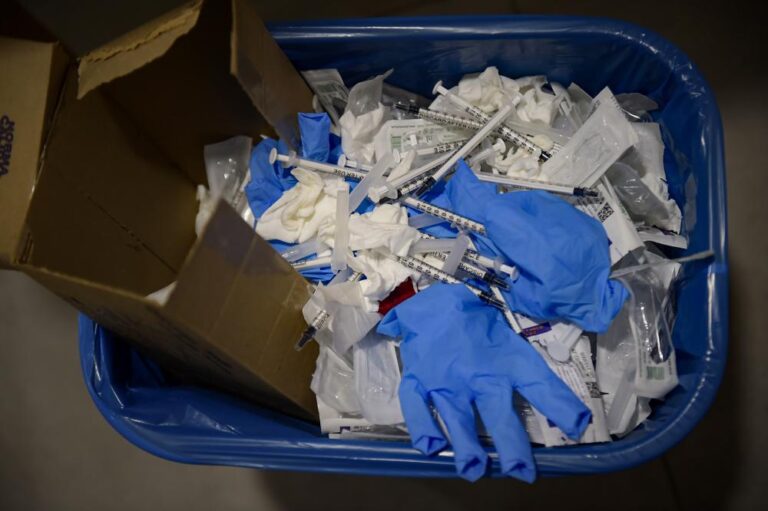
The World Health Organization says overuse of gloves, “moon suits” and the use of billions of masks and vaccination syringes to help prevent the spread of the coronavirus have spurred a huge glut of health care waste worldwide, according to AP.

“It is absolutely vital to provide health workers with the right (protective gear),” Dr. Michael Ryan, WHO’s emergencies chief, said in a statement. “But it is also vital to ensure that it can be used safely without impacting on the surrounding environment.”

In the statement, Dr. Anne Woolridge of the International Solid Waste Association said “safe and rational use” of personal protective equipment would reduce environmental harm, save money, reduce possible supply shortages and help prevent infection “by changing behaviors.”

The U.N. health agency reported Tuesday that tens of thousands of tons of extra medical waste has strained waste management systems and is threatening both health and the environment, pointing to a “dire need” to improve those systems and get a response from both governments and people.

“Part of the message for the public is to become more of a conscious consumer,” said Dr. Margaret Montgomery, technical officer of WHO’s water, sanitation, hygiene and health unit. “In terms of the volume, it’s enormous.”

“We find that people are wearing excessive PPE,” Montgomery said, referring to personal protection equipment.

The agency says most of the roughly 87,000 tons of such equipment – including what she called “moon suits” and gloves — obtained from March 2020 to November 2021 to battle COVID-19 has ended up as waste. More than 8 billion doses of vaccine administered globally have produced 143 tons of extra waste in terms of syringes, needles and safety boxes.

WHO issued recommendations like use of “eco-friendly” packaging and shipping as well as reusable equipment and recyclable or biodegradable materials.

Tedros Adhanom Ghebreyesus, the WHO director-general, said the excess waste potentially exposes health workers to “needle-stick injuries, burns, infection, and affects communities living near poorly managed landfills and waste disposal sites.”

The agency called for investment in “non-burn waste treatment” technologies. It reported that 30 percent of healthcare facilities worldwide – and 60 percent in the least developed countries – were already ill-equipped to handle existing waste loads, even before the COVID-19 pandemic led to them to balloon.

Kim Jong Un’s wife and aunt make rare public appearance amid pandemic

0

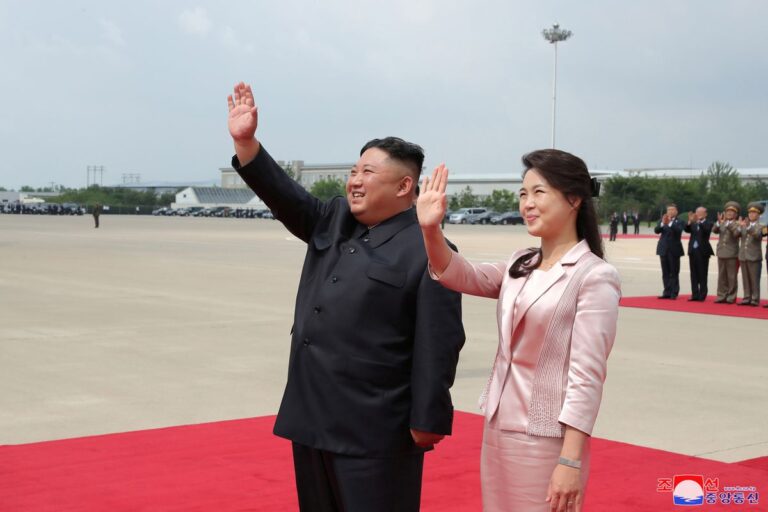
North Korean leader Kim Jong Un’s wife and influential auntmade a rare appearance in state media on Wednesday, as the ruling family has maintained a low profile during the coronavirus pandemic, according to Reuters.

Kim’s wife, Ri Sol Ju, and his aunt, Kim Kyong Hui, attended an art performance at the Mansudae Art Theatre in the capital, Pyongyang, celebrating the Lunar New Year holiday, state television showed.

Ri was last seen publicly on Sept. 9, when she joined her husband in visiting the Kumsusan Palace of the Sun, which houses the embalmed bodies of Kim’s late grandfather and father, on the anniversary of the country’s founding.

“When (Kim) appeared at the auditorium of the theatre with his wife, Ri Sol Ju, amid the playing of the welcome music, the audience raised stormy cheers of ‘Hurrah!'” the official KCNA news agency said.

TV footage showed Ri, in a traditional red-and-black hanbok dress, chatting and smiling with Kim during the show, and the couple taking the stage to shake hands and take a photo with the artists.

The clip also confirmed the first appearance since January 2020 of Kim’s aunt and a former senior official of the ruling Workers’ Party, Kim Kyong Hui, seen watching the concert sitting next to Ri.

Kim Kyong Hui was a key figure in the young leader’s first years in power, but had disappeared from media after he ordered the execution of her powerful husband, Jang Song Thaek, over treason charges in 2013, before making a surprise comeback six years later.

South Korea’s National Intelligence Service (NIS) said in 2017 that she was dealing with unspecified illness outside Pyongyang.

The NIS told lawmakers that she apparently refrained from outside activities to prevent COVID-19 infections but was “playing well with their kids.”

The spy agency believes Kim and Ri have three children, but little is publicly known about them.

North Korea has not confirmed any COVID-19 outbreaks, but closed its borders and taken strict curbs including travel restrictions.

Ri had once garnered international attention as she often accompanied Kim on social, business and even military outings, in a stark break from his father, Kim Jong Il, who was rarely seen in public with any of his wives.

She was absent from state media for more than a year before being seen attending a concert last February, fuelling speculation over her health and potential pregnancy.

S. Korea’s daily COVID-19 count surpasses 20,000 as US military cases fall

0

South Korea reached a new pandemic high of 20,270 coronavirus cases on Tuesday as the nation wrapped up the Lunar New Year holiday, three days typically marked by widespread travel on the peninsula, according to Stripes.

Tuesday’s count was 1,928 cases higher than the previous record of 18,342 infections logged the day before, according to the Korea Disease Control and Prevention Center. Over 6,000 cases were reported in Gyeonggi province, where Camp Humphreys, the largest U.S. military base overseas, is located.

Meanwhile, U.S. Forces Korea reported 196 new COVID-19 cases for the week ending Monday, its third consecutive week of declining numbers. USFK confirmed 379 new infections the previous week and a pandemic high of 1,599 between Jan. 4 and 10.

The U.S. military population in South Korea is subject to strict social distancing and mask policies but has not been confined to their homes and installations as those in Japan were for three weeks in January.

One month after South Korea confirmed its first COVID-19 case on Jan. 20, 2020, USFK elevated its health-risk level to condition Charlie and Charlie-plus, which prompted mandatory health checks at base entrances and curtailed many activities.

“We are very proud of the USFK-affiliated community … for their continued efforts in adhering to our [health protection condition] mitigation measures and USFK core tenets,” command spokesman Army Col. Lee Peters said in a statement to Stars and Stripes on Wednesday. “Their actions are reflected in our numbers and they speak for themselves: we’ve seen a continued downward trend over the last three weeks and expect to continue this trend.”

The capital city of Seoul, which routinely counted more COVID-19 cases than any other province last year, reported 4,209 new infections on Tuesday.

Prime Minister Kim Boo-kyum, in a speech to the National Assembly on Jan. 27, implored the country to refrain from long-distance travel during the three-day holiday. With a “heavy heart,” and concern for people’s lives, Kim said, he could not fulfill their expectations of a normal holiday.

South Korean President Moon Jae-in on Jan. 21 asked his countrymen and women to consider their health during the holiday.

“The COVID-19 pandemic is still ongoing, and many people will not be able to return home even though the Lunar New Year holiday is only a few days away,” he said. “Amid this situation, I ask you to do all you can and take good care of your health.”

USFK is at health protection condition Bravo-plus, which indicates a heightened risk for the coronavirus spreading and brings increased health protection measures.