Home Blog Page 78

Ukraine reports higher but ‘not critical’ Chernobyl radiation

0

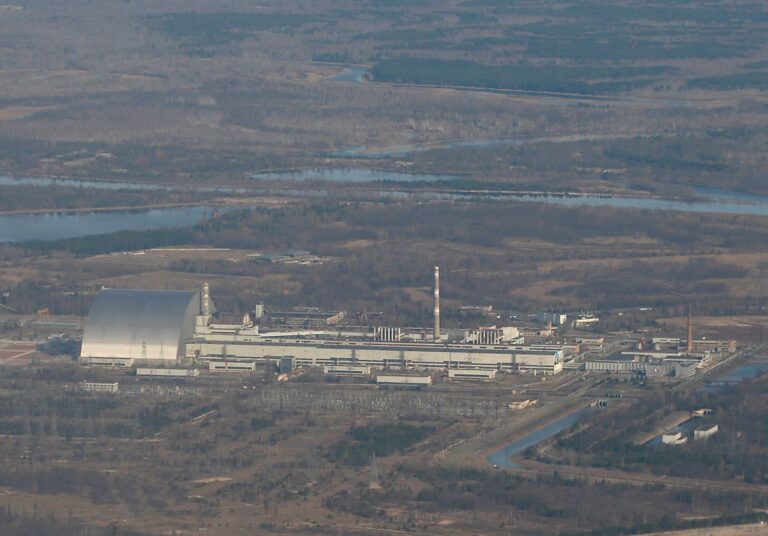
Ukraine’s nuclear agency and interior ministry said on Friday they were recording increased radiation levels from the site of the defunct Chernobyl nuclear power plant, reported by Reuters.

“Radiation starts to increase. It is not critical for Kyiv for the time being, but we are monitoring,” the interior ministry said.

Experts at the state nuclear agency did not provide exact radiation levels but said the change was due to the movement of heavy military equipment in the area lifting radioactive dust into the air.

The still-radioactive site of the 1986 nuclear disaster lies some 100 kilometres from Kyiv.

Ukraine’s neighbour Poland said it had not recorded any increase in radiation levels on its territory.

Ukrainians take shelter, flee, and get married as they enter a war

0

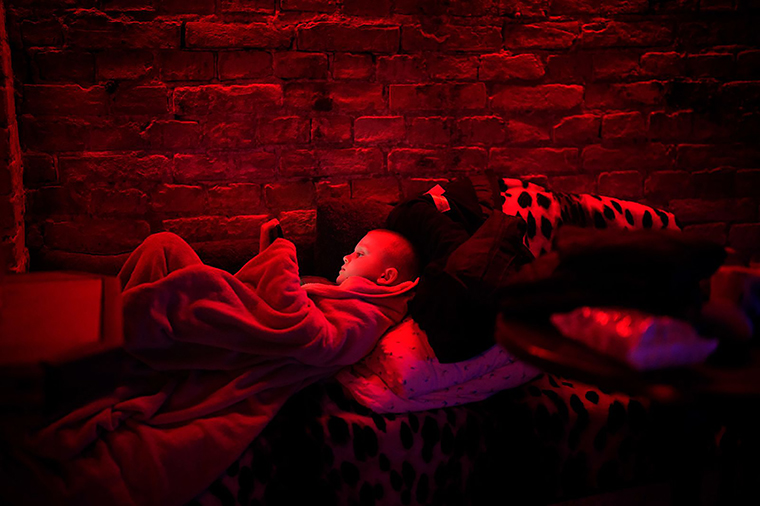
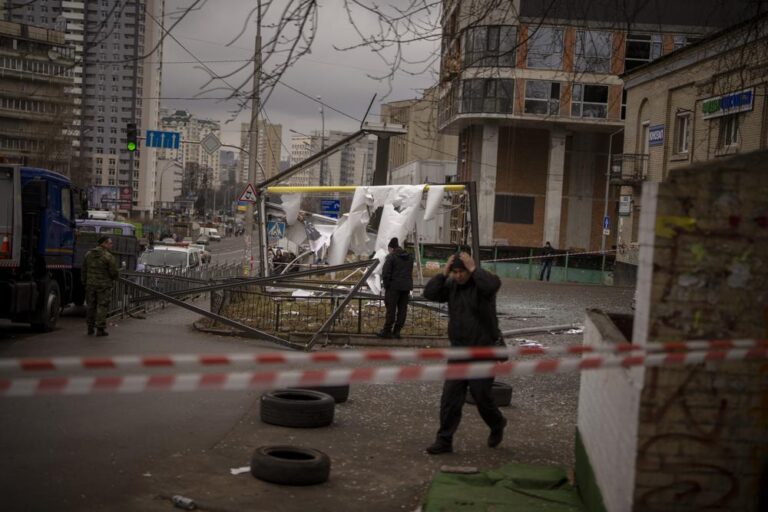
People in Ukraine woke up to a new reality on Thursday, as explosions rocked major cities and prompted many to flee the capital Kyiv.

“It’s hard to believe it’s actually our neighbor doing this, because we never really believed that our neighbor can just come and just grab our land and tell us what to do,” one woman taking shelter in a subway station in the city of Kharkiv told CNN.

“We (are an) independent country of Ukraine, and … we don’t want to be a part of Russia or any other country,” she said.

Families in Kyiv told CNN about the decision they faced: leave behind their homes, facing potential danger on the road, or stay?

By early morning Thursday, heavy traffic filled roads in Kyiv heading westward, as residents packed up and drove in the opposite direction of the Russian border.

Sviatoslav Fursin, left, and Yaryna Arieva kneel during their wedding ceremony at St. Michael's cathedral in Kyiv on Thursday.
Sviatoslav Fursin, left, and Yaryna Arieva kneel during their wedding ceremony at St. Michael’s cathedral in Kyiv on Thursday. (Christian Streib/CNN)

Yaryna Arieva and her partner, Sviatoslav Fursin, rushed to tie the knot with the sound of air raid sirens ringing in their ears.

The couple had planned to get married on May 6 and celebrate at a restaurant with a “very, very cute terrace” overlooking the Dnieper River, said 21-year-old Arieva — “Just us and the river and beautiful lights.”

They don’t know what the future will bring — but they’re determined to stay and fight. After their wedding, the couple prepared to go to the local Territorial Defense Center to join efforts to help defend the country.

Macron says he’s ready to broker a ceasefire, accuses Putin of “duplicity”

0

French President Emmanuel Macron is positioning himself as the mediator between Russia and Ukraine for a potential ceasefire agreement.

Macron was the first major Western leader to speak with Russian President Vladimir Putin after Russian military actions began. They spoke before the summit — but Macron admitted the phone call didn’t achieve much, “since the Russian President has chosen war”, reported by CNN.

Macron also accused Putin of duplicity, saying he and other European leaders had been discussing “the details of the implementation of the Minsk agreements” with Putin just hours before the Russian President launched the operation, referring to the 2015 pact that established a shaky ceasefire in the region.“So yes, there was duplicity. Yes, there was a deliberate, conscious choice by President Putin to launch the war when we could still negotiate peace,” Macron said.

“I think it is my responsibility, first of all, to take such initiatives when they are requested by Ukraine, and then, while condemning, while sanctioning, while continuing to decide and act, to leave this path open so that the day when the conditions can be met, we can obtain a cessation of hostilities for the Ukrainian people,” Macron said a joint news conference Friday in Brussels after an emergency European Union summit.

At the summit on Thursday, EU leaders signed off on a new round of sanctions, described by European Council President Charles Michel as “massive” and “painful” against Russia and Belarus.

UN investigator calls for 60M vaccine doses for N. Korea

0

The United Nations’ independent investigator on human rights in North Korea has called for the international community to provide 60 million doses of COVID-19 vaccines to the isolated authoritarian nation, which has recently showed signs of easing one of the world’s most restrictive pandemic border closures, reported by AP.

Tomas Ojea Quintana said Wednesday the doses would be enough to inoculate North Korea’s population of more than 25 million people at least twice. He said the shots would possibly encourage Pyongyang’s leadership to open up more after the country’s self-imposed lockdown of the past two years created challenges for outside monitors, aid groups and diplomats.

North Korea still claims to have a perfect record in keeping COVID-19 out of its territory — a claim that’s widely doubted. But the closure of its border to nearly all trade and visitors for two years further shocked an economy that was already damaged by decades of mismanagement and crippling U.S.-led sanctions over Kim’s nuclear weapons and missile programs.

Quintana was one of the U.N. investigators who jointly issued a letter to North Korea’s government in August last year asking it to clarify whether it has ordered troops to shoot on sight any trespassers who cross its northern border in violation of the country’s pandemic closure. The North has not publicly commented on the matter.

In its latest report to the World Health Organization, North Korea said it has so far tested more than 54,180 people for the coronavirus as of Feb. 3, but that all tests were negative.

The move could be “the key to opening (North) Korea’s border and resuming its interaction with the international community and bringing it out of isolation,” Quintana said at a news conference on Wednesday in Seoul.

It’s unclear whether Quintana’s plan is feasible. The North has so far shunned millions of shots offered by the U.N.-backed COVAX distribution program, possibly because they come with international monitoring requirements. Quintana suggested promising North Korea 60 million doses up front because the country might be unwilling to receive limited volumes in phases.

North Korea in recent weeks has partially reopened railroad freight traffic with its ally China, in a move that appears to align with leader Kim Jong Un’s call for a more “scientific” virus response.

The reopening shows North Korea is exploring more sustainable ways to deal with a virus threat that may last for years, and it could also provide a glimpse into the North’s vaccine strategy following a yearlong delay in its mass immunization program.

Experts say the North may seek China and Russia’s help to provide regular testing and vaccinations for workers and troops in border areas, where access from other regions is tightly restricted.

Russia attacks Ukraine hitting cities and bases with airstrikes

0

Russia launched a wide-ranging attack on Ukraine on Thursday, hitting cities and bases with airstrikes or shelling, as civilians piled into trains and cars to flee. Ukraine’s government said Russian tanks and troops rolled across the border in a “full-scale war” that could rewrite the geopolitical order and whose fallout already reverberated around the world.

According to AP, sirens rang out in Ukraine’s capital, large explosions were heard there and in other cities, and people massed in train stations and took to roads, as the government said the former Soviet republic was seeing a long-anticipated invasion from the east, north and south. It reported more than 40 soldiers had been killed and dozens wounded so far. 

In unleashing Moscow’s most aggressive action since the Soviet invasion of Afghanistan in 1979, President Vladimir Putin deflected global condemnation and cascading new sanctions — and chillingly referred to his country’s nuclear arsenal. He threatened any foreign country attempting to interfere with “consequences you have never seen.”

The chief of the NATO alliance said the “brutal act of war” shattered peace in Europe, joining a chorus of world leaders who decried the attack, which could cause massive casualties, topple Ukraine’s democratically elected government and upend the post-Cold War security order. The conflict was already shaking global financial markets: Stocks plunged and oil prices soared amid concerns that heating bills and food prices would skyrocket.

Ukrainian President Volodymyr Zelenskyy cut diplomatic ties with Moscow and declared martial law.

“As of today, our countries are on different sides of world history,” Zelenskyy tweeted. “Russia has embarked on a path of evil, but Ukraine is defending itself and won’t give up its freedom.”

His adviser Mykhailo Podolyak said: “A full-scale war in Europe has begun. … Russia is not only attacking Ukraine, but the rules of normal life in the modern world.”

The attack targeted a country the size of Texas that has increasingly tilted toward the democratic West and away from Moscow’s sway. The autocratic Putin made clear earlier this week that he sees no reason for Ukraine to exist, raising fears of possible broader conflict in the vast space that the Soviet Union once ruled. Putin denied plans to occupy Ukraine, but his ultimate goals remain hazy.

Ukrainians who had long braced for the prospect of an assault were urged to stay home and not to panic despite the dire warnings.

With social media amplifying a torrent of military claims and counter-claims, it was difficult to determine exactly what was happening on the ground.

Associated Press reporters saw or confirmed explosions in the capital, in Mariupol on the Azov Sea, and Kharkiv in the east. AP confirmed video showing Russian military vehicles crossing into Ukrainian-held territory in the north from Belarus and from Russian-annexed Crimea in the south.

“We are facing a war and horror. What could be worse?” 64-year-old Liudmila Gireyeva said in Kyiv. She planned to flee the city and try to eventually get to Poland to join her daughter. Putin “will be damned by history, and Ukrainians are damning him.”

Governments from the U.S. to Asia and Europe readied new sanctions after weeks of failed efforts for a diplomatic solution. But global powers have said they will not intervene militarily to defend Ukraine, though NATO mobilized more troops to move toward eastern Europe.

Alliance member Lithuania, which borders Russian ally Belarus and a Russian exclave, declared a state of emergency, and the president of Moldova pushed to do the same.

“We woke up in a different world today,” Germany’s foreign minister said.

After weeks of denying plans to invade, Putin justified his actions in an overnight televised address, asserting that the attack was needed to protect civilians in eastern Ukraine — a false claim the U.S. had predicted he would make as a pretext for an invasion. He accused the U.S. and its allies of ignoring Russia’s demands to prevent Ukraine from joining NATO and for security guarantees.

The attacks came first from the air. Later Ukrainian authorities described ground invasions in multiple regions, and border guards released security camera footage Thursday showing a line of Russian military vehicles crossing into Ukraine’s government-held territory from Russian-annexed Crimea.

Putin’s announcement came just hours after the Ukrainian president rejected Moscow’s claims that his country poses a threat to Russia and made a passionate, last-minute plea for peace.

“The people of Ukraine and the government of Ukraine want peace,” Zelenskyy said in an emotional overnight address, speaking in Russian in a direct appeal to Russian citizens.

Zelenskyy said he asked to arrange a call with Putin late Wednesday, but the Kremlin did not respond.

The attack began even as the U.N. Security Council was meeting to hold off an invasion. Members still unaware of Putin’s announcement of the operation appealed to him to stand down. U.N. Secretary-General Antonio Guterres opened the emergency meeting, telling Putin: “Give peace a chance.”

But hours later, NATO’s Jens Stoltenberg indicated it was too late: “Peace on our continent has been shattered.”

Pepsi announced Wednesday a first-of-its-kind nitrogen-infused cola

0

PepsiCo (PEP) announced Wednesday a first-of-its-kind nitrogen-infused cola that has a creamier and smoother taste compared to traditional carbonated sodas. The beverage, called Nitro Pepsi, is being released in the United States on March 28 and comes in regular and vanilla flavors, according to CNN.

Pepsi’s nitro cola also produces a foamy head when opening the can, so the company recommends a special way of drinking Nitro Pepsi: serving it without ice and not using the straw.

Nitro Pepsi, first announced in 2019, is aimed at attracting drinkers who don’t like carbonated drinks. 

“While soda has been a beverage of choice for so many consumers over the past century, some people still cite heavy carbonation as a barrier to enjoying an ice-cold cola,” said Todd Kaplan, Pepsi’s vice president of marketing, in a press release. He added that Nitro Pepsi is a “huge leap forward for the cola category and will redefine cola for years to come.”

Nitro Pepsi is the latest entrant on the soda shelves as young people’s interest in them have been on the decline. New campaigns and product extensions, such as alcohol, could be a way to get potential customers to pay more attention. 

For example, last week Coca-Cola released Starlight, a mysterious tasting soda inspired by space. Pepsi, meanwhile, has experimented with coffee-flavored drinks.

Nitrogen is more commonly used in beer and coffee drinks, like Starbucks’ wildly successful cold brews, as nitrogen gas creates a silky, foamy texture. But since those come out of taps, Pepsi had to come up with a way to maintain the nitrogen in a can.

To solve that problem, Pepsi took a page from Guinness’ playbook and added a so-called widget at the bottom that creates a “frothy, foamy, smooth texture unique to Nitro Pepsi.” Guinness patented the widget about 50 years ago, and the nitrogen-filled capsule releases the gas when opened to create the stout’s signature foamy head.

Property crisis spreads across Asia Pacific

0

As China Evergrande and a host of other major Asian property developers continue to grapple with extraordinary debt, there are now signs the property crisis has spread further across the Asia Pacific region, reported by asiamarkets.com

One of Australia’s largest construction and development companies, WBHO Australia Pty Ltd (along with 18 of its subsidiary companies) has plunged into administration.

WBHO Australia was effectively forced into administration after Wilson Bayly Holmes-Ovcon Limited announced it would no longer finance the Australian operations due to concerns about the industry.

“The Australian construction environment has also become increasingly competitive and contractual, in our view, the potential risk on large mega-building projects outweighs the current margins available,” it said in a statement.

The statement goes on to criticise Australia’s “hard-line” approach to managing COVID-19.

“The Australian government’s hard-line approach of managing Covid-19 through a combination of border restrictions, snap lockdowns and mandatory work-from-home regulations for many sectors, has had a considerable impact on property markets as well as other industries such as the leisure industry.

“Border restrictions have resulted in hundreds of thousands of foreign students, tourists and investors unable to gain entry to the country. Population levels in the two major cities of Melbourne and Sydney have shown negative growth as a result.

“The impact of lockdown restrictions on the retail, hotel and leisure and commercial office sectors of building markets have created high levels of business uncertainty in Australia and have significantly reduced demand and delayed the award of new projects in these key sectors of the construction industry.”

Deloitte has been appointed administrator of the group and will now have the task of sorting through its debt burdens which industry experts believe could run into the billions.

Reports are emerging from Australia detailing how workers at WBHO Australia’s largest subsidiary, construction giant, Probuild, have been abruptly ordered to leave work sites and told they no longer have jobs.

Probuild has numerous high-profile contracts worth billions with major Australian corporates and the Australian Government.

It’s estimated around 5000 employees – direct and indirect – could be impacted.

Jason Yat-Sen Li, CEO of leading corporate advisory firm Yatsen Associates, said the collapse demonstrated a “broken industry”.

“The Probuild collapse hurts a lot of innocent people including workers, sub-contractors & consumers,” said Li.

“Builder margins now less than 2-3% (is) unsustainable for big projects. This shows a broken industry structure where developers making the dollars don’t necessarily carry the most risk or accountability.”

WBHO Australia’s parent company is Johannesburg-listed builder Wilson Bayly Holmes-Ovcon Limited (JSE: WBO). It’s share price has plunged 27% since the announcement.

WBHO Australia reported revenue of A$1.4 billion in 2021 and had current liabilities worth A$401 million.

Google drops mandates, opens amenities as it prepares for workers to return

0

Google is dropping some Covid-related mandates for employees and restoring perks back to its headquarters as it prepares to bring workers back to the office.

According to CNBC, Google Real Estate and Workplace Services VP David Radcliffe wrote an email to San Francisco Bay Area employees this week explaining that the company is relaxing some rules around vaccines, testing, social distancing and masks. Separately, a Google spokesperson told CNBC that the company has reversed course and will not require vaccinations as a condition of employment for U.S. workers, but declined to offer further details.

The San Francisco Bay Area has the highest concentration of Google offices, with dozens of buildings across several cities in the region, including its Mountain View headquarters. Radcliffe said 30% of Google employees in the area came into the office over the past week, but the return remains voluntary.

The company has still not determined a new date for the mandated return since it last pushed off its Jan. 10 expectation amid the omicron surge. But under a line titled “What Happens Next?” Radcliffe notes that it is preparing to begin its 30-day transition period to the hybrid work week if conditions continue to improve. He said his team is planning “celebrations” to welcome back employees.

Radcliffe’s note also said that perks such as massages and access to informal spaces in the office will be returning. In the past, Google has been able to attract talent with fun office amenities, but many of those were suspended during the pandemic.

The moves come as the company prepares to require most employees to come into physical offices at least three days a week for a “hybrid”work model, while some other Bay Area tech companies are offering fully remote work options. Google has had to delay its office return several times amid various Covid-19 variant surges, and another surge could change these latest plans once again.

It has almost been two years since Google and other tech companies first sent their employees home at the start of the pandemic. Since then, the labor market has tightened, employees have grumbled about missing perks, and workers have voiced their desire to remain working remotely.

Radcliffe’s note says Bay Area offices are lifting the testing requirement imposed in January, which applied even to vaccinated employees.  

In addition, Google is dropping its social distancing requirement and masks for vaccinated employees in most areas, noting that the few cities still requiring masks are likely to drop them soon. 

Google is also reversing course on requiring vaccination for employment for U.S. employees, according to Google spokesperson Lora Lee Erickson. In November, CNBC reported the company told employees that they must comply with vaccine policies or they’d face loss of pay and eventually loss of employment.

Erickson told CNBC the company dropped the requirement for employment last month after removing the Jan. 18 deadline it had set for employees to either get vaccinated or get exemption approval. She declined to provide further details on the policy or the reasons for the reversal.

Unvaccinated employees who are approved to enter offices will still need to follow additional protocols, including testing and wearing a mask, Radcliffe’s note stated.

Google is following local guidelines to “prioritize the health and safety” of the workforce while allowing flexibility, Erickson said in a statement to CNBC.

Radcliffe also wrote that the company is reopening amenities such as fitness centers without appointment and massages; restoring full shuttle service; adding more places to eat free breakfast and lunch; and opening “all informal spaces” such as lounges, game rooms, music rooms and massage chairs.

“We’re at the beginning of a journey, so the office experience will feel pretty similar to what it was like pre-Covid,” Radcliffe said. “We’re designing and piloting options to support new ways of working together and we’ll gather insights, data and feedback to help us learn as we go.”

Radcliffe added that in-person business meetings and events are also “ramping back up.”

“We’re giving employees who welcome the chance to come into the office the option to do that wherever we safely can, while allowing those who aren’t ready to keep working from home,” Erickson told CNBC. “Based on current conditions in the Bay Area, we’re pleased that our employees who choose to come in now have the ability to access more onsite spaces and services to work and connect with colleagues.”

Hong Kong residents become annoyed as it sticks with zero-COVID policy

0

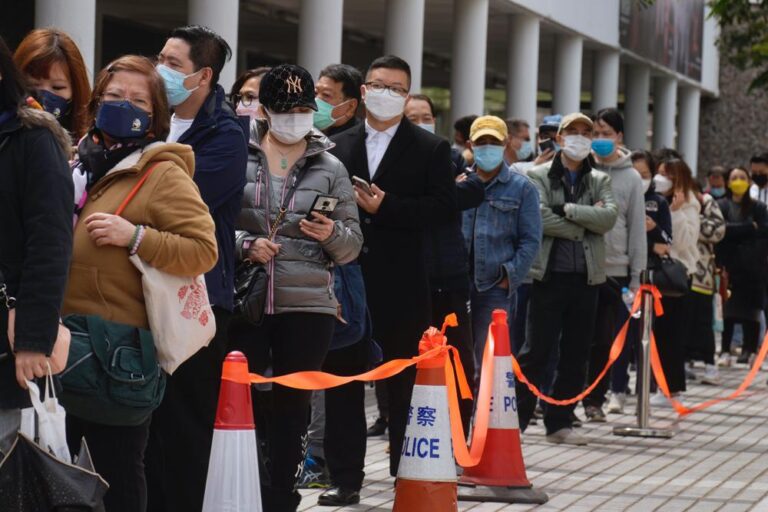
Hong Kong residents are becoming increasingly annoyed with the administration’s insistence on sticking to China’s “zero-COVID” strategy as the city posted another record number of cases Wednesday, bristling at ever-stricter regulations and a plan to test everyone for the virus, according to AP.

Schools have already switched to online learning and summer holidays are being moved forward so that the buildings can be used as facilities for testing, isolation and vaccination. Hong Kong says it will go ahead with the plan to test every one of its 7.5 million residents three times in March.

Under the “zero-COVID-19” strategy, every person testing positive case must be quarantined in a hospital or other government facility for 14 days regardless of symptoms. It’s in contrast with most countries, which are reducing restrictions and allowing people with mild or no symptoms to remain at home.

Hong Kong already is operating under its strictest curbs on travel, business and public activity since the pandemic began. In place since Feb. 10, they also prohibit gatherings of more than two households. Restaurants, hair salons and religious sites were ordered closed.

Those restrictions are expected to be tightened further on Thursday, the same day the government rolls out a new app to control access to specified venues.

The app will contain the user’s vaccination records and only residents who have had at least one shot, or certain specified medical exemptions, will be allowed to enter places like restaurants, malls and supermarkets.

“If Hong Kong still has to live the zero-COVID policy and then cannot achieve it, then Hong Kong would become an island because it basically will be cut off from the rest of the world, including China, and we already see the escalation in price of vegetables,” said Francis Lun, the CEO of Geo Securities in Hong Kong.

“In addition, the status of Hong Kong as an international financial center would suffer.”

“The whole world knows we have to live with the virus, only the Hong Kong government does not know,” said taxi driver Chan Tai-man. “Actually it’s not that they don’t know, they only do what the Chinese government tells them to.”

With hospitals in Hong Kong already overwhelmed, construction crews from mainland China are being sent to build new isolation units and the city was moving to convert hotels, halls, indoor stadiums and other quarantine locations, Hong Kong Chief Executive Carrie Lam said.

Chinese medical teams were also building mobile testing laboratories to help prepare Hong Kong for the launch of the mass testing.

“Everybody is now predicting that we will have a pretty sizeable percentage of people infected with COVID-19 in Hong Kong, so hopefully through comprehensive universal testing we will try to identify these infected cases and put them in isolation,” Lam told reporters Tuesday night.

“To ensure the success, we need a lot more isolation facilities.”

Leung Chun-kit, a kitchen worker, said he didn’t think the government was prepared for universal testing and dealing with the results.

“I think the government should consider increasing hospital manpower and facilities to better support the health workers,” he said.

In his presentation of the city budget on Wednesday, Financial Secretary Paul Chan announced a series of measures to provide relief to residents and small businesses, as well as resources to fight the pandemic.

After keeping the coronavirus largely at bay with extremely strict regulations on international travel and internal restrictions, Hong Kong has seen record numbers of new cases fueled by the highly contagious omicron variant.

Last week the daily figure climbed to more than 6,000 confirmed cases for the first time, then hit more than 7,000 earlier this week. On Wednesday, Hong Hong reported 8,674 cases.

The analysis of sewage samples suggest the real number could be far greater, with experts predicting that the citywide testing could catch some 300,000 cases.

“We probably have not seen the peak of this wave, so how we are going to manage the next two to three months will be extremely essential and critical to containing, but there is no guarantee whatsoever,” Lam said.

Currently 68% of Hong Kong’s population is fully vaccinated and another 10% has had one shot, according to Our World in Data.

As part of its zero-tolerance strategy, China has locked down entire cities, keeping people sequestered in their homes and providing them with food and supplies during extensive testing and contact tracing.

Hong Kong, a former British colony and semi-autonomous region of China, lacks the resources for a complete lockdown but there is growing fear among residents that it is going in that direction. Smaller lockdowns of single buildings or city blocks have raised vehement criticism.

Hong Kong operates under the “one country, two systems” principle within China, but the mainland has been exerting ever-increasing authority.

Lam insisted “there is no instruction from the Central People’s Government on a lockdown” and that the current outbreak was “entirely a matter” for her administration to handle.

“Our motherland is giving us all the support that we need at this critical stage,” she said. “But at the end of the day, I am responsible under ‘one country, two systems.’”

China on Wednesday reported 90 new cases of domestic transmission, almost half in the northern Inner Mongolia region and 10 in Beijing. Shenzhen in Guangdong province, which borders Hong Kong, reported seven new cases.

Guangdong also recorded 38 imported cases, all from Hong Kong, despite strict border controls that have virtually severed travel between Hong Kong and the mainland.

Addressing the surge in Hong Kong on Monday, China’s leading epidemiologist Zhong Nanshan said strict control measures were needed to prevent a higher death rate among the elderly.

Mainland China has lifted lockdowns on millions of people in cities in the north and center of the country, but continues to impose quarantines and require mass testing in districts where cases have been reported.

Practically for Lam, relaxing the zero-COVID-19 strategy would further hinder travel between the city and the mainland, where authorities require three weeks of quarantine or more. Beijing will not reopen Hong Kong’s border with the mainland until the city reaches and maintains zero cases.
Top S.Korea comedian Yoo Jae-suk faces backlash in China after comments on Winter Olympics

0

According to thestar.com, top comedian Yoo Jae-suk is facing backlash in China after remarks made on the latest episode of MBC’s hit variety show Hangout With Yoo.

When other hosts were talking about 2022 Beijing Winter Olympics, Yoo did not hide his feelings and emotions about an alleged biased judgment in a short track event, in which Korean skater Hwang Dae-heon was disqualified for late passing and making contact with other players.

A Chinese athlete, who appeared to have pushed Hwang during the race, made it into the next round without any penalty.

Yoo’s Chinese fan club Yooniverse announced Monday evening (Feb 21) that the group has decided to disband and end its operation.

According to a post on the fan club’s official Weibo channel, the fan club plans to stop its operation because Yoo and the fans’ “directions are different.” No details were offered for the abrupt disbandment.

The 49-year-old comedian, arguably one of the most famous television celebrities in Korean broadcasting, provided a look at his daily life in the Feb 19 episode of Hangout With Yoo.

In addition to Yoo, many Korean celebrities who showed their support for Korean national athletes and expressed their feelings about the Beijing Olympics have been bombarded by Chinese social media users posting a flood of vicious comments on social media accounts.

Other well-known figures that have been targeted include RM of K-pop boy band BTS and rapper Paloalto. – The Korea Herald/Asia News Network