Home Blog Page 64

North Korea says it test-fired biggest ICBM

0

North Korea said Friday it test-fired its biggest-yet intercontinental ballistic missile under the orders of leader Kim Jong Un, who vowed to expand the North’s “nuclear war deterrent” while preparing for a “long-standing confrontation” with the United States.

The report by North Korean state media came a day after the militaries of South Korea and Japan said they detected the North launching an ICBM in its first long-range test since 2017, according to AP.

Following its streak of nuclear and ICBM tests in 2017, Kim suspended such testing ahead of his first meeting with Trump. But the diplomacy derailed in 2019 when the Americans rejected North Korean demands for a major release of U.S.-led sanctions against the North in exchange for a limited surrender of its nuclear capabilities.

The ICBMs launched in three 2017 test flights demonstrated they could reach into the U.S. mainland. The larger Hwasong-17 may be intended to be armed with multiple warheads to overwhelm missile defenses.

North Korea’s ruling party in January had issued a veiled threat to end Kim’s moratorium on ICBM and nuclear tests, citing U.S. hostility.

South Korea’s military has also detected signs North Korea may be restoring some of the nuclear-testing tunnels it detonated just before Kim’s first meeting with Trump in 2018. Some experts say the North may resume nuclear testing in coming months.

The launch extended a barrage of weapons demonstrations this year that analysts say are aimed at forcing the United States to accept the idea of North Korea as a nuclear power and remove crippling sanctions against its broken economy that has been further damaged by pandemic-related difficulties.

State TV dramatized the testing process like a Hollywood movie, showing Kim walking in slow motion in front of his giant missile in sunglasses and a black leather motorcycle jacket. It edited quick cuts that alternately show Kim and other officials staring at their watches before Kim takes off his shades and nods, with the video then showing the missile being rolled out of the hangar.

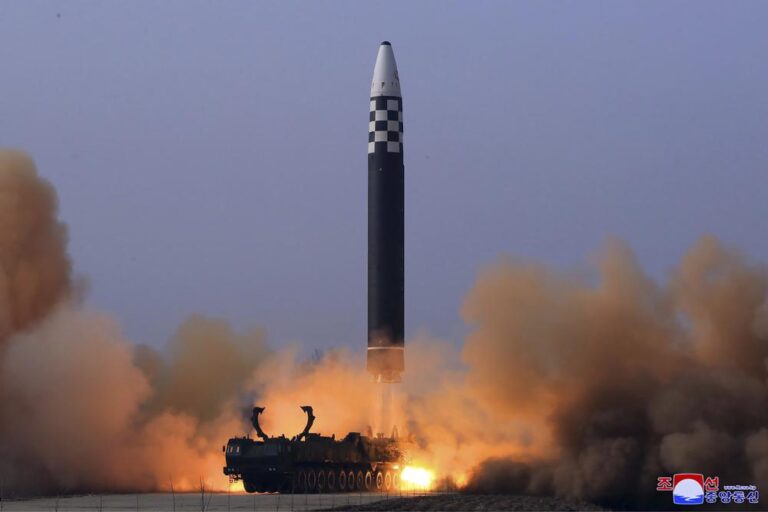
The Hwasong-17, which was fired at a high angle to avoid the territorial waters of neighbors, reached a maximum altitude of 6,248 kilometers (3,880 miles) and traveled 1,090 kilometers (680 miles) during a 67-minute flight before landing in waters between North Korea and Japan, Pyongyang’s official Korean Central News Agency said.

KCNA claimed the launch met its technical objectives and proved the ICBM could be operated quickly during wartime conditions.

The South Korean and Japanese militaries had announced similar flight details, which analysts say suggested that the missile could reach targets 15,000 kilometers (9,320 miles) away when fired on normal trajectory with a warhead weighing less than a ton. That would place the entire U.S. mainland within striking distance.

Believed to be about 25 meters (82 feet) long, the Hwasong-17 is the North’s longest-range weapon and, by some estimates, the world’s biggest road-mobile ballistic missile system. North Korea revealed the missile in a military parade in October 2020 and Thursday’s launch was its first full-range test.

KCNA paraphrased Kim as saying that his new weapon would make the “whole world clearly aware” of the North’s bolstered nuclear forces. He vowed for his military to acquire “formidable military and technical capabilities unperturbed by any military threat and blackmail and keep themselves fully ready for long-standing confrontation with the U.S. imperialists.”

The agency published photos of the missile leaving a trail of orange flames as it soared from a launcher truck on an airport runway near the capital, Pyongyang, and Kim smiling and clapping as he celebrated with military officials from an observation deck.

Other images showed Kim penning a memo ordering the Hwasong-17 test flight and approving the launch. Kim has issued handwritten orders for some of the most significant weapons demonstrations of his rule over North Korea, including its previous most recent ICBM test-flight in November 2017, which capped a highly provocative run in nuclear and missile tests that triggered a verbal exchange of war threats with then-President Donald Trump.

South Korea’s military responded to Thursday’s launch with live-fire drills of its own missiles launched from land, a fighter jet and a ship, underscoring a revival of tensions as diplomacy remains frozen. It said it confirmed readiness to execute precision strikes against North Korea’s missile launch points as well as command and support facilities.

U.S. Secretary of Defense Lloyd J. Austin held separate telephone conversations with his counterparts in South Korea and Japan where they discussed response measures to North Korean missile activities and vowed to strengthen defense cooperation, according to U.S. Defense Department statements.

Japanese Foreign Minister Yoshimasa Hayashi said he talked with South Korean counterpart Chung Eui-yong over the phone and agreed to strengthen bilateral cooperation against the North Korean threat and seek further U.N. Security Council actions against Pyongyang. Seoul’s Unification Ministry, which handles inter-Korean affairs, criticized the North for breaking its self-imposed moratorium on ICBM tests.

“Whatever North Korea’s intent may be, the North must immediately suspend action that create tensions on the Korean Peninsula and destabilizes the regional security situation and return to the table for dialogue and negotiations,” ministry spokesperson Cha Deok-cheol said in a briefing.

The United States requested an open Security Council meeting on the launch and anticipates it on Friday, Linda Thomas-Greenfield, the U.S. ambassador to the United Nations, told reporters.

The United States also imposed fresh sanctions against five entities and individuals in Russia and North Korea over transferring sensitive items to the North’s missile program, State Department spokesperson Ned Price said.

Thursday’s test was North Korea’s 12th round of launches this year and the most provocative since President Joe Biden took office.

North Korea’s resumption of nuclear brinkmanship reflects a determination to cement its status as a nuclear power and wrest economic concessions from Washington and others from a position of strength, analysts say. Kim may also feel a need to trumpet his military accomplishments and drum up internal loyalty while the country faces economic difficulties.

The other recent tests included a purported hypersonic weapon, a long-range cruise missile and an intermediate-range missile that could reach Guam, a major U.S. military hub in the Pacific. The U.S. and South Korean militaries had expected a full-range test of the Hwasong-17 after concluding two of the recent midrange launches included components of the new ICBM.

US to welcome up to 1M Ukrainians fleeing war amid broader aid effort

0

The United States plans to accept up to 100,000 Ukrainians fleeing Russia’s invasion and is pledging $1 billion in new humanitarian aid, the Biden administration said on Thursday after a month of bombardments touched off Europe’s fastest-moving refugee crisis since the end of World War Two.

In contrast to the Afghan evacuation however, the 100,000 Ukrainians would not necessarily be allowed into the United States all at once or even within the current fiscal year, which stretches until the end of September, the U.S. official said.

About 355,000 Ukrainian immigrants live in the United States, according to data analyzed by the Migration Policy Institute (MPI), a Washington-based think tank.

The announcement coincided with U.S. President Joe Biden’s meeting with European leaders in Brussels to coordinate the Western response to the crisis.

According to Reuters, more than 3.5 million people have fled since Russia invaded Ukraine on Feb. 24, putting a strain on the neighboring European countries receiving them.

U.S. lawmakers and advocates have urged Biden to do more to help those seeking refuge in the United States.

In the first two weeks of March, seven Ukrainian refugees were resettled in the United States, internal U.S. State Department data seen by Reuters shows.

Some Ukrainians have traveled to Mexico to seek U.S. asylum at the southwest border. 

A senior Biden official said the administration still expected many Ukrainians to choose to remain in Europe close to their home country but added the U.S. commitment to receive more people would relieve some pressure on European nations currently hosting the bulk of refugees fleeing the conflict, which Russia calls a “special military operation.”

“We recognize that some number of Ukrainians who have fled may wish to come to the United States temporarily,” the official told reporters on the condition of anonymity.

The Biden administration said in a statement it would use “the full range of legal pathways” to bring Ukrainians to the United States, including the U.S. refugee resettlement program, which provides a path to citizenship.

As part of the effort, Ukrainians may enter through existing visa avenues and through a relief program known as “humanitarian parole,” which allows people into the country on an emergency basis, the senior administration official said. The Biden administration said it will focus on Ukrainians with family members in the United States.

Reuters reported details of the plans earlier this week.

N. Korea media give Kim Jong Un ‘Top Gun’ treatment in missile coverage

0

A countdown begins from nine.

Then one of Kim’s aides screams “Fire!” in slow motion, before a quick succession of shots shows another soldier waving a flag, and then others gathered in the command trailer screaming as one pushes the launch button.

Red flames pour out and the missile flies into the sky.

Sporting a shiny leather jacket and slick aviator shades, North Korean leader Kim Jong Un has starred in a Hollywood-style video for Pyongyang’s latest missile launch, reported by Reuters.

Under Kim, North Korea has sought to give its state media a makeover with digital effects, seeking more modern ways to tell its stories.

On Thursday, North Korea tested a huge intercontinental ballistic missile in a test Kim said was designed to demonstrate the might of its nuclear force and deter any U.S. military moves.

State television broadcast a heavily produced video of the launch featuring flashy effects and edits. International online commentators compared the video to the movie “Top Gun” or the South Korean K-pop hit “Gangnam Style.”

Kim, wearing a leather jacket and sunglasses and flanked by uniformed military officers, is shown in slow motion walking and pointing as hangar doors slowly open to reveal the massive missile.

The intense soundtrack quickens as the shot switches quickly between Kim and the officers looking at their watches before the North Korean leader takes off his sunglasses and nods sombrely to start the missile moving to its launching position.

After the missile disappears, Kim celebrates with his two top aides shouting “hurray” and raising their hands.

In the next scene, a smiling Kim walks on the tarmac shoulder to shoulder with soldiers clad in desert-style combat uniforms and body armour.

The TV footage of the missile launch sparked memes and remixes online calling Kim “Top Kim Jong Un” or referring to the video as “Pyongyang Style.”

Earlier, Kim found viral fame when he rode a white horse up the snowy slopes of North Korea’s most sacred mountain in recent years.

Singapore lift quarantine requirements as Asia shifts to “living with COVID”

0

Singapore said on Thursday it will lift quarantine requirements for all vaccinated travellers from next month, joining a string of countries in Asia moving more firmly toward a “living with the virus” approach.

Prime Minister Lee Hsien Loong said the financial hub will also drop requirements to wear masks outdoors and allow larger groups to gather

Still, mask wearing mandates remain in place in several places including South Korea and Taiwan, while facial covering is almost ubiquitous in Japan.

“Our fight against COVID-19 has reached a major turning point,” Lee said in a televised speech that was also streamed on Facebook. “We will be making a decisive move towards living with COVID-19.”

Singapore was one of the first countries to shift from a containment strategy to new COVID normal for its 5.5 million population, but had to slow some of its easing plans due to subsequent outbreaks.

Now, as infection surges caused by the Omicron variant begin to subside in most countries in the region and vaccination rates improve, Singapore and other nations are removing a host of social distancing measures designed to stop the spread of the virus.

Singapore began lifting quarantine restrictions for vaccinated travellers from certain countries in September, with 32 countries on the list before Thursday’s extension to vaccinated visitors from any nation.

Japan lifted this week restrictions imposed on Tokyo and 17 other prefectures that had limited hours of eateries and other businesses.

South Korea, where COVID infections this week topped 10 million but appear to be stabilizing, pushed back a curfew on eateries to 11 p.m., stopped enforcing vaccine passes and dropped quarantine for vaccinated travellers arriving from overseas.

Indonesia dropped quarantine requirements for all arrivals from overseas this week, and its Southeast Asian neighbours of Thailand, the Philippines, Vietnam, Cambodia and Malaysia took similar measures, as they seek to rebuild tourism sectors.

Indonesia is also lifting a ban on travel for a Muslim holiday in early May that traditionally sees millions of people head to villages and towns to celebrate Eid al-Fitr at the end of the holy month of Ramadan.

Australia will lift its entry ban for international cruise ships next month, effectively ending all major COVID-related travel bans after two years. 

New Zealand this week ended mandatory vaccine passes to visit restaurants, coffee shops and other public spaces. It will also lift vaccine mandates for a number of sectors from April 4 and open the borders for those on visa-waiver programmes from May.

Hong Kong, which has registered the most deaths per million people globally in recent weeks, plans to relax some measures next month, lifting a ban on flights from nine countries, reducing quarantine and reopening schools after a backlash from business and residents.

Singapore travel and movement related stocks surged on Thursday, with a gain of nearly 5% for airport ground-handling firm SATS (SATS.SI) and 4% for Singapore Airlines (SIAL.SI). Shares in public transport and taxi operator Comfortdelgro Corp (CMDG.SI) rose 4.2%, their sharpest one-day gain in 16 months. The Straits Times index (.STI) was up 0.8%.

Gov. Kemp signs bill to give Georgia taxpayers refunds.

0

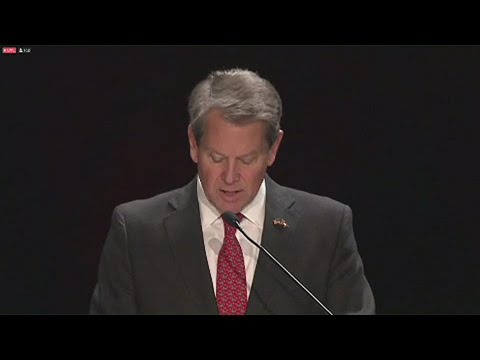
Gov. Brian Kemp said Wednesday he had signed into law a state income tax refund that will see Georgia households get payments of between $250-$500.

The bill, H.B. 1302, will provide for the payments in the coming weeks.

The $1.6 billion measure comes from a surplus of $2.2 billion in the Georgia budget.

The law provides for the following refunds:

  • Single tax filers or married taxpayers filing separately: $250
  • Head of household filers: $375
  • Married joint filers: $500

Gov. Kemp cited rising inflation in a tweet for the push to provide the tax refund.

“I just signed HB 1302, returning over $1 billion in surplus funds to GA taxpayers. As Bidenflation runs rampant across the country, in the Peach State, we are bringing this relief to hardworking Georgians – because that’s YOUR money, not the government’s,” Kemp said.

The checks will go to residents who filed Georgia state income tax returns in 2020 and 2021.

Fearing revenue would tank amid the COVID pandemic, Georgia lawmakers cut 10% from the spending plan while developing the budget for the 2021 fiscal year in the summer of 2020. Once it became clear revenue wouldn’t plummet, the state government then restored hundreds of millions of dollars back into its education budget. However, other agencies across the Peach State were still under a 10% cut, leaving a surplus of funds from the previous fiscal year.

According to the Georgia Budget and Policy Institute, the 2022 fiscal year budget still leaves several state agencies underfunded by millions compared to pre-pandemic numbers. There are cuts to spending in Pre-K through 12th grade, higher education, health services and programs, and the Departments of Human Services and Labor among others.

Proponents of the plan argued that any surplus should be returned directly to taxpayers.

“When government takes in more than it needs, I believe those dollars should be returned to the taxpayer, because that is your money – not the government’s,” the governor staid in a statement.

S. Korea’s disgraced former president Park returns home after prison

0

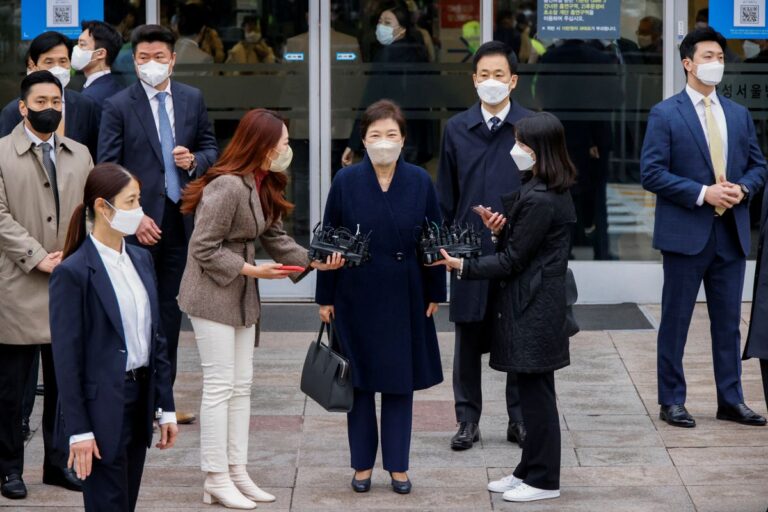
Former South Korean President Park Geun-hye left hospital on Thursday three months after she was released from prison where she spent nearly five years following a conviction on corruption charges.

According to Reuters, Park, 70, became the country’s first democratically elected leader to be forced from office when the Constitutional Court upheld a parliament vote in 2017 to impeach her over a scandal that also landed the chiefs of two conglomerates, Samsung and Lotte, in jail.

“As president, I tried to work hard for the country and the people but there are many dreams that were not achieved,” Park, dressed in a dark navy coat and holding a purse, told hundreds of cheering supporters after arriving at her home in the southeastern city of Daegu.

“But those dreams are tasks for others,” Park said, signalling no intention of returning to the political fray. “I will provide support so that talented people can contribute to the development of my hometown of Daegu and the country.”

Park then visited her father’s grave before heading home.

Park’s release comes days after a presidential election won by conservative candidate Yoon Suk-yeol.

President-elect Yoon, who was in involved in the investigation of the corruption charges against Park when he served as prosecutor-general, said during the election campaign that he was sorry about what happened to her.

On Thursday, he said he hoped to meet her and would invite her to his inauguration in May.

Moon’s office said he had sent Park an orchid and wished her well.

Park is the daughter of former dictator Park Chung-hee and her imprisonment divided a country in which old Cold War rivalry between right and left still shapes politics.

An unidentified object was thrown at Park shortly after she began delivering her televised remarks from a podium but she smiled and thanked the crowd.

“I am extremely grateful that so many people came to warmly greet me even though I had numerous shortcomings and disappointed you,” she said.

The Supreme Court last year upheld Park’s sentence of 20 years in prison for colluding with a friend, who was also jailed, to receive millions of dollars from the companies, mostly to fund her friend’s family and non-profit groups.

Outgoing President Moon Jae-in, who heads a liberal administration, granted Park a special pardon in December, citing her deteriorating health and his hopes to move past the “unfortunate history” and promote national unity.

Earlier, as Park left the Samsung Medical Centre in Seoul, she told some 40 supporters that her health had improved. Dozens of officials who served in her administration and her conservative political party also gathered to offer their best wishes.

North Korea tests largest ICBM, White House condemns return to long-range launches

0

North Korea conducted what is thought to be its largest intercontinental ballistic missile (ICBM) test ever on Thursday, the South Korean and Japanese militaries said, marking a dramatic end to a self-imposed moratorium on long-range testing.

It would be the first full-capability launch of the nuclear-armed state’s largest missiles since 2017, and represents a major step in the North’s development of weapons that might be able to deliver nuclear warheads anywhere in the United States.

The North’s return to major weapons tests also poses a new national security headache for U.S. President Joe Biden as he responds to Russia’s invasion of Ukraine, and presents a challenge to South Korea’s incoming conservative administration.

“This launch is a brazen violation of multiple U.N. Security Council resolutions and needlessly raises tensions and risks destabilising the security situation in the region,” White House press secretary Jen Psaki said in a statement condemning the launch. “The door has not closed on diplomacy, but Pyongyang must immediately cease its destabilising actions.”

North Korea had put its ICBM and nuclear tests on hold since 2017, but has defended the weapons as necessary for self-defence, and said U.S. diplomatic overtures are insincere as long as Washington and its allies maintain “hostile policies” such as sanctions and military drills.

South Korea’s outgoing President Moon Jae-in, who made engaging North Korea a major goal of his administration, condemned the launch as “a breach of the moratorium on ICBM launches that Chairman Kim Jong Un himself promised to the international community”.

It was also a serious threat to the Korean peninsula, the region and the international community, and a clear violation of U.N. Security Council resolutions, added Moon, who is due to leave office in May.

The latest missile launch was an “unacceptable act of violence”, Japanese Prime Minster Fumio Kishida said.

Thursday’s ICBM launch prompted South Korea to test-fire a volley of its own, smaller ballistic and air-to-ground missiles to demonstrate it has the “capability and readiness” to precisely strike missile launch sites, command and support facilities, and other targets in North Korea if necessary, South Korea’s Joint Chiefs of Staff said in a statement.

Amid a flurry of diplomacy in 2018, Kim declared a self-imposed moratorium on testing ICBMs and nuclear weapons, but suggested the North could resume such testing amid stalled denuclearisation talks.

That moratorium had often been touted as a success by former U.S. President Donald Trump, who held historic summits with Kim in 2018 and 2019, but never gained a concrete pact to limit the North’s nuclear or missile arsenals.

On Jan. 19, North Korea said it would bolster its defences against the United States and consider resuming “all temporarily suspended activities”, according to state news agency KCNA, an apparent reference to the self-imposed moratorium.

New construction has also been spotted at North Korea’s only known nuclear test site, which was shuttered in 2018.

The looming prospect of possible nuclear tests, more joint U.S.-South Korea military drills, and the new conservative South Korean president mean “all conditions are present for a tit-for-tat chain reaction of escalatory steps”, said Chad O’Carroll, CEO of Korea Risk Group, which monitors North Korea.

“Though Biden would prefer to focus exclusively on the Ukraine crisis, it’s likely he will soon face crisis-level tensions between the Koreas,” he said.

With the sanctions regime at an impasse at the U.N. Security Council and North Korea opposed to talks on denuclearisation for the foreseeable future, Pyongyang is now likely capable of making serious progress on its weapons development programme with little risk of substantive punishment, O’Carroll added.

US weekly jobless claims at lowest level since 1969

0

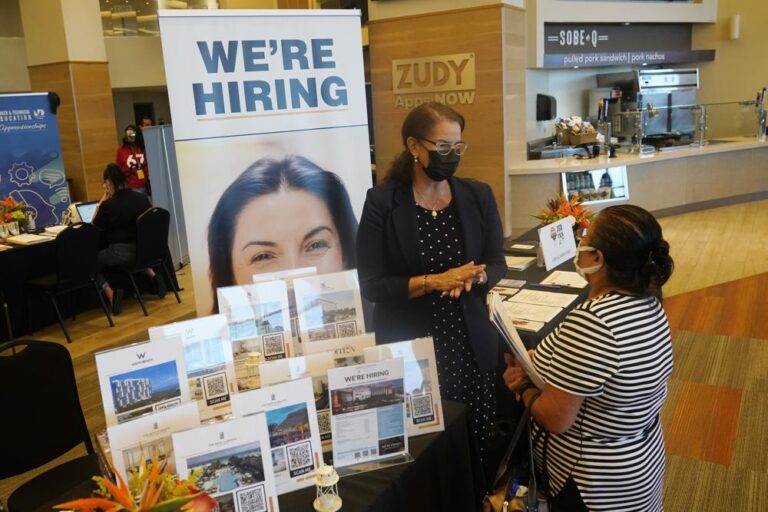
The number of Americans applying for unemployment benefits last week fell to its lowest level in 52 years as the U.S. job market continues to show strength in the midst of rising costs and an ongoing virus pandemic.

Jobless claims fell by 28,000 to 187,000 for the week ending March 19, the lowest since September of 1969, the Labor Department reported Thursday. First-time applications for jobless aid generally track the pace of layoffs.

According to AP, the four-week average for claims, which compensates for weekly volatility, also fell to levels not seen in five decades. The Labor Department reported that the four week moving average tumbled to 211,750 from the previous week’s 223,250.

The Federal Reserve launched a high-risk effort last week to tame the worst inflation since the early 1980s, raising its benchmark short-term interest rate and signaling up to six additional rate hikes this year.

The Fed’s quarter-point hike in its key rate, which it had pinned near zero since the pandemic recession struck two years ago, marks the start of its effort to curb the high inflation that followed the recovery from the recession. The rate hikes will eventually mean higher loan rates for many consumers and businesses.

The central bank’s policymakers have projected that inflation will remain elevated, ending 2022 at 4.3%.

Earlier this month, the government reported that consumer inflation jumped 7.9% over the past year, the sharpest spike since 1982.

In total, 1,350,000 Americans were collecting jobless aid the week that ended March 12, another five-decade low.

Earlier this month, the government reported that employers added a robust 678,000 jobs in February, the largest monthly total since July. The unemployment rate dropped to 3.8%, from 4% in January, extending a sharp decline in joblessness to its lowest level since before the pandemic erupted two years ago.

U.S. businesses posted a near-record level of open jobs in January — 11.3 million — a trend has helped pad workers’ pay and added to inflationary pressures.

First female US secretary of state, Madeleine Albright dies

0

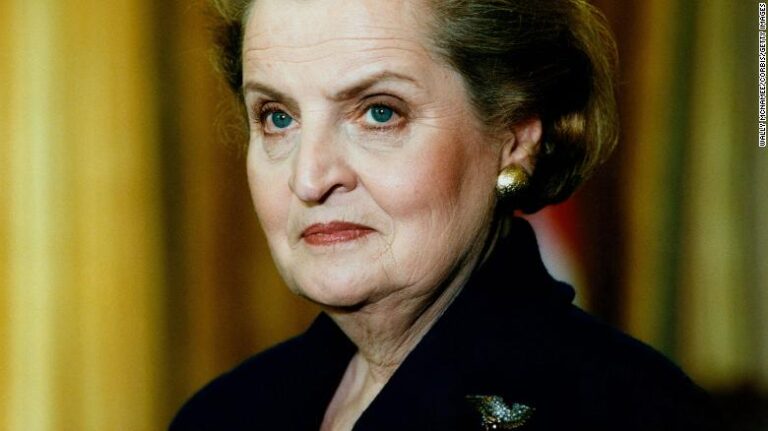
Madeleine Albright, the first female US secretary of state and who helped steer Western foreign policy in the aftermath of the Cold War, has died. She was 84 years old, reported by CNN.

The cause was cancer, Albright’s family said in a statement Wednesday.

Albright was a central figure in President Bill Clinton’s administration, first serving as US ambassador to the United Nations before becoming the nation’s top diplomat in his second term. She championed the expansion of NATO, pushed for the alliance to intervene in the Balkans to stop genocide and ethnic cleansing, sought to reduce the spread of nuclear weapons, and championed human rights and democracy across the globe.

President Joe Biden paid tribute to Albright in a lengthy statement Wednesday, calling her a “force” and saying working with her during the 1990s while he was on the Senate Foreign Relations Committee was among the highlights of his Senate career.

“When I think of Madeleine, I will always remember her fervent faith that ‘America is the indispensable nation,'” said Biden, who ordered flags at the White House and all federal buildings to be flown at half-staff in Albright’s honor.

“Few leaders have been so perfectly suited for the times in which they served,” Clinton said in a statement. “As a child in war-torn Europe, Madeleine and her family were twice forced to flee their home. When the end of the Cold War ushered in a new era of global interdependence, she became America’s voice at the UN, then took the helm at the State Department, where she was a passionate force for freedom, democracy, and human rights.”

Clinton later told CNN’s Wolf Blitzer that he had recently spoken with his former top diplomat.

She “spent the entire conversation talking about how Ukraine had to be defended and that we had put a lot of those who said we had made a mistake to expand NATO — she said (Russia’s) not going after NATO yet,” Clinton said on “The Situation Room.”

“She just wanted to support whatever we could do to back Ukraine. And that’s all she wanted to talk about. She was happy. She was upbeat,” he added. “And she didn’t want to venture into her health challenges. She said, ‘I’m being treated, I’m doing the best I can. The main thing we can all do now is to think about the world we want to leave for our kids.'”

Albright was a face of US foreign policy in the decade between the end of the Cold War and the war on terror triggered by the September 11, 2001, attacks, an era heralded by President George H.W. Bush as a “new world order.” The US, particularly in Iraq and the Balkans, built international coalitions and occasionally intervened militarily to roll back autocratic regimes, and Albright — a self-identified “pragmatic idealist” who coined the term “assertive multilateralism” to describe the Clinton administration’s foreign policy — drew from her experience growing up in a family that fled the Nazis and communists in mid-20th century Europe to shape her worldview.

She saw the US as the “indispensable nation” when it came to using diplomacy backed by the use of force to defend democratic values around the world.

“We stand tall and we see further than other countries into the future, and we see the danger here to all of us,” she told NBC in 1998. “I know that the American men and women in uniform are always prepared to sacrifice for freedom, democracy and the American way of life.”

Perhaps most notable were her efforts to bring about an end to violence in the Balkans, and she was crucial in pushing Clinton to intervene in Kosovo in 1999 to prevent a genocide against ethnic Muslims by former Serbian leader Slobodan Milosevic. She was haunted by the earlier failure of the Clinton administration to end the genocide in Bosnia.

The breakup of communist Yugoslavia into several independent states, including Serbia and Montenegro, Slovenia, Croatia, Bosnia-Herzegovina and Macedonia, in the 1990s generated savage bloodshed unseen on the continent since World War II. The term “ethnic cleansing” became synonymous with Bosnia, where Serb forces loyal to Milosevic tried to carve out a separate state by forcing out the non-Serb civilian population.

The Clinton administration did not intervene until the massacre at Srebrenica in 1995, when Serbs killed 8,000 Muslim men and boys, which led to the US-brokered Dayton Peace Plan. But when Milosevic then tried to move his ethno-nationalist plan to Kosovo, the Clinton administration gathered a coalition to stop him doing there what he had gotten away with in Bosnia.

Albright accused Milosevic of creating “a horror of biblical proportions” in his “desire to exterminate a group of people” — Kosovo’s Muslim majority. She came under heated criticism in Washington at the time, with some calling the NATO airstrikes “Albright’s War” while others accused her of misjudging Milosevic’s resolve. To that end, Albright said in 1999, “I take full responsibility along with my colleagues for believing that it was essential for us not to stand by and watch what Milosevic was planning to do,” adding that “we cannot watch crimes against humanity.”

Ultimately, the US-led coalition did stop Serbian aggression, and Kosovo declared independence in 2008.

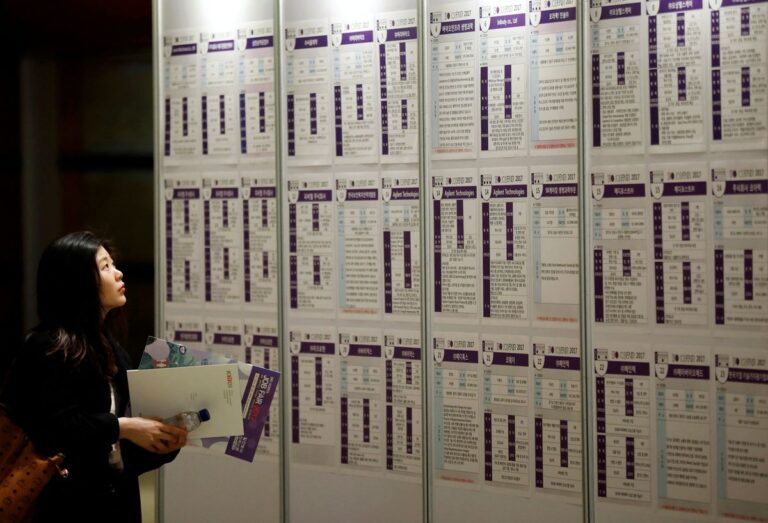
The jobs and ageing faces, behind S. Korea’s record low unemployment numbers

0

It also highlights a consistent problem in Asia’s fourth-largest economy, where the United Nations estimates that the share of elderly people will become the largest of any country by 2050.

The country’s elderly face the highest risk of becoming suicidal, and the relative poverty rate for 65-year-olds and above in Korea is the highest in the OECD. About 45% of that age group is living on less than 50% of the median disposable income.

According to Reuters, wages are barely increasing. Nominal wage growth for South Korea’s salaried workers was 1.7% last year after a 0.3% gain in 2020, data from Statistics Korea shows.

The heavy concentration of job increases in the elderly population shows the fragile nature of the domestic economy, experts say.

“I know I’m underpaid compared to some of younger people in the area, but where else would I go if I don’t take this opportunity?” Kim said, adding that she is happy with her current jobs after other roles such as being a cleaner.

None of Kim’s jobs comes with any social security benefits or the potential for meaningful wage increases. Such jobs do little to boost the country’s private consumption, as many in Kim’s age group are working to barely escape poverty.

The fast-rising proportion of the elderly population poses a growing threat to public finances, as more people need social welfare at a time when tax revenue is set to decline alongside a shrinking workforce.

“Retirement? I’m not sure if I can ever do that; I will probably be working as long as I can,” Kim said.

Yoon Jee-ho, a Citi economist based in Seoul, says the high poverty rate exposes structural weakness.

“Korea’s people aged above 65 tend to have a higher income poverty rate compared to other major economies, partly due to insufficient coverage of the existing pension system as well as not enough private savings,” Yoon said.

The demographic squeeze is not unique.

In Japan, senior citizens have become an increasingly important part of the country’s labour pool, as about 13% of the workforce are 65 or older, up from 9% in 2012. More than three-quarters are part-timers filling roles such as cleaners, taxi drivers and shop clerks.

James Cho, CEO of Korean mobile platform “Pleasehelp,” which connects job seekers to errand work, says many people on the cusp of retirement are just as busy as those who are in their 20s and 30s it terms of job searching.

“There is no age boundary; as long as one can use a smart phone, the elderly can also make money,” Cho said, adding that there were all sorts of gigs, including catching cockroaches, staging a fight, and delivery orders.

Conservative President-elect Yoon Suk-yeol, who promised to deliver stable, private sector-led job growth, is inheriting an economy that expanded at the fastest pace in 11 years in 2021, with minimum wage at 42% higher that of five years ago.

At age 69, Kim Jung-mi holds three jobs: she spends three hours getting a two-year old home from kindergarten every weekday for $9 per hour, then washes vegetables at a store that sells kimchi. Occasionally, she walks her neighbour’s dog.

That kind of gig work among elderly people has helped South Korea to log a record-setting run of low unemployment through February, at 2.7%, with almost half of the job increases driven by people 60 and older.

Although the drift to low-paid, part-time work is a global phenomenon, it has put South Korea at the top of OECD’s scale measuring the temporary employment rate for people 65 and older: 69% of that age group is working somewhere, far higher than 38.1% in Japan and 13.2% for the peer group average.