Home Blog Page 88

Hong Kong activist arrested ahead of Olympics

0

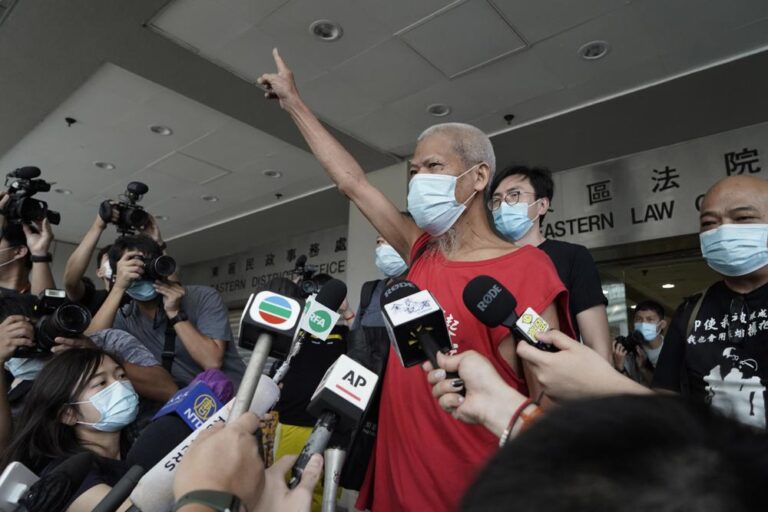
 A veteran Hong Kong activist was arrested Friday days after announcing plans to protest the Beijing Winter Olympics outside government offices in the city, according to AP.

South China Morning Post newspaper identified him as Koo Sze-yiu, saying he was picked up in the early morning at his home under a national security law.

Police confirmed they had arrested a 75-year-old man on suspicion of inciting subversion, but did not identify him. They also said that four other other people were brought back to the station for questioning.

Last year, some 47 activists were charged with conspiring to subvert state power under the national security law, following their participation in an unofficial primary election aimed at selecting legislature candidates for the pro-democracy camp.

Authorities claimed that the primary was subversion as some of the activists indicated that they would vote down major bills in the legislature that would force Hong Kong leader Carrie Lam to step down if the pro-democracy candidates won a majority.

Most of the city’s prominent pro-democracy activists are currently in jail or have fled overseas in fear of political persecution.

Earlier this week, Koo sent a media announcement inviting coverage of a petition he planned to present on Friday at 10 a.m. in front of China’s Liaison Office — the agency representing the Chinese government in the nominally semi-autonomous enclave.

Koo said that China had pressed on with the Beijing Winter Games while ignoring “unjust” cases of imprisonment in Hong Kong.

“Don’t forget that human rights are being oppressed in Hong Kong!” he wrote in the announcement.

He said that authorities have abused the national security law to imprison dissidents or those who speak out against Beijing’s policies in the city.

Koo designed his media statement with interspersed bold and enlarged letters that read “Coffin Winter Olympics.”

Over 150 people have been arrested under Hong Kong’s national security law since it was implemented in June 2020 in response to massive pro-democracy protests. Koo had previously taken part in protests and carried a mock coffin outside China’s Liaison Office on Chinese National Day on Oct. 1.

He had been arrested and jailed several times after being convicted of taking part in unauthorized rallies and flag desecration.

The 2020 law criminalizes what it describes as secession, subversion, and other offenses against the state. Rights groups, foreign governments and activists have condemned the law for reversing the freedoms promised to Hong Kong when Britain handed it over to China in 1997.

Beijing Olympics begin, with lockdown and boycotts

0

The country where the coronavirus outbreak emerged two years ago launched a locked-down Winter Olympics on Friday, proudly projecting its might on the most global of stages even as some Western governments mounted a diplomatic boycott over the way China treats millions of its own people, according to AP.

The opening ceremony began just after the arrival of Chinese President Xi Jinping and International Olympic Committee President Thomas Bach at the same lattice-encased National Stadium that hosted the inaugural event at the 2008 Olympics.

With the dimming of the lights and a countdown in fireworks, Beijing became the first city to host both winter and summer Games. And while some are staying away from the second pandemic Olympics in six months, many other world leaders attended the opening ceremony. Most notable: Russian President Vladimir Putin, who met privately with Xi earlier in the day as a dangerous standoff unfolds at Russia’s border with Ukraine.

The Olympics — and the opening ceremony — are always an exercise in performance for the host nation, a chance to showcase its culture, define its place in the world, flaunt its best side. That’s something China in particular has been consumed with for decades. But at this year’s Beijing Games, the gulf between performance and reality will be particularly jarring.

Fourteen years ago, a Beijing opening ceremony that featured massive pyrotechnic displays and thousands of card-flipping performers set a new standard of extravagance to start an Olympics that no host since has matched. It was a fitting start to an event often billed as China’s “coming out.”

Now, no matter how you view it, China has arrived — but the hope for a more open country that accompanied those first Games has faded.

For Beijing, these Olympics are a confirmation of its status as world player and power. But for many outside China, particularly in the West, they have become a confirmation of the country’s increasingly authoritarian turn.

As if to underline that transformation, the opening ceremony Friday was staged at the same stadium — known as the Bird’s Nest — that held the 2008 version. Back then, Chinese dissident artist Ai Weiwei consulted on its construction. Now, he is one of the country’s best known dissidents and lives in exile.

Chinese authorities are crushing pro-democracy activism, tightening their control over Hong Kong, becoming more confrontational with Taiwan and interning Muslim Uyghurs in the far west — a crackdown the U.S. government and others have called genocide.

The pandemic also weighs heavily on this year’s Games, just as it did last summer in Tokyo. More than two years after the first COVID-19 cases were identified in China’s Hubei province, nearly 6 million human beings have died and hundreds of millions more around the world have been sickened.

The host country itself claims some of the lowest rates of death and illness from the virus, in part because of strict lockdowns imposed by the government aimed at quickly stamping out any outbreaks. Such measures instantly greeted anyone arriving to compete in or attend the Winter Games.

China itself has also transformed in the years since. Then, it was an emerging global economic force making its biggest leap yet onto the global stage by hosting those Games. Now it is a burgeoning superpower hosting these. Xi, who was the head of the 2008 Olympics, now runs the entire country and has encouraged a personality-driven campaign of adulation.

Gone are the hopeful statements from organizers and Western governments that hosting the Olympics would pressure the ruling Communist Party to clean up what they called its problematic human rights record and to become a more responsible international citizen.

Three decades after its troops crushed massive democracy demonstrations in Tiananmen Square, killing hundreds and perhaps thousands of Chinese, the government locked up an estimated 1 million members of minority groups, mostly Muslim Uyghurs from its far-western Xinjiang region, in mass internment camps. The situation has led human rights groups to dub these the “Genocide Games.”

China says the camps are “vocational training and education centers” that are part of an anti-terror campaign and have closed. It denies any human rights violations.

Such behavior was what led leaders of the United States, Britain, Australia and Canada, among others, to impose a diplomatic boycott on these Games, shunning appearances alongside Chinese leadership while allowing their athletes to compete.

Outside the Olympic “bubble” that separates regular Beijingers from Olympians and their entourages, some expressed enthusiasm and pride at the world coming to their doorstep. Zhang Wenquan, a collector of Olympic memorabilia, said Friday that he was excited, but that was tempered by the virus that has changed so much for so many.

“I think the effect of the fireworks is going to be much better than it in 2008,” he said. “I actually wanted to go to the venue to watch it. … But because of the epidemic, there may be no chance.”

In the lead-up to the Olympics, China’s suppression of dissent was also on display in the controversy surrounding Chinese tennis star Peng Shuai. She disappeared from public view last year after accusing a former Communist Party official of sexual assault. Her accusation was quickly scrubbed from the internet, and discussion of it remains heavily censored.

In the shadow of those political issues, China put on its show. As Xi took his seat, the performers turned toward him and repeatedly bowed. A simultaneous cheer went up from them, and they raised and waved their pom poms toward their president — China’s most powerful leader since Mao Zedong. A barrage of fireworks, including some that spelled out “Spring,” announced that the festivities were at hand.

A line of people dressed in costumes representing China’s varied ethnicities passed the national flag to the pole where it was raised — a show of unity that the country often puts on as part of its narrative that its wide range of ethnic groups live together in peace and prosperity.

Politics elbowed its way into the proceedings, if gently. The parade of athletes from Taiwan — the island democracy that China says belongs to it — was greeted with a cheer from the crowd, as were the Russian competitors. An overcoated Putin stood and waved at the delegation, nodding crisply as they marched.

The stadium was relatively full — though by no means at capacity — after authorities decided to allow a select group to attend events.

Once the cauldron is lit, as with any Olympics, attention will shift Saturday — at least partially — from the geopolitical issues of the day to the athletes themselves.

All eyes turn now to whether Alpine skiing superstar Mikaela Shiffrin, who already owns three Olympic medals, can exceed sky-high expectations. How snowboard sensation Shaun White will cap off his Olympic career — and if the sport’s current standard-bearer, Chloe Kim, will wow us again. And whether Russia’s women will sweep the medals in figure skating.

And China is pinning its hopes on Eileen Gu, the 18-year-old, American-born freestyle skier who has chosen to compete for her mother’s native country and could win three gold medals.

As they compete, the conditions imposed by Chinese authorities offer a stark contrast to the party atmosphere of the 2008 Games. Some flight attendants, immigration officials and hotel staff have been covered head-to-toe in hazmat gear, masks and goggles. There is a daily testing regimen for all attendees, followed by lengthy quarantines for all those testing positive.

Even so, there is no passing from the Olympic venues through the ever-present cordons of chain-link fence — covered in cheery messages of a “shared future together” — into the city itself, another point of divergence with the 2008 Games.

COVID-19 vaccination rates are higher among gay and lesbian adults

0

COVID-19 vaccination rates are higher among gay and lesbian adults in the U.S. compared to heterosexual adults, new research suggests.

According to a Centers for Disease Control and Prevention report published Thursday, just over 85 percent of lesbian or gay adults in the U.S. have received at least one dose of a COVID-19 vaccine, compared to 76 percent of heterosexual adults, according to Thehill.

Gay or lesbian adults were also more likely to have confidence in the safety of vaccines, with 76 percent reporting they were either completely or very confident in vaccine safety, compared with 64 percent of heterosexual respondents. More than 90 percent of gay or lesbian adults said they believed getting vaccinated against COVID-19 was very or somewhat important, as did 87 percent of bisexual adults, according to the report.

Among gay or lesbian adults, vaccination rates were highest among men at nearly 89 percent, compared with nearly 81 percent among women.

Among all lesbian, gay, bisexual or transgender (LGBT) adults, vaccination rates were lowest among Black LGBT people across all categories of sexual orientation and gender identity. The percentage of transgender or nonbinary adults who reported receiving more than one dose of a COVID vaccine was similar to that of cisgender adults, at nearly 76 percent and nearly 77 percent, respectively.

The CDC report is a departure from previous findings that LGBTQ+ individuals may be more hesitant to get vaccinated, though the report’s conclusion that LGBTQ+ adults have a high degree of confidence in COVID vaccines is in line with other similar surveys.

There were no “significant differences” found in vaccination rates based on gender identity, according to the report, which used data collected from more than 150,000 respondents between August and October.

The Kaiser Family Foundation in a report in August found that 82 percent of LGBT adults surveyed said they had received at least one dose of a vaccine, compared with 66 percent of non-LGBT adults. LGBT adults were also more likely to support federal vaccine mandates, according to the report.

Another CDC survey in 2021 found that 92 percent of LGBTQ respondents reported receiving one or more doses of a COVID-19 vaccine. 

The CDC in the 2021 report said high vaccination rates among LGBTQ people could be driven by the fact that LGBTQ individuals tend to be politically liberal, live in blue states and live in urban areas. But the CDC noted in its Thursday report that LGBT adults face an increased risk of becoming severely ill from COVID-19 because of a higher prevalence of comorbidities, which could be influencing more LGBT people to get vaccinated.

Zuckerberg is in danger of losing his top 10 billionaire ranking

0

The historic collapse in Meta’s shares this week has wiped $31 billion off Mark Zuckerberg’s personal wealth, taking him down three places on Bloomberg’s list of the world’s richest people.

According to CNN, he now stands in 10th place on the Bloomberg Billionaires Index, behind Oracle (ORCL) co-founder Larry Ellison and just a few hundred million dollars above India’s energy-to-tech entrepreneur, Mukesh Ambani. Tesla (TSLA) CEO Elon Musk tops the list by a wide margin.

Zuckerberg, 37, owns more than 398 million Meta shares, or 14.2% of the company, according to an SEC filing from February 2021, the most recent filing available.

Following the crash, the CEO and co-founder is now worth $89.6 billion, just $400 million more than Ambani, who controls Reliance Industries and is Asia’s richest man, according to the Bloomberg ranking.

Apart from a disastrous earnings report, Meta revealed for the first time just how much money it’s spending on its shift to the metaverse. The company also reported a slight-but-striking decline in daily active Facebook users in the United States and Canada from the prior quarter.

Meta Platforms, the company formerly known as Facebook (FB), had its worst day ever on the stock market Thursday, after reporting a rare profit decline and stagnant user numbers, and delivering a vague assessment of the company’s prospects as it invests heavily in augmented and virtual reality.

“This fully realized vision is still a ways off,” Zuckerberg said on a call with analysts. “And although the direction is clear, our path ahead is not yet perfectly defined.”

The company’s shares closed down more than 26%, shaving nearly $240 billion from its market value.

Thursday was a reminder of how huge Meta has become. Its market cap declined by an amount greater than the valuation of most public companies, including Oracle and Cisco (CSCO). The loss was also nearly as big as Disney’s (DIS) total value.

India’s COVID deaths cross 500,000 but some analysts count millions more

0

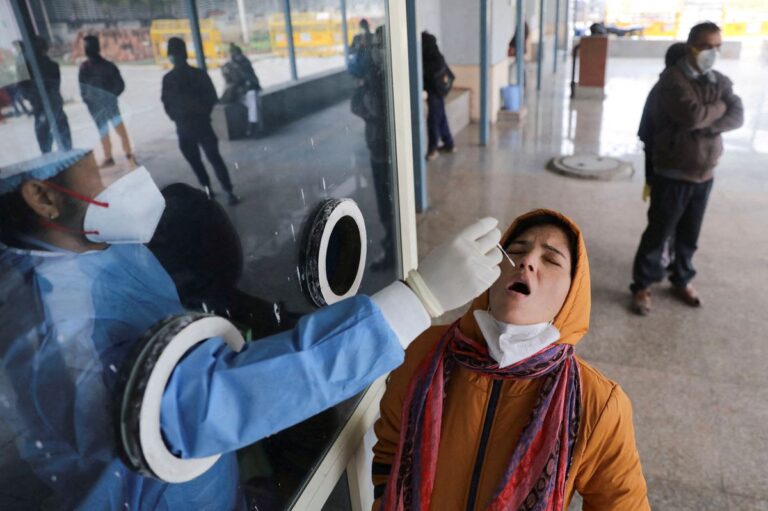
India’s official COVID-19 death toll crossed 500,000 on Friday, a level some data analysts said was breached last year but was obscured by inaccurate surveys and unaccounted dead in the hinterlands, where millions remain vulnerable to the disease, according to Reuters.

The country, which has the fourth-highest tally of deaths globally, recorded 400,000 deaths by July 2021 after the devastating outbreak from the Delta variant of the coronavirus, according to official data. Some believe the figures were much higher.

“Our study published in the journal Science estimates 3 million COVID deaths in India until mid-2021 using three different databases,” Chinmay Tumbe, an assistant professor at the Indian Institute of Management, Ahmedabad, who co-authored the study, told Reuters.

India’s cumulative tally of 500,055 deaths on Friday included 1,072 fatalities reported over the last 24 hours, according to the federal health ministry. Out of this, 335 deaths were reported from the southern state of Kerala that has, for weeks, been updating data with deaths from last year.

Kerala, with less than 3% of India’s 1.35 billion population, accounts for nearly 11% of the total deaths reported in the country.

“Some states such as Kerala are recording their backlog deaths under judicial pressure, although not all states have done that,” said Gautam Menon, a professor of physics and biology at Ashoka University near the capital who has been tracking the spread of the virus.

In Prime Minister Narendra Modi’s home state of Gujarat, authorities have received over 100,000 claims for COVID-19 compensation, of which 87,000 claims have been approved, according to a senior government official.

The number of claims received is nearly 10 times the official COVID-19 death toll of 10,545, as per government data.

Last month, the Indian government dismissed the study as baseless in a notification saying there is a robust system of birth and death reporting.

India’s states record deaths from COVID after collating data from their districts. In the last few months, several states have updated the number of deaths, some under pressure from the country’s top court. In most instances, authorities said there were lapses due to delayed registrations and other administrative errors.

India is currently in the midst of a third wave of the coronavirus led by the Omicron variant, which some top experts say is already in community transmission although federal officials say most cases are mild.

Last month, the government eased testing norms and told states to drop mandatory testing for contacts of confirmed cases unless they were old or battling other conditions. But, with the number of tests falling, the government issued a revised circular warning states they would miss the spread of the virus.

According to official figures, India’s overall number of COVID infections has reached 41.95 million, the second-highest globally behind the United States.

To prevent new surges, the government has vaccinated three-fourths of the eligible 939 million adult population with the mandatory two-dose regime.

Indian officials are carrying out a vaccination drive in remote parts of the country to increase lagging vaccination rates, with health workers going door-to-door to administer shots.

“I make them understand how important vaccines are to escape from coronavirus,” health worker Asmita Koladiya, who is forced to take her infant daughter along with her because of a lack of childcare, told Reuters.

In the country’s capital Delhi, as new infections of the Omicron variant fell sharply off the peak, authorities further eased curbs and said they will allow schools and colleges to reopen from Monday, and permit private offices to be fully staffed.

The city’s sports complexes will also reopen, its Deputy Chief Minister Manish Sisodia said in a webcast on Friday.

S.Korea extends social distancing rules as Omicron cases soar

0

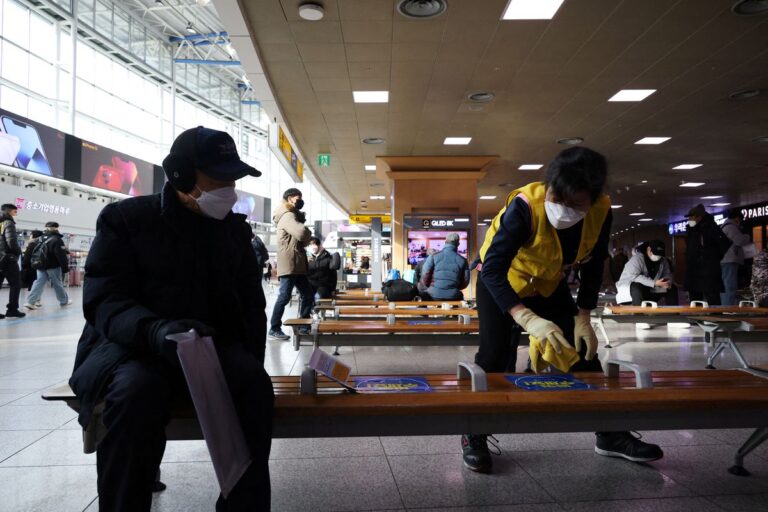
South Korea extended COVID-19 social distancing rules on Friday for an additional two weeks as Omicron variant infections soar, including a 9 p.m. curfew for restaurants and a six-person limit on private gatherings, according to Reuters.

The restrictions were due to end on Sunday but Prime Minister Kim Boo-kyum said the extension was necessary to slow the spread of Omicron amid fears the Lunar New Year holiday, which ended on Wednesday, may have fuelled infections.

Nearly 86% of the country’s 52 million population are fully vaccinated, with 53.8% having received booster shots.

To handle the surge in cases, the government has rolled out a new testing regime under which only priority groups take a polymerase chain reaction (PCR) tests while others can get a rapid antigen test at a clinic for faster initial diagnosis.

It also reduced the mandatory quarantine time for vaccinated people who test positive from 10 days to a week, and allowed more people with few or no symptoms to be treated at home.

“Slowing the pace of the Omicron’s spread, which is heading to its peak day after day, is a priority in this difficult circumstance,” he said at a televised government response meeting.

New daily cases have tripled over the past two weeks, but the number of deaths and serious infections have remained relatively low in the highly vaccinated country.

South Korea reported a record daily increase of 27,443 new COVID-19 cases, with 24 new deaths, the Korea Disease Control and Prevention Agency said on Friday.

Overall South Korea has reported 934,656 COVID-19 cases, and 6,836 deaths since the pandemic began.

MARTA would build a bus rapid transit line in southwest Atlanta

0

MARTA would build a bus rapid transit line instead of light rail along Campbellton Road in southwest Atlanta under a proposal unveiled Thursday night, according to AJC.

The line would run in the middle of a 6-mile stretch of Campbellton Road between MARTA’s Oakland City station and the Barge Road park-and-ride lot. It would feature limited stops, transit stations and other features designed to mimic a rail line.

If the MARTA board approves the plan, it would become part of a proposed network of bus rapid transit lines crisscrossing metro Atlanta. But it might not satisfy some neighborhood residents, who have pressed for a rail line along the busy corridor.

MARTA could build light rail in eight to 10 years, the analysis found. A trip along the full 6-mile route would take just 16 minutes.

Bus rapid transit uses exclusive lanes, limited stops and other features to keep traffic moving. The analysis found it would be almost as fast as light rail — 19 minutes from one end of the line to the other.

It would cost $100 million to build and $5 million annually to operate. MARTA would need to acquire 2 acres of property, and 20 driveways would be restricted.

At Thursday night’s online meeting, MARTA said the new service would begin in 2028.

The Campbellton line would be part of a larger bus rapid transit network across the region. In Atlanta, MARTA plans a similar line along Capitol Avenue, along D.L. Hollowell Parkway and North Avenue, and along Metropolitan Parkway.

MARTA plans bus rapid transit lines in Clayton County and along Ga. 400. Similar lines are under consideration in Gwinnett County and along the top end of the Perimeter.

Residents appear divided. About 45% of neighborhood residents MARTA surveyed favored bus rapid transit, while 43% preferred light rail.

The Campbellton line is part of a $2.7 billion Atlanta transit expansion made possible when city voters approved a half-penny sales tax for MARTA in 2016. Two years later, MARTA approved a project list that included 29 miles of light rail across the city, including Campbellton Road. The list also included bus rapid transit lines, station renovations and other improvements.

Since then, MARTA has been studying Campbellton Road to determine what kind of transit makes the most sense. Last summer it asked neighborhood residents to consider the merits of bus rapid transit versus light rail.

A MARTA analysis found light rail on Campbellton Road would cost $340 million to build and $13 million annually to operate. MARTA would need to acquire 12 acres of property along the route, and 144 driveways would be restricted to right turns only.

Eventually, the region’s bus rapid transit network could be more extensive than MARTA’s existing rail network.

North Korea’s Kim calls Winter Olympics ‘great victory’ for China

0

China has been North Korea’s only major ally since the two signed a treaty in 1961, and international sanctions imposed over Pyongyang’s nuclear weapons and ballistic missile programmes have made it more dependent than ever on Beijing for trade and other support.

After nearly two years of some of the world’s strictest border closures in the pandemic, North Korea resumed limited trade by train with China last month, but maintains near-total lockdowns on other border travel.

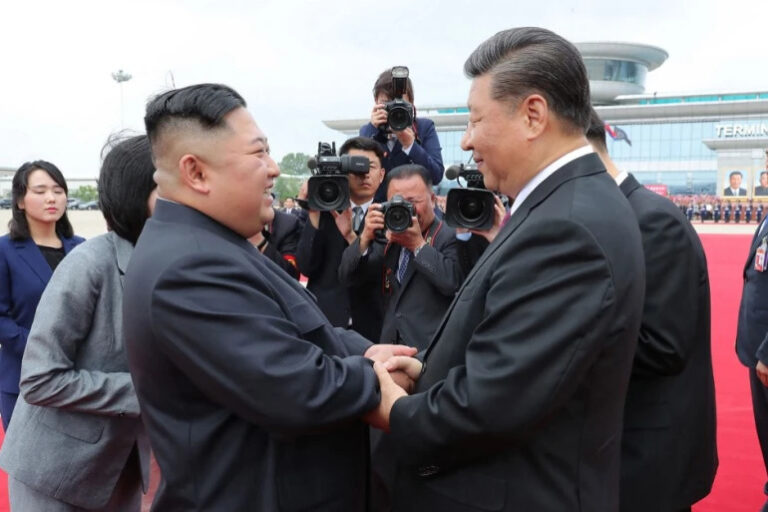
According to Aljazeera, North Korean leader Kim Jong Un has sent a message to Chinese President Xi Jinping congratulating him on the Beijing Winter Olympic Games as a “great victory” and saying he wants to improve relations between their countries, according to state news agency KCNA.

“The successful opening of the Beijing Winter Olympics despite the worldwide health crisis and unprecedented severe circumstances is another great victory won by socialist China,” Kim said in the letter, KCNA reported on Friday.

Kim said that he would “steadily develop the relations between the two parties and the two countries to a new high stage”.

He said the ties between the two countries “have been cemented into invincible strategic relations that can never be broken by anything in the struggle for defending and advancing the common cause”.

The Winter Olympics are due to open in Beijing later on Friday.

The United Nations Security Council will meet the same day to discuss a record month of North Korean missile tests, including the launch of an intermediate-range ballistic missile on Sunday, the first test of that type since 2017.

China and Russia last month delayed a US bid to impose UN sanctions on five North Koreans, diplomats said.

In a previous letter from sports authorities in January, North Korea said it would not be attending the Games in neighbouring China, blaming COVID-19 risks and “hostile forces” from other countries, although it did not mention specific nations.

North Korean athletes are not eligible to compete under their national flag after the country was suspended from the International Olympic Committee (IOC) until the end of 2022 for failing to send a team to the Tokyo Summer Olympics last year, citing COVID-19 concerns.

The earlier letter also criticised unspecified moves by the United States, which in December announced that its government officials would boycott the 2022 Winter Olympics because of China’s human rights record while leaving US athletes free to travel to Beijing to compete.

FBI investigating bomb threats as hate crimes

0

The FBI said Wednesday afternoon that its joint terrorism task forces are leading the investigation of recent bomb threats to about two dozen historically Black colleges and universities — including three in Georgia — which it described as hate crimes, according to AJC.

“This investigation is of the highest priority for the Bureau and involves more than 20 FBI field offices across the country,” the FBI said in a statement on its website.

“These threats are being investigated as racially or ethnically motivated violent extremism and hate crimes,” the statement said. “We are working closely with our local, state, and federal law enforcement partners; coordinating with the targeted institutions; and meeting with academia and faith leaders to share information.”

The first round of bomb threats to the schools occurred early last month. Spelman received one of the threats. There are about 100 accredited HBCUs nationwide, including nine in Georgia.

Federal authorities have been under increasing pressure from elected officials, HBCU alumni, students and advocates to discuss any work they’re doing to investigate the threats. Several news outlets reported Wednesday that the FBI is looking at five or six juveniles as persons of interest, citing unnamed sources.

The FBI added its investigation includes houses of worship. The FBI said in its statement that it is unable to provide more details at this time.

Albany State University received a bomb threat Monday. Fort Valley State University and Spelman College received threats Tuesday. No devices were found, authorities said.

S. Korea: March 9 vote has been dubbed the “unlikeable election”

0

Going by opinion polls, the two leading candidates for South Korea’s presidency have a big problem – their disapproval ratings are so high that the March 9 vote has been dubbed the “unlikeable election”, according to Reuters.

Started by pundits and popularised by the media, the name has stuck, and even the candidates shamefacedly acknowledge the ugly image they’ve helped create.

Voters wanting to hear what they will do about runaway property prices and the widening income inequality in Asia’s fourth largest economy have been disappointed by election campaigns that have stooped to vicious personal attacks.

All the mudslinging has left many voters holding their noses while making their pick.

“I can’t help but keep thinking who’s the lesser evil, which makes me sad,” said Kim, a 38-year-old office worker who only gave her surname, and identified herself as a floating voter.

Until recently, surveys conducted for various newspapers and broadcasters showed both Lee and Yoon drawing disapproval ratings of around 60%, but now they are down to 50% or less.

The support numbers are unconvincing, with polls showing conflicting results.

A survey released on Thursday by Hangil Research showed 40.4% of respondents favoured Lee and 38.5% picked Yoon, while Opinion Research Justice put Yoon 5.4% ahead with 43.5%.

Public disillusion with the country’s political class festered during the five-year term of the outgoing president, Moon Jae-in.

Presidents are only allowed one term in South Korea. And having vowed to clean up politics after his predecessor was impeached and jailed for graft, Moon’s own presidency became mired in policy failures and corruption scandals, fuelling voters’ cynicism over the perceived hypocrisy.

The chief beneficiary from the backlash against mainstream politicians has been Ahn Cheol-soo, a renowned software mogul and doctor who is running as a minor opposition challenger after losing to Moon in the 2017 election.

Ahn’s ratings hovered between 7-8% in the latest polls after peaking at about 15%, but his showing has added to uncertainty over the ballot’s outcome.

Polls show Yoon and Ahn would stand a better chance of winning if they united under one ticket, but both say that is not under consideration for now, even if some of their campaign staff think it could be the way to go.

“I know people are worried about intensifying back-to-back negative campaigns,” Lee Jae-myung, the ruling Democratic Party candidate, said during a news conference last week in which he pledged to focus more on policy issues.

“I am ashamed every time I hear this is the most unlikeable election. I sincerely apologise.”

Lee and Yoon Suk-yeol, his rival from the conservative People Power Party, will participate in the first live television debate between the main contenders on Thursday evening.

A former governor of Gyeonggi province, Lee gained prominence through his aggressive response to the COVID-19 pandemic and his advocacy of universal basic income, while Yoon is a former prosecutor-general and political novice.

Both parties’ smear tactics have targeted not just the candidates, but their families too.

Yoon was forced to deny accusations levelled by Democrats that a shaman who is close to his wife was deeply involved in the People Power Party campaign.

But, he also had to apologise for his wife’s inaccurate resume when she applied for teaching jobs years ago.

For his part, Lee has apologised over his son’s illegal gambling, and he was forced back into damage limitation mode by media reports on Thursday.

Lee said he would undergo an investigation if necessary after allegations that a provincial government employee illegally served as a personal assistant to his wife and that she misappropriated government funds through a corporate credit card.

Lee apologised for causing public concern, but did not say whether the reports were true.