Home Blog Page 84

Hong Kong now vaccinating as young as 3 years old kids

0

Hong Kong will begin vaccinating children as young as 3 years old to combat a record surge of infections, authorities said Monday, according to USATODAY.

Hong Kong confirmed a record 2,071 new coronavirus cases Monday, the most in a single day since the pandemic began. That number could more than double Tuesday as another 4,500 people tested preliminary-positive. 

The decision came days after the death of a 4-year old who tested positive there. In the U.S., the minimum age for vaccination is 5.

The city’s medical and quarantine capacity has been overloaded, forcing hospitals to reserve isolation wards for children, the elderly, and patients with serious symptoms, the Hong Kong Free Press reported. 

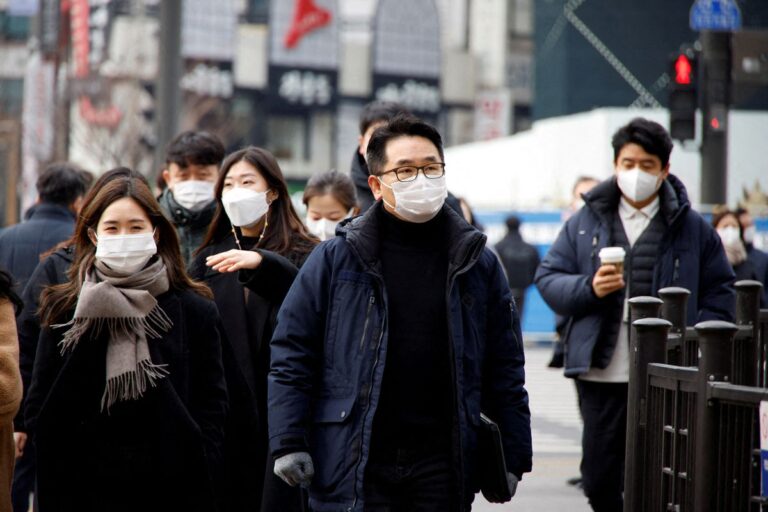
Hong Kong has adopted mainland China’s “zero tolerance” approach that requires quarantines, mask mandates, case tracing and lockdowns of buildings, neighborhoods and entire cities when a few cases are detected.

Taiwan says needs to re-open, eyes March cut to COVID quarantine

0

Taiwan aims to ease its strict COVID-19 quarantine policy from next month as it needs to gradually resume normal life and re-open to the world, the government said on Monday.

According to Reuters, since the pandemic began two years ago, Taiwan has succeeded in keeping reported cases of COVID-19 below 20,000, having enforced a blanket two-week quarantine for everyone arriving on the island even as large parts of the rest of the world have ditched theirs.

About 30% of Taiwan’s 23.5 million people have now had a booster dose, a figure that is gradually rising, and the government has said it wants to get that to 50% before easing entry requirements.

Taiwan has never gone into full lockdown during the pandemic and has never closed its borders, though arrivals have generally been limited to citizens and foreign residence permit holders.

Speaking at a meeting with senior health officials, Premier Su Tseng-chang said that even though there could be further domestic infections the government was “quite confident” in its anti-pandemic measures.

“The government must also take into account livelihoods and economic development, gradually return to normal life, and step out to the world,” his office cited him as saying.

On the precondition that there are sufficient medical supplies and preparations and that the vaccination rate continues to rise, Su said he had asked the Central Epidemic Command Centre to “consider whether reasonable and appropriate adjustments” should be made to the quarantine policy and entry of businesspeople.

Health Minister Chen Shih-chung, who leads the command centre in charge of fighting the pandemic, told reporters they were aiming to cut quarantine to 10 days before the middle of March, confident they can detect any infections within that period with testing.

“Basically, we can relax epidemic prevention” measures, he said.

But asked whether quarantine could be done away with completely before the summer holidays, Chen said: “The possibility is not high”.

Chen said business travellers will be able to come again, and will have to do the same 10-day quarantine, but he could not offer a timeframe on allowing tourists back in.

Taiwan is currently dealing with a handful of new domestic COVID-19 cases a day, all as a result of the more infectious Omicron variant. Officials have said they are confident they can contain those outbreaks.

S.Korea to start giving fourth doses of COVID vaccine

0

South Korea will begin giving out fourth doses of COVID-19 vaccines this month and supply millions of additional home test kits to ease shortages amid a surge in Omicron infections, authorities confirmed on Monday.

According to Reuters, at least 44.22 million people, or 86.2 percent of the population, are considered fully vaccinated. Sunday’s 54,619 new cases took the tally of infections to 1,405,246, the Korea Disease Control and Prevention Agency (KDCA).

The country’s death toll rose by 21 to 7,102.

Recipients of the fourth shot will include some 500,000 people aged 18 or older who live or work at care centres, and 1.3 million others who immunocompromised, KDCA director Jeong Eun-kyeong told a separate briefing.

People outside these groups would not yet be advised to receive additional vaccination.

As the Omicron variant of coronavirus became dominant last month, the government began to restrict free polymerase chain reaction (PCR) tests to those in high risk groups.

The surge has pushed daily cases to records, but widespread vaccination, with first booster shots received by more than 57 percent of the population of 52 million, has helped limit deaths and serious infections.

High-risk groups will be the first to get the fourth dose, in effect a second booster shot, Health Minister Kwon Deok-cheol told a COVID-19 response meeting.

“We’re planning to provide fourth shots to those who live in nursing homes and care facilities and others with declined immunisation, in light of a recent increase of infections among people aged 60 or older,” he said.

Others must first take rapid antigen tests using kits sold at stores, or offered free by public health centres.

On Sunday, authorities imposed a three-week rationing period on test kits for home use, by limiting online sales as well as pharmacy purchases to five to a person at a single location.

However, the total number available to buy will not be curbed, authorities said, as they believe stocks to be adequate in the absence of major hoarding.

Kwon said about 30 million additional self-test kits will be supplied nationwide this month to dispel concerns about shortages. The government has said it plans to provide 190 million self-test kits for March, more than twice the supply in February.

The National Assembly passed a bill on Monday to allow COVID-19 patients to cast their ballot in the March 9 presidential election.

The amendment to the Public Official Election Act came as officials explore how to prevent potential COVID-related disruptions while ensuring everyone’s right to vote.

The existing rules effectively ban people diagnosed with a contagious disease after the March 4-5 early voting period due to mandatory isolation policy.

U.S. advised Americans to avoid travel to South Korea, Belarus over COVID

0

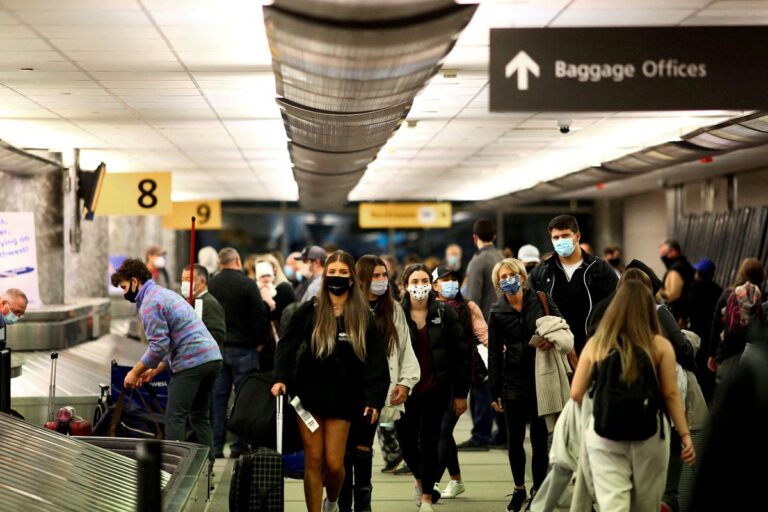
The U.S. Centers for Disease Control and Prevention (CDC) on Monday advised against travel to six countries and territories including South Korea, Azerbaijan and Belarus, according to Reuters.

The CDC also added Comoros, French Polynesia, and Saint Pierre and Miquelon to its risk list of “Level Four: Very High.”

Rents rise sharply across the U.S.

0

Last year, Laura Kraft landed a job in Orlando, Florida. She’d just gotten her PhD in entomology, meaning she studies bugs, and she’d be working on a big nature exhibit at a theme park. All that sounded great until she started looking for an apartment.

Government data show that the rent Americans are actually paying — not just the change in price for new listings — rose 3.8% over the past year. But, while less dramatic, that consumer price index also shows rents have been rising more than usual the past few months, according to NPR.

Allison Best-VanLiew is feeling the bite of those rising rents up in Buffalo, New York. “It’s been a little wild, to be honest,” she says.

By no stretch is Buffalo a hot housing market historically. Best-VanLiew and her husband have been renting on a busy street for a few years and they pay $900 a month.

“We do not have a dishwasher, which is normally fine.” But she says now they are thinking of having a baby. “The bottles alone, like you kind of need that.”

And as they’ve been looking around for a better place, she says everything seems more expensive than it was a few years ago. “Between $1,200 and $1,400 for a place relatively close to this size with just a dishwasher,” she says.

Like a lot of young couples, she and her husband would rather buy a house. But with home prices hitting new records she says they’re having trouble saving enough for a down payment. And with so many would-be first time homebuyers priced out of the market, that boosts demand for rentals and helps push rents even higher.

“I started looking at rent and was like, not sure if I was going to take the job,” she says. “The rent was so high in Orlando… it really blew me away.”

At first she looked for a place of her own. But anything in her price range had a waiting list at least 6 months long. So she found a Facebook group for theme park employees looking for roommates in order to afford a place to live.

“My roommate and I together are paying $2,200,” Kraft says. “A lot of people that I know have like three, four, sometimes five roommates in a house.”

The cost of renting a place in Orlando rose nearly 30% just last year alone, according to a survey by the real estate firm Redfin. Cities in Florida, New York, and New Jersey are seeing particularly steep jumps in rent. As is Austin, Texas, with the biggest one year gain of 40%.

The survey, it should be noted, tracks new listings for apartments.

“That doesn’t literally mean that every person in Austin is going to see their rent go up 40 percent,” says Redfin’s Chief Economist Daryl Fairweather. “But it means that if you are on the market right now looking for an apartment or home to rent, the prices will be 40 percent higher than they were the year before.”

Some of the forces driving rents higher differ from city to city. Fairweather says a lot of technology workers have been moving to Austin and the migration of more people there is pushing up both rents and home prices. In New York City, rents are rebounding after falling earlier in the pandemic.

But she says rents are rising more than usual just about everywhere.

“The root cause of the problem is a lack of supply,” Fairweather says. “We have not built enough homes to meet demand.”

There a bunch of reasons for that. One of the biggest, she says, is restrictive zoning. Especially in higher-cost parts of the country, zoning rules make it hard to build cheaper smaller houses or apartments that are tightly packed together.

Meanwhile, Fairweather says more millennials in their late 20s and early 30s feel like they’re done with roommates or their parents’ basement.

“Millennials are the biggest generation,” she says. “We’re forming households, and we want a place of our own and that is causing an increase in demand.”

Redfin’s survey looks at the 50 largest U.S. cities. On average, it found the rents landlords were seeking for available homes and apartments rose 3% in 2020, which is about normal for recent years. But then last year, they rose 14%.

Taliban kidnap nine Westerners including former BBC journalist

0

Two journalists working for the United Nations have been detained in Kabul, the global agency said in a tweet Friday — with reports of at least eight other Westerners also detained in the war-torn nation.

According to NYPOST, among them is former BBC reporter Andrew North, Afghanistan’s former vice president Amrullah Saleh said.

“Two journalists with UNHCR and Afghan nationals working with them have been detained in Kabul. We are doing our utmost to resolve the situation, in coordination with others,” the UNHCR said in a tweet.

“We will make no further comment given the nature of the situation.”

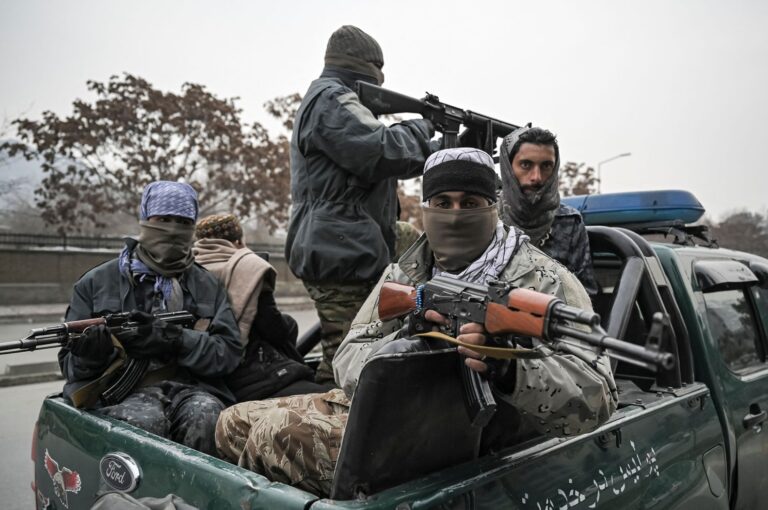
Saleh also claimed that eight other Westerners were “kidnapped” by the Taliban, which seized power last year amid the chaotic withdrawal of US troops.

“Due to no media, no reporting by citizens & a suffocating atmosphere corruption, crime & atrocities aren’t well exposed,” he tweeted Friday.

“As an example 9 citizens of western countries have been kidnapped amongst them Andrew North of BBC & Peter Juvenal owner of Gandomak Restaurant.”

A member of a Taliban intelligence unit in Kabul told the Washington Post that “several foreign nationals” were arrested in Kabul on charges of working for Western intelligence agencies.

The BBC’s foreign editor, Paul Danahar, said in a tweet that North “is working for the UN in Kabul.”

“He is a former colleague and a respected journalist,” he added.

“All inquiries about his situation, which his friends and colleagues are obviously concerned about, should be directed to the UN.”

Former BBC reporter Andrew North is among the detainees.
Former BBC reporter Andrew North is among the detainees.Twittter / @NorthAndrew

S. Korea police probing assault of Chinese man amid Olympic skating furore

0

South Korean police are investigating an alleged assault on a Chinese student in the southern port city of Busan, local media reported on Friday, amid growing anti-China sentiment over an Olympics skating race controversy, according to Reuters.

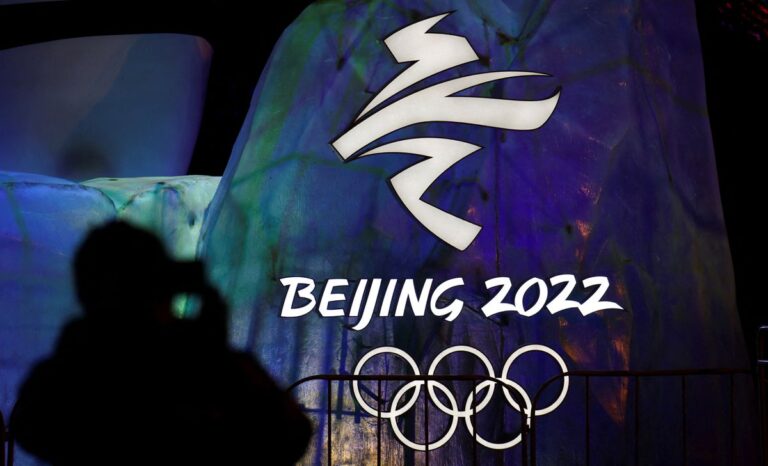
The disqualification of two South Korean short track speed skaters at the Beijing Winter Games has provoked anger at home, with many comments on social media and from some politicians accusing the referees of penalising them to boost the host nation’s chances of winning medals.

The Busan incident occurred on Wednesday night when an unidentified Chinese student was attacked by two Korean men, according to the Yonhap news agency.

The Korean Sport and Olympic Committee said it would appeal. The International Skating Union, the sport’s governing body, said in a statement posted on its website that the chief referee stood by the decision after a video review, and that protests were not allowed under competition rules.

The Olympics controversy has spilled over into a diplomatic spat, with Seoul’s foreign ministry urging the Chinese embassy to exert “prudence” about releasing public messages.

The embassy had issued a rare statement on Tuesday expressing concerns over growing anti-China sentiment and accusing local media and politicians of stirring up public fury.

A video posted by China’s state-run Beijing Youth Daily on its Chinese social media WeChat account showed a man kicking another man sitting in a parking lot. The video was also widely circulated on Weibo, China’s equivalent of Twitter.

Reuters was unable to independently verify the video.

Police in Busan were unreachable for comment, but Yonhap said an initial investigation did not find any link to the Olympics controversy, quoting a police official as saying the assailants did not appear to have attacked the man because he was Chinese.

China’s foreign ministry spokesman Zhao Lijian, when asked about the reports, said its consulate in Busan had reached out to the student to provide assistance while coordinating with local police.

“We will spare no efforts to safeguard the legitimate rights and interests and personal safety of Chinese citizens overseas,” he told a briefing.

South Koreans were especially irked by the disqualification of world number 2 Hwang Dae-heon, who crossed the line first in the men’s 1,000 metres semi-final on Monday but was penalised for a “late illegal pass causing contact”. Chinese skaters advanced to the final and eventually secured gold and silver medals.

Hong Kong extends ban on incoming flights from eight countries, adds Nepal

0

Hong Kong on Friday extended a ban on incoming flights from eight countries, including the United States and Britain, and imposed one on Nepal until March 4, with the government citing concerns over a growing COVID-19 outbreak, according to Reuters.

Flights to Hong Kong are down 90% and hardly any are allowed to transit as the financial hub isolates itself from the world in the hope it can contain a coronavirus outbreak, even though new infections are overwhelmingly local transmissions.

The other countries are Australia, Canada, France, India, Pakistan and Philippines.

Beijing’s ambitious Olympic COVID bubble

0

For a country determined to keep out the virus that first emerged within its borders, bringing in more than 15,000 people from all corners of the world was a serious gamble. It appears to be working.

One week into the 17-day event, China seems to be meeting its formidable COVID-19 Olympic challenge with a so-called “bubble” that allows Beijing Games participants to skip quarantine but tightly restricts their movement so they don’t come in contact with the general population. There have been 490 confirmed cases — many of them positive tests on symptomless visitors — and no reports of any leaking out to date, according to AP.

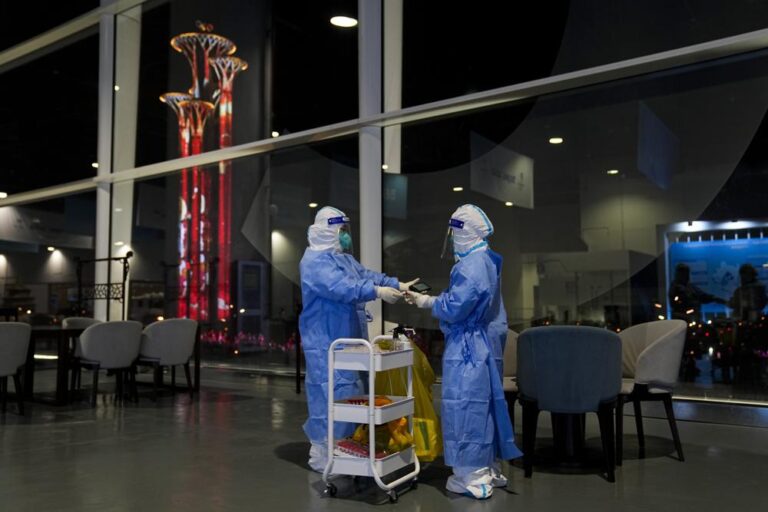
Inside the bubble, Olympic organizers are employing a version of the government’s zero-tolerance approach. Everyone is tested daily for the virus, and anyone who tests positive is rapidly isolated to prevent any spread. Athletes and others are required to wear N95 face masks when not competing.

China’s relative success may make exiting its zero tolerance strategy more difficult. Most of the nation’s 1.4 billion people have not been exposed to the virus, so they haven’t developed antibodies that way. And while the vaccination rate is high, the emergence of new variants such as omicron may make the vaccines in use less effective.

For at least the near future, that means anyone caught in an outbreak could face lockdowns and repeated testing — and those coming to China will be isolated in a hotel room for two weeks or more. The repercussions from the 2-year-old pandemic keep marching on.

“Arguably the riskiest thing they’ve done so far is to host the Games, and if they can get through that, then they can continue to use this strategy to keep localized outbreaks under control for a long time,” said Karen Grépin, a public health expert at the University of Hong Kong.

China has tight restrictions on who can enter China and requires those who do to quarantine at designated hotels for two to three weeks. It responds to even the smallest outbreaks with lockdowns of buildings and neighborhoods, followed by mass testing of all residents to root out and isolate positive cases.

The strategy is not without costs. In the run-up to the Olympics, China expanded its lockdowns to entire cities of more than 10 million people to stamp out outbreaks, forcing factories and nonessential shops to close and restricting people to their residential compounds.

A southwestern area of about 4 million people bordering Vietnam has been locked down this week because of an outbreak that has infected about 180 people. In Beijing, two residential neighborhoods remain locked down because of a handful of cases two weeks ago.

The closed loop, as the Olympics bubble is officially called, has created two separate worlds. Athletes and other participants aren’t able to visit Beijing’s tourist sites or restaurants and bars in their downtime. Their only glimpses of the city are from the windows of buses that shuttle them from lodging to venues and back.

Both their hotels and the competition venues are fenced off with temporary walls; guards are posted to keep people from going out or coming in.

Outside, life goes on as normal for most in the nation’s capital. Select groups — school children, corporate sponsors, winter sports groups, foreign diplomats and journalists among others — are being invited to fill the stands partially, but most follow the Games on their smartphones or TV.

“We don’t feel the Winter Olympics are far from our life,” said Yi Jianhua, a retiree from Hunan province visiting his daughter in Beijing. “We can watch it on TV and mobile phone. Although we cannot be there in the venue, we still pay close attention to it, because this is a grand event. Yes, there are regrets but it’s acceptable.”

China has had scattered outbreaks in the past month, but none related to the Olympics. On Friday, health authorities reported 22 new cases in an outbreak in Liaoning province, east of Beijing.

None of the 450 confirmed infections inside the loop have spread to others in the bubble, Huang Chun, a pandemic control official, said earlier this week. And there have been no reports of anything medically serious.

The possibility of a large outbreak inside the bubble, potentially sidelining athletes from competitions, has been a greater fear than any leakage into the rest of China.

“I feel all the protective measures are well in place,” said Fang Yanmin, a tourist taking photos with her friend in front of a statue of Bing Dwen Dwen, the Games’ panda mascot. “There is no need to panic.”

Guo Haifeng, waiting for friends at a nearby subway station, applauded the closed loop, saying it prevents the athletes and public from interrupting each other’s lives. Even if he were offered tickets, he said he wouldn’t go.

“Because of the pandemic, we should try to avoid going to the scene,” he said. “We should restrain ourselves and not affect others.”

The final test will come after the Games, when thousands of Olympic staff and volunteers from China exit the bubble. They are expected to be required to quarantine for a week or more before leaving to try to forestall the effects of any latent infections they might have.

China’s zero-tolerance policy has kept the virus at bay. Health authorities have reported 4,636 deaths since the start of the pandemic, a tiny fraction of those in other major nations. Most date from the initial outbreak in early 2020 that overwhelmed the health system in the city of Wuhan.

“For us, we achieved the goal of zero cases so we can travel with ease,” said Yi, the retiree.

Grépin believes the health and economic benefits of China’s approach have outweighed the costs, borne by those caught up in lockdowns and industries such as tourism, which has been damaged by on-and-off pandemic-related travel restrictions. Economic growth slowed to 4% at the end of last year but exports remain strong.

“They’ve had incredibly low mortality by any standard, and most of the country has lived a relatively normal life for the last two years,” she said.

U.S. buys 600K doses of new COVID antibody awaiting clearance

0

Addressing diminished treatment options in the omicron wave, the Biden administration has purchased enough of a yet-to-be approved antibody drug to treat 600,000 COVID-19 patients, officials said Thursday.

The new monoclonal antibody from pharmaceutical giant Eli Lilly will be shipped out to states free of charge if the Food and Drug Administration approves the company’s request for emergency use authorization, said Health and Human Services Secretary Xavier Becerra. “We are going to try to be there to meet the demand,” he added.

According to AP, the government’s move comes after the two leading monoclonal antibody treatments in the U.S. turned out to be ineffective against the omicron variant, which now accounts for nearly all COVID-19 cases in the country. Data indicate that the Lilly drug works against omicron, including the new BA.2 mutation. Lilly said the contract for its new drug — bebtelovimab — is worth at least $720 million. That name is pronounced “beb-teh-LO-vi-mab.”

Laboratory-made monoclonal antibodies stand in for the human body’s immune system by acting to block an invading virus. Delivered intravenously or by injection, the medicines are meant to be administered early in an infection to forestall severe disease and death. Former President Donald Trump received an antibody combination after he tested positive for the coronavirus in 2020.

But late last month the FDA revoked its emergency use authorization for Regeneron’s antibody drug, along with another from Lilly. The two medications had been the the backbone of antibody treatment, and doctors were hard pressed to come up with fallbacks when they didn’t work against omicron. Alternate therapies for early COVID-19 infections, including two new antiviral pills from Pfizer and Merck, have been in short supply. An antibody drug from GlaxoSmithKline that remained effective against omicron is also scarce.

The issue has had political ramifications because some Republican governors heavily promoted the original antibody treatments. Florida Gov. Ron DeSantis claimed the two antibody drugs that were faltering against omicron could still help some patients.

“We want to make sure that the treatments we provide work,” said Becerra. “If someone wants to suggest to Americans that they go elsewhere, that’s not where we’re going.”

Scientists say COVID-19 treatments like monoclonal antibodies are not a substitute for vaccination. They are usually reserved for people who are the most vulnerable, including seniors, transplant recipients and those with conditions like heart disease and diabetes.

Lilly is seeking FDA authorization for its antibody drug to be used to treat mild to moderate COVID-19 in high-risk patients.

Under the government’s contract with Lilly, HHS would get about 300,000 treatment courses of the new antibody drug in February and another 300,000 in March. The medicines would be ready to ship following FDA authorization.

The Lilly contract was awarded through collaboration between an HHS unit called the Office of the Assistant Secretary for Preparedness and Response and the Pentagon’s Joint Program Executive Office for Chemical, Biological, Radiological and Nuclear Defense.

The drugmaker said in a press release the government has the option to buy another 500,000 doses no later than July 31. A spokeswoman said the company can’t speculate on when FDA authorization might come.

“We’re working with them closely, and hope to bring bebtelovimab to people who need it as soon as possible,” said Allison Howell.

Lilly said test data indicate that the antibody drug “retains full neutralizing activity” against omicron and “retains neutralization” against all known variants of omicron, including BA.2.

Though COVID-19 cases and new hospitalizations are falling as omicron recedes, more than 86,000 patients remain in the hospital. Deaths have continued to rise, averaging about 2,400 a day.

HHS said early data indicates that the new drug from Lilly works both against omicron and its BA.2 mutation, which accounts for a still small but quickly growing share of U.S. cases. Should BA.2 keep rising, the new antibody drug could offer a viable treatment option and a chance to keep pace.

“It’s a constant staying ahead of this virus,” said Becerra.