Home Blog Page 81

Gold medal-winning speedskater bashes decision to host 2022 Winter Olympics in China

0

Nils van der Poel of Sweden went to Beijing and absolutely dominated at the National Speed Skating Oval, winning two speedskating gold medals and setting a world record.

However, before returning to his home country, the double gold medalist offered some scathing parting words about the decision to host the 2022 Winter Olympics in China, calling it “terrible” and “extremely irresponsible.”, according to USATODAY.

“I really think it’s terrible, but I think I shouldn’t say too much about it, because we still have a squad in China,” van der Poel told SportBladet in an interview translated from Swedish to English

“The Olympics is a lot, it’s a fantastic sporting event where you unite the world and nations meet. But so did Hitler before invading Poland (Berlin hosted the 1936 Summer Games), and so did Russia before invading Ukraine (Sochi hosted the 2014 Winter Games).

“I think it is extremely irresponsible to give it to a country that violates human rights as blatantly as the Chinese regime is doing.”

Van der Poel, who won gold medals in the 5,000- and 10,000-meter speedskating events, setting a world record in the latter, was very complementary of the Chinese people he came into contact with while staying at the Olympic Village.

“The Olympic Village was very nice,” van der Poel said. “The Chinese people I met were absolutely amazing. I had a very nice experience behind the scenes.”

The human rights violations that van der Poel is alluding to are allegations of extreme mistreatment of the Uyghur people by the Chinese government that the U.S. State Department has called genocide and cited as ongoing “crimes against humanity.” The Uyghurs are a predominantly Muslim ethnic group native to Xinjiang in western China. These allegations are among the reasons why the United States diplomatically boycotted the Beijing Games.

South Korea keeps crowd limits as omicron causes 25-fold spike

0

South Korea will extend restaurant dining hours but maintain a six-person limit on private social gatherings as it wrestles with a massive coronavirus wave driven by the highly infectious omicron variant.

The 109,831 new cases reported on Friday was another record and about a 25-fold increase from the levels seen in mid-January, when omicron became the country’s dominant strain. The more than 516,000 infections counted in the past seven days alone raised South Korea’s caseload to over 1.75 million, according to AP.

The Health Ministry said about 30% of intensive care units designated for COVID-19 treatment are currently occupied. The ministry said 385 virus patients were in serious or critical condition, which was 100 more than a week earlier but still lower than the levels of around 1,000 seen in late December during a delta outbreak.

While omicron more easily infects those who have been vaccinated or had COVID-19 previously, experts say vaccination and booster shots still provide strong protection from serious illness and death.

More than 86% of South Koreans have been fully vaccinated and 58% have received booster shots. Health officials started offering fourth vaccination shots at nursing homes and other long-term care settings this seek.

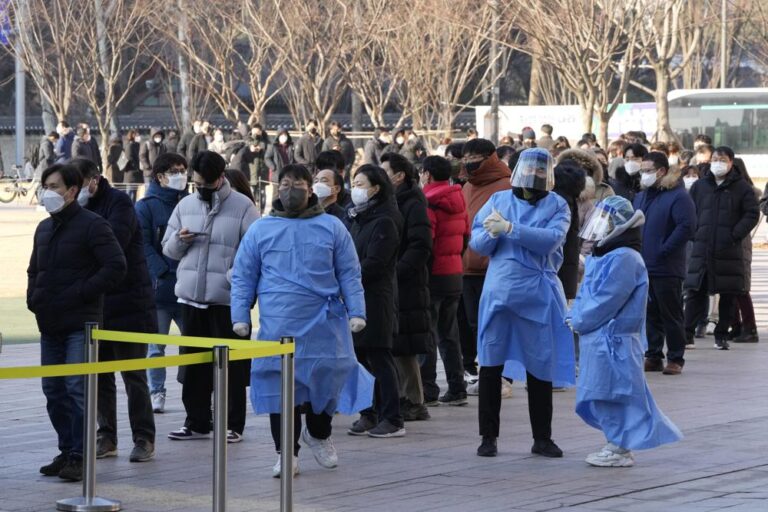
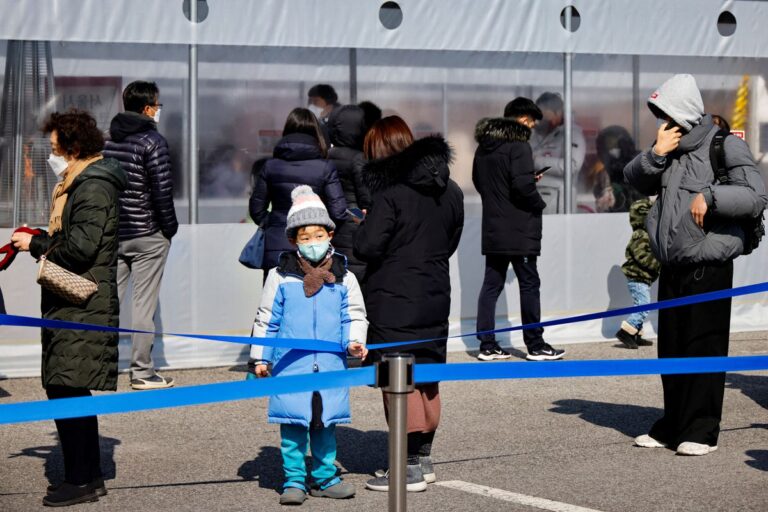
Long lines snaked around public health offices and testing stations in the densely populated capital Seoul, where health workers in hazmat suits distributed rapid antigen test kits and collected throat and nasal samples from senior citizens and other high-risk groups.

There’s also concern that campaigning for the March 9 presidential election could worsen transmissions. Thousands of supporters packed a rally in the southwestern city of Suncheon by ruling party candidate Lee Jae-myung, where they clapped, shouted and chanted his name. Lee’s conservative opponent Yoon Suk Yeol also drew huge crowds during a rally in the southeastern city of Sangju.

Omicron has so far seemed less likely to cause serious illness or death than the delta variant, which hit the country hard in December and January. But cases are growing much faster and appear to be putting the country on a verge of a possible hospital surge.

Prime Minister Kim Boo-kyum, Seoul’s No. 2 official behind President Moon Jae-in, acknowledged people’s frustration with extended virus restrictions and the shock on service sector businesses, but said officials couldn’t afford to ease social distancing significantly when hospitalizations and deaths are starting to creep up.

Officials did extend the curfew on restaurants and other businesses from 9 p.m. to 10 p.m. but private social gatherings of seven or more people will continue to be prohibited at least through March 13.

People will continue to be required to show their vaccination status through smartphone apps or documents to enter potentially crowded spaces like restaurants, coffee shops, gyms and karaoke venues.

“Experts are expecting the (omicron outbreak) to peak sometime between late February and March,” Kim said during a meeting on anti-virus strategies. “When we reach a point where we could confirm the (outbreak) has peaked and was in decline, we will start meaningfully easing social distancing measures like other nations so that people could go back to their precious normal lives.”

Atlanta home prices up 23.5% from a year ago

0

Hedge funds and corporations have been buying up houses in metro Atlanta, adding fuel to an already hot market in which buyers are frequently bidding against each other as they try to find their next home among the shrinking options.

“There is a complete imbalance of supply and demand,” said Kristen Jones, owner of Re/Max Around Atlanta Realty. “I don’t think we will continue to see the double-digit appreciation that we have seen over the past two years, but prices will continue to rise.”

After the collapse of the housing bubble in 2007, the market was flooded with homes. Many builders went out of business, and the remaining companies became cautious. Even after the glut was absorbed, construction was slowed by zoning restrictions.

The lag in building has only grown worse during the pandemic as supply chain problems make many materials more expensive or hard to acquire. Meanwhile, construction has been hampered by labor shortages.

According to AJC, the median price of a home sold in January was $350,000 – up 23.5% from a year ago, according to a report released Thursday by Re/Max.

In the 28-county area covered by Re/Max, 5,463 homes were sold in January. That’s down 15.4% from last year, mostly because fewer houses are for sale, real estate agents said.

Georgia Multiple Listing Service, which covers a smaller, 12-county area of metro Atlanta, found a 22.8% increase in prices from a year earlier. The number of sales decreased by 17%.

While prices in the region have risen steadily, houses are still a bargain compared to many cities in the North and West. That has attracted investors, especially hedge funds and real estate investment trusts, which are looking to buy homes in order to lease them.

About one-third of the homes sold in the region are purchased by investors, both individuals and groups of people who pool together money to make big-ticket investments, according to a study by Redfin, a national real estate firm.

Among metro areas, Atlanta now ranks No. 1 in the percentage of houses sold to investors.

The influx of big money drives up prices since investors are less constrained by cost and generally offer cash. “The level of institution investment in Atlanta does drive price points, especially in the lower brackets,” said Travis Reed, president of HOME Real Estate, an Atlanta-based real estate agency. “The long-term effect is that, first and foremost, it will be harder to afford residential real estate.”

And, because most of those purchases are held either to rent or as an asset to be sold years in the future, it means fewer houses on the market.

In a market balanced between buyers and sellers, the number of homes listed for sale should roughly equal the number sold over six months, experts say. But the 8,733 homes listed for sale last month represented just 1.2 months of sales, according to Re/Max.

The tilt toward sellers has been going on for years. The pandemic also spurred many people toward home buying with an eye toward larger spaces for working at home.

Yet supply has not come close to keeping up.

In desirable areas, the bidding can be a frenzy: 155 offers were made for one Forsyth County home, which sold for about $600,000, according to Shea Zimmerman, managing broker at Harry Norman Realtors.

The highest price doesn’t always win. Sellers generally prefer a cash offer to one in which they must wait for a mortgage approval. Sellers may not want the deal to be contingent on repairs.

Indian court sentences 38 to death for fatal 2008 bombings

0

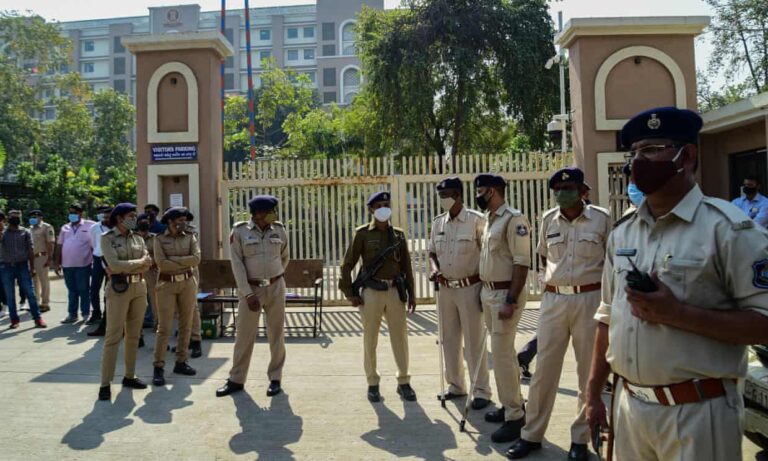
A court in India on Friday sentenced to death 38 people for a series of bomb blasts in 2008 that left more than 50 dead in Gujarat state, which has a history of violent clashes between Hindus and Muslims.

It was the first time that so many accused have received death sentences in a single case in India. The sentences must be confirmed by a higher court.

The attacks in Ahmedabad 13 years ago underscored communal tensions that are still reverberating in India.

The attacks occurred in two waves with explosive devices hidden in lunchboxes and bicycles. The first blast took place near crowded busy shopping centers in Ahmedabad and the second about 20 minutes later in and around hospitals where casualties were being taken.

On Friday, Judge A. R. Patel also sentenced 11 people to life imprisonment in the case in which more than a dozen bombs went off in several parts of Ahmedabad on July 26, 2008.

All the 49 convicts are Muslims, Brahmbhatt said, adding that only one Hindu was arrested and acquitted by the court.

The judge described the case as the “rarest of rare,” Arvind Patel, another prosecutor, told reporters.

A group of people lit firecrackers and distributed sweets, hailing the verdict at one of the blast sites in Ahmedabad in western India.

Patel last week convicted the accused of charges of murder, conspiracy to wage war against the state and illegal possession of arms. He acquitted 28 others for lack of evidence. The trial concluded in September.

India’s overburdened courts are notorious for delays in trials with nearly 40 million cases pending across the country.

A militant Islamic group called Harkat-ul-Jihad-al-Islami claimed responsibility for the bombings. It was considered to be Pakistani-based but apparently is no longer active.

The Indian Mujahideen, a radicalized faction of the banned Students Islamic Movement of India, also was involved, said Sudhir Brahmbhatt, a government prosecutor in the case, citing police documents.

The group planned the explosions as revenge for the 2002 Hindu-Muslim violence in Gujarat in which more than 1,000 people, most of them Muslims, were killed, the Press Trust of India news agency said. It was some of the worst religious violence India has seen since its independence from Britain in 1947.

The unrest was triggered by a fire on a train packed with Hindu pilgrims that killed 60 passengers. The cause was never proven, but Hindu extremists blamed the deaths on Muslims and reacted by rampaging through Muslim areas.

India’s Prime Minister Narendra Modi was the chief minister — the top elected official — of Gujarat at the time. There were long-standing allegations that he didn’t do enough to stop the devastating religious riots. He has denied the accusations.

As COVID runs rampant, Hong Kong working-class district reels

0

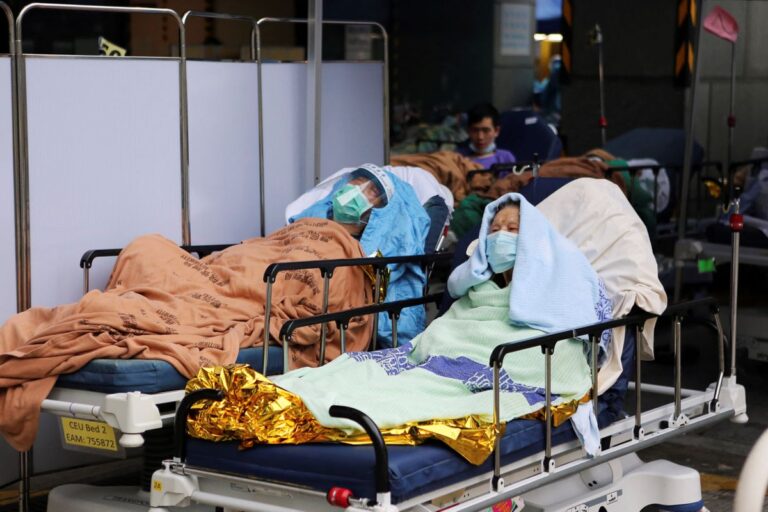
Lam Foon, 98, sits propped up and swaddled in soggy woollen blankets in a hospital bed just outside the entrance to Hong Kong’s Caritas Medical Centre, waiting for tests to confirm her preliminary positive result for COVID-19.

“I don’t feel so good,” she told Reuters through a surgical mask, next to a similarly wrapped patient wearing a mask and face shield.

Lam was one of dozens of patients lying in the parking lot of Caritas on Thursday, after there was no more room inside the hospital that serves 400,000 people in the working-class district of Cheung Sha Wan on the Kowloon peninsula. Temperatures dipped to 15 degrees Celsius (59 Fahrenheit) amid some rain.

Medical staff were unable to say how long Lam would have to wait. People who test preliminarily positive for COVID have to take further tests before treatment.

This and similar scenes across the global financial hub are signs of a public healthcare system under severe strain as COVID-19 cases surge, with more than 95% of all hospital beds full, according to Reuters.

“You can see I’m wearing two masks. I need to protect myself because the government won’t protect me,” said Lo Kai-wai, a 59-year-old logistics worker queuing at a mobile testing centre that had already reached its daily quota of 3,000 people.

“I don’t want to see her (Lam) get a second term.”

Some business owners impacted by government-imposed restrictions also question the sustainability of current policies.

“The government needs to find a better balance to both control the virus, but also to allow people to better get on with their lives,” said Timothy Poon, 23, the manager of a cafe close to the hospital, whose business has dropped by up to 60% amid the outbreak.

“The zero-COVID policy is a mission impossible.”

Others, however, are more upbeat.

“If everyone is willing to get vaccinated, the situation will improve,” said Lung Mei-chu, 78, at a testing centre in another district.

Once largely insulated from the coronavirus pandemic, Hong Kong is facing a citywide outbreak, with businesses buckling and some losing patience with the government’s “zero COVID” policies.

In the cluster of working-class districts in nearby Sham Shui Po, some residential blocks and public housing estates have been sealed off, crowds in malls and street markets have thinned, and once teeming diners known as dai pai dongs and stalls selling knick-knacks are quieter after dark.

Trevor Chung, 29, a medic at Caritas, blamed the government in part for inadequate planning, a shortage of beds and other medical equipment, and chronic manpower shortages.

“The government underestimated the situation,” said Chung, clad in a full-face visor and blue hazmat suit. “I expect things to get a lot worse … There are many elderly people in this district, and many aren’t vaccinated.”

Hong Kong authorities on Thursday apologised for the dire situation at hospitals serving the city of 7.4 million.

The city’s zero-COVID policy has meant even asymptomatic people and those with mild conditions have been sent to hospitals or quarantine centres, although the government is now adjusting its strategy as the healthcare system is overwhelmed.

The outbreak has piled further pressure on Hong Kong leader Carrie Lam, whose five-year term is due to end in June.

While Lam says surrendering to the virus “is not an option” and Chinese President Xi Jinping has said the “overriding mission” for Hong Kong is to rein in the virus, some are skeptical.

South Korea’s Airlines Set To Charge Passengers More For Fuel

0

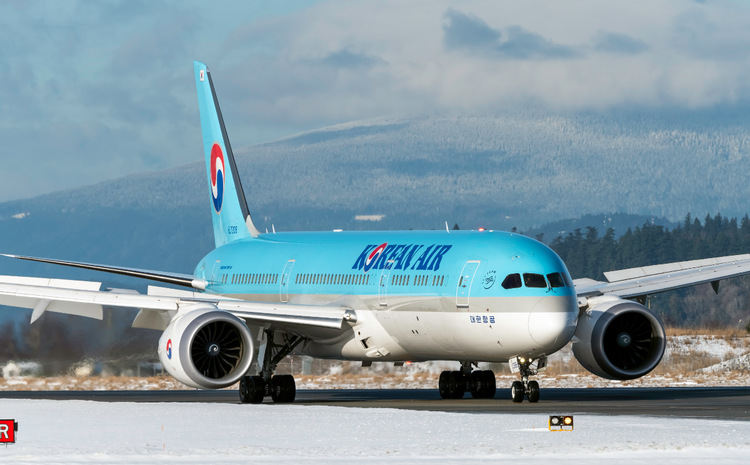
Rising jet fuel prices are again seeing South Korea’s airlines increase their fuel surcharges in March. Fuel surcharges on domestic routes will increase from 5,500 won (US$4.60) to 8,800 won ($7.36), while surcharges on international flights will depend on the length of the route. International fuel surcharges will start at 18,000 won ($15.06) and go up to 138,200 won ($115.60) for longer flights, according to simpleflying.com

After axing fuel surcharges in 2020, South Korea’s airlines reintroduced them last April. However, jet fuel prices have increased since then. In turn, fuel surcharges have also steadily trended upwards. For every US$1.00 increase in the oil price, flag carrier Korean Air racks up a further $30 million in fuel expenses. The price of jet fuel is closely tied to the oil price and normally accounts for between 20% – 30% of Korean Air’s annual operating costs. The cost of fuel for South Korea’s airlines depends on the jet fuel prices traded on the Singaporean market.

The fuel surcharges are like an insurance policy in case jet fuel prices don’t dip soon (and many analysts don’t think prices will drop this year). At some point, Asiana, Korean Air, and South Korea’s other airlines will need to buy more fuel. The extra revenue collected from these surcharges helps offset the added expense of doing so if purchased when prices are high.

However, what is saving airlines some money is the reduced amount of flying they are doing compared to pre-pandemic levels. Reduced flying means less fuel used which means less money spent on fuel. It’s a silver lining in the broader COVID-19 airline catastrophe.

Singapore jet fuel broke through the $100 per barrel level in mid-January, the first time in seven years that happened. Skip forward one month, and the jet fuel price is now trading slightly above $110.

Korean Air international passengers flying to Shenyang and Fukuoka will pay the smallest fuel surcharges while passengers heading to New York, Dallas, Boston, Chicago, Atlanta, Washington, Toronto will pay the top surcharge. Sitting in the second most expensive band are flights to London, Los Angeles, Vancouver, San Francisco, Sydney, Seattle, Amsterdam, Auckland, Paris, and Frankfurt.

Asiana’s international destinations with the smallest fuel surcharges are Dalian, Miyazaki, Yanji, Yancheng, Yantai, Weihai, Changchun, Qingdao, and Fukuoka. At the other end of the scale, the airline saves its biggest surcharges for flights to New York, London, Rome, Los Angeles, San Francisco, Sydney, Seattle, Paris, Frankfurt, Venice, and Barcelona.

If Singapore’s jet fuel prices break the $1.50 per gallon mark in a month, South Korea’s airlines can start charging fuel surcharges. They revisit the surcharge level every month while the price is above $1.50 and adjust the levy accordingly.

Airlines generally buy their fuel in advance using a process known as hedging. They buy when they think the spot price is low and organize delivery when they think the spot price will be high. So South Korean airline passengers buying a ticket today to fly in March will pay the increased surcharge but will likely be flying on planes using fuel purchased at lower prices. That’s not exclusive to South Korea. Nearly all airlines practice fuel hedging.

South Korea daily COVID-19 cases top 100K, curfew eased ahead of election

0

South Korea’s new daily COVID-19 cases topped 100,000 for the first time amid its Omicron outbreak, with authorities saying social distancing measures would be only slightly eased ahead of the March 9 presidential election, according to Reuters.

More than 58% of the country’s 52 million population has received vaccine booster shots. Overall, more than 44 million people, accounting for 86.2% of the population, are fully vaccinated.

The KDCA said 109,831 new COVID-19 cases had been reported as of midnight on Thursday, bringing the country’s total to 1,755,809. An additional 45 deaths were reported, for a total of 7,283.

Authorities announced on Friday they would move a curfew on restaurants and cafes from 9 p.m. to 10 p.m., a nod to increasing criticism from business owners.

“The situation for small business owners and the self-employed is desperate,” President Moon Jae-in told a meeting of aides on Friday, when calling for the parliament to quickly pass a supplemental budget with measures for “resolving the difficulties of the people’s livelihood.”

Other anti-pandemic rules such as a six-person cap on private gatherings, a seven-day quarantine for international arrivals, mask mandates in public spaces, and vaccine passes for a range of businesses, will be in place until at least March 13, officials said, after the election.

Moon is barred by the constitution from running again. The two leading contenders are locked in what may be the tightest race in 20 years.

As cases have surged, South Korea has scaled back the tracking, tracing, and quarantining strategy that helped it keep earlier waves in check.

Now people with few or no symptoms are being treated at home rather than health facilities, and only people in priority groups get immediate access to free PCR tests.

Others must first take a rapid antigen test for faster initial diagnosis.

Some experts warn daily cases could still double or triple and have called for maintaining social distancing measures. Authorities say so far serious cases have remained manageable, and deaths are relatively low.

The CDC is considering changes to its mask policy as the pandemic in the US improves

0

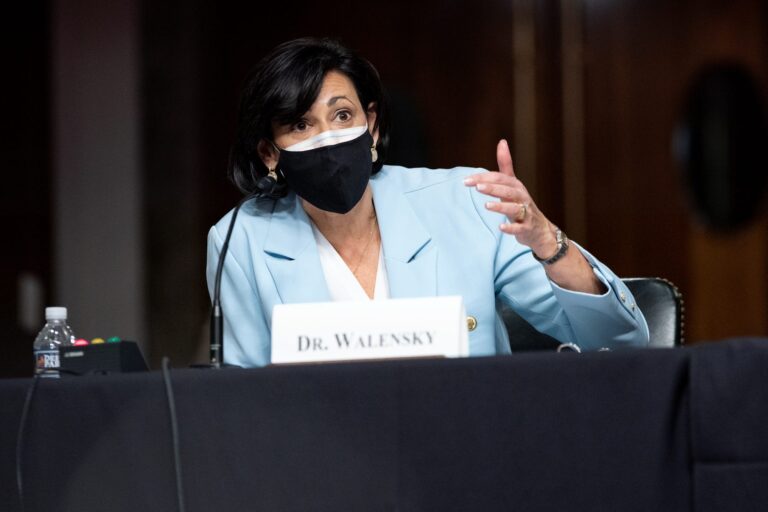
The Centers for Disease Control and Prevention is considering changes to its mask policy as the pandemic in the US improves, said Director Rochelle Walensky, who hinted at a possible lifting of its recommendation to mask up indoors, according to Business Insider.

Walensky said in a White House briefing on Wednesday that the CDC is now considering hospital capacity as a critical benchmark for gauging the pandemic’s severity and that this would be an essential factor in determining its guidance measures in the coming weeks.

“We want to give people a break from things like mask-wearing when these metrics are better, and then have the ability to reach for them again should things worsen,” Walensky said.

Community transmission remains high throughout the US, but organizations across the country have been lifting mask mandates as Omicron cases continue to fall and hospitalization rates stabilize.

California on Wednesday removed its indoor mask requirement for vaccinated persons, though children have to remain masked in school for at least another two weeks. New York also announced that it was dropping its indoor mask-or-vaccine mandates earlier this month.

And starting Thursday, vaccinated people visiting the Disney World theme park in Florida will no longer be required to wear masks indoors or outdoors. 

Dr. Anthony Fauci, who is President Biden’s chief medical adviser, said at Wednesday’s briefing that the country’s health officials are “very carefully” monitoring if they will update policies to require a fourth shot for mRNA vaccines.

He presented data showing that the protection against severe disease from the Moderna and Pfizer booster shots wanes from around 90% to 78% within four months, which he noted is still a “good” level of protection.

With cases and hospitalizations on a sharp decline, “vaccination and boosting will be critical in maintaining that downward trajectory,” Fauci said.

COVID-19 hospitalizations in the US this week fell 28% from the week before, while deaths related to the coronavirus have decreased 9%, she said.

“If and when we update our guidance, we will communicate that clearly, and it will be based on the data and science,” she added.

The CDC currently recommends wearing face masks while indoors, regardless of vaccination status. The US also requires people wear a mask while taking public transport and flights.

Walensky noted there are still times when it’s essential to wear a mask, such as when someone shows COVID-19 symptoms or feels unwell, is within 10 days of testing positive for the coronavirus, or if they were exposed to someone in COVID-19 quarantine.

“We all share the same goal: To get to a point where COVID-19 is no longer disrupting our daily lives, a time when it won’t be a constant crisis rather than something we can prevent, protect against, and treat,” Walensky said.

Korean Speedskater Busts Out His BTS Dance Moves On Medal Stand

0

Olympic short-track speedskater Kwak Yoon-gy finished second with his Korean team in the 5,000-meter men’s relay on Wednesday ― but perhaps second to none in his celebration on the medal stand.

The athlete busted out his BTS dance moves from the K-pop band’s megahit “Dynamite.” And he got a shoutout from band member RM for it, Koreaboo.com reported.

The athlete, who has hundreds of thousands of followers on Instagram, also competed in the 2010 and 2018 Winter Games.

On his Olympics bio page, the 32-year-old skater said his ambition was to win gold in Beijing. But he got silver and followed it with a solid-gold dance routine.

That still qualifies as dynamite.

You can trade in any Samsung Galaxy phones for a free Galaxy S22 at AT&T

0

If you have any — and we mean any — Galaxy S, Note, or Z smartphone gathering dust in a drawer, you can save $800 off your purchase, possibly netting you a completely free S22 just for digging up a device from 2010.

According to AIf you’re an AT&T customer looking to pick up any S22 device, this is probably perfect for you. If you’re not, keep in mind, you’ll need to use AT&T’s network for three years — if you cancel service, you’ll have to shell over the total value of the phone. If you’re interested, be quick — as with most things in this world, it’s a limited-time offer.ndroidpolice, if you send AT&T “ANY Note, S or Z series phone in ANY condition from ANY year” (caps courtesy of the carrier), you’ll get $800 off towards any Galaxy S22 series smartphone. That means you can get a 128GB Galaxy S22 for free or a juicy discount on either of the more expensive models.

If you’re an AT&T customer looking to pick up any S22 device, this is probably perfect for you. If you’re not, keep in mind, you’ll need to use AT&T’s network for three years — if you cancel service, you’ll have to shell over the total value of the phone. If you’re interested, be quick — as with most things in this world, it’s a limited-time offer.

AT&T really does mean any Galaxy S or Note device here, going all the way back to the original models released in 2010 and 2011, respectively. If you’ve kept one of those old dinosaurs in a drawer and it’s still capable of turning on, the carrier will gladly take it from you and give you a fiery new flagship in exchange. I should know — I booted up my own Gingerbread-powered OG Galaxy S, and even though it’s unable to render Android Police properly, it’s still capable of getting me a massive discount on one of this year’s best phones.

If you don’t have a Samsung phone to hand over, this offer also includes iPhones as old as the iPhone 6 (released in 2014) and Google phones as old as the Pixel 3 (released in 2018 and very recently discontinued). A ton of Galaxy A-series devices, including the A32, A50, A51, A52, A70, A71, and A72, also count for this promotion.