Home Blog Page 77

World’s largest plane ‘Antonov AN-225’ destroyed in Ukraine

0

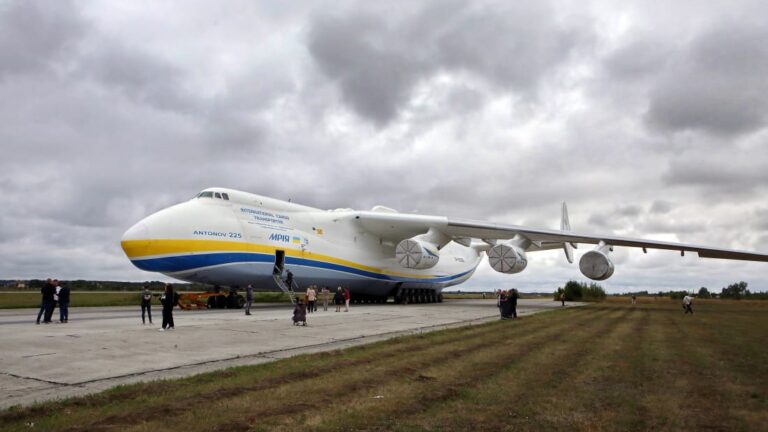
The world’s largest aircraft, the Antonov AN-225, has been destroyed during the Russian invasion of Ukraine, according to Ukrainian officials, generating alarm and sadness among the aviation world in which it occupies almost cult status.

The story of the An-225 begins back in the 1960 and ’70s when the Soviet Union was locked in a race into space with the United States.

By the end of the 1970s, the need arose for transporting large and heavy loads from their places of assembly to the Baikonur Cosmodrome, the sprawling spaceport in the deserts of Kazakhstan that was the launchpad for Yuri Gagarin’s pioneering space voyage of 1961.

The cargo in question was the Buran spacecraft, the Soviet Union’s answer to NASA’s Space Shuttle. Since there were at the time no airplanes capable of carrying it, the Antonov company was ordered to develop one.

According to CNN, the enormous aircraft, named “Mriya,” or “dream” in Ukrainian, was parked at an airfield near Kyiv when it was attacked by “Russian occupants,” Ukrainian authorities said, adding that they would rebuild the plane.

“Russia may have destroyed our ‘Mriya’. But they will never be able to destroy our dream of a strong, free and democratic European state. We shall prevail!” wrote Ukrainian Foreign Minister Dmytro Kuleba on Twitter.

There has been no independent confirmation of the aircraft’s destruction. A tweet from the Antonov Company said it could not verify the “technical condition” of the aircraft until it had been inspected by experts.

Ukrainian state defense company Ukroboronprom, which manages Antonov, on Sunday issued a statement saying the aircraft had been destroyed but would be rebuilt at Russia’s expense — a cost it put at $3 billion.

“The restoration is estimated to take over 3 billion USD and over five years,” the statement said. “Our task is to ensure that these costs are covered by the Russian Federation, which has caused intentional damage to Ukraine’s aviation and the air cargo sector.

In a later statement, the company said the airplane had been in on the ground near Kyiv on February 24 undergoing maintenance.

“According to the director of Antonov Airlines, one of the engines was dismantled for repairs and the plane wasn’t able to take off that day, although the appropriate commands were given,” it said.

Russian forces claimed to have captured Hostomel airfield, where the AN-225 was located, on Friday. A CNN team on the ground witnessed Russian airborne troops taking up positions.

Satellite images from Maxar Technologies show significant damage to part of the hangar in which the AN-225 is stored.

Meanwhile, NASA’s Fire Information for Resource Management System detected multiple fires at the airport, including at the hangar where the plane is kept. The fire at the hangar was detected at 11:13 a.m. on Sunday, according to the NASA data, which is obtained from a number of NOAA and NASA satellites.

It is not clear if these fires at the airport are the result of actual fires or explosions from military strikes.

If confirmed, the attack would mark a shocking end to an aircraft that has seen more than 30 years of service dating back to the days of the Soviet Union.

The AN-225 was sometimes drafted in to help airlift aid during crises in other countries. In the aftermath of the 2010 Haiti earthquake it delivered relief supplies to the neighboring Dominican Republic. During the early days of the Covid pandemic it was used to transport medical supplies to affected areas.

Its popularity in the aviation world meant it often drew large crowds wherever it went, particularly when it made star appearances at air shows.

Some of its fans took to social media on Sunday to express their dismay at claims of the aircraft’s destruction. “Mriya – You will always be remembered!” wrote aviation blogger Sam Chui on Twitter.

To this day, Mriya remains the heaviest aircraft ever built. Powered by six turbofan engines, she has a maximum payload weight of 250 tonnes, which can be carried inside or on its back. It boasts the largest wingspan of any airplane in operational service.

Only one An-225 was ever built by the Kiev-based Antonov company, which came up with the design. It first took flight in 1988 and has been in service ever since.

Construction was begun on a second plane, but it was never finished.

N. Korea fires missiles, Japan says ‘at least one ballistic missile’ fired

0

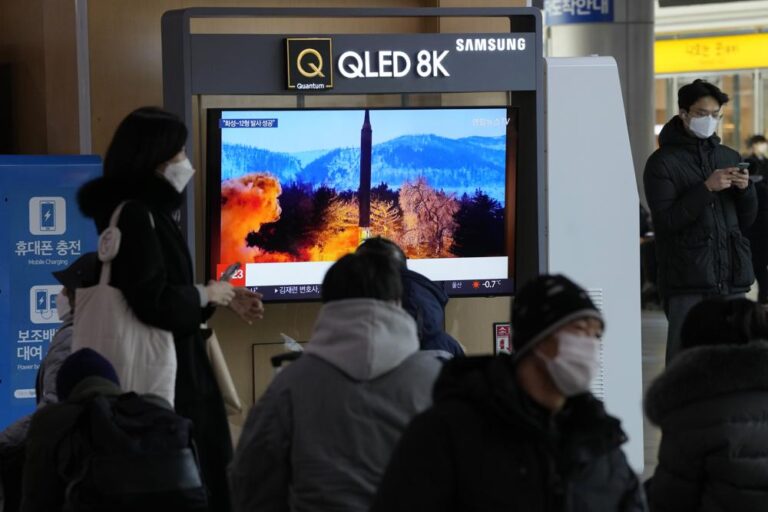
 North Korea launched a ballistic missile off the east coast of the Korean Peninsula on Sunday, South Korea’s Joint Chiefs of Staff said.

The missile was fired from the Sunan area of North Korea at around 7.52 a.m. local time, the Joint Chiefs said.

North Korea has ramped up its missile testing in 2022, announcing plans to bolster its defenses against the United States and evaluate “restarting all temporally suspended activities,” according to state media.
In the first four weeks of 2022 alone, North Korea launched seven missile tests, but none of those were of its longest range missiles.

During the Trump presidency, North Korean leader Kim Jong Un tested intercontinental ballistic missiles (ICBM) that could theoretically reach continental US, leveraging those tests into meetings with the then-U.S. president. Last year, during U.S. President Joe Biden’s first in office, North Korea staged eight tests — none in the range of an ICBM.

Analysts suggest the increased testing this year shows Kim is both striving to meet domestic goals and show an increasingly turbulent world in which Pyongyang remains a player in the struggle for power and influence.

Japanese Defense Minister Nobuo Kishi said North Korea launched “at least one ballistic missile,” that flew a distance of 186 miles and to a maximum altitude of 373 miles, CNN reported.

Sunday’s missile firing is Pyongyang’s first since Jan. 30 local time, when it fired what it claimed was a Hwasong-12 intermediate range ballistic missile (IRBM), its longest range ballistic missile since 2017. Sunday’s test was of a missile of shorter range than that test, according to the estimates provided by Japan.

South Korea’s National Security Council (NSC) said the launch was “undesirable” for peace stabilization while the world is trying to resolve the Ukraine war, according to the Blue House, South Korean presidential office.

NSC also expressed “deep concern and severe regret” over the launch, which marks the eighth missile test this year, and urged the North to “immediately stop actions contrary to peaceful resolution through diplomacy.”

The newest launch comes less than two weeks ahead of the South Korea presidential election on March 9, in which North Korea is likely to be a key electoral issue. If conservative candidate Yoon Suk Yeol is successful, analysts expect him to take a much harder line against the North compared to current President Moon Jae-in.

“North Korea is not going to do anyone the favor of staying quiet while the world deals with Russia’s aggression against Ukraine,” Leif-Eric Easley, associate professor of international studies at Ewha University in Seoul, said following Sunday’s test.

“Pyongyang has an ambitious schedule of military modernization. The Kim regime’s strength and legitimacy have become tied to testing ever better missiles.”

Elon Musk “SpaceX Starlink satellite internet service activated in Ukraine”

0

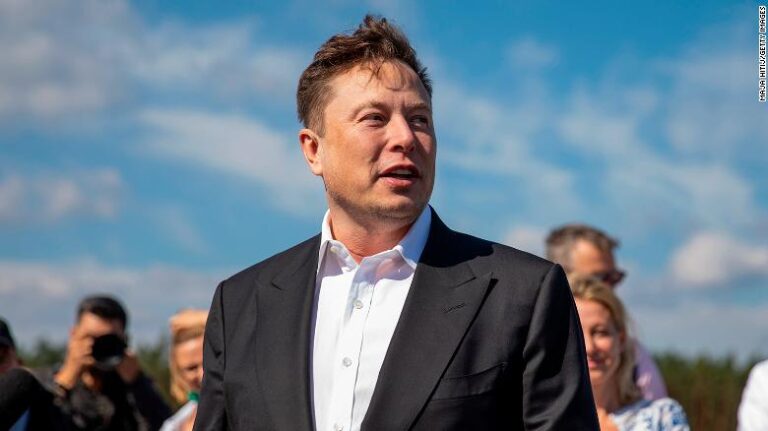
SpaceX founder and CEO Elon Musk announced Saturday that the company’s Starlink internet satellites are now active in Ukraine as the country suffers power outages due to Russia’s invasion.

There have been “intermittent” power outages in Ukraine, but the internet is still “generally available,” a senior US defense official told reporters Saturday.

According to CNN, the Starlink system was recently used in Tonga, in the South Pacific Ocean, to provide internet service to connect remote villages following the eruption of an underwater volcano in January, according to SpaceX. The eruption was likely the biggest recorded anywhere on the planet in more than 30 years, CNN reported.

“Starlink service is now active in Ukraine,” Musk, the Tesla CEO, tweeted. “More terminals en route.”

Ukraine’s vice prime minister asked Musk to provide internet service to the country amid Russian attacks, and Musk delivered, according to a Twitter exchange between the two on Saturday.

Mykhailo Fedorov, who is also Ukraine’s minister of digital transformation, tweeted to Musk: “while you try to colonize Mars — Russia try to occupy Ukraine! While your rockets successfully land from space — Russian rockets attack Ukrainian civil people! We ask you to provide Ukraine with Starlink stations and to address sane Russians to stand.”

Starlink is a satellite-based internet constellation intended to blanket the planet in high-speed broadband and could potentially bring connectivity to billions of people who still lack reliable internet access.

The idea requires swarms of satellites operating in low-Earth orbit — roughly 340 miles high, in SpaceX’s case — to provide continuous coverage.

The Twitter exchange took place as Russian President Vladimir Putin ordered his country’s deterrence forces, which includes nuclear arms, to be placed on high alert. Ukrainian Deputy Interior Minister Evgeny Yenin said talks between Russian and Ukrainian delegations will take place Monday morning.

CNN’s Ellie Kaufman, Jackie Wattles and Helen Regan contributed to this report.

Google has temporarily disabled for Ukraine some Google Maps tools

0

Alphabet Inc’s (GOOGL.O) Google confirmed on Sunday it has temporarily disabled for Ukraine some Google Maps tools which provide live information about traffic conditions and how busy different places are, according to Reuters.

Russia calls its actions in Ukraine a “special operation”.

Big tech companies including Google have said they are taking new measures to protect users’ security in the region.

Online services and social media sites have also been tapped by researchers piecing together activity around the war.

The company said it had taken the action of globally disabling the Google Maps traffic layer and live information on how busy places like stores and restaurants are in Ukraine for the safety of local communities in the country, after consulting with sources including regional authorities.

Ukraine is facing attacks from Russian forces who invaded the country on Thursday. As missiles fell on Ukrainian cities, nearly 400,000 civilians, mainly women and children, have fled into neighbouring countries. 

A professor at California’s Middlebury Institute of International Studies said Google Maps helped him track a “traffic jam” that was actually Russian movement towards the border hours before Russian President Vladimir Putin announced the attack. 

Google said live traffic information remained available to drivers using its turn-by-turn navigation features in the area.

TWICE plays to sold-out crowd at State Farm Arena

0

When the nine-member K-pop group first arrived at Atlanta’s State Farm Arena, it was hard for them to accept that they’d later be filling up Georgia’s largest indoor arena, one of the group’s members recalled.

According to AJC, the Feb. 24 show had sold out in hours when tickets went on sale late last year. Rabid fans decked out in the group’s merchandise packedthe arena, many holding glowingTWICE-branded lightsticks in orange, green and pink hues.

For the uninitiated, K-pop took off in the 1990s in Korea, defined as a mashup of Western musical styles — pop, R&B, hip hop — that also feature Korean cultural elements. Groups like BTS and Blackpink helped shepherd an expansion of K-pop into the America mainstream in the last few years. BTS, the uber-popular seven-member boy band, has topped the American charts and was set to play a show at Atlanta’s Bobby Dodd Stadium in May 2020 before the pandemic postponed the tour.

But other groups like TWICE, which have been popular in East Asia for years, are also starting to cross over. K-pop sub-cultures have been around in America for a while, but the genre is quickly entering the mainstream, fueled in part by the Internet, enhanced promotion from American record labels and the current lack of prominent American boy bands and girl groups.

“I feel that TWICE has gotten bigger for sure,” vocalist Jeongyeon told the crowd to deafening cheers.

TWICE’s mammoth three-hour set — filled with buoyant hits, intricately choreographed routines, pyrotechnics and three different confetti releases — was a show of force for the genre as a whole, and a service for the group’s diverse fanbase.

It’s one of the biggest K-pop shows Atlanta has ever seen, if not the biggest, and the latest sign that the global explosion of K-pop has taken hold here.

Made up of nine members — Nayeon, Jeongyeon, Momo, Sana, Jihyo, Mina, Dahyun, Chaeyoung, and Tzuyu — TWICE also has stops in Texas, New York and California on their fourth world tour, their first to come through Atlanta.

Since 2020, four of the group’s albums have charted on the U.S. Billboard 200 chart. TWICE’s first English-language single, “The Feels,” which dropped last year and opened their show, landed on the Hot 100 chart. Several songs on TWICE’s latest album, “Formula of Love: O+T=<3,” are in English.

Formed by a Korean record label through a television show in 2015, TWICE was in perfect sync as they moved through detailed dance numbers, with the members moving in and out of different formations across two stages while singing into headset microphones. Momo, Jihyo and Chaeyoung especially stood out for their stage presence.

Across 31 songs, they showed only marginal signs of fatigue, with breaks during lengthy video interludes and to speak to the crowd, both in English and in Korean, through a translator.

Fans’ relationships with their favorite artists are a defining characteristic of K-pop, which was especially clear during the speaking sections that focused on TWICE’s love for their fans — known collectively as “Once” — and vice versa. The end of the show had a more casual feel, as the singers donned T-shirts and sweatpants, spun a wheel to decide their encore set and walked around the stages interacting with fans looking on from the crowd.

That K-pop has found an audience in the Southeast is also significant given that many sounds that originated in Atlanta hip-hop and trap music have now found a place in mainstream K-pop — even in the catalog of a group like TWICE, which has a more bubblegum pop sound than many other acts.

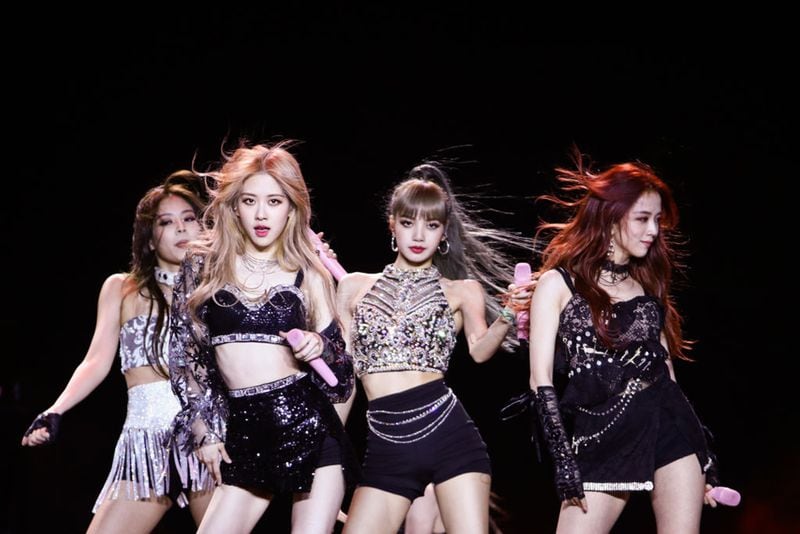
Blackpink perform at the Sahara Tent during the 2019 Coachella Valley Music And Arts Festival on April 19, 2019, in Indio, California. (Rich Fury/Getty Images for Coachella/TNS)
Credit: TNS

A Pitchfork review of a TWICE album last year noted some of the group’s early hits had “beats that landed between freestyle and Atlanta bass.” During Chaeyoung’s rap on the standout track “ICON,” for example, she uses the “triplet flow” popularized by Atlanta rappers like Migos and Future. The cadence of the hook on “HELLO” is alsoreminiscent of flows common in Atlanta trap music.

It’s all yet another sign of the global impact of Atlanta’s hip-hop scene. For Crystal Anderson, a George Mason University professor who wrote the book “Soul in Seoul: African American Popular Music and K-pop,” the use of trap sounds is just the latest evolution in K-pop’s tendency to be influenced by different Black musical genres over the years.

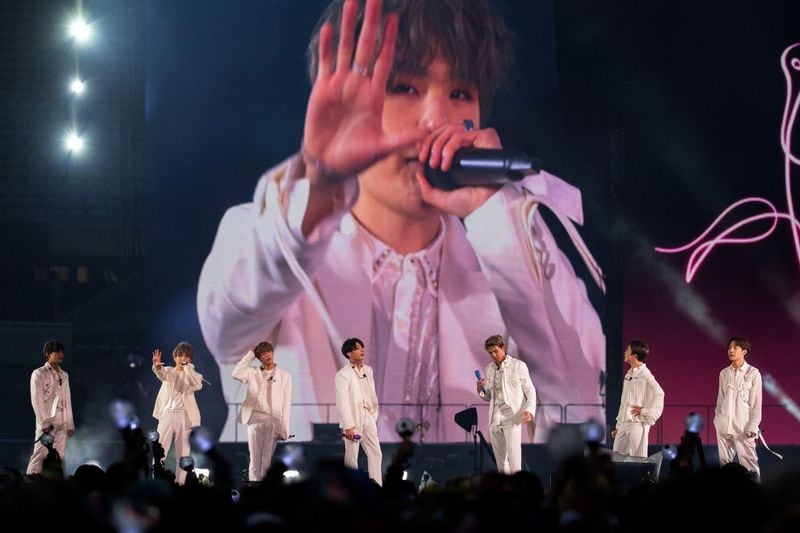
South Korean K-pop band BTS performs in concert in May 2019 in Chicago. (Erin Hooley/Chicago Tribune/TNS)
Credit: TNS

“We’re talking soul, funk, techno, house. Now we’re seeing things like trap,” she said. “K-pop is very attuned to the kinds of music that’s popular now.”

At their State Farm Arena show, TWICE navigated between genres including bossa nova, disco and electro pop.

Deandre Quiero, 18, came from Ohio to see the show. Like the members of TWICE, he said he alsowasn’t expecting the show to be so packed.

“I don’t feel like (I’ve ever been) listening to a TWICE song and got mad,” he said. “I always have a smile on my face. They just make a lot of people happy.”

Major floods hit Australia’s east coast, killed 7 people

0

Parts of Australia’s third-most populous city Brisbane were under water Monday after heavy rain brought record flooding to some east coast areas and killed seven people, reported by AP.

The flooding in Brisbane and its surrounds is the worst since 2011 when the city of 2.6 million people was inundated by what was described as a once-in-a-century event.

Multiple emergency flood alerts were in place for Brisbane suburbs, where 2,145 homes and 2,356 businesses were submerged or would become so Monday as the waters rose. Another 10,827 properties will be partially flooded above the floorboards.

The Brisbane River peaked on Monday at 3.85 meters (12 foot, 3 inches), officials said.

That was 61 centimeters (2 feet) below the 4.46 meter (14 foot, 3 inch) flood level reached in 2011, officials said.

A 59-year-old man drowned in Brisbane’s north on Sunday afternoon after he tried to cross a flooded creek on foot and was pinned against a fence, Queensland state police said on Monday.

Queensland emergency services warned life-threatening flash flooding was occurring south of Brisbane in parts of Gold Coast city.

Residents were advised to shelter where they were unless it is unsafe to do so. Access to many areas was cut in multiple places, Queensland Fire and Emergency Services said in an alert.

Emergency crews made more than 130 swift-water rescues in 24 hours, officials said.

All seven flood deaths have been in Queensland state, of which Brisbane is the capital. A search continues for a solo sailor, aged in his 70s, who fell overboard from his vessel in the Brisbane River near the city center on Saturday.

Police were also searching for a man missing from Goodna, west of Brisbane and another Esk, northwest of Brisbane.

South of the Queensland border, police on Monday were searching for man after officers heard him calling for help on Sunday in floodwaters in the New South Wales town of Lismore.

Queensland Premier Annastacia Palaszczuk said the rainfall over Brisbane had been extraordinary since November when authorities were considering water use restrictions due to a shortage.

“It is still a significant event, and I think everyone would agree no one has seen this amount of rain in such a short period of time,” in the southeastern area, Palaszczuk said.

Brisbane Lord Mayor Adrian Schrinner said the floods are “very different” to 2011 because the rain pummeled the region for five days. In 2011, the rain had stopped days before the Brisbane River peaked and authorities had warned for several days of flooding downstream.

Queensland Transport Minister Mark Bailey said major roads had been cut. Train and ferry services across Brisbane have been halted, he said.

“We’re going to have localized flooding in a lot of areas for a couple of days yet,” Bailey said.

South of the Queensland border, the New South Wales town of Lismore was bracing for its worst flooding on record.

Downtown Lismore was inundated on Monday after days of unrelenting rain and 15,000 people had been evacuated, officials said.

China relaxed restrictions on Russian wheat imports

0

According to CNN, China has relaxed restrictions on imports of Russian wheat, a move that could address food security concerns in the world’s second largest economy and ease the impact of Western sanctions on Russia

The decisionto allow imports of wheat from all regions of Russia was made during Russian President Vladimir Putin’s visit to Beijing earlier this month, but the details were only announced by China’s customs administration this week.

Food security is a key priorityfor Chinese President Xi Jinping, who has called for increasing agricultural production and diversifying imports.

The agreement also provides Russia with a secure buyer at a time when exports to other countries might be complicated by financial sanctions or other disruption.

“Uncertainty around potential sanctions is beginning to create a potential supply shock,” analysts from Goldman Sachs wrote Thursday in a research report.

“In our view, until the uncertainty around the rapidly escalating situation is resolved, commodity price risk remains skewed to the upside, with further escalation likely to send European natural gas, wheat, corn and oil prices higher from already-elevated levels,” they said.

China will likely be “the benefactor” of Russian commodities as other countries pare back on Russian imports, they added.

The analysts expect Russian commodities and raw materials to be “redirected to China” if the demand from the rest of the world drops significantly on further escalation of geopolitical tensions.

China’s decision has not gone down well with other countries.

Russia is the world’s top producer of wheat. Previously, China had restricted wheat imports from Russia due to concerns about the presence of dwarf bunt fungus — a disease that can cause severe loss of yield for wheat and other crops — in some parts of the country.

China has refused to condemn Russia’s attack on Ukraine, instead repeating calls for parties to “exercise restraint” and accusing the United States of “fueling fire” in the region

The agreement is the latest in a series of deals between Russia and China, and according to experts, it helps both nations.

It helps Beijing secure food supplies at a time when global food prices are already near 10-year highs. Wheat futures jumped by about 5% on the Chicago Board of Trade on Thursday after Russia attacked Ukraine, as the two countries account for about a third of global supply. Futures pulled back a little on Friday, but are still up 12% this week.

On Friday, Australian Prime Minister Morrison slammed China over its “lack of a strong response.”

“At a time when the world was seeking to put additional sanctions on Russia, they have eased restrictions on the trade of Russian wheat into China…and that is simply unacceptable,” he said at a press conference.

Putin has nuclear sword in confrontation with the West

0

It has been a long time since the threat of using nuclear weapons has been brandished so openly by a world leader, but Vladimir Putin has just done it, warning in a speech that he has the weapons available if anyone dares to use military means to try to stop Russia’s takeover of Ukraine.

The threat may have been empty, a mere baring of fangs by the Russian president, but it was noticed. It kindled visions of a nightmarish outcome in which Putin’s ambitions in Ukraine could lead to a nuclear war through accident or miscalculation.

“As for military affairs, even after the dissolution of the USSR and losing a considerable part of its capabilities, today’s Russia remains one of the most powerful nuclear states,” Putin said, in his pre-invasion address early Thursday, according to AP.

“Moreover, it has a certain advantage in several cutting-edge weapons. In this context, there should be no doubt for anyone that any potential aggressor will face defeat and ominous consequences should it directly attack our country.”

By merely suggesting a nuclear response, Putin put into play the disturbing possibility that the current fighting in Ukraine might eventually veer into an atomic confrontation between Russia and the United States.

That apocalyptic scenario is familiar to those who grew up during the Cold War, an era when American school children were told to duck and cover under their desks in case of nuclear sirens, But that danger gradually receded from the public imagination after the fall of the Berlin Wall and the dissolution of the Soviet Union, when the two powers seemed to be on a glide path to disarmament, democracy and prosperity.

President Joe Biden has been aware of the danger of nuclear war between Russia and NATO since the emergence of the crisis with Ukraine. From the start, he has said NATO would not be sending troops into Ukraine because it could trigger direct fighting between the U.S. and Russia, leading to nuclear escalation and possibly World War III.

It was a tacit admission that the United States would not take on the Russians militarily over Ukraine, and instead rely on extraordinary sanctions to gradually strangle the Russian economy.

But the admission also included another truth. When it came to fighting off a Russian invasion, Ukraine remained on its own because it is a non-treaty member and does not qualify for protection under NATO’s nuclear umbrella.

If Putin tried to attack one of the America’s NATO partners, however, that would be a different situation, because the pact is fully committed to mutual defense, Biden has said.

Knowing that Biden had already taken a military response off the table, why did Putin even bother to raise it in his speech?

In part, he may have wanted to keep the West off balance, to prevent it from taking aggressive action to defend Ukraine against Putin’s blitzkrieg drive to take over the country.

But the deeper context seemed to be his great desire to show the world that Russia is a powerful nation, not to be ignored. Putin talks repeatedly about the humiliation of Russia after the Soviet collapse. By waving his nuclear sword, he echoed the bluster with which the Soviet Union had stared down the United States and earned, in his mind, respect.

After Putin’s speech, Pentagon officials offered only a muted response to his implied threat to use nuclear weapons against any country that tried to intervene in Ukraine.

A senior defense official, speaking on condition of anonymity to discuss internal deliberations, said Thursday that U.S. officials “don’t see an increased threat in that regard,” but he would not say more.

Putin’s language touches a raw nerve in the Pentagon because it highlights a longstanding concern that he might be willing to preemptively use nuclear weapons in Europe preemptively in a crisis.

This is one reason Washington has tried for years, without success, to persuade Moscow to negotiate limits on so-called tactical nuclear weapons -– those of shorter range that could be used in a regional war. Russia has a large numerical advantage in that weaponry, and some officials say the gap is growing.

Coincidentally, the Biden administration was wrapping up a Nuclear Posture Review –- a study of possible changes to U.S. nuclear forces and the policies that govern their use –- when Russia’s troop buildup near Ukraine reached a crisis stage this month. It’s unclear whether that study’s results will be reworked in light of the Russian invasion.

Before that, even young people understood the terrifying .idea behind the strategy of mutual assured destruction — MAD for short — a balance in nuclear capabilities that was meant to keep hands on each side off of the atomic trigger, knowing that any use of the doomsday weapons could end in the annihilation of both sides in a conflict.

And amazingly, no country has used nuclear weapons since 1945, when President Harry Truman dropped bombs on Japan in the belief that it was the surest way to end World War II quickly. It did, but at a loss of about 200,000 mostly civilian lives in Hiroshima and Nagasaki. Around the world, even today, many regard that as a crime against humanity and question if it was worth it.

For a brief time after the war, the United States had a nuclear monopoly. But a few years after, the Soviet Union announced its own nuclear bomb and the two sides of the Cold War engaged in an arms race to build and develop increasingly more powerful weapons over the next few decades.

With the end of the Soviet Union in 1991, and its transformation to a hoped-for democracy under Boris Yeltsin, the United States and Russia agreed to limits on their armaments. Other post-Soviet countries like Ukraine, Kazakhstan and Belarus voluntarily gave up the nukes on their territory after the Soviet Union dissolved.

In recent years, if nuclear weapons were spoken of at all, it was usually in the context of stopping their proliferation to countries like North Korea and Iran. (Iran denies that it wants to possess them and North Korea has been steadily but slowly building both its nuclear weapons and its delivery mechanisms. )

When former U.S. President Donald Trump made an implicit threat to use nuclear weapons against North Korea in August 2017, many were shocked. Trump spoke before diplomacy and his fruitless summits with Kim began the following year. “North Korea best not make any more threats to the United States,” Trump told reporters at his golf club in Bedminster, N.J.. “They will be met with fire and fury like the world has never seen.” But North Korea’s nuclear arsenal is far smaller than Russia’s.

Biden, Europe are holding one key SWIFT sanction against Russia

0

U.S. and European officials are holding one key financial sanction against Russia in reserve, choosing not to boot Russia off SWIFT, the dominant system for global financial transactions.

The Russian invasion of Ukraine caused a barrage of new financial sanctions Thursday. The sanctions are meant to isolate, punish and impoverish Russia in the long term. President Joe Biden announced restrictions on exports to Russia and sanctions against Russian banks and state-controlled companies, reported by AP.

But Biden pointedly played down the need to block Russia from SWIFT, saying that while it’s “always” still an option, “right now that’s not the position that the rest of Europe wishes to take.” He also suggested the sanctions being put in place would have more teeth.

“The sanctions we’ve imposed exceed SWIFT,” Biden said in response to a question Thursday. “Let’s have a conversation in another month or so to see if they’re working.”

Ari Redbord, a former Treasury senior adviser, said he expects Russia’s leadership to bypass financial penalties that limit its ability to engage in the global financial system through the increased use of cryptocurrency.

He said this is a risk “especially when there are actors like Iran, China and North Korea” that will continue to trade with Russia outside of the formal financial system, Redbord said.

“If Russian banks are entirely cut off from the U.S. and European financial system, that will be very debilitating to those banks and the Russian economy,” he said. But the Russian government will use alternative means to trade with countries “even if there are debilitating” sanctions from the European Union and U.S.

Still, some European leaders, including in the United Kingdom, favor taking the additional step of blocking Russia from SWIFT, the Belgium-headquartered consortium used by banks and other financial institutions that serves as a key communications line for commerce worldwide. The SWIFT system averaged 42 million messages daily last year to enable payments. The name is an acronym for the Society for Worldwide Interbank Financial Telecommunications, and about half of all high-value payments that cross national borders go through its platform.

Ukraine has sought for Russia to be excluded from SWIFT, but several European leaders would prefer to stay patient because a ban could make international trade more difficult and hurt their economies.

“A number of countries are hesitant since it has serious consequences for themselves,” said Dutch Prime Minister Mark Rutte, who believes a ban should be a last resort.

The British government says Prime Minister Boris Johnson pushed at a virtual meeting of the Group of Seven world leaders Thursday for Russia to be kicked out of SWIFT. It said there was “no pushback” but it was agreed that more discussion was needed. U.K. officials would not confirm Germany was resisting.

U.S. lawmakers have called on Biden to deploy every available financial sanction, with Senate Republican Leader Mitch McConnell saying Thursday that America should “ratchet the sanctions all the way up. Don’t hold any back. Every single available tough sanction should be employed and should be employed now.”

But Sen. Jim Risch of Idaho, the top Republican on the Senate Foreign Relations Committee, said the SWIFT ban would be complicated and time-consuming in part because the U.S. doesn’t have control over the decision.

The problem is that banning Russia from SWIFT might not cut it off from the global economy as cleanly as proponents think. Also, there could be blowback in the form of slower international growth. And rival messaging systems could gain users in ways that erode the power of the U.S. dollar — all of which has left SWIFT as a sanction waiting to be deployed.

“It’s a communications platform, not a financial payments system,” said Adam Smith, a lawyer who worked in the Obama administration. “If you remove Russia from SWIFT, you’re removing them from a key artery of finance, but they can use pre-SWIFT tools like telephone, telex or email to engage in bank-to-bank transactions.”

The other risk is that countries could migrate their institutions to platforms other than SWIFT, such as a system developed by China. This would increase the friction in global commerce — hurting growth — and make it harder to monitor the finances of terrorist groups.

“By politicizing SWIFT you give incentive for others to develop alternatives,” said Brian O’Toole, a senior fellow at the Atlantic Council and former Treasury official. “SWIFT also is an important partner in U.S.-European counterterrorism efforts. It shares data with U.S. Treasury related to counterterrorism issues that has proven to be enormously valuable.”

The sanctions announced Thursday would still accomplish much of what would happen if Russia lost access to SWIFT, said Clay Lowery of the Institute of International Finance.

“Cutting off these financial institutions from utilizing the dollar, euro, pound sterling is still a pretty significant step,” Lowery said. “You’re really having the same impact on certain subsections of the Russian economy through sanctions.”

Iran was blocked from the SWIFT system in 2014 because of its nuclear program. In 2019, then-Russian Prime Minister Dmitry Medvedev said losing access to SWIFT would be akin to a declaration of war against Russia. The statement by Medvedev is a sign that Russia viewed the platform as a vulnerability and developed workarounds to limit any economic damage.

“I think it will be harmful in the immediate term and psychological as well, but I’m not sure it’ll impact the economy in ways that make it worthwhile,” Smith said.

Russia has already prepared for ways to evade sanctions, including those imposed this week, experts say.

China blames the US, as war breaks out in Europe

0

As Russian missiles flew through the Ukrainian sky Thursday and world leaders decried an invasion spreading across the country, China refused to condemn Russia’s move outright, while appearing to levy blame on the United States and its allies.

Beijing finds itself in a complex position as Russia’s invasion of its neighbor intensifies, needing to balance a close strategic partnership with Moscow with its seemingly contradictory policy of supporting state sovereignty.

A Chinese government official Thursday sidestepped questions over whether it would condemn Russia’s actions or consider it an “invasion.”, reported by CNN.

Instead, China’s Assistant Foreign Minister Hua Chunying — who repeated staid lines about seeking peace through dialogue and said the situation was “not what we would hope to see” — was quick to point the finger at the US, implying that Washington was a “culprit” for “fanning up flames,” referring to US warnings in recent weeks of an imminent invasion.

“China has taken a responsible attitude and persuaded all parties not to escalate tensions or incite war…Those who follow the US’ lead in fanning up flames and then shifting the blame onto others are truly irresponsible,” she said.

The comments echoed those made a day earlier, prior to the invasion, when Hua blamed the crisis on “NATO expansion eastward all the way to Russia’s doorstep.””Did it ever think about the consequences of pushing a big country to the wall?” she said.

The presence of Hua at the briefing both days was itself unusual, as the veteran spokeswoman had not been at the podium in such briefings since she was promoted to assistant minister for foreign affairs in October.

Her comments were widely disseminated across China’s official state media and social media platforms, where talk of Ukraine dominated coverage and conversation.

But while state media reflected the official government line, top trending topics on Weibo, China’s Twitter-like platform, included a speech by Russian President Vladimir Putin with more than 360 million views, as well as others looking at how Ukrainian citizens were reacting, such as a post on people lining up to donate blood with 62 million views.

The topic “Ukraine President says Western countries completely give up on Ukraine,” topped the list in the morning, raking up over 1 billion views throughout the day and tens of thousands of comments.

Many of those comments on the highly moderated platform mocked Ukraine and its President Volodymyr Zelensky for being “pro-West” and cheered for Russia and Putin.

But others pushed back: “War is not funny at all,” wrote one user, whose post was liked over 60,000 times. “It makes me feel physically sick to see all the jokes about war.”

The Russian invasion comes on the heels of a meeting earlier this month between Chinese leader Xi Jinping and Putin, who made a show of their strong bond with a highly publicized meeting ahead of the Beijing Olympics and declared “no limits” to their relationship.But an outright backing of Russian moves would put China at odds with the West. It would also contradict China’s usual vocal support for state sovereignty and territorial integrity.