Home Blog Page 73

Russia “It understands North Korea’s move to renew missile launches”

0

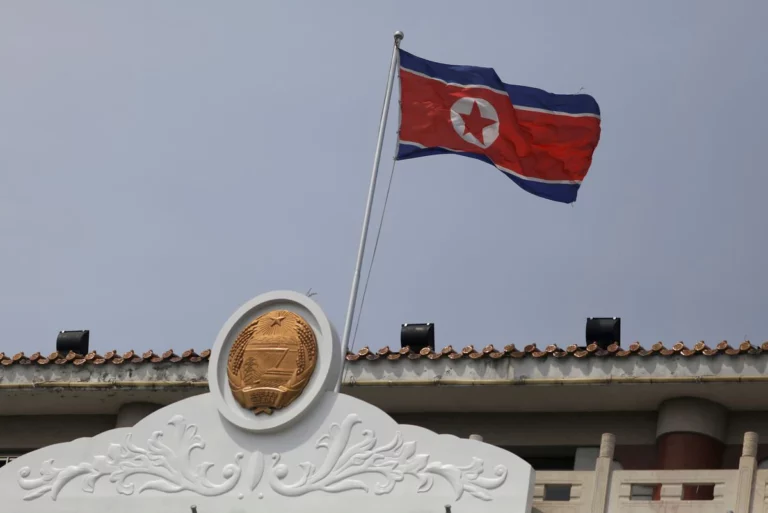
Russia understands North Korea’s decision to renew frequent missile launches and sees no prerequisites to restart Korea de-nuclearisation talks, RIA news agency quoted a Russian foreign ministry official as saying on Tuesday.

North Korea tested a record number of missiles in January, including its largest since 2017, and launched a ballistic missile into the sea in a resumption of weapons tests in late February. It launched another one last Saturday.

According to Reuters, Pyotr Ilyichyov, head of the international organisations division at the foreign ministry, said that when Pyongyang paused missile tests before there had been an increase in military cooperation between Seoul and Washington.

Ilyichyov said he saw no prerequisites for the resumption of de-nuclearisation talks because Washington has chosen to pursue the path of sanctions against Pyongyang.

Mask mandates go away in schools, but parent worries persist

0

Major school districts around the country are allowing students into classrooms without masks for the first time in nearly two years, eliminating rules that stirred up intense fights among educators, school boards and parents throughout the pandemic.

New York City became the latest school district to do away with its mask requirement Monday and Philadelphia is poised to lift its mandate Wednesday, joining big cities such as Houston and Dallas and a number of a states that made similar moves in the last week. According to AP, Chicago schools will end their mask mandate next Monday.

Parents, teachers and principals face a complicated balancing act in navigating the new rules. Some families are thrilled that their children no longer have to wear masks, while others say they’re still tentative and urging their kids to keep wearing face coverings for now. Teachers and principals are caught in the middle.

In Anchorage, Alaska, School Superintendent Deena Bishop says lifting the mandate in the city’s nearly 100 public schools last week was a relief after months of acrimony even though there were some bumpy patches.

Bishop says she has been made aware of a handful of comments teachers inadvertently made that “didn’t sit well” with students and their parents, such as a teacher singling out a young child whose parents decided to keep them wearing a mask and another who had made a student feel guilty about their decision not to wear one.

She said the instances served as “teachable moments” to remind staff that “a choice is a choice and that we need to honor that home’s choice.”

“There was a lot of angst, a lot of battles in the city over wearing masks, not wearing masks,” Bishop said. “So I’m glad that we’ve taken that fight away. All that has just subsided, and now we can go back to focus on learning.”

Falling infection rates and new federal health guidance are leading most of the remaining states with statewide school mask requirements to drop the mandates. The Centers for Disease Control and Prevention recently issued new guidelines saying most Americans live in places where healthy people, including students, can safely take a break from wearing masks.

But those hesitant about ending school mask mandates often point to low childhood vaccination rates among American children. Only about a quarter of children ages 5 to 11 have been fully vaccinated against the coronavirus, and about 58% of children ages 12 to 17 are inoculated, the CDC says.

New York, Connecticut, Massachusetts, Illinois and Delaware rescinded their statewide school mask requirements recently. New Jersey and Rhode Island dropped theirs officially Monday while California, Oregon and Washington have jointly announced they’ll drop their statewide mandates effective March 12.

In many instances, the ultimate decisions are being made at the local school district level.

Officials many large cities, such as Boston, Los Angeles and Washington, D.C., have said they’ll keep mask rules for now, either until vaccination rates improve among their students, or they can work out agreements with teachers unions, which have been among those most vocal about keeping the mandates in place.

After Chicago schools announced Monday that masks will no longer be required as of March 14, the city’s teachers union vowed to take officials to court, saying the move will violate an agreement with the district to keep the mask rule through the end of the school year.

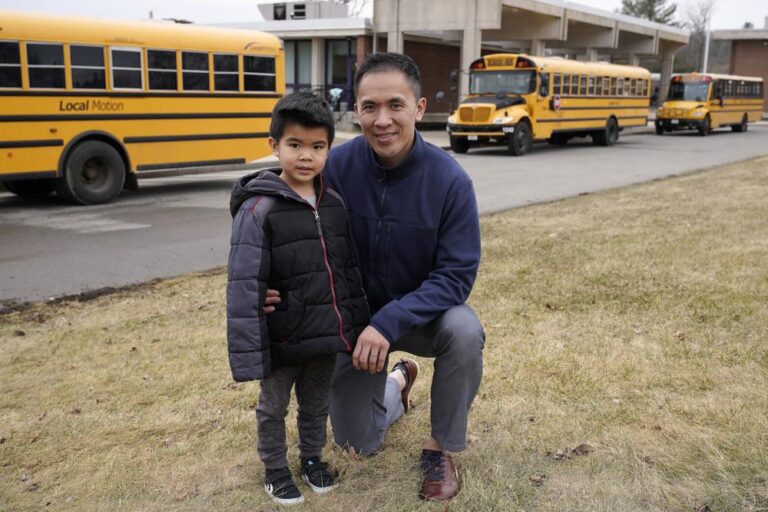
In New York City, elementary student Jack Jalaly ditched his mask Monday as they became optional in the nation’s largest school district.

“I think it’s nice because kids can finally see their teachers talk, and I also have a younger daughter who has spent all her time with no face, right?” said Jack’s mother, Andrea. “So for little kids, it’s really great because you can see the way words are pronounced and you can see spellings.

But third-grader Derrick Carter-Jacob kept his mask on as New York eliminated the requirement. “I don’t want to get COVID,” he said.

“Leave it on. There’s no reason for him to take it off until basically everybody is safe,” said his parent, Michael Jacob. “I want my son to be safe. I’m sorry. That’s the way I see it.”

John Bracey, a Latin teacher at Belmont High School in suburban Boston, says he intends to keep wearing his hospital-grade N-95 respirator through the end of the academic year even as district officials are expected to decide on their school mandate later this week.

The 41-year-old Bellingham resident said he and his wife have also decided to keep his two young school-age children wearing masks this week even though their district lifted the requirement Monday.

“I have major concerns on so many levels,” Bracey said. “It appears to be a decision made to benefit the most privileged and leaves everyone else to their own devices. We’re sacrificing the health of immunocompromised students, elderly staff and those of us with young children. I just can’t find a public health or moral justification for removing them.”
Shell apologizes for buying Russian oil

0

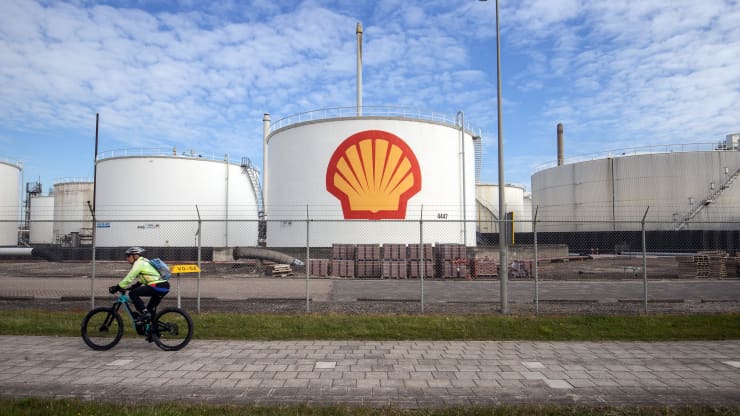
Oil major Shell on Tuesday apologized for a buying a heavily discounted consignment of Russian oil last week, and announced it would gradually withdraw from its involvement in all Russian hydrocarbons, reported by CNBC.

On Friday, Shell purchased 100,000 metric tons of flagship Urals crude from Russia. It was reportedly bought at a record discount, with many firms shunning Russian oil due to Moscow’s unprovoked invasion of its neighbor. The purchase did not violate any Western sanctions.

“As an immediate first step, the company will stop all spot purchases of Russian crude oil. It will also shut its service stations, aviation fuels and lubricants operations in Russia,” it said in a statement.

Russian gymnast with ‘Z’ symbol faces long ban

0

Gymnastics’ governing body has condemned the “shocking behaviour” of the Russian gymnast Ivan Kuliak, who now faces a lengthy ban for wearing a symbol in support of the invasion of Ukraine on the medal podium of a World Cup event.

After winning bronze in the parallel bars final at the Apparatus World Cup in Doha, Kuliak taped the letter “Z” to the front of his outfit before standing next to the gold medallist, Illia Kovtun of Ukraine, for the national anthems.

The “Z” is regarded as particularly incendiary given it has been seen daubed on Russian tanks and vehicles in Ukraine and has come to symbolise support for president Vladimir Putin and the invasion.

According to Theguardian, Kuliak, 20, was unable to wear the Russian flag as it had already been banned by the International Gymnastics Federation (FIG).

In a statement, the FIG said it would ask the Gymnastics Ethics Foundation to open disciplinary proceedings against Kuliak “following his shocking behaviour”.

Meanwhile, the former world championship chess challenger Sergey Karjakin has been banned from a number of prestigious tournaments, including the Grand Chess tour, following several outspoken comments backing the invasion.

As of Monday all Russian and Belarusian gymnasts, officials and judges were suspended from all future FIG-sanctioned competitions. In taking its decision, the FIG said it took in account the latest recommendations from the IOC, the stance of its athletes’ commission and the “deep concerns” and positions expressed by many national gymnastics federations.

Russia’s invasion has been condemned around the world, sent more than 1.5 million Ukrainians fleeing abroad, and triggered sweeping Western-led sanctions aimed at crippling the Russian economy. On Sunday eight civilians were killed outside the capital Kyiv when Russian forces shelled a bridge as they were trying to flee to safety.

When asked about the sort of potential sanctions the Russian could face, the FIG referred the Guardian to article 42.3 of its 2022 statutes regarding “the disciplinary measures which can be imposed amongst others on a Federation, on a legal entity or on an individual”.

Such measures include “the cancellation of results of a competition”, which leaves open the possibility that Kuliak could lose his bronze medal, and “the proscription to take part in the FIG events and other international events for one given or unspecified duration” – in other words, a potential lengthy ban.

Kuliak’s comments were immediately criticised by Ukraine’s 2016 Olympic parallel bars champion Oleg Verniaiev, who wrote on Instagram: “Of course, you will excuse me, but let the Russians not shout that sport is out of politics! Congratulations to our guy, everything is in its place, glory to Ukraine.”

Kuliak is not the first Russian gymnast to publicly support Putin’s war in Ukraine. Last week Svetlana Khorkina, who won seven Olympic medals between 1996 and 2004, shared the “Z” symbol online with the caption: “A campaign for those who are not ashamed to be Russian.”

More than 60 million people from Atlanta to Philadelphia face the threat of severe storms Monday

0

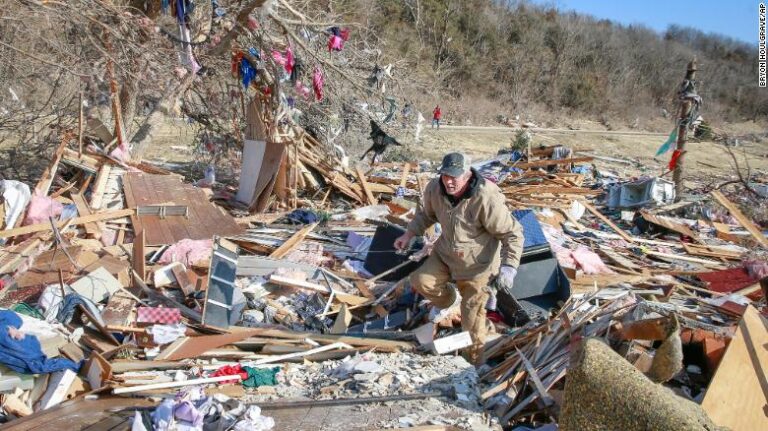
According to CNN, more than 60 million people from Atlanta to Philadelphia face the threat of severe storms Monday, days after a deadly tornado outbreak killed seven people in Iowa.

Other cities that could see severe weather include Washington, DC, Baltimore and Nashville, said CNN meteorologist Haley Brink, adding the main threats include isolated tornadoes and damaging winds.

Tornado warnings were also issued in Arkansas late Sunday and early Monday. A spokesperson for the Arkansas Division of Emergency Management said there was tornado damage and multiple downed power lines near the Martin Township area, about 70 miles northwest of downtown Little Rock, with one injury reported.

A family was reported to be trapped in their storm shelter but were later able to be helped and are safe, according to the agency.

The Pope County Office of Emergency Management in northwest Arkansas asked people to avoid the area “as emergency responders and other officials work in the area to clean up and check on residents.”

Heavy rain will also accompany Monday’s storms, especially across the Ohio River Valley, with the potential for rainfall rates of one to two inches per hour, she said. Flood watches have been issued for parts of Kentucky, Ohio, Indiana and West Virginia, and soil in the area is already saturated from heavy rain over the last two weeks. Any additional rain will make ongoing river flooding worse, Brink said.

As these large swathes of the country brace for the potential of more severe weather, recovery efforts remain ongoing in Iowa, where several tornadoes touched down near Des Moines Saturday. Seven people, including two children, died in the storms, officials said.

Six Madison County residents were killed, according to county Emergency Management Director Diogenes Ayala. The oldest victim was 72 years old and the youngest was aged 2, Ayala said at a news conference in Winterset Sunday afternoon. He had earlier said there were two victims under 5.

A person in a rural area near the Lucas County city of Chariton was also killed, an official said.

Six people in Madison County were being treated for injuries sustained in the tornado, according to officials. Ayala previously said one adult had life-threatening injuries and three others had been hospitalized in serious condition.

“This is, I think, the worst anyone has seen in quite a long time,” Ayala said Sunday.

U.S. gasoline prices jump to highest since 2008 on Russia conflict

0

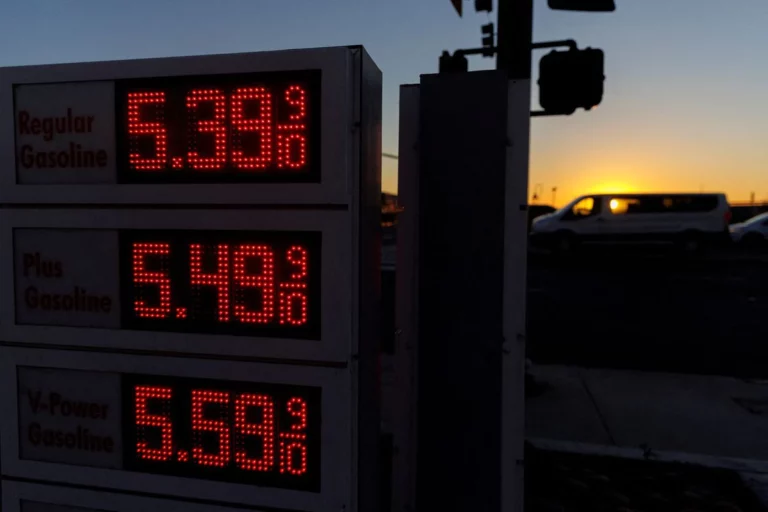
U.S. gasoline prices at the pump jumped 11% over the past week to the highest since late July 2008 as global sanctions cripple Russia’s ability to export crude oil after its invasion of Ukraine, automobile club AAA said on Sunday.

AAA said average U.S. regular grade gasoline prices hit $4.009 per gallon on Sunday, up 11% from $3.604 a week ago and up 45% from $2.760 a year ago, reported by Reuters.

GasBuddy said that weekly increase was the second largest ever, following a jump of 49 cents per gallon during the week of Sept. 3, 2005, after Hurricane Katrina tore through the U.S. Gulf Coast.

“Increasing oil prices continue to play a leading role in pushing prices higher,” AAA said in a release, noting “pump prices will likely continue to rise as crude prices continue to climb.”

U.S. crude futures soared more than 12% to $130.50 per barrel late Sunday, their highest since July 2008, as the United States and its European allies consider banning imports of Russian oil. 

The automobile club, which has data going back to 2000, said U.S. retail gasoline prices hit a record $4.114 a gallon on July 17, 2008, which was around the same time U.S. crude futures soared to a record $147.27 a barrel.

The most expensive gas in the country is in California at $5.288 a gallon, followed by Hawaii ($4.695), Nevada ($4.526) and Oregon ($4.466), according to AAA.

U.S. gasoline futures , meanwhile, soared to a record $3.890 per gallon on Sunday.

Gasoline price provider GasBuddy said the average price of U.S. gasoline spiked nearly 41 cents per gallon, topping $4 for the first time in almost 14 years, and stands just 10 cents below the all-time record of $4.103 per gallon.

More than 4,300 detained on Sunday at anti-war protests in Russia

0

Police detained more than 4,300 people on Sunday at Russia-wide protests against President Vladimir Putin’s invasion of Ukraine, according to an independent protest monitoring group, according to Reuters.

Thousands of protesters chanted “No to war!” and “Shame on you!”, according to videos posted on social media by opposition activists and bloggers.

About 2,000 people attended an anti-war protest in Kazakhstan’s biggest city Almaty, according to videos posted on social media. Reuters was unable to independently verify the posts.

The crowd shouted slogans such as “No to war!” and obscenities directed at Putin while waving Ukrainian flags.

Blue and yellow balloons were placed in the hand of a statue of Lenin towering over the small square where the rally took place.

The Russian state polling agency VTsIOM said Putin’s approval rating had risen 6 percentage points to 70% in the week to Feb. 27. FOM, which provides research for the Kremlin, said his rating had risen 7 percentage points to 71% in the same period.

Dozens of protesters in the Urals city of Yekaterinburg were shown being detained. One protester there was shown being beaten on the ground by police in riot gear. A mural in the city showing President Vladimir Putin was defaced.

Reuters was unable to independently verify the footage and photographs on social media. Russia’s interior ministry said earlier that police had detained around 3,500 people, including 1,700 in Moscow, 750 in St Petersburg and 1,061 in other cities.

The interior ministry said 5,200 people had taken part in the protests. The OVD-Info protest monitoring group said it had documented the detention of at least 4,366 people in 56 different cities.

“The screws are being fully tightened – essentially we are witnessing military censorship,” Maria Kuznetsova, OVD-Info’s spokeswoman, said by telephone from Tbilisi.

“We are seeing rather big protests today, even in Siberian cities where we only rarely saw such numbers of arrests.”

The last Russian protests with a similar number of arrests were in January 2021, when thousands demanded the release of opposition leader Alexei Navalny after he was arrested on returning from Germany where he had been recovering from a nerve agent poisoning.

Some Russian state-controlled media carried short reports about Sunday’s protests but they did not feature high in news bulletins.

Russia’s RIA news agency said the Manezhnaya Square in Moscow, adjoining the Kremlin, had been “liberated” by police, who had arrested some participants of an unsanctioned protest against the military operation in Ukraine.

RIA also showed footage of what appeared to be supporters of the Kremlin driving along the embankment in Moscow with Russian flags and displaying the “Z” and “V” markings used by Russian forces on tanks operating in Ukraine.

Patriarch Kirill, head of the Russian Orthodox Church, said Russian values were being tested by the West, which offered only excessive consumption and the illusion of freedom.

Putin, Russia’s paramount leader since 1999, calls the invasion, launched on Feb. 24, a “special military operation”. He says it is aimed at defending Ukraine’s Russian-speaking communities against persecution and preventing the United States from using Ukraine to threaten Russia.

The West has called his arguments a baseless pretext for war and imposed sanctions that aim to cripple the Russian economy. The United States, Britain and some other NATO members have supplied arms to Ukraine.

Navalny had called for protests on Sunday across Russia and the rest of the world against the invasion. 

S.Korean campaign gets ugly

0

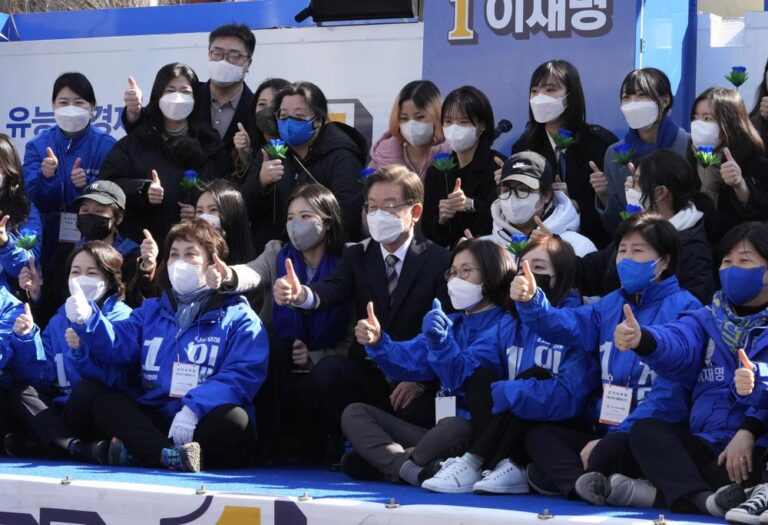
The race between South Korea’s two leading presidential candidates has seen unprecedented levels of toxic rhetoric, mudslinging and lawsuits.

How bad is it?

“Hitler,” “beast,” and “parasite” are some of the choicer insults leveled by both camps. Some are even calling it “The Squid Game Election,” in reference to Netflix’s megahit survival drama where people are killed if they lose children’s games.

And the stakes? There’s widespread speculation that the loser will be arrested.

“It’s a dreadful presidential election when the losing contender faces prison. Please survive this dogfight in the mire!” senior opposition politician Hong Joon-pyo wrote on Facebook.

According to AP, just days before Wednesday’s election, Lee Jae-myung from the liberal governing Democratic Party and Yoon Suk Yeol from the main conservative opposition People Power Party are locked in an extremely tight race.

Their negative campaigns are aggravating South Korea’s already severe political divide at a time when it faces a battered, pandemic-hit economy, a balancing act over competition between its main ally, Washington, and its top trading partner, China, and a raft of threats and weapons tests from rival North Korea.

Opinion surveys show that both candidates have more critics than supporters.

“Isn’t our national future too bleak with an unpleasant and bitter presidential election that calls for choosing the lesser of two evils?” the mass-circulation Dong-A Ilbo newspaper said in an editorial.

Yoon has slammed Lee over his possible ties to an allegedly corrupt land development scandal. Lee has denied any connection, and in turn has tried to link Yoon to the same scandal, while separately criticizing him for his reported ties to shamanism — an ancient, indigenous religious belief.

There have also been attacks on the candidates’ wives, both of whom have been forced to apologize over separate scandals.

Yoon described Lee’s party as “Hitler” and “Mussolini” while an associate called Lee’s purported aides “parasites.” Lee’s allies called Yoon “a beast,” “dictator” and “an empty can” and derided his wife’s alleged plastic surgery.

Their campaign teams and supporters have filed dozens of lawsuits charging libel and the spread of false information, among other issues.

“This year’s presidential election has been more overwhelmed by negative campaigning than any other previous election, and the mutual hatred won’t easily die down after the election,” said Choi Jin, director of the Seoul-based Institute of Presidential Leadership.

Among the fault lines in the electorate are South Korean regional rivalries, views on North Korea, a conflict between generations, economic inequality and women’s rights issues.

Yoon is more popular with older voters and those in the southeastern region of Gyeongsang, where past conservative and authoritarian leaders came from. His supporters typically advocate a stronger military alliance with the United States and a tougher line on North Korea, and they credit past authoritarian rulers for quickly developing the economy after the Korean War.

Lee enjoys greater support from younger people and those from Jeolla province, Gyeongsang’s rival region in the southwest. His supporters generally want an equal footing in relations with the United States and rapprochement with North Korea while being extremely critical of past authoritarian rulers’ human rights records.

In a notable development, many surveys showed Yoon has received greater approval ratings than Lee from voters aged 18 and 29, most of whom were born after South Korea became a developed country.

“They didn’t experience poverty and dictatorships. … They are very critical of China and North Korea, and they have rather friendly feelings toward the U.S. and Japan,” said Park Sung-min, head of Seoul-based MIN Consulting, a political consulting firm.

South Korea’s deep divisions are reflected in the troubles of the last three leaders. Their supporters say intense corruption investigations after they left office were politically motivated by their rivals.

China will provide Ukraine humanitarian aid, praises Russia ties

0

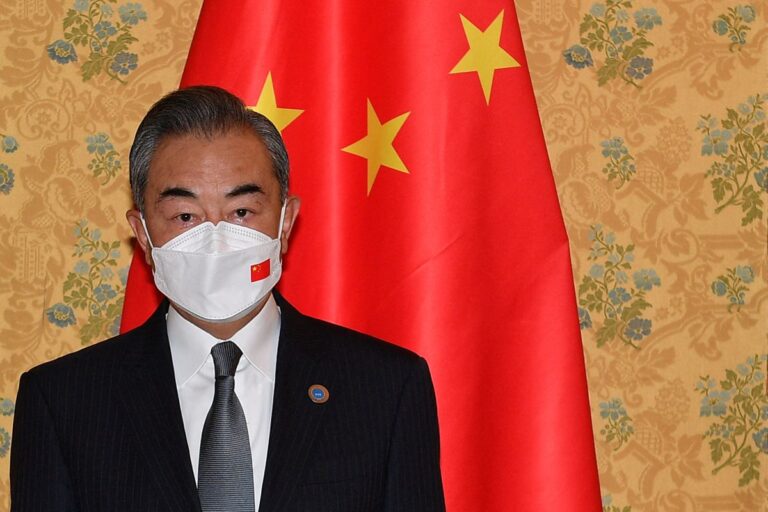
China’s Red Cross will provide humanitarian aid to Ukraine “as soon as possible”, Foreign Minister Wang Yi said on Monday, as he praised his country’s friendship with Russia as “rock solid”, according to Reuters.

China has refused to condemn Russia’s attack on Ukraine or call it an invasion while asking Western countries to respect Russia’s “legitimate security concerns.”

Russian President Vladimir Putin met Chinese President Xi Jinping hours before the start of last month’s Winter Olympics in Beijing and they signed a wide-ranging strategic partnership aimed at countering U.S. influence and said they would have “no ‘forbidden’ areas of cooperation”.

Wang said the friendship between China and Russia was “rock solid” and prospects for cooperation bright.

“No matter how sinister the international situation is, both China and Russia will maintain their strategic determination and continuously push forward the comprehensive strategic partnership of coordination in the new era.”

Wang said the causes of the “Ukraine situation” were “complex” and had not happened overnight, noting, using a traditional Chinese expression, that “three feet of ice does not form in a single day”.

“Solving complex problems requires calmness and rationality, rather than adding fuel to the fire and intensifying contradictions,” he told a news conference on the sidelines of the annual meeting of China’s parliament.

China has already done “some work” to promote peace talks and has all along been in contact with all sides, he added.

“China is willing to continue to play a constructive role in pushing for peace and promoting talks, and is willing to work with the international community to carry out necessary mediation when needed.”

China is willing to continue to make its own efforts to resolve the humanitarian crisis and the country’s Red Cross will “as soon as possible” provide a batch of aid to Ukraine, Wang said, without giving details. It was the first time the country has announced such help.

China proposes that “humanitarian action” must abide by the principles of neutrality and impartiality, and humanitarian issues should not be politicised, he added.

Russia claims it will allow civilians to flee their homes

0

The Russian Defense Ministry claims it will stop firing at 10 a.m. local time Monday (2 a.m ET) to allow civilians to flee their homes in the Ukrainian cities of Kyiv, Kharkiv, Sumy and Mariupol, despite repeatedly breaching previous agreements, according to CNN.

A first effort of ceasing fire and opening evacuation routes in Mariupol and Volnovakha failed on Saturday, with Ukrainian authorities putting evacuations on hold citing repeated Russian violations of the ceasefire.

Russia claimed its forces had resumed their offensive in Mariupol and Volnovakha due to “unwillingness of the Ukrainian side.”

A second attempt was dashed within hours Sunday, with Ukrainian authorities saying Russian forces were regrouping their forces and resuming heavy shelling of Mariupol.

Monday marks the third attempt.

In a statement Monday, the ministry said the decision comes “at the personal request” of French President Emmanuel Macron, and that the relevant details had been communicated to international bodies including the United Nations.

On Sunday, a Russian military strike hit an evacuation crossing point in a Kyiv suburb, killing a family with two children and several other civilians fleeing their homes, according to the city’s mayor.

Two mortar or artillery shells hit the checkpoint in the suburb of Irpin, northwest of Kyiv, Ukrainian authorities said. International media filming at the checkpoint reported that a shell landed as a stream of civilians was coming through.