Home Blog Page 72

WHO: COVID-19 cases, deaths continue to drop globally

0

The number of new coronavirus cases and deaths globally have continued to fall in the past week, the World Health Organization said Wednesday, with only the Western Pacific reporting an increase in COVID-19.

In its latest report on the pandemic issued on Wednesday, the U.N. health agency said new COVID-19 infections dropped by 5% in the last week, continuing a declining trend that started more than a month ago. Deaths were also down by 8% and have been falling globally for the last two weeks, according to AP.

Only the Western Pacific saw a rise in coronavirus cases, reporting a 46% increase. In the last week, Hong Kong has been recording about 150 deaths per day, giving it the world’s highest death rate per 1 million people, according to data from Oxford University.

Earlier this week, an expert group convened by WHO said it “strongly supports urgent and broad access” to booster doses of COVID-19 vaccine amid the global spread of omicron, capping a reversal of the U.N. agency’s repeated insistence last year that boosters weren’t necessary for healthy people.

WHO Director-General Tedros Adhanom Ghebreyesus pleaded with rich countries not to offer boosters and to send doses to Africa instead, saying there was no scientific justification to warrant boosters for healthy people.

Numerous scientific studies have since proven that booster doses of authorized vaccines help restore waning immunity and protect against serious COVID-19, especially amid the global spread of omicron.

The highly infectious omicron variant has recently overwhelmed the semi-autonomous Chinese city, prompting mass quarantines, supermarket panic buying and even the city’s morgues are overflowing, forcing authorities to store bodies in refrigerated shipping containers.

Elsewhere, COVID-19 is falling significantly; the biggest declines were seen in the Middle East and Africa, where cases dropped by 46% and 40%, respectively.

“The mildness of the omicron wave, its low death toll and the fact that it is rapidly disappearing, has created the widespread impression that COVID-19 is over,” said Salim Abdool Karim of the University of KwaZulu-Natal in South Africa. He said it’s still unclear when the pandemic might end, but said the low death toll during the omicron surge was striking.

Many scientists have credited that to the booster immunization programs undertaken in numerous rich countries, which have broken the connection between COVID-19 infection and severe disease.

S. Korea Presidential Race Too Close to Call

0

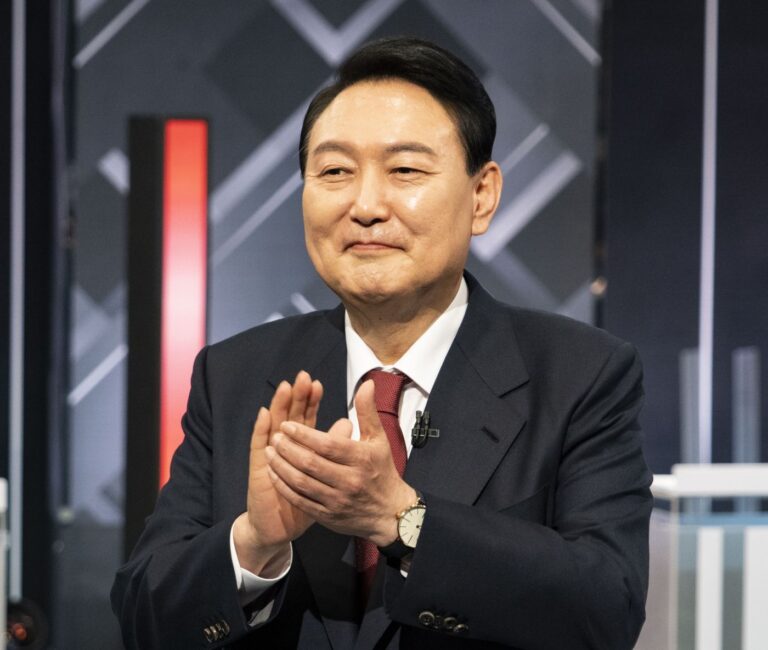
South Korea’s presidential race was too close to call according to an exit poll released minutes after voting ended Wednesday, that showed conservative candidate Yoon Suk-yeol with a lead of less than one percentage point.

According to Bloomberg, Yoon had 48.4% of the votes, compared with 47.8% for progressive candidate Lee Jae-myung of the ruling Democratic Party, a joint exit poll by three major TV broadcasters showed. A separate exit poll by JTBC TV network showed Lee with 48.4% of the votes compared with Yoon’s 47.7%. Final official results are expected to come later in the evening or early Thursday morning.

South Korea’s presidents serve a single five-year term and the winner would replace Moon Jae-in, who has backed rapprochement with North Korea and largely avoided stances that would rankle China, the country’s biggest trading partner.

A former factory worker who later became a civil rights lawyer, Lee, 57, has been in politics for more than 15 years as a member of the progressive camp — becoming governor of heavily populated Gyeonggi province surrounding Seoul in 2018. He has pushed to make the country Asia’s first to introduce universal basic income.

A victory for Lee would likely mean a continuation of Moon’s policies of warmer ties with Pyongyang. On the campaign trail, Lee said the best way to build peace on the heavily armed peninsula would be by ensuring trust with North Korea. Lee has also called for trying to gain advantage for South Korea by leveraging the friction between China and the U.S.

Yoon, 61, is a former top prosecutor, political newcomer and foreign policy novice. He was handpicked by Moon in 2019 with a mandate to make good on his pledges to go after the most powerful. But ties soured after Yoon’s probes included members of the current government and led to the resignations of two of Moon’s justice ministers.

A victory for Yoon would return a hawk to the presidential Blue House, likely leading to a stronger embrace of South Korea’s military alliance with the U.S. and support for the Biden administration push to bring in allies to build supply chains for crucial materials such as semiconductors that aren’t dependent on China.

It could also mean a chill for relations with neighbors North Korea and China after Yoon said he backed the option of a preemptive strike if Pyongyang posed an immediate threat and called for a new deployment of a U.S.-made missile interceptor system known as THAAD. China banned sales of group tour packages and appearances of Korean celebrities on television shows in retaliation for Seoul’s deployment of the U.S.-led missile shield system about six years ago, despite Beijing’s objection.

“He is more willing to treat China as a threat,” said Naoko Aoki, a research associate at the University of Maryland’s Center for International and Security Studies. “Yoon has signaled he will more closely align with the U.S. Although that does not mean South Korea will be in lockstep with the U.S. on all issues, that will not please China,” she said.

McDonald’s, Starbucks and Coca-Cola leave Russia

0

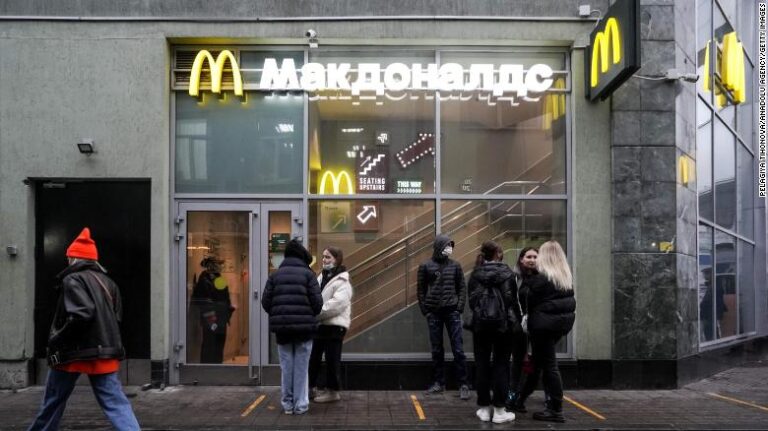
McDonald’s and Starbucks are shutting their restaurants and cafes in Russia, and Coca-Cola is suspending its operations there in response to Russia’s invasion of Ukraine. PepsiCo is also pulling some products from the country.

“McDonald’s has decided to temporarily close all our restaurants in Russia and pause all operations in the market,” CEO Chris Kempczinski said in a statement Tuesday.

“In Russia, we employ 62,000 people who have poured their heart and soul into our McDonald’s brand to serve their communities. We work with hundreds of local, Russian suppliers and partners who produce the food for our menu and support our brand,” Kempczinski said. “And we serve millions of Russian customers each day who count on McDonald’s. In the thirty-plus years that McDonald’s has operated in Russia, we’ve become an essential part of the 850 communities in which we operate.”

But, he added, “at the same time, our values mean we cannot ignore the needless human suffering unfolding in Ukraine.”

According to CNN, there were 847 locations of McDonald’s in Russia at the close of last year, according to an investor document.

Globally, most McDonald’s (MCD) locations are operated by franchise operators. But that’s not the case in Russia, where 84% of locations are operated by the company, according to the document. Russia’s restaurants, along with another 108 in Ukraine, all operated by McDonald’s, accounted for 9% of the company’s revenue in 2021, according to the document.

Biden bans Russia oil imports to U.S., warns gasoline to rise further

0

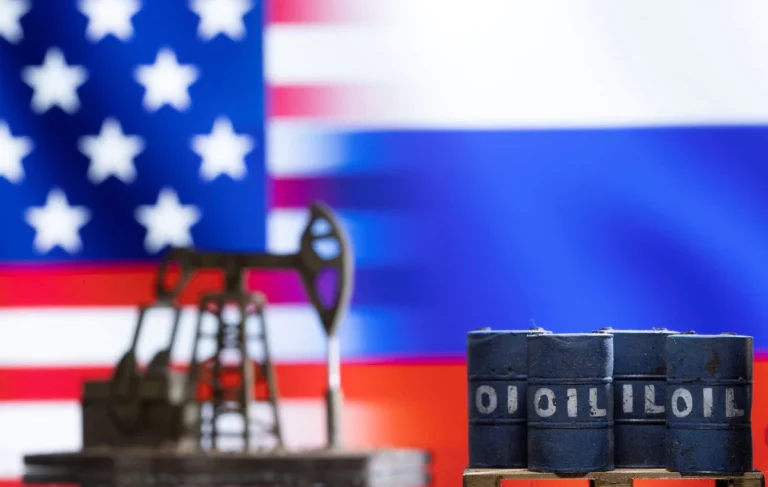
U.S. President Joe Biden on Tuesday imposed an immediate ban on Russian oil and other energy imports in retaliation for the invasion of Ukraine, amid strong support from American voters and lawmakers, even though the move will drive up U.S. energy prices.

“We’re banning all imports of Russian oil and gas energy,” Biden told reporters at the White House. “That means Russian oil will no longer be acceptable in U.S. ports and the American people will deal another powerful blow to (Russian President Vladimir) Putin’s war machine.”

The ban caps sweeping U.S. and European sanctions imposed on Moscow for launching the largest war in Europe since World War Two. Russian strikes have targeted Ukrainian cities and killed hundreds of civilians, some as they tried to flee their homes. 

Biden, who has pledged that U.S. soldiers will not go to Ukraine to fight, voiced America’s support for the Ukrainian people, and predicted their ultimate victory.

“Russia may continue to grind out its advance at a horrible price, but this much is already clear: Ukraine will never be a victory for Putin. Putin may be able to take a city, but he’ll never be able to hold the country,” he said.

Oil prices jumped on the news, with Benchmark Brent crude LCOc1 for May climbing by 5.4% to $129.91 a barrel by 1345 GMT, according to Reuters.

Retail gasoline prices in the United States surged to an all-time record on Tuesday, with the average cost of a retail gallon of gasoline hitting $4.173 early Tuesday, according to the American Automobile Association.

Biden signed an executive order on the ban soon after his remarks. The ban goes into effect immediately, but gives buyers 45 days to wind down existing contracts, a senior administration official told reporters.

The move also bans new U.S. investment in Russia’s energy sector, and prohibits Americans from participating in any foreign investments that flow into the Russian energy sector, the official said.

Biden has been working with allies in Europe, who are far more dependent on Russian oil, to isolate Russia’s energy-heavy economy and Putin. Britain announced shortly before Biden’s remarks that it would phase out the import of Russian oil and oil products by the end of 2022.

The United States consulted closely with allies on the ban, but did not ask them to join in, and did not expect that they would, the official said.

Biden said sanctions imposed by the United States and its allies had already caused the Russian economy to “crater” and vowed to continue ratcheting up pressure on Moscow to stop a war that forced more than 2 million people to flee the country.

The United States imported more than 20.4 million barrels of crude and refined products a month on average from Russia in 2021, about 8% of U.S. liquid fuel imports, according to the Energy Information Administration. The United States also imports a negligible amount of coal from Russia.

Biden predicted prices would rise further as a result of “Putin’s war,” but pledged to do all he could to ease the pain for the American people. He also warned U.S. companies against profiteering or otherwise exploiting the situation.

“The decision today is not without costs here at home. Putin’s war is already hurting American families at the gas pump … I’m going to do everything I can to minimize Putin’s price hikes here at home,” Biden said.

“Russia’s aggression is costing us all. It is not time for profiteering,” said the Democratic president, who has repeatedly targeted big U.S. companies for unfairly jacking up prices.

In November, Biden had cited mounting evidence of anti-consumer behavior by oil and gas companies and asked the Federal Trade Commission to dig deeper into possible “illegal conduct” in the market.

S. Korea votes for new leader to battle COVID, home prices, inequality

0

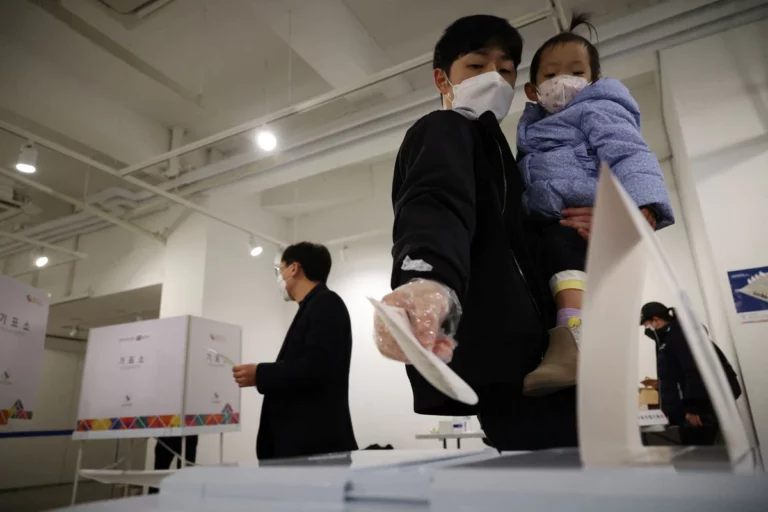
South Koreans went to the polls on Wednesday to elect a new president who will shape Asia’s fourth-largest economy riven by gender and generational divides, face off with a confrontational North Korea, and guide the country’s rising status in the world.

The campaign was marked by surprises, scandals and smears, but the policy stakes are high for the country’s 52 million residents, and whoever they elect to be president for the next five years.

The winner will face mounting challenges including handling the effects of South Korea’s worst wave of COVID-19 infections, deepening inequality and surging housing prices, and navigating the increasingly tense rivalry between China and the United States.

Voters are looking for a leader who can root out corruption and initiate negotiations to curb North Korea’s nuclear ambitions.

The contest is shaping as a tight two-way race between Lee Jae-myung, the standard-bearer of the ruling Democratic Party, and Yoon Suk-yeol, from the conservative main opposition People Power Party.

They are vying to succeed incumbent President Moon Jae-in, who is constitutionally barred from seeking re-election.

A win by the conservative opposition would represent a remarkable turnaround for a party that was in disarray after the last election in 2017, held early after the impeachment and dismissal of President Park Geun-hye.

Moon’s liberal Democratic Party, meanwhile, is fighting to protect and continue his agenda, and also to head off threats by Yoon to investigate the outgoing president’s administration for corruption if elected.

The two presidents before Moon, including Park, were imprisoned after they left office. Moon faces no specific allegations of wrongdoing, but his administration faced several major corruption scandals among top officials.

Polls last week showed a slight edge for Yoon, who secured a surprise, last-minute boost when a fellow conservative running a distant third dropped out and threw Yoon his support.

In the absence of opinion polls over the past six days, Yoon’s camp said on Monday it expected to win with a 10% margin, while Lee’s team predicted it would come out on top by 1-2%.

According to Reuters, out of about 44 million eligible voters nationwide, more than 61% had cast their votes by 1 p.m. on Wednesday, election authorities said. That number includes record turnout in early voting that began on Friday.

A former prosecutor general, Yoon has vowed to fight corruption, foster justice and create a more level playing field, while seeking a harder line toward North Korea and a “reset” with China.

Lee was governor of the most populous province of Gyeonggi and shot to fame with his aggressive coronavirus responses and advocacy for universal basic income.

Both candidates’ disapproval ratings matched their popularity as scandals, mud-slinging and gaffes dominated what was dubbed the “unlikeable election”.

Young voters who backed Moon but became disillusioned with economic problems and corruption scandals are seen as a key bloc.

Lee Sung-jin, 33, said he had heard that the turnout among people in their 20s and 30s would be important.

“As the current problems for young people concerning employment and housing prices are serious, I voted for a candidate who made a pledge to come up with solutions,” he said as he cast his vote in Seoul, without specifying who he voted for.

With more than 1 million COVID patients treating themselves at home, election authorities tightened voting procedures on Monday amid uproar over early voting irregularities. 

During Saturday’s special early voting for infected voters, some election workers collected ballots in shopping bags or plastic buckets to place in ballot boxes, and some voters reported receiving papers that had already been used.

Officials said there was no evidence of foul play but the chaos threatened to tarnish South Korea 35-year democratic history of tight and relatively transparent elections.

South Korea reports record high 342,446 new daily COVID-19 cases

0

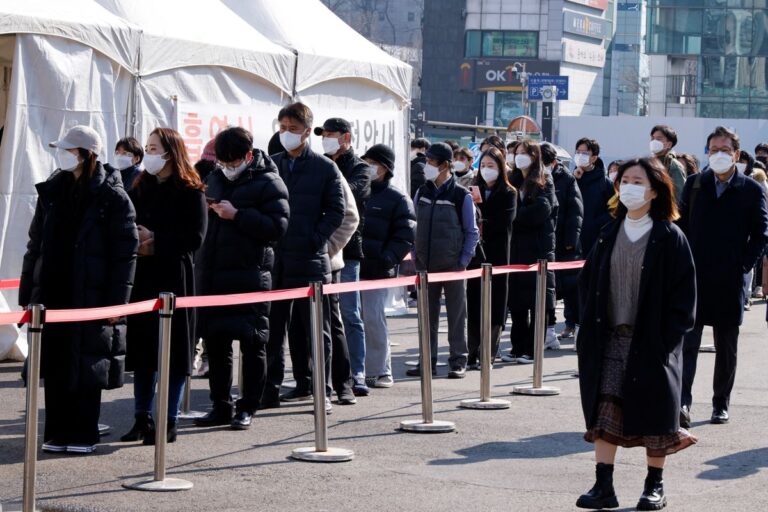
South Korea reported a new record daily high 342,446 COVID-19 cases, the Korea Disease Control and Prevention Agency said on Wednesday, amid a surge of Omicron infections.

The country also reported an additional 158 deaths from the virus, KDCA said.

South Korea is in the grip of an Omicron COVID-19 wave, with more than 200,000 new virus cases being recorded most days this month.

As the country gears up for the final day of its presidential election on Wednesday, more than a million people are currently isolating at home after testing positive, health authorities say. The country amended its electoral laws last month to ensure they would be able to vote.

People infected or in quarantine can walk in or take taxis or ambulances provided by local offices to the polling stations to vote in isolated booths. They are allocated an hour at the end of the second day of early voting and an hour and a half on Wednesday.

South Korea had early success in containing outbreaks and surges with aggressive testing and contact tracing.

Although the government’s pandemic management was not a major campaign focus, the Omicron spike of the past week is affecting the voting as it drives cases to record highs. 

At least 1.33 million people have fled to Poland from Ukraine

0

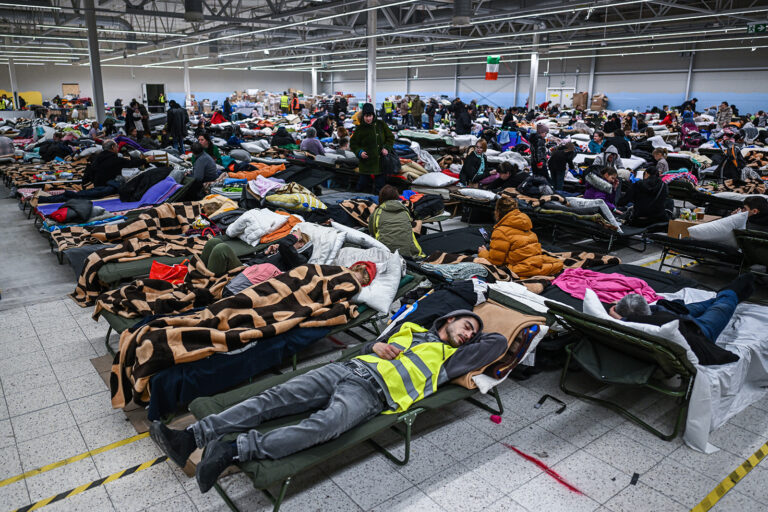
At least 1.33 million people have arrived in Poland from Ukraine since Russia launched its military invasion, Poland’s embassy to the European Union tweeted Wednesday, citing figures from the country’s border guard agency. 

“Among them 93% are Ukrainian, 1% are Polish and 6% are from 100 other different countries,” the post read. 

On Tuesday alone, some 125,800 people crossed into Poland according to the agency. 

Meanwhile, the Ukrainian military has agreed to a 12-hour ceasefire with Russia on Wednesday to allow civilians to escape through humanitarian corridors, Ukraine’s Deputy Prime Minister Iryna Vereshchuk said.

Vereshchuk added that Prime Minister Denys Shmygal would be talking to the International Committee of the Red Cross Wednesday about the proposed routes for the ceasefire, which runs from 9 a.m. to 9 p.m local time.

S. Korea’s election set to be judgment on Moon’s mixed record

0

South Koreans are choosing primarily between two imperfect candidates in Wednesday’s presidential election, at a time when the country faces a range of challenges, including a sluggish economy and a rising cost of living.

Over President Moon Jae-in’s five years in power, South Korean real estate prices have risen astronomically, leaving many families unable to purchase homes, while the pandemic wiped out many independent businesses. And despite repeated peace overtures from Seoul, North Korea has continued to develop an increasingly sophisticated range of missiles.

In most polls leading up to the election, Yoon has led Lee by narrow margins. Yoon bolstered his chances at victory less than a week before the vote when he merged campaigns with minor candidate Ahn Cheol-soo, who held around 5% to 10% of support in most polls. Ahn formally withdrew his candidacy and said he would support Yoon toward the goal of achieving a change of power.

In seeking the presidency, both candidates have pledged generous state spending to assist the vulnerable class, whose ranks have expanded of late. Along with rising housing prices, especially in the Seoul area, many lost earnings throughout the pandemic. A study released on Thursday by the Korea Institute of Public Administration found 68% of respondents reporting having lost income during the pandemic, in many cases due to fewer working hours.

South Korea has room to expand welfare expenditures but cannot maintain the current pace of stimulus spending, said ChangHwan Kim, a professor at the University of Kansas.

“The Korean government actually only spends about 12% of GDP on welfare, which is much lower than other advanced countries,” Kim told Nikkei.

“But the government can’t continue providing as much money as they did throughout the pandemic. … They must find a more permanent way of redistributing wealth, but politically that won’t be easy,” Kim said.

In a poll released Thursday by Ipsos and the Korea Economic Daily Newspaper, 44% of respondents said Lee is the candidate who would best administer the economy, while 33% chose Yoon.

They are hoping to tap into a widely held desire for change, as analysts say many voters are less interested in the two main candidates’ visions for governance and more keen to move on from the left-leaning Moon administration.

“This is a backward-looking election,” Kang Won-taek, a professor of political science at Seoul National University, told Nikkei Asia.

“The five years of the Moon administration were difficult, so there is a strong feeling of wanting to make change. … Candidates’ pledges are more focused on correcting the mistakes than setting a course for where the country will go in the future,” Kang said.

At his own campaign events, Yoon has said that an administration led by Lee would continue Moon’s ineffective approach to key issues such as the housing market and employment.

Throughout his campaign, Yoon, a former prosecutor with no previous political experience, has been accused of attempting to rally young male voters by appealing to some young men’s dislike of “feminism” and claims that the government has gone out of its way to help young women while doing little for men, who are required to spend roughly two years serving in the military.

Yoon pledged to abolish South Korea’s ministry dedicated to gender issues, and during his campaign has used messaging, including a television advertisement, that depicts young men as suffering unfairly as more women make gains in South Korea, a country with a large gender pay gap and where women are underrepresented in the top ranks of government and business.

At a stop in the industrial city of Pohang, Yoon told a crowd that the state funds the Moon administration has allocated to policies intended to achieve greater gender equality would have been more than enough to eliminate the threat from North Korea.

In Yoon’s favor is his background as a prosecutor, where he oversaw aggressive investigations of power players from both major political camps, earning him a reputation as a man guided by principle instead of group loyalty.

“I think voters are drawn to Yoon with a desire for a change of administration that will bring policy changes, and also with his more reliable character appeal,” Lee Sook-jong, a professor at the Sungkyunkwan University Graduate School of Governance, told Nikkei.

Lee is by far the more experienced politician, having previously served as mayor of a suburb of Seoul and governor of Gyeonggi Province, which surrounds the capital. In both jobs, though some were put off by his outspoken and sometimes brash persona, Lee enjoyed strong approval ratings and gained attention for experimenting with universal basic income.

“In the case of Lee, supportive voters view him as a more experienced leader from his mayorship and governorship. By apologizing for some of the controversial policies of the Moon administration, such as housing policies, he gave the impression of changing course,” professor Lee said.

Instead of policies, many voters will likely be thinking of their own frustration when making their choice on Wednesday and wish to “pass judgment on the Moon administration,” said Kim Jin-seok, a professor in the department of social welfare at Seoul Women’s University.

“After more than two years of the coronavirus pandemic, many voters are just seeking a government that can maintain stability,” Kim told Nikkei.

“The next administration’s first tasks will be to recognize our society’s growing polarization and find ways to actively address it.”
S. Korea seizes N. Korean ‘fishing’ boat, fires warning shot at patrol boat

0

South Korea’s military seized a North Korean boat that crossed into its waters on Tuesday and fired a warning shot to see off a North Korean patrol vessel that tried to intervene, Seoul officials said.

According to AP, the boat crossed into the South’s waters at around 9:30 a.m. (0030 GMT), and was about 10 km (6.2 miles) off the west coast of the peninsula when it was seized and towed to Baengnyeongdo island for investigation, the official said.

The official said it was the first time that a North Korean patrol vessel had crossed the border since 2018, when the rival Koreas agreed to cease “all hostile acts” and dismantled some structures along the heavily fortified land border.

The incident comes at delicate time on the Korean Peninsula. The South is set to hold a presidential election on Wednesday, and tension has risen over the North’s recent weapons tests and fresh signs of activity at its nuclear testing site.

South Korea’s Yonhap news agency initially described the vessel as a fishing boat, but officials said that had still to be determined.

Seven unarmed sailors were aboard the vessel, but six appeared to be wearing uniforms, a South Korean military official said. During initial questioning, the North Korean sailors claimed that there must have been a “navigating error”.

A North Korean patrol boat that was tracking the seized vessel briefly crossed the Northern Limit Line (NLL), the de facto sea boundary, but turned back after the South Korean military broadcast warnings and fired a warning shot, a second military official said.

“We’ve informed the North side that we’re making checks on the boat and will notify the results,” the official told reporters.

Malaysia to reopen borders from April

0

Malaysia will reopen its borders fully from April 1 and allow entry without quarantine for visitors vaccinated against COVID-19, Prime Minister Ismail Sabri Yaakob said on Tuesday.

Malaysia has since March 2020 maintained some of the tightest entry curbs in Asia to try to contain coronavirus outbreaks, with most foreign nationals barred from entry and returning Malaysians required to undergo quarantine, according to Reuters.

The reopening follows similar steps taken by neighbours Thailand, Cambodia, Philippines, Vietnam and Indonesia, with quarantine waived for vaccinated travellers with negative COVID-19 tests before departure and after arrival.

Malaysian nationals barred from leaving the country for more than a year can fully resume international travel, Ismail Sabri said, adding that travel agreements with other countries including Brunei, Thailand and Indonesia were in the works in addition to one with Singapore announced last year.

He also said restrictions on business operating hours, gatherings, social distancing and interstate travel would be eased.

The Southeast Asian country will begin a transition to the endemic phase of COVID-19 from next month, Ismail Sabri said in a televised address.