Home Blog Page 70

Russia seeking military aid from China

0

A U.S. official said Russia asked China for military equipment to use in its invasion of Ukraine, a request that heightened tensions about the ongoing war ahead of a Monday meeting in Rome between top aides for the U.S. and Chinese governments, according to AP.

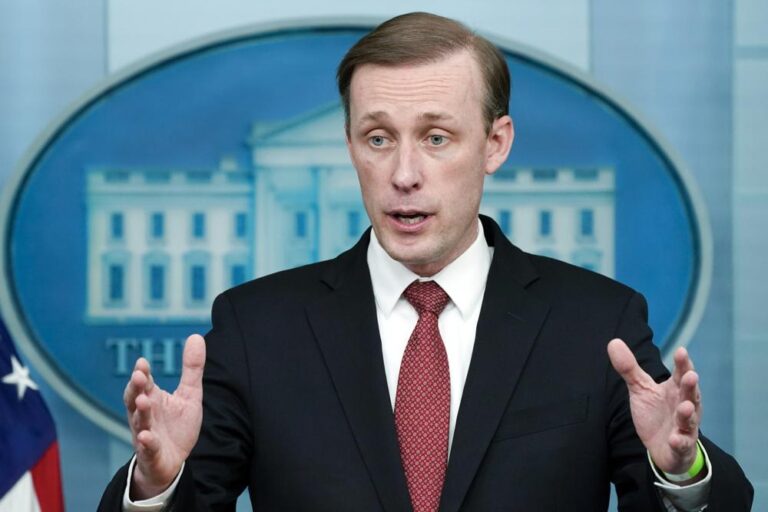
In advance of the talks, White House national security adviser Jake Sullivan bluntly warned China to avoid helping Russia evade punishment from global sanctions that have hammered the Russian economy. “We will not allow that to go forward,” he said.

Chinese officials have said Washington shouldn’t be able to complain about Russia’s actions because the U.S. invaded Iraq under false pretenses. The U.S. claimed to have evidence Saddam Hussein was stockpiling weapons of mass destruction though none was ever found.

On CNN, Sullivan said the administration believes China knew that Putin “was planning something” before the invasion of Ukraine. But he said the Chinese government “may not have understood the full extent of it because it’s very possible that Putin lied to them the same way that he lied to Europeans and others.”

Sullivan and Yang last met for face-to-face talks in Switzerland, where Sullivan raised the Biden administration’s concerns about China’s military provocations against Taiwan, human rights abuses against ethnic minorities and efforts to squelch pro-democracy advocates in Hong Kong.

That meeting set the stage for a three-hour long virtual meeting in November between Biden and Xi.

Sullivan is also to meet Luigi Mattiolo, diplomatic adviser to Italian Prime Minister Mario Draghi, while in Rome.

The prospect of China offering Russia financial help is one of several concerns for President Joe Biden. A U.S. official, speaking on condition of anonymity to discuss sensitive matters, said that in recent days, Russia had requested support from China, including military equipment, to press forward in its ongoing war with Ukraine. The official did not provide details on the scope of the request. The request was first reported by the Financial Times and The Washington Post.

The Biden administration is also accusing China of spreading Russian disinformation that could be a pretext for Russian President Vladimir Putin’s forces to attack Ukraine with chemical or biological weapons.

Russia’s invasion of Ukraine has put China in a delicate spot with two of its biggest trading partners: the U.S. and European Union. China needs access to those markets, yet it also has shown support for Moscow, joining with Russia in declaring a friendship with “no limits.”

In his talks with senior Chinese foreign policy adviser Yang Jiechi, Sullivan will indeed be looking for limits in what Beijing will do for Moscow.

“I’m not going to sit here publicly and brandish threats,” he told CNN in a round of Sunday news show interviews. “But what I will tell you is we are communicating directly and privately to Beijing that there absolutely will be consequences” if China helps Russia “backfill” its losses from the sanctions.

“We will not allow that to go forward and allow there to be a lifeline to Russia from these economic sanctions from any country anywhere in the world,” he said.

In brief comments on the talks, Chinese Foreign Ministry spokesperson Zhao Lijian did not mention Ukraine, saying that the “key issue of this meeting is to implement the important consensus reached by the Chinese and U.S. heads of state in their virtual summit in November last year.”

“They will exchange views on China-U.S. relations and international and regional issues of common concern,” Zhao said in comments posted on the ministry’s website late Sunday.

The White House said the talks will focus on the direct impact of Russia’s war against Ukraine on regional and global security.

Biden administration officials say Beijing is spreading false Russian claims that Ukraine was running chemical and biological weapons labs with U.S. support. They say China is effectively providing cover if Russia moves ahead with a biological or chemical weapons attack on Ukrainians.

When Russia starts accusing other countries of preparing to launch biological or chemical attacks, Sullivan told NBC’s “Meet the Press,” “it’s a good tell that they may be on the cusp of doing it themselves.”

Pentagon spokesman John Kirby, on ABC’s “This Week,” said “we haven’t seen anything that indicates some sort of imminent chemical or biological attack right now, but we’re watching this very, very closely.”

The striking U.S. accusations about Russian disinformation and Chinese complicity came after Russian Foreign Ministry spokeswoman Maria Zakharova alleged with no evidence that the U.S. was financing Ukrainian chemical and biological weapons labs.

The Russian claim was echoed by Chinese foreign ministry spokesman Zhao Lijian, who claimed there were 26 bio-labs and related facilities in “which the U.S. Department of Defense has absolute control.” The United Nations has said it has received no information backing up such accusations.

White House press secretary Jen Psaki called the claims “preposterous.”

There is growing concern inside the White House that China is aligning itself with Russia on the Ukraine war in hopes it will advance Beijing’s “vision of the world order” in the long term, according to a person familiar with administration thinking. The person was not authorized to comment publicly and spoke on the condition of anonymity.

Sullivan told “Face the Nation” on CBS that the Russian rhetoric on chemical and biological warfare is “an indicator that, in fact, the Russians are getting ready to do it and try and pin the blame elsewhere and nobody should fall for that.”

The international community has assessed that Russia used chemical weapons in attempts to assassinate Putin detractors such as Alexei Navalny and former spy Sergei Skripal. Russia also supports the Assad government in Syria, which has used chemical weapons against its people in a decadelong civil war.

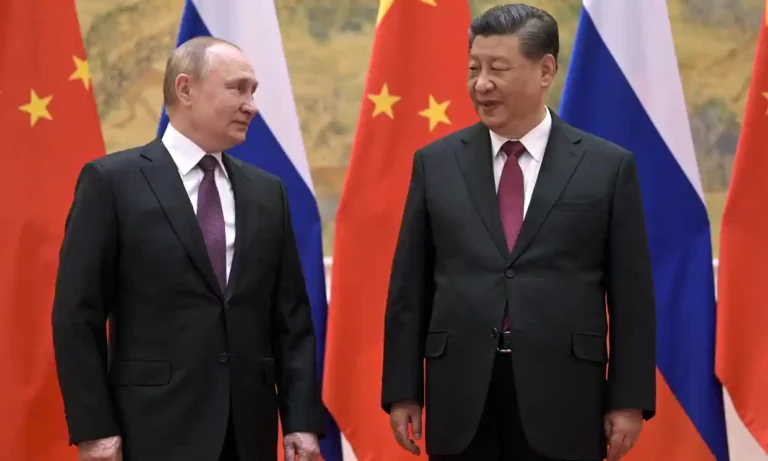
China has been one of few countries to avoid criticizing the Russians for its invasion of Ukraine. China’s leader Xi Jinping hosted Putin for the opening of the Winter Olympics in Beijing, just three weeks before Russia invaded on Feb. 24.

During Putin’s visit, the two leaders issued a 5,000-word statement declaring limitless friendship.

The Chinese abstained on U.N. votes censuring Russia and has criticized economic sanctions against Moscow. It has expressed its support for peace talks and offered its services as a mediator, despite questions about its neutrality and scant experience mediating international conflict.

But questions remain over how far Beijing will go to alienate the West and put its own economy at risk. Sullivan said China and all countries are on notice that they cannot “basically bail Russia out … give Russia a workaround to the sanctions,” with impunity.
US will try to persuade China not to supply arms to Russia at key Rome meeting

0

The United States will try to persuade China not to supply arms to Russia at a high-level meeting in Rome which the White House sees as critically important not just for the war in Ukraine but also for the future of the global balance of power.

Jake Sullivan, the US national security adviser, will meet his Chinese counterpart, Yang Jiechi, in the Italian capital amid reports that Russia has asked China for weapons to bolster its faltering invasion of Ukraine.

Sullivan will point out that the US briefed Beijing on Vladimir Putin’s intentions months ahead of the invasion, but that the Chinese leadership ignored those warnings, mistakenly believing that Putin was bluffing to gain leverage, according to sources familiar with plans for the Rome meeting. Sullivan will also argue that if China supplies weapons to Moscow it will be a further, historic mistake, and a turning point in global politics.

China has so far not condemned the Russian invasion or the mass killings of civilians in bombardments of Ukrainian towns, and has abstained on resolutions deploring the attack at the UN security council and general assembly. Xi last week called for “maximum restraint” in Ukraine after a virtual meeting with German chancellor Olaf Scholz and French president Emmanuel Macron, and said he was “pained to see the flames of war reignited in Europe”.

Xi also expressed concern about the impact of sanctions on the global economy, and the limitation that western sanctions are imposing on China’s ability to buy Russian oil.

Hass, now a senior fellow at the Brookings Institution, said he did not expect to see any immediate breakthroughs at the Rome meeting.

“The results may take weeks or longer to come into focus,” he said. “Neither side likely to provide other with satisfaction. Outcomes may need to be measured in degrees, not black-white binaries.”

The Biden White House is anxious to prevent the Ukraine war further cementing a division of the world into two opposing blocs.

Sullivan and Yang will also follow up on agreements Joe Biden and Xi Jinping made in a virtual summit in November, to improve crisis communications between the two nuclear powers.

“We also are watching closely to see the extent to which China actually does provide any form of support – material support or economic support – to Russia,” Sullivan told CNN. “It is a concern of ours. And we have communicated to Beijing that we will not stand by and allow any country to compensate Russia for its losses from the economic sanctions.

Sullivan said the US had made clear to Beijing that there would “absolutely be consequences” for “large-scale” efforts to help Russia sidestep sanctions.

Russia has also asked China for economic help as it faces severe western sanctions, but Sullivan told CNN the US was “communicating directly, privately to Beijing that there will absolutely be consequences” if China helps Russia evade sanctions.

The Financial TimesNew York Times and Washington Post reported on Sunday about the Russian request for weapons, amid claims from US officials that the Russian military was running short on certain kinds of armaments.

The spokesperson for the US embassy in Washington, Liu Pengyu, told CNN he had “never heard” of the Russian arms requests.

“The current situation in Ukraine is indeed disconcerting,” he said in a statement. “The high priority now is to prevent the tense situation from escalating or even getting out of control.”

“It feels like the US-China relationship is moving toward a pretty significant fork,” Ryan Hass, former China director at the US national security council, said on Twitter. “If China materially contributes to Russia’s war machine in Ukraine through provision of materiel or significant backfilling, then China’s actions will accelerate the cleavage of the world in direction of adversarial blocs.

“It’s wise for the US to speak directly and privately with the Chinese at an authoritative level now to clarify the lasting strategic ramifications of China’s decisions in this moment.”

China’s COVID cases more than triple to highest point

0

Chinese officials reported 1,807 new symptomatic COVID cases on Sunday — more than triple the number reported the previous day and the country’s highest figure in two years.

The northeastern province of Jilin accounted for 78 percent of the national total, China’s National Health Commission said. The nationwide total easily topped Saturday’s count, which was already a record for cases since the country’s first outbreak in early 2020 — sparking a fresh round of lockdowns.

China’s current case count is far fewer than those of many other countries, but the growing number could complicate its hope to suppress spread as quickly as possible.

The country, where COVID originated, is tweaking its testing regime in response to the spread of the Omicron variant, after having in the past two years required medical workers to swab members of the public using nucleic acid tests that require labs to process samples.

Health authorities said they would allow the general public to buy such kits in stores and online for the first time and on Saturday they approved five COVID-19 antigen kits made by local companies to be used for self-testing.

“In order to deal with how Omicron spreads, we need to promote a model of antigen screening and nucleic acid tests, enable the public to purchase tests by themselves, which is conducive to early detection,” Chinese Vice Premier Sun Chunlan was quoted by state broadcaster CCTV as telling a government meeting on Saturday.

“[The increase] showed that some local areas, facing a rapid rise of epidemic, lacked the capacity to expand medical resources, resulting in limited admission of infections to centralized facilities within a short period of time,” a Jilin provincial official told a news briefing on Sunday.

Beijing has ordered its localities to stick to the “dynamic clearing” policy to keep virus case counts close to zero, prompting several localities to take measures such as cancelling group events, launching rounds of mass testing and canceling in-person classes in school.

Authorities in Changchun, the provincial capital already under lockdown, have been conducting mass testing and working on turning an expo center into a temporary hospital with 1,500 beds, according to the local official and state media reports.

The southern tech hub of Shenzhen reported 60 new local cases with confirmed symptoms for Saturday, the highest daily rise of such cases for the city since China contained the first outbreak in early 2020.

All nine districts in Shenzhen have halted indoor dining, closed a flurry of indoor entertainment venues and demanded that companies should have employees work from home from March 14-18 if remote working is possible, with exceptions for those in essential sectors.

Six officials with local government or Communist Party authorities in the southern city of Dongguan have been removed from their roles for doing a poor job in COVID prevention and control, state media said on Sunday.

Power restored to Chernobyl nuclear plant

0

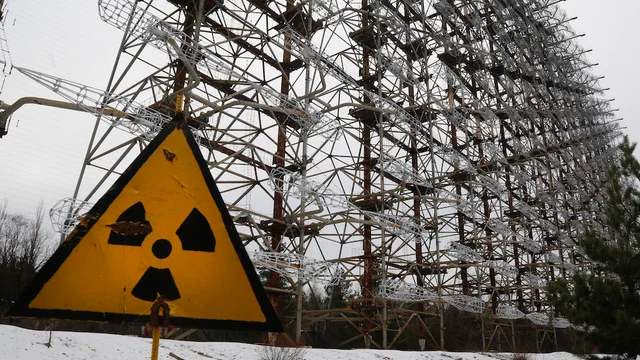
Ukrainian officials said power has been restored to the Chernobyl nuclear power plant on Sunday, after warning of an increased risk of radiation leaking after Russian forces reportedly knocked the plant off the energy grid earlier in the week. 

Ukrainian atomic energy ministry said in an online post on Sunday that cooling systems would operate normally after relying on backup power, Reuters reported

Russia has seized a number of Ukrainian power plants in its invasion on its neighbor. 

Ukraine’s Zaporizhzhia nuclear power plant, one of the largest such facilities in Europe, caught fire earlier this month following a Russian attack, raising alarm across the region. 

U.S. Ambassador to the United Nations Linda Thomas-Greenfield told the U.N. Security Council earlier this month that Russia’s focus on nuclear plants could pose a problem for Ukraine.

“Nuclear facilities cannot become part of this conflict,” she warned.”Russia must halt any further use of force that might put at further risk all 15 operable reactors across Ukraine – or interfere with Ukraine’s ability to maintain the safety and security of its 37 nuclear facilities and their surrounding populations.”

At least 549 civilians in Ukraine had been killed in the invasion since March 9, and more than 2.698 million refugees have fled the country, according to the United Nations.

Ukrainian officials had warned about a potential radiation leak if a high voltage power line connected to the plant wasn’t repaired, according to Reuters. 

Russian forces took control of the Chernobyl nuclear site at the beginning of Moscow’s invasion about three weeks ago.

“It is impossible to say the Chernobyl nuclear power plant is safe after a totally pointless attack by the Russians,” President Zelensky’s adviser Mykhailo Podoliak said at the time. “This is one of the most serious threats in Europe today.”

‘The Batman’ remained No.1 in theaters while a live BTS concert broadcast was one-day-only blockbuster

0

In its second weekend of release, Warner Bros.′ “The Batman” easily remained the No. 1 movie in North American theaters with $66 million in ticket sales, according to studio estimates Sunday, while a live BTS concert broadcast was one-day-only blockbuster.

1. “The Batman,” $66 million.

2. “Uncharted,” $9.3 million.

3. “BTS Permission to Dance on Stage: Seoul,” $6.8 million.

4. “Dog,” $5.3 million.

5. “Spider-Man: No Way Home,” $4.1 million.

6. “Death on the Nile,” $2.5 million.

7. “Radhe Shyam,” $1.8 million.

8. “Sing 2,” $1.6 million.

9. “Jackass Forever,” $1.1 million.

10. “Scream,” $445,000.

Matt Reeves’ Caped Crusader reboot starring Robert Pattinson and Zoë Kravitz held well in its second week, dropping a modest 51% — a good rate for a comic book movie — from its $134 million debut and bringing its domestic total to $238.5 million. It’s done nearly identical business overseas, leading to $463.2 million globally thus far, according to AP.

“The Batman,” Warner Bros.′ first exclusively theatrical release in more than a year after experimenting with simultaneous streaming releases through 2021, is expected to have much of March to itself at theaters. No new wide releases opened over the weekend and “The Batman” should remain atop the box office for at least another week. Partly because theaters were so dependent on “The Batman” this month, AMC Entertainment and some other chains introduced ticket prices that were $1 to $1.50 higher for the film’s first eight days of release.

Also packing theaters, albeit for a shorter window, was “BTS Permission to Dance on Stage: Seoul.” The live broadcast Saturday of the band’s first stage concert in South Korea sine 2019 grossed $6.8 million in 797 North American theaters. Globally, it made $32.6 million — a testament to the immense popularity of the South Korean boy band. Tickets to the event screenings went for as much as $35.

One promising sign for Hollywood and exhibitors: Movies are holding well. During much of 2021 amid in the ups and down of the pandemic, most films struggled to remain sizable draws after their first or second week in theaters. This weekend, not only did “The Batman” hold well, so did the weekend’s other top films.

“Uncharted,” the action-adventure starring Tom Holland and Mark Wahlberg, declined only 17% in its fourth week of release. The videogame adaptation, from Sony Pictures, came in second with $9.3 million. It grossed $113.4 million domestically.

MGM’s “Dog,” starring Channing Tatum, has also had staying power. In its fourth week of release, it dipped only 13% with $5.3 million in ticket sales. The modestly budgeted film has made $47.8 million.

Paul Dergarabedian, senior media analyst for the data firm Comscore, said those results reflect a stabilizing marketplace after pandemic fluctuations.

“These are unusually small weekend-over-weekend drops,” said Dergarabedian, who noted the dip for “The Batman” was even less (41%) if you discounted the film’s early presales ahead of opening weekend. “The road to recovery is in full swing, it’s just taking a while.”

The paucity of competition for “The Batman” was partly due to other studios staying away from one of the year’s more anticipated films. But it was also reflective of an early 2022 trend and changes accelerated by the pandemic. With more major movies going straight to streaming, theatrical offerings are slimmer.

The Walt Disney Co. opted to debut the Pixar film “Turning Red” on Disney+, as it did for the previous two Pixar releases. Before the pandemic, Pixar releases were some of Hollywood’s most reliable ticket-sellers. Domee Shi’s “Turning Red,” the first Pixar film directly solely by a woman, about a 13-year-old Asian Canadian girl who turns into a giant red panda when she feels strong emotions, played in three theaters domestically (Disney didn’t provide sales figures) and opened theatrically in 12 international markets where Disney+ isn’t available. It grossed $3.8 million in those territories.

The release schedule, said David A. Gross, who runs the movie consultancy Franchise Entertainment, remains thin. He counted 16 wide releases in January and February, while there would typically be 22 to 25. The National Association of Theatre Owners has called lack of movies “a critical issue” for theaters.

“But the April and May titles are strong and they are more consistent from week to week, which is what we’ve been missing,” wrote Gross in a newsletter Sunday. He expects moviegoing to continue to strengthen in the spring and summer. If sales can reach 80% of 2019 grosses, he says, that would be a very good result for the year.

Estimated ticket sales for Friday through Sunday at U.S. and Canadian theaters, according to Comscore. Final domestic figures will be released Monday.

American journalist Brent Renaud was killed by Russian forces 

0

Award-winning American journalist Brent Renaud was killed by Russian forces in the Ukrainian city of Irpin, police in Kyiv said in social media posts on Sunday. Another American journalist, Juan Arredondo, was wounded, reported by CNN.

In a tweet, Kyiv region police identified the dead man as Renaud, who was 50. Police posted a photo of his body and his American passport as evidence, as well as a photo of an outdated New York Times press badge with Renaud’s name.

Renaud was a Peabody Award-winning documentary filmmaker, producer and journalist who lived and worked in New York and Little Rock, Arkansas, according to his biography on the Renaud Brothers website.With his brother Craig, Renaud spent years “telling humanistic verite stories from the World’s hot spots,” including projects in Iraq, Afghanistan, Haiti, Egypt and Libya, according to his website bio.

Andriy Nebitov, the head of the Kyiv region police, said in a Facebook post that Russian forces shot Renaud, adding that “the occupants cynically kill even journalists of international media, who’ve been trying to tell the truth about atrocities of Russian military in Ukraine.”

“Of course, journalism carries risks, but the US citizen Brent Renaud paid with his life for an attempt to shed light on how underhand, cruel, and merciless the aggressor is,” Nebitov added.

Renaud is the first foreign journalist known to be killed in the war in Ukraine. A Ukrainian camera operator, Yevhenii Sakun, was reportedly killed when Kyiv’s TV tower was shelled earlier this month.

Press freedom groups denounced Sunday’s violence as a violation of international law.

“Russian forces in Ukraine must stop all violence against journalists and other civilians at once, and whoever killed Renaud should be held to account,” the Committee to Protect Journalists said in a statement.

Time magazine told CNN that Renaud, an acclaimed filmmaker, was in Ukraine in recent weeks to work on “a Time Studios project focused on the global refugee crisis.”

“Our hearts are with all of Brent’s loved ones,” the publication said. “It is essential that journalists are able to safely cover this ongoing invasion and humanitarian crisis in Ukraine.”

Arredondo, a Colombian-American photographer, appeared in a social media video from Okhmatdyt hospital in Kyiv and recounted the shooting. He said he and Renaud were driving through a checkpoint in Irpin on the way to film refugees leaving the city when Russian forces opened fire.

Arredondo said there were “two of us,” and Renaud was “shot and left behind,” adding that Renaud was shot in the neck. “We got split and I got pulled into the (stretcher).” Asked how he got to the hospital, he replied, “an ambulance, I don’t know.”

Arredondo, a filmmaker and visual journalist who is also an adjunct professor at Columbia Journalism School, posted photos from Zhytomyr, Ukraine, on Saturday, noting in an Instagram post that he is “#onassignment.”

The Dean of Columbia Journalism School, Steve Coll, told CNN: “We don’t have any independent information about his injuries at this time but are working now to learn more and to see if we can help.”

Arredondo is a prominent photographer, with work featured in The New York Times, National Geographic, The Wall Street Journal, Newsweek, ESPN, Vanity Fair and other media outlets, according to his personal website bio.

Anton Gerashchenko, an adviser to Ukraine’s interior minister, said in a statement on Telegram that Renaud “paid with his life for attempting to expose the insidiousness, cruelty and ruthlessness of the aggressor.”

Irpin, in northern Ukraine just outside Kyiv, has been the site of substantial Russian shelling in recent days and has seen extensive destruction, according to the Kyiv regional government on Friday.

Russian strikes hit western Ukraine as offensive widens

0

Russia widened its military offensive in Ukraine on Friday, striking near airports in the west of the country for the first time as troops kept up pressure on the capital, Kyiv, and the U.S. and its allies prepared to revoke Russia’s favored trading status in a new punishment for the invasion.

Russian Defense Ministry spokesman Igor Konashenkov said Russia used high-precision long-range weapons Friday to put military airfields in Lutsk and Ivano-Frankivsk “out of action.” He did not provide details.

The airstrikes on the Lutsk airfield left two Ukrainian servicemen dead and six people wounded, according to the head of the surrounding Volyn region, Yuriy Pohulyayko. In Ivano-Frankivsk, residents were ordered to shelters after an air raid alert, Mayor Ruslan Martsinkiv said.

According to AP, the number of refugees fleeing Ukraine has topped 2.3 million, and some 100,000 people have been evacuated during the past two days from seven cities under Russian blockade in the north and center of the country, including the Kyiv suburbs, Zelenskyy said.

Zelenskyy told Russian leaders that the invasion will backfire as their economy is strangled. Western sanctions have already dealt a severe blow, causing the ruble to plunge, foreign businesses to flee and prices to rise sharply.

“You will definitely be prosecuted for complicity in war crimes,” Zelenskyy said in a video address, adding that “you will be hated by Russian citizens.”

Putin dismissed such talk, saying the country has endured sanctions before.

″We will overcome them,” he said at a televised meeting of government officials, but acknowledged the sanctions create “certain challenges.”

In addition to those who have fled the country, millions have been driven from their homes inside Ukraine. Kyiv Mayor Vitali Klitschko said about 2 million people, half the metropolitan area’s population, have left the capital.

“Every street, every house … is being fortified,” he said. “Even people who in their lives never intended to change their clothes, now they are in uniform with machine guns in their hands.”

Western officials said Russian forces have made little progress on the ground in recent days and are seeing heavier losses and stiffer Ukrainian resistance than Moscow apparently anticipated. But Putin’s forces have used air power and artillery to pummel cities.

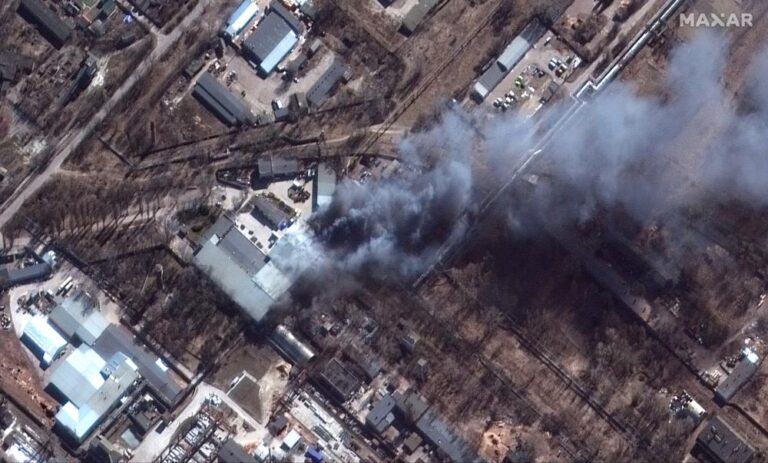
New satellite photos, meanwhile, appeared to show a massive convoy outside the Ukrainian capital had fanned out into towns and forests near Kyiv, with artillery pieces raised for firing in another potentially ominous movement.

The photos emerged amid more international efforts to isolate and sanction Russia, particularly after a deadly airstrike on a maternity hospital in the southern port city of Mariupol that Western and Ukrainian officials decried as a war crime.

Russian Defense Ministry spokesman Igor Konashenkov said Russian-backed fighters have advanced up to 800 meters of Mariupol from the east, north and west, further squeezing the city which has the Azov Sea to its south. Konashenkov said the advance was being conducted by fighters from the separatist-held Donetsk region, the standard Russian line for fighting in the east.

Separately, Russian President Vladimir Putin approved bringing “volunteer” fighters from around the world to join the Ukraine offensive. Defense Minister Sergei Shoigu said Russia knew of “more than 16,000 applications” from countries in the Middle East, many of them from people who he said had helped Russia against the Islamic State group, according to a Kremlin transcript.

Since 2015, Russian forces have backed Syrian President Assad against various groups opposed to his rule, including Islamic State.

Putin told Shoigu that Russia should help would-be volunteers to “move to the combat zone” and contrasted them with what he called foreign “mercenaries” fighting for Ukraine.

Increasing the pressure on Moscow, the U.S. and other nations were poised later Friday to announce the revocation of Russia’s “most favored nation” trade status, which would allow higher tariffs to be imposed on some Russian imports.

Unbowed by the sanctions, Russia kept up its bombardment of besieged Mariupol while Kyiv braced for an onslaught, its mayor boasting that the capital had become practically a fortress protected by armed civilians.

The head of the Kyiv Region administration, Oleksiy Kuleba, said a missile hit the town of Baryshivka, about 20 kilometers east of Kyiv’s main international Boryspil Airport. He reported significant damage to residences but no immediate casualty toll.

Three Russian airstrikes early Friday also hit the eastern city of Dnipro, a major industrial hub and Ukraine’s fourth-largest city in a strategic position on the Dnieper River. The strikes killed at least one person, according to Interior Ministry adviser Anton Heraschenko.

Meanwhile, Russian forces were pushing toward Kyiv from the northwest and east but were repulsed from Chernihiv as Ukrainian fighters regained control of Baklanova Muraviika, the general staff of Ukraine’s armed forces said.

The convoy seen in satellite imagery from Maxar Technologies showed the 40-mile (64-kilometer) line of vehicles, tanks and artillery had been redeployed, the company said. Armored units were seen in towns near the Antonov Airport north of the city. Some vehicles moved into forests, Maxar reported, with towed howitzers nearby in position to open fire.

The Russian column had massed outside the city early last week, but its advance appeared to stall as reports of food and fuel shortages circulated. U.S. officials said Ukrainian troops also targeted the convoy with anti-tank missiles.

Ukrainian Deputy Prime Minister Iryna Vereshchuk in a video message announced efforts to create new humanitarian corridors to bring aid to people in areas occupied or under Russian attack around the cities of Kherson in the south, Chernihiv in the north and Kharkiv in the east.

Authorities also planned to send aid into Mariupol, a city of 430,000, where the situation was increasingly dire as trapped civilians scrounged for food and fuel, Vereshchuk said. Repeated previous attempts have failed as aid and rescue convoys were targeted by Russian shelling.

More than 1,300 people have died in the city’s 10-day siege, Vereshchuk said. “They want to destroy the people of Mariupol. They want to make them starve,” she added. “It’s a war crime.”

Residents have no heat or phone service, and many have no electricity. Nighttime temperatures are regularly below freezing, and daytime ones hover just above it. Bodies are being buried in mass graves. The streets are littered with burned-out cars, broken glass and splintered trees.

“They have a clear order to hold Mariupol hostage, to mock it, to constantly bomb and shell it,” Ukrainian President Volodymyr Zelenskyy said in his nightly video address to the nation Thursday. He said the Russians began a tank attack right where there was supposed to be a humanitarian corridor.

US colleges are pulling their partnerships and financial ties with Russia

0

Colleges across the U.S. are pulling students from study abroad programs in Russia, ending research partnerships and cutting financial ties as part of a global wave of condemnation over the invasion of Ukraine.

At the same time, colleges have promised to support Russian students on their campuses, opposing calls from a few in Congress to remove them from the country as a sanction against their homeland.

The moves are mostly symbolic — U.S. colleges have little power to sway Russia or squeeze its finances, and academic exchange between the nations has always been meager. But the suggestion that some or all Russian students should forfeit the opportunity to study here has drawn new attention to the role of universities in global disputes.

Last academic year, U.S. colleges hosted nearly 5,000 students from Russia, less than 1% of all international students. Advocates for international education say losing those students would forgo a chance to expose them to western ideals, and they say Russians who choose to study in America are already more likely to want change back home.

“Leaders need to make a distinction between Putin and Russian people who want a better life,” said Jill Welch, a senior adviser for the Presidents’ Alliance on Higher Education and Immigration, a coalition of university presidents. “Sending anyone back wouldn’t shorten any war by a day.”

Several other states have also told colleges to pull investments, including Virginia, Ohio and Arizona.

Presidents of Arizona’s public universities notified the state Monday that they were ending financial and academic ties with Russia in response to an order from the state’s board of regents. Arizona State University announced it will part with a corporate training center in Moscow affiliated with its business school.

Other colleges are reviewing contracts or financial donations from Russian sources, but some had no plans to return the money or end deals.

Stanford University received $1.6 million through a contract with an undisclosed Russian source in December 2020, according to U.S. Education Department records. A university spokesperson said it’s an agreement for online business courses and that Stanford is in “full compliance” with U.S. sanctions.

Last year, Rutgers University reported a new contract with Russia. The school said it’s a deal with the Russian State University for the Humanities in Moscow for research and information exchange through November 2023. Officials said the agreement is currently inactive.

Major music labels have now suspended operations in Russia

0

The entertainment exodus from Russia is continuing. Both Sony Music and the Warner Music Group announced Thursday that they would be suspending operations in Russia.

All three of the U.S. major music labels have now ceased operations in the country: Universal Music Group was the first to do so with its announcement on Tuesday.

Music labels aren’t the only entertainment entities moving away from Russia. Major Hollywood studios, including Warner Brothers and Sony Pictures Entertainment, have said they are delaying the release of new blockbusters in Russia.

The gaming industry has done the same.

In Sony’s announcement, the company directly acknowledged the war in Ukraine.

“Sony Music Group calls for peace in Ukraine and an end to the violence,” the company statement said. “We have suspended operations in Russia and will continue our support of global humanitarian relief efforts to aid victims in need.”

Warner Music is majority-owned by Len Blavatnik, an oligarch who is often described as a British American businessman and philanthropist after becoming a naturalized dual citizen of both countries. Blavatnik was born in Ukraine and raised in Russia to a Jewish family.

In its statement, Warner Music said it would continue humanitarian efforts. The company has said it is supporting the International Committee of the Red Cross and has a direct link to a donation page on its Instagram profile.

“Warner Music Group is suspending operations in Russia, including investments in and development of projects, promotional and marketing activities, and manufacturing of all physical products,” the company said in a statement sent to NPR. “We will continue to fulfill our agreed upon obligations to our people, artists, and songwriters as best we can as the situation unfolds. We remain committed to supporting the humanitarian relief efforts in the region.”

Sony said Wednesday it would stop all sales of PlayStation consoles in Russia and disable the PlayStation Store. Microsoft did the same with its Xbox consoles and online services last week.

Electronic Arts also said it would “stop sales of our games and content including virtual currency bundles, in Russia and Belarus while the conflict continues.”

On a larger scale, Nintendo announced Tuesday that “in light of recent world events,” it was delaying the release of Advance Wars 1+2: Re-Boot Camp to all markets. The game was scheduled to come out on April 8.

US to extend airplane, transit mask mandate through April 18

0

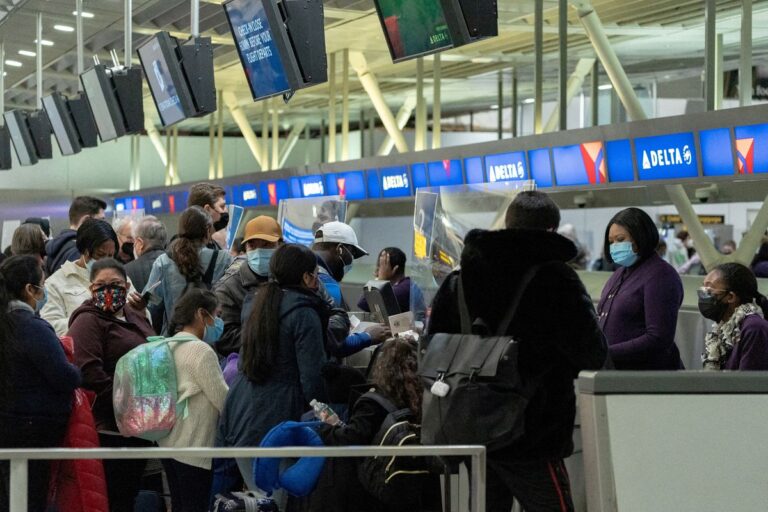
President Joe Biden’s administration will extend requirements for travelers to wear masks on airplanes, trains and in transit hubs through April 18 as public health authorities review when mask requirements should be dropped, the White House confirmed.

The move extends the current requirements that were set to expire March 18 by a month.

The current CDC transit order, which has been in place since soon after Biden took office in January 2021, has been previously extended three times and requires masks to be worn by all travelers on airplanes, ships, trains, subways, buses, taxis and ride-shares and at transportation hubs such as airports, bus or ferry terminals, train and subway stations, and seaports.

His predecessor, President Donald Trump, rejected requests from U.S. public health agencies to impose the requirements in transit – even though airlines and some other transportation modes had required masks.

Last month, Texas Attorney General Ken Paxton sued the Biden administration over the transportation mask mandate.

“Seat-belt laws likewise took away the ‘liberty’ to choose driving (or flying) without a seat belt, but losing that choice was not irreparable harm,” the Justice Department said in response, adding the court should reject Paxton’s lawsuit.

According to Reuters, the Transportation Security Administration (TSA) and Centers for Disease Control and Prevention (CDC) said in statements Thursday that CDC will work with other government agencies “to help inform a revised policy framework for when, and under what circumstances, masks should be required in the public transportation corridor.”

The TSA extension comes at the CDC’s recommendation. Airline and some government officials think this could be the last nationwide extension of the mask requirements.

Airlines and travel groups last month called on the administration by March 18 to “repeal the Federal mask mandate for public transportation or provide a clear roadmap to remove the mask mandate within 90 days.”

The mask requirements have resulted in significant friction on U.S. airplanes. The Federal Aviation Administration says since January 2021, there have been a record 6,800 unruly passenger incidents reported — and 70% involved masking rules.

The CDC last month eased its guidance for wearing masks. U.S. government agencies have dropped mask requirements in federal buildings in the Washington area and other places with low or medium levels of COVID-19.

The CDC said last week that 93% of the U.S. population is in a location where COVID levels are low enough that people do not need to wear masks.

United Airlines said Thursday it would allow 2,200 unvaccinated workers to return to their normal positions as the pandemic recedes.

The administration is also considering lifting requirements that international visitors get a negative COVID-19 test within a day of travel, officials said, as many countries have dropped testing requirements. The administration requires foreign air travelers to be vaccinated.

On Thursday, 31 Republican senators asked the administration to end the mask and pre-departure testing requirements. “It is time for the federal government to recognize this reality, follow the science, and reduce or eliminate these restrictions immediately,” Senator Roger Wicker said.