Home Blog Page 68

Chanel duels S. Korean resellers in luxury boom

0

As COVID curbs cut travel and duty-free shopping, South Koreans are driving a luxury goods boom at home that has left Chanel barring nearly a third of would-be shoppers to stop bulk buyers snagging $10,000 bags for resale with markups of 20% or more, reported by Reuters.

The storied French fashion and luxury company told Reuters it has seen traffic to its boutiques in South Korea skid since it began screening for customers it believed might be stocking up purely to flip to others in the resale market.

“We were able to identify them (bulk buyers) after having analysed their buying patterns. Since this policy was implemented, the traffic in our boutiques has decreased by 30%,” Chanel told Reuters in a statement. It didn’t disclose exactly how it deemed those customers to be potential bulk buyers, and the privately owned business doesn’t disclose sales numbers by country.

Chanel’s strategy, implemented since July last year, came as global demand for luxury goods was picking up after the worst of the coronavirus pandemic. South Korea is the world’s seventh-biggest luxury goods market according to Euromonitor, and the research firm estimates it was one of only two of the top seven markets by revenue – the other being China – to see sales grow last year from 2019 levels.

Supply at brands like Chanel, though, is tightly controlled, preserving exclusivity and boosting appeal with no online shopping option beyond cosmetics, perfumes and some small accessories. Such is the appetite in downtown Seoul that long queues form before dawn outside department stores as shoppers brace for what’s known as an ‘open run’ – a sprint to Chanel’s doors at opening time.

“I arrived … at 5.30 a.m. for an open run and I was notified that there were more than 30 people in front of me,” a shopper told Reuters in front of a Chanel boutique in Seoul. Speaking on condition of anonymity because of privacy concerns, he said by the time he entered the store – nearly 10 hours later – the item he wanted was sold out.

Reflecting such red-hot demand in the resale market, a Chanel medium classic flap bag was sold at 13.5 million won ($11,031) – 20% more than its standard retail price – in January on KREAM, a platform offering everything from sneakers to tech and luxury goods that is an affiliate of tech giant Naver Corp.

KREAM, an acronym for ‘Kicks Rule Everything Around Me’, was launched in 2020. It told Reuters its monthly transactions exceeded 100 billion won in December, and said South Korea’s resale market is worth more than 1 trillion won – nearly $820 million – even at the most conservative estimates.

Still, some consumers say long queues and waiting lists have put them off.

“I just gave up buying a Chanel product long ago,” said a Seoul resident in her 30s, declining to be named due to privacy concerns.

“It’s too difficult to buy one, with some 300 people usually on a waiting list, and by the time it’s my turn, there is no product left. This really puts me off and I don’t want to be at the centre of this craziness.”

Not giving up any time soon are the bulk buyer-resellers.

Speaking on condition of anonymity because of the sensitivity of the matter, some resellers told Reuters they’re hiring “line standers” for a fee of up to $125 a day to stand in queues or enter stores on their behalf.

One reseller in his 30s told Reuters he’s been reselling his purchases at usually more than 20% profit – and it can be far more profitable when inventory level is low.

He said he sold a Chanel flap card holder recently on secondhand marketplace app Karrot for nearly 1 million won, 40% above its retail price – five minutes after it went up for sale.
Global rise in COVID cases is ‘tip of the iceberg’

0

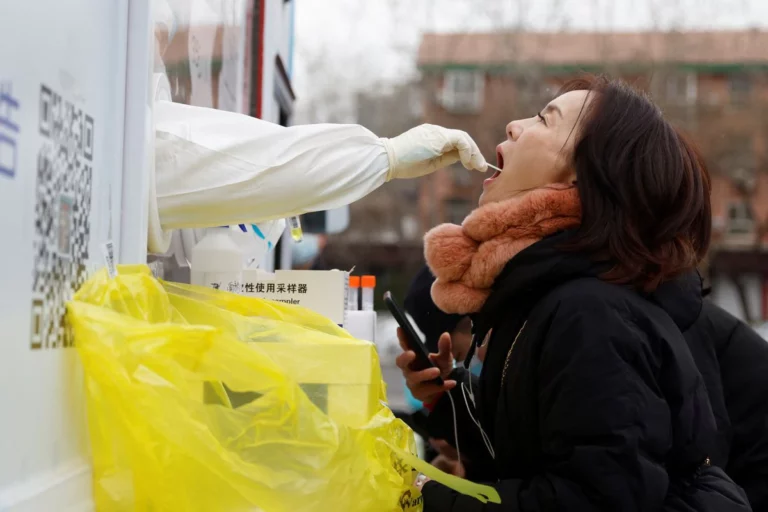
Figures showing a global rise in COVID-19 cases could herald a much bigger problem as some countries also report a drop in testing rates, the WHO said on Tuesday, warning nations to remain vigilant against the virus.

After more than a month of decline, COVID cases started to increase around the world last week, the WHO said, with lockdowns in Asia and China’s Jilin province battling to contain an outbreak.

A combination of factors was causing the increases, including the highly transmissible Omicron variant and its BA.2 sublineage, and the lifting of public health and social measures, the WHO said.

“These increase are occurring despite reductions in testing in some countries, which means the cases we’re seeing are just the tip of the iceberg,” WHO’s head Tedros Adhanom Ghebreyesus told reporters.

Low vaccination rates in some countries, driven partly by a “huge amount of misinformation” also explained the rise, WHO officials said.

According to Reuters, new infections jumped by 8% globally compared to the previous week, with 11 million new cases and just over 43,000 new deaths reported from March 7-13. It is the first rise since the end of January.

The biggest jump was in the WHO’s Western Pacific region, which includes South Korea and China, where cases rose by 25% and deaths by 27%.

The picture in Europe is also not universal. Denmark, for example, saw a brief peak in cases in the first half of February, driven by BA.2, which quickly subsided.

But experts have begun to warn that the United States could soon see a similar wave to that seen in Europe, potentially driven by BA.2, the lifting of restrictions and potential waning immunity from vaccines given several months ago.

“I agree with the easing of restrictions, because you can’t think of it as an emergency after two years,” said Antonella Viola, professor of immunology at Italy’s University of Padua.

“We just have to avoid thinking that COVID is no longer there. And therefore maintain the strictly necessary measures, which are essentially the continuous monitoring and tracking of cases, and the maintenance of the obligation to wear a mask in closed or very crowded places.”

Africa also saw a 12% rise in new cases and 14% rise in deaths, and Europe a 2% rise in cases but no jump in deaths. Other regions reported declining cases, including the eastern Mediterranean region, although this area saw a 38% rise in deaths linked to a previous spike in infections.

A number of experts have raised concerns that Europe faces another coronavirus wave, with case rising since the beginning of March in Austria, Germany, Switzerland, the Netherlands, and the United Kingdom.

The WHO’s Maria Van Kerkhove said at the briefing that BA.2 appears to be the most transmissible variant so far.

However, there are no signs that it causes more severe disease, and no evidence that any other new variants are driving the rise in cases.

Japanese officials say 4 dead after 7.4 earthquake near Fukushima

0

A strong 7.4 magnitude earthquake shook off the coast near Fukushima, Japan – the site of a nuclear disaster in 2011 – late Wednesday, killing four people according to Japanese officials.

The earthquake, upgraded from an original 7.3 magnitude, knocked out power to more than 2 million customers across the country and injured 97 people, Prime Minister Fumio Kishida said in a parliamentary session Thursday morning. 

The region is part of northern Japan that was devastated by a deadly 9.0 magnitude earthquake and tsunami 11 years ago that also caused nuclear plant meltdowns. That quake and tsunami killed more than 22,000 people. Wednesday’s quake came only days after the area marked the 11th anniversary of the disaster in March 2011.

The 2011 earthquake was 9.1 magnitude, some 63 times stronger, and released about 500 times more energy than Wednesday’s quake, CNN reported. 

The Tokyo Electric Power Company Holdings, which operates the Fukushima Daiichi nuclear plant where the cooling systems failed after the 2011 disaster, said workers found no abnormalities at the site, which was in the process of being decommissioned.

Those who died included a man in his 60s in Soma city who fell from the second floor of his house while trying to evacuate and a man in his 70s who panicked and suffered a heart attack, Kyodo News reported earlier.

The U.S. National Weather Service said there was no threat of a tsunami for the U.S. West Coast, British Columbia, or Alaska, and the Japan Meteorological Agency dropped its low-risk tsunami advisory early Thursday.

Tsunami waves of 8 inches reached shore in Ishinomaki, about 242 miles northeast of Tokyo, according NHK national television.

The Japan Meteorological Agency said the quake struck 36 miles below the sea. The quake shook large parts of eastern Japan, including Tokyo, where buildings shook violently.

The quake hit at 10:36 a.m. ET, the U.S. Geological Survey said. 

Facebook and YouTube removed Zelensky deepfake

0

Facebook and YouTube said Wednesday that they removed uploads of a deepfake video of Ukranian President Volodymyr Zelensky that purported to show him yielding to Russia.

The deepfake spread widely online Wednesday, as noticed earlier by Vice’s Motherboard. In the video, which CNN Business has reviewed, Zelensky appears to stand behind a presidential podium and in front of a backdrop, both of which feature the Ukranian coat of arms. Wearing a green shirt, Zelensky speaks in Ukranian, appearing to tell Ukranians to put down their weapons in the weeks-old war against Russia, according to CNN.

Hany Farid, a professor at the University of California, Berkeley, and digital forensics expert, pointed out several of the obvious signs that the video is a deepfake. First, it’s a low-quality, low-resolution recording; this is a common trick to hide the distortions created when making a deepfake, as our brains tend to be more forgiving of glitches in low-quality videos. Second, the Zelensky in the video looks straight ahead without moving his arms throughout the clip — it’s very tricky to make a convincing deepfake that includes head motions and hands moving in front of the face. Third, there are little visual inconsistencies in the video, he pointed out, that occur during the process of making a deepfake, which is created a single frame at a time. Though Zelensky’s voice is harder for Farid to comment on, in part because he doesn’t speak Ukranian, he said it sounds a bit off to him.

The video comes weeks after the official Facebook account for Ukraine Land Forces posted a warning that such videos of Zelensky may appear. “Be aware – this is a fake!” the account wrote, soon adding, “Rest assured – Ukraine will not capitulate!” That warning was accompanied by an image that appeared to show Zelensky in a similar shirt as what appeared in the deepfake video, in front of the same backdrop and behind the same podium.

As of Wednesday afternoon, the video could still be found online, such as in some posts CNN Business spotted on Twitter and YouTube in which users made clear that it was a deepfake.

While Farid doesn’t think the video fooled people, he thinks it “muddies the information waters,” making it harder for anyone to trust what they see.

“Casting doubt on what you see and hear and read is a very powerful weapon in the information war and deepfakes are now playing a role in that,” Farid said.

Deepfakes — which combine the terms “deep learning” and “fake” — are persuasive-looking but false video and audio files. Made using cutting-edge and relatively accessible AI technology, they aim to show a real person doing or saying something they did not. Experts have long been concerned that, as they improve, they would be used to spread misinformation.

In a series of posts on Twitter Wednesday afternoon, Meta’s head of security policy, Nathaniel Gleicher, wrote that the company spotted and removed the video earlier that day. “We’ve quickly reviewed and removed this video for violating our policy against misleading manipulated media, and notified our peers at other platforms,” he wrote.

YouTube spokesperson Ivy Choi said the video and reuploads of it have been removed from the platform because it violates the company’s misinformation policies. “We do allow this video if it provides sufficient education, documentary, scientific or artistic context,” Choi said in a statement.

A Twitter spokesperson said the company is tracking how the video is shared across the social network, and has taken “enforcement action” in cases where it violates company rules (such as its synthetic and manipulated media policy, which forbids users from sharing altered content that may confuse people or lead to harm; in some cases, Twitter may label tweets containing misleading media to give users more context).

While the video doesn’t look tremendously doctored, there are some telltale signs that the video is not what it appears to be. And Zelensky himself appeared in a video posted to an official Ukraine defense account on Twitter, saying he is continuing to defend Ukraine and refusing to lay down weapons against Russia.

Russia attacks theatre sheltering civilians

0

Deputy Mayor Sergei Orlov told the BBC that between 1,000 and 1,200 people had sought refuge in the building.

About 1,500 cars had managed to flee Mariupol on Wednesday, according to Mr Orlov, the deputy mayor. But, he said, an attack by Russia on the convoy left at least five wounded, including a child.

Peter Maurer, the president of the International Committee of the Red Cross, called for better access to civilians caught up in the war, which he said was causing “enormous suffering”. Mr Maurer, who arrived in Ukraine for a five-day visit, described the situation in Mariupol as a “waking nightmare”.

Elsewhere, at least 10 people waiting in a queue for bread in the northern city of Chernihiv were killed by Russian shelling on Wednesday, the country’s prosecutor general said. Unverified footage released by a local outlet showed bodies on a street.

While the number of casualties is unclear, a local MP said the basement where people were gathered had withstood the bombing.

“It looks like most of them have survived,” Dmytro Gurin told the BBC.

But Petro Andriushchenko, an adviser to the city’s mayor, earlier said emergency workers were struggling to reach the building due to constant shelling.

Images of the theatre, verified by the BBC, showed extensive damage and smoke rising from the site.

Russia’s air strikes and shells have previously hit a maternity hospital, a church and apartment buildings.

Mariupol’s city council said in a statement that Russian forces “deliberately and cynically destroyed” the theatre, saying a “plane dropped a bomb on a building where hundreds of peaceful Mariupol residents were hiding”.

Both Dmytro Kuleba, the Ukrainian foreign minister, and the city council accused Russia of a “war crime” in the wake of the attack.

Ukraine’s President Volodymyr Zelensky denounced the bombing and said Russia had deliberately targeted the theatre.

“Our hearts are broken by what Russia is doing to our people. To our Mariupol,” he said in a video address late on Wednesday evening.

Satellite pictures taken on 14 March – released by the US company Maxar – showed the Russian word for “children” had been marked on the ground in large letters to warn Russian jets away from the building.

The BBC was earlier told that many children and elderly people were sheltering inside, and that conditions were quickly deteriorating.

Local authorities say at least 2,400 people have been killed in Mariupol since the start of the war, although they acknowledge this is likely to be an underestimate. Many of the dead are being buried in mass graves.

An estimated 300,000 residents are trapped inside the city, where running water, electricity and gas have been cut off. Food and water supplies are running low, as Russian troops have not allowed the delivery of humanitarian aid.

Hours after news of the destruction emerged, the Russian defence ministry denied it had carried out an air strike against the theatre, the RIA news agency reported.

Pfizer asks US to authorize 4th COVID vaccine dose for seniors

0

Pfizer and its partner BioNTech asked U.S. regulators Tuesday to authorize an additional booster dose of their COVID-19 vaccine for seniors, saying data from Israel suggests older adults would benefit.

Currently the U.S. urges two primary shots followed months later by a booster dose for everyone age 12 and older. The new application seeks to add a fourth shot only for the over-65 population that has been hit hardest by the pandemic, according to AP.

While some early data left unclear just how much benefit another shot offered — or for how long — Pfizer said Tuesday that an analysis of health records of more than 1.1 million Israeli seniors showed confirmed infections were two times lower and rates of severe illness were four times lower among those who got two boosters instead of just one.

Pfizer also cited an ongoing study of healthcare workers that tracked a jump in virus-fighting antibodies after getting the additional booster.

In the U.S. so far, a fourth dose is recommended only for people with severely weakened immune systems, who need three doses to begin with for the best chance at any protection.

The Food and Drug Administration and the Centers for Disease Control would have to approve the request. If so, a key question would be how soon seniors would be advised to roll up their sleeves.

While authorities say the vaccinations continue to offer strong protection against severe illness, they haven’t held up as well against milder infections especially those due to the omicron mutant. With COVID-19 cases finally plummeting after the intense omicron surge, public health experts are starting to look ahead to what next steps might be needed — if a new variant crops up or, barring that, whether to try shoring up coronavirus protection in the fall at the same time people get flu vaccinations.

Speaking to CBS’ “Face the Nation” on Sunday, Pfizer CEO Albert Bourla signaled the company’s plans.

“The protection that you are getting from the third, it is good enough, actually quite good for hospitalizations and deaths. It’s not that good against infections,” he said. “But we are just submitting those data to the FDA and then we will see what the experts also will say outside Pfizer.”

The U.S. booster campaign was based on evidence that the shots’ effectiveness, particularly against milder infections, was waning about six months after the last dose. Calls for a third shot grew once it became clear the vaccines weren’t as strong against the omicron mutant as they were against earlier versions of the virus.

Many scientists say the ultimate goal of vaccination is to prevent severe illness, not mild infections, and early CDC data show the shots still are doing a good job at that. During the omicron wave, effectiveness against hospitalization was 91% in people who had gotten their booster two months earlier, and 78% by the fourth month after that booster.

Pfizer based its new application on data from Israel, which already was offering a second booster to people age 60 and older and health care workers.

CDC adds Mauritius to ‘very high’ risk category for travel

0

The US Centers for Disease Control and Prevention added just one new destination, the Indian Ocean island nation of Mauritius, to its highest-risk category for travel on Monday.

The weekly travel risk-level update brought good news for islands clustered in and around the Caribbean Sea with nine destinations — including the Bahamas, Jamaica and the Dominican Republic — dropping down one rung from Level 4.

The CDC places a destination at “Level 4: Covid-19 Very High” risk when more than 500 cases per 100,000 residents are registered in the past 28 days.

Mauritius, located off the eastern coast of Africa, recently logged a 180% increase in weekly cases, according to World Health Organization figures. Located about 700 miles (1,100 km)east of Madagascar, Mauritius had previously been on Level 3.

Last week, Hong Kong, New Zealand and Thailand were added to Level 4.

After declines in global cases since the end of January, WHO logged an uptick in cases worldwide for the week of March 7.

BTS To Perform At 2022 Grammy Awards

0

BTS will be taking the stage at the 2022 Grammy Awards!

On March 15 local time, the Recording Academy officially announced its first lineup of performers for the upcoming 64th annual Grammy Awards.

The 64th Grammy Awards will air live on April 3 at 8 p.m. ET.

Just like all the other performers announced thus far, BTS is in the running for one of this year’s Grammy Awards: the group’s hit song “Butter” is nominated for Best Pop Duo/Group Performance, marking BTS’s second nomination in the category.

BTS will be one of the artists performing at this year’s show, joining a star-studded lineup that includes Billie Eilish, Olivia Rodrigo, Lil Nas X with Jack Harlow, Brandi Carlile, and Brothers Osborne.

Korean Air will reroute flights that use Russian airspace

0

Korean Air Lines (003490.KS) will reroute flights to Europe and eastern North America that made use of Russian airspace, the airline said on Tuesday, citing operational challenges and safety concerns.

South Korean budget carrier Air Busan Co Ltd (298690.KS), said it will cancel six passenger flights with Vladivostok until April 15, citing issues such as airport operations and safety, according to Reuters.

Other airlines, such as Japan’s ANA, have already altered routes over Europe following Russia’s invasion of Ukraine.

The airline will also temporarily suspend all passenger and cargo services with Moscow and Vladivostok until the end of April, Korean Air said in a statement.

Among these are flights between Incheon and Moscow, Incheon and Vladivostok, and those with stopovers in Moscow, it added.

Flights on European routes, such as Seoul-London, will be rerouted via other countries such as China, Kazakhstan and Turkey, adding up to 2 hours and 45 minutes to the duration of one-way trips, it said.

Flights departing from North American airports, such as New York-Seoul, will be rerouted via Alaska and the Pacific Ocean, which will add flight time of up to 1 hour and 40 minutes to each one-way trip.

Three million migrants have now fled Ukraine

0

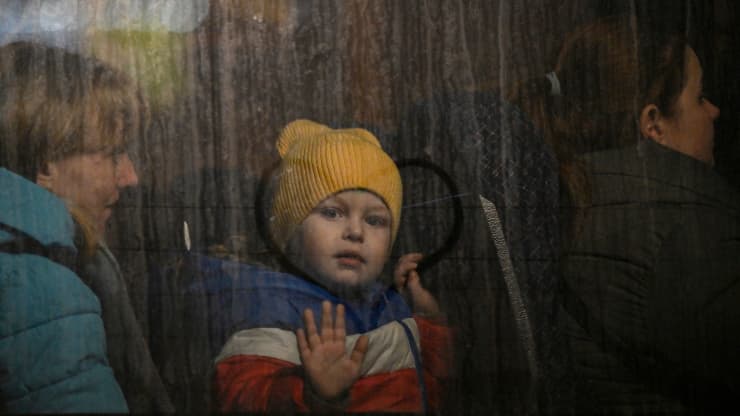
In less than three weeks, Russia’s invasion of Ukraine has sent 3 million people fleeing their homes to neighboring countries — with still millions more displaced domestically — in what has quickly become Europe’s worst migrant crisis since World War II.

While the majority have been compassionately welcomed by host countries rejecting President Vladimir Putin’s indiscriminate attack, the sudden influx of people is having a profound impact on the European landscape — with potentially significant consequences.

Nowhere is that impact more pronounced than in Poland.

According to CNBC, since the start of the war on Feb. 24, Poland has welcomed over 1.8 million refugees — almost twice the 1 million authorities had anticipated and increasing its population by 4.8%.

The east European country is a natural point of entry for Ukrainians owing to their 530-kilometer shared land border, as well as numerous historical, cultural and economic ties. Indeed, there is already a sizeable Ukrainian diaspora in Poland following an earlier spate of migration after Russia’s 2014 annexation of Crimea.

But as the number of refugees requiring humanitarian assistance spirals well beyond initial estimates, it is putting considerable strain on the government and the dozens of relief agencies that have mobilized to help them.

“First, all of the people knew where they wanted to go. They had some friends they wanted to stay with [in Poland],” said Dominika Chylewska, head of communications at Caritas Polska, a charity offering relief to migrants at Polish reception points including Przemysl, a city 12 kilometers from Ukraine’s border.

Others still planned to travel further afield to Berlin, Prague and Tallinn, she said.

“Now, we already see that there are more people coming without any final destination,” said Chylewska.

If, as many fear, Russia succeeds in its invasion and installs a pro-Kremlin government, the likelihood of migrants returning home is far lower.

But if, as Western allies hope, there is a resolution to the conflict that restores a sovereign Ukraine, the majority of migrants may choose to return home and embark on the lengthy task of rebuilding their war-torn country.

“Most who left would like to be able to go back,” said Bosoni. “They are not economic migrants, they are people escaping war and death.”