Home Blog Page 61

Huge trade relationship at stake as China and EU meet to discuss Russia

0

China and Europe’s top leaders are set to meet on Friday, as their vast and growing trade relationship threatens to be overshadowed by differences over Russia and other geopolitical tensions.

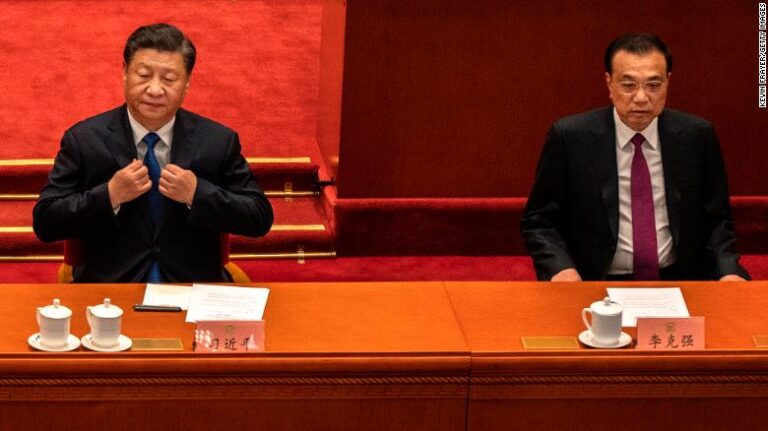
At the virtual EU-China summit, Beijing is expected to face pressure from one of its top trading partners over the war in Ukraine, which will be the main focus of the talks, according to the European Union. Chinese President Xi Jingping and Premier Li Keqiang will also discuss business ties, human rights and climate change with European Council President Charles Michel and Ursula Von der Leyen, president of the European Commission, reported by CNN.

Europe trades more goods with China than anyone else. But in recent weeks, concerns in the West have spiked over Beijing’s refusal to condemn the Russian invasion of Ukraine.

“Senior EU officials have unsuccessfully sought to convince Beijing to push Moscow toward deescalation,” Eurasia Group experts wrote in a note Tuesday. “[They] will now seek to enlist Xi, but the feeling in Brussels is that China is not interested in pressuring Russia.”

The divergence over the Russia-Ukraine crisis stands in contrast to China and Europe’s economic ties, which have deepened during the coronavirus pandemic.

China abstained from voting on a United Nations Security Council resolution condemning Russia’s invasion of Ukraine in February, troubling many in the West.

“The way in which China handles this conflict will have bearing on the future overall of the EU-China relationship,” Reinhard Butikofer, head of the European Parliament’s delegation for relations with China, told reporters ahead of the summit.

In a statement, EU leaders said they would focus on “the engagement of the international community to support Ukraine, the dramatic humanitarian crisis created by Russia’s aggression, its destabilizing nature for the international order and its inherent global impact.”

China has acknowledged the tension in the room, but pushed back on any assertions of wrongdoing.

“The current international situation is volatile,” Chinese Foreign Ministry spokesman Wang Wenbin said at a press conference Wednesday.

Beijing has already urged the United States —which, along with the European Union, has imposed tough sanctions against Moscow — not to undermine its “legitimate rights and interests,” adding that China and Russia would “continue to conduct normal economic trade cooperation.”

China has long sought to drive a wedge between the United States and European Union, with officials and state media often pointing to the importance for the bloc’s “strategic autonomy” from Washington.

Despite the pressure,China and the European Union are heavily reliant on each other for hundreds of billions of dollars in trade each year.

China overtook the United States in 2020 as Europe’s biggest trading partner for goods, with the overall value of trade reaching €588 billion ($650 billion), according to EU statistics office Eurostat.

In 2021, the trend continued: Overall China-EU trade in goods reached €695.5 billion (approximately $777 billion), compared with €631.4 billion ($704 billion) in US-EU trade.

China was the number one source of EU imports and the third largest destination of EU exports, after the United States and United Kingdom, according to Eurostat.

Europe’s trade with the world’s second largest economy has soared over the past decade. China logged some of the highest annual growth rates for both EU imports and exports from 2011 to 2021, Eurostat said in a report.

However, the European Union still considers the United States to be its biggest overall trading partner, taking into account the exchange of services and foreign investment. China ranks second in that respect, followed by the United Kingdom and Switzerland.

There is also little hope for a revival of a planned China-EU investment deal, which was previously shelved due to Beijing’s sanctions against European Parliament members over their stance on Xinjiang.

Given the current plethora of issues, that is “a non-starter” for now, said Eurasia Group analysts.

Russia allowed gas to keep flowing to Europ despite Putin deadline

0

Russia allowed gas to keep flowing to Europe on Friday despite a deadline for buyers to pay in roubles or be cut off, and peace talks resumed, with Moscow saying it would respond to a Ukrainian offer.

According to Reuters, an order by President Vladimir Putin cutting off gas buyers unless they pay in roubles from Friday had caused alarm in Europe, where it was seen as Moscow’s strongest card to play to retaliate for Western financial sanctions. Germany, the biggest buyer, rejected the demand as “blackmail”.

But pipelines were pumping as normal on Friday. Kremlin spokesperson Dmitry Peskov said the decree would not affect shipments which were already paid for, only becoming an issue when new payments were due in the second half of the month.

“Does this mean that if there is no confirmation in roubles, then gas supplies will be cut off from April 1? No, it doesn’t, and it doesn’t follow from the decree,” Peskov told reporters.

Negotiations aimed at ending the war resumed by video link, even as Ukrainian forces made more advances on the ground in a counterattack that has repelled the Russians from Kyiv and broken the sieges of some cities in the north and east. Russia said progress was being made in the talks and it would respond to a Ukrainian peace proposal delivered earlier this week.

The Red Cross said it had been barred from bringing aid in what would have been the first humanitarian convoy to reach the besieged port of Mariupol, but still hoped to be able to organise the evacuation of residents by bus.

After failing to capture a single major Ukrainian city in five weeks of war, Russia says it is pulling back from northern Ukraine and shifting its focus to the southeast, including Mariupol.

Russia has painted its draw-down in the north of Ukraine as goodwill gesture for peace talks. Ukraine and its allies say the Russian forces have been forced to regroup after sustaining heavy losses due to poor logistics and tough Ukrainian resistance.

Irpin, a commuter suburb northwest of Kyiv that had been one of the main battlegrounds for weeks, is now firmly back in Ukrainian hands, a wasteland littered with burnt-out tanks.

Volunteers and emergency workers were carrying the dead on stretchers out of the rubble. About a dozen bodies were zipped up in black plastic body bags, lined up on a street and loaded into vans.

Lilia Ristich was sitting on a metal playground swing with her young son Artur. Most people had fled; they had stayed.

“We were afraid to leave because they were shooting all the time, from the very first day. It was horrible when our house was hit. It was horrible,” she said. She listed off neighbours who had been killed – the man “buried there, on the lawn”; the couple with their 12-year-old child, all burned alive.

“When our army came then I fully understood we had been liberated. It was happiness beyond imagination. I pray for all this to end and for them never to come back,” she said. “When you hold a child in your arms it is an everlasting fear.”

The governor of the Kyiv region, Oleksandr Pavlyuk, said on Friday Russian forces had also withdrawn from Hostomel, another northwestern suburb which had seen intense fighting, but were still dug in at Bucha, between Hostomel and Irpin.

Further north, Russian forces have withdrawn from the site of the Chernobyl former nuclear power plant, although Ukrainian officials said some Russians were still in the radioactive “exclusion zone” around it.

Over the past 10 days, Ukrainian forces have recaptured suburbs near Kyiv, broken the siege of Sumy in the east and driven back Russian forces advancing on Mykolaiv in the south.

In the latest Ukrainian advance, Britain’s Ministry of Defence said on Friday Ukrainian forces had recaptured villages linking Kyiv with the besieged northern city of Chernihiv.

Russians leave Chernobyl; Ukraine braces for renewed attacks

0

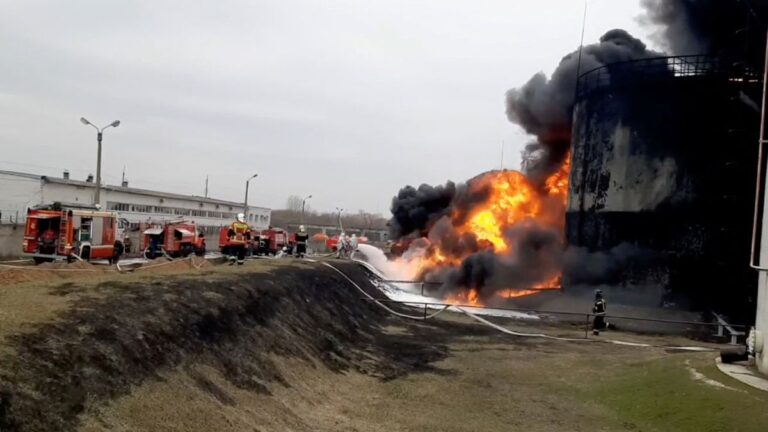
Emergency relief and evacuation convoys for the besieged Ukrainian city of Mariupol remained in doubt Friday following reports of Russian interference, while Russian officials accused Ukraine of flying helicopter gunships across a border between the two countries and striking an oil depot, reported by AP.

Russian forces seized the Chernobyl site soon after invading Ukraine on Feb. 24, raising fears they would cause damage or disruption that could spread radiation. The workforce there oversees the safe storage of spent fuel rods and the concrete-entombed ruins of the reactor that exploded in 1986.

Five weeks and one day into a conflict that has left thousands dead and driven more than 4 million refugees from Ukraine, there seemed little faith that the two sides would find agreement on their respective demands any time soon.

Russian President Vladimir Putin said conditions weren’t yet “ripe” for a cease-fire and he wasn’t ready for a meeting with Zelenskyy until the negotiators do more work, Italian Premier Mario Draghi said after a Thursday telephone conversation with the Russian leader.

Following a plea from Zelenskyy when he addressed Australian Parliament on Thursday, Prime Minister Scott Morrison said that his country would send mine-resistant armored personnel carriers to Ukraine.

“We’re not just sending our prayers,” Morrison said, adding that Australia was also sending guns, munitions, humanitarian aid, body armor and the Bushmaster vehicles.

The governor of Russia’s Belgorod region said the alleged airstrike caused multiple fires and two people were injured. A Kremlin spokesman said the incident on Russia’s territory could undermine negotiations between Russian and Ukrainian representatives that resumed by video link Friday.

“Certainly, this is not something that can be perceived as creating comfortable conditions for the continuation of the talks,” Kremlin spokesman Dmitry Peskov replied when asked if the strike could be viewed as an escalation of the war in Ukraine.

It was not immediately possible to verify the claim that Ukrainian helicopters targeted the oil depot or several nearby businesses in Belgorod also reported hit. Russia has reported shelling from Ukraine before, including an incident last week that killed a military chaplain, but not an incursion of its airspace.

The negotiations follow a meeting of Russian and Ukrainian delegations in Turkey on Tuesday where Ukraine reiterated its willingness to abandon a bid to join NATO and offered proposals to have its neutral military status guaranteed by a range of foreign countries.

The head of the Russian delegation, Vladimir Medinsky, wrote on social media that Moscow’s positions on retaining control of the Crimean Peninsula and expanding the territory in eastern Ukraine held by Russia-backed separatists “are unchanged.”

The International Committee for the Red Cross said complex logistics were still being worked out for the operation to get emergency aid into Mariupol and civilians out of the city, which has suffered weeks of heavy fighting with dwindling water, food and medical supplies.

“We are running out of adjectives to describe the horrors that residents in Mariupol have suffered,” ICRC spokesperson Ewan Watson said Friday during a U.N. briefing in Geneva. “The situation is horrendous and deteriorating, and it’s now a humanitarian imperative that people be allowed to leave and aid supplies be allowed in.”

He said the group had sent three vehicles toward Mariupol and a frontline between Ukrainian and Russian forces but two trucks carrying supplies for the city were not accompanying them. Dozens of buses organized by Ukrainian authorities to take people out also had not started approaching the dividing line, Watson said.

On Thursday, Russian forces blocked a 45-bus convoy attempting to evacuate people from Mariupol after the Russian military agreed to a limited cease-fire in the area, and only 631 people were able to leave in private cars, the Ukrainian government said.

Russian forces also seized 14 tons of food and medical supplies trying to make it to Mariupol, Deputy Prime Minister Iryna Vereshchuk said.

The city has been the scene of some of the worst suffering of the war. Tens of thousands of residents managed to leave in the past few weeks through humanitarian corridors, reducing the population from a prewar 430,000 to an estimated 100,000 by last week. But continued Russian attacks have repeatedly thwarted aid and evacuation missions.

“We do not see a real desire on the part of the Russians and their satellites to provide an opportunity for Mariupol residents to evacuate to territory controlled by Ukraine,” Petro Andryushchenko, an adviser to the mayor of Mariupol, wrote Friday on the Telegram messaging app.

In the past few days, the Kremlin, in a seeming shift in its war aims, said that its “main goal” now is gaining complete control of the Donbas, where Mariupol is located. The Donbas is the predominantly Russian-speaking industrial region of eastern Ukraine where Moscow-backed separatists have been battling Ukrainian forces since 2014 and have declared two areas as independent republics.

Western officials said there were growing indications Russia was using its talk of de-escalation in Ukraine as cover to regroup, resupply and redeploy its forces for a stepped-up offensive in the east.

Russian forces have subjected both Chernihiv, a besieged and blockaded city in northern Ukraine, and the capital of Kyiv to continued air and ground-launched missile strikes despite Moscow saying Tuesday it planned to reduce military activity in those areas.

Elsewhere, Ukrainian forces have retaken the villages of Sloboda and Lukashivka, which are south of the besieged northern city of Chernihiv and located along one of the main supply routes between the city and Ukraine’s capital, Kyiv, according to Britain’s Defense Ministry.

Ukraine has also continued to make successful but limited counterattacks to the east and northeast of Kyiv, the ministry said.

Ukrainian President Volodymyr Zelenskyy warned that Russian withdrawals in the country’s north and center were just a military tactic to build up strength for new attacks in the southeast.

“We know their intentions,” Zelenskyy said in his nightly video address to the nation. “We know that they are moving away from those areas where we hit them in order to focus on other, very important ones where it may be difficult for us.”

Hours later, Belgorod governor Vyacheslav Gladkov wrote on Telegram early Friday that the fire at the oil depot “occurred as a result of an airstrike from two helicopters of the armed forces of Ukraine, which entered the territory of Russia at a low altitude.”

The depot run by Russian energy giant Rosneft is located about 35 kilometers (21 miles) north of the Ukraine-Russia border.

Separately, Ukraine’s state power company, Energoatom, said Russian troops pulled out of the heavily contaminated Chernobyl nuclear site in northern Ukraine early Friday after receiving “significant doses” of radiation from digging trenches in the exclusion zone around the closed plant.

The International Atomic Energy Agency said it could not independently confirm the exposure claim. Energoatom gave no details on the condition of the soldiers it said were exposed to radiation, and it did not say how many were affected. There was no immediate comment from the Kremlin.

The agency, which is the U.N.’s nuclear watchdog, said it had been informed by Ukraine that Russian forces at Chernobyl had transferred control of the site of the world’s worst nuclear disaster to the Ukrainians in writing.

IAEA Director-General Rafael Grossi wrote on Twitter that he would visit the decommissioned plant as soon as possible and his agency’s “assistance and support” mission to Chernobyl “will be the first in a series of such nuclear safety and security missions to Ukraine.”

Grossi was in the Russian enclave of Kaliningrad Friday for talks with senior officials about nuclear issues in Ukraine. Nine of Ukraine’s 15 operational reactors are currently in use, including two at the Russian-controlled Zaporizhzhya facility, the agency said.
N. Korea not telling the whole truth about latest ICBM test

0

According to CNN, North Korea’s launch last week of an intercontinental ballistic missile (ICBM), reported to be its most formidable yet, may have been a less advanced weapon than previously believed, according to a South Korean military official.

The official, who spoke under the condition of anonymity, said South Korean and US analysis of the March 24 launch of what North Korea claimed was a new Hwasong-17 ICBM, was in actual fact the older and slightly smaller Hwasong-15 — an ICBM last tested by Pyongyang in 2017.

The South Korean official said assessments by Seoul and Washington showed the ICBM launched last week only had two engine nozzles, like Hwasong-15, whereas Hwasong-17 has four.

And video released last Friday by state-run Korean Central Television (KCTV) purporting to show Kim Jong Un guiding the launch reveal the North Korean leader’s shadow appearing westward, meaning it was filmed in the morning, but the launch took place in the afternoon, the official said.

Also, it was cloudy in the launch area last Thursday, but the weather in the KCTV video appears to be sunny, the official said.

Several missile experts have since reached a similar conclusion, but they caution the significance of last week’s successful ICBM launch — North Korea’s first in more than four years — should not be discounted, pointing out the test still demonstrated a weapon with the theoretical ability to hit all of the continental United States.

The ICBM fired by North Korea last Thursday flew to an altitude of 6,000 kilometers (3,728 miles) and to a distance of 1,080 kilometers (671 miles) with a flight time of 71 minutes before splashing down in waters off Japan’s western coast last Thursday, according to Japan’s Defense Ministry.

Japan’s Vice Defense Minister Makoto Oniki told reporters shortly afterward that the missile’s altitude would suggest it is a “new type of ICBM.”

Japanese officials were sticking to that assessment this week, with Chief Cabinet Secretary Hirokazu Matsuno saying on Monday that Tokyo judged the missile to be a new type based on flight altitude and other information.

And CNN previously reported that the Pentagon is still assessing to what extent the missile is an improved version of previous launches.

But the South Korean official and missile experts said further close analysis of images in North Korean state media of last week’s launch gave two potential clues relating to Pyongyang’s alleged subterfuge.

Russia accused Ukraine of carrying out an air strike against a fuel depot in the Russian city

0

According to Reuters, Russia accused Ukraine of carrying out an air strike against a fuel depot in the Russian city of Belgorod on Friday, an incident the Kremlin said set an unfavourable tone for peace talks with Kyiv.

Ukraine’s foreign minister, Dmytro Kuleba, said he could not confirm or deny reports of Ukrainian involvement in the strike as he did not have military information. The Ukrainian Defence Ministry and the general staff did not respond to requests for comment.

In separate comments, Energy Minister Nikolai Shulginov said the incident would not affect the region’s fuel supplies or prices for consumers.

The governor of the neighbouring Kursk region, Roman Starovoit, said its own fuel supplies were sufficient to last several weeks and called on the population not to stockpile fuel.

An ammunition depot near Belgorod caught fire on Wednesday, causing a series of blasts. At the time, Gladkov said authorities were waiting for the Russian defence ministry to establish its cause.

Moscow calls its intervention in Ukraine “a special military operation”.

Video footage of the purported attack — the first accusation of a Ukrainian air strike on Russian soil since Moscow launched its invasion of Ukraine on Feb. 24 — showed what looked like several missiles being fired from low altitude, followed by an explosion. Reuters could not immediately verify the footage.

Regional governor Vyacheslav Gladkov said on messaging app Telegram that two Ukrainian helicopters struck the facility in Belgorod, some 35 kilometres (22 miles) from the border with Ukraine, after entering Russia at low altitude.

The resulting blaze injured two workers, Gladkov added, while some areas of the city were being evacuated.

However, Russian oil firm Rosneft (ROSN.MM), which owns the fuel depot, said in a separate statement that no one was hurt in the fire. The company gave no information on the cause of the fire.

A witness told Reuters that another blast was heard in the city at around 1020 GMT. The cause of the blast was not immediately clear.

Speaking to reporters on a conference call, Kremlin spokesman Dmitry Peskov said President Vladimir Putin had been briefed about the incident. Peskov said the strike could jeopardise Moscow’s peace negotiations with Kyiv.

“Of course this cannot be perceived as creating comfortable conditions for continuing the talks,” Peskov said, adding that everything was being done to prevent disruptions in fuel supplies in the city.

Russia bombs Ukraine cities, despite pledge to scale down operations

0

Russian forces bombarded a besieged city in northern Ukraine on Wednesday, a day after promising to scale down operations there, and Kyiv and its Western allies dismissed a pullback near the capital as a ploy to regroup by invaders taking heavy losses.

Nearly five weeks into an invasion in which it has failed to capture any major cities, Russia said it would curtail operations near Kyiv and the northern city of Chernihiv “to increase mutual trust” for peace talks.

But Chernihiv’s Mayor Vladyslav Astroshenko said Russian bombardment had only intensified over the past 24 hours, with more than 100,000 people trapped in the city with just enough food and medical supplies to last about another week, according to Reuters.

“This is yet another confirmation that Russia always lies,” he told CNN in an interview. “They actually have increased the intensity of strikes,” with “a colossal mortar attack in the centre of Chernihiv” on Wednesday wounding 25 civilians. Reuters could not immediately verify the situation there.

In an overnight address, Ukraine’s President Volodymyr Zelenskiy made clear he took nothing Moscow said at face value.

“Ukrainians are not naive people,” he said. “Ukrainians have already learned during these 34 days of invasion, and over the past eight years of the war in Donbas, that the only thing they can trust is a concrete result.”

Zelenskiy advisor Oleksiy Arestovych said Moscow was shifting some forces from northern Ukraine to the east, where it was trying to encircle the main Ukrainian force there. Some Russians would stay behind near Kyiv to tie Ukrainian forces down, he said.

Russian forces also hit industrial facilities in western Ukraine in three strikes overnight, a regional governor said.

The past week has seen Ukrainian forces make substantial gains, recapturing towns and villages on the outskirts of Kyiv, breaking the siege of the eastern city of Sumy and pushing back Russian forces in the southwest.

The Pentagon said Russia had started moving very small numbers of troops away from positions around Kyiv, describing the move as more of a repositioning than a withdrawal.

“We all should be prepared to watch for a major offensive against other areas of Ukraine,” spokesman John Kirby told a news briefing. “It does not mean that the threat to Kyiv is over.”

Britain’s defence ministry said Moscow was being forced to pull troops from the vicinity of Kyiv to Russia and Belarus, to resupply and reorganise after taking heavy losses. Russia was likely to compensate for its reduced ground manoeuvre capability through mass artillery and missile strikes, it added.

Russia says it is carrying out a “special operation” to disarm and “denazify” its neighbour. Western countries say Moscow launched an unprovoked invasion, which included a full-scale assault on the capital that was repelled by fierce Ukrainian defence.

Moscow has said in recent days that its main focus is now on southeastern Ukraine, a region called the Donbas, where it is trying to capture more territory to turn over to separatists it has supported since 2014.

The area includes Mariupol, a port of 400,000 people which has been lain to waste after a month of Russian siege, and where the United Nations believes thousands of people may have died.

On Wednesday, Russian forces were shelling nearly all cities along the front line separating Ukrainian government-controlled territory from areas held by the separatists in the region, the Donetsk governor said, and heavy fighting was reported in Mariupol. 

The British defence ministry, in an intelligence briefing, said the announcement that Moscow was now focusing on the southeast was “likely a tacit admission that it is struggling to sustain more than one significant axis of advance”.

Around a quarter of Ukrainians have been driven from their homes by the biggest attack on a European country since World War Two. The United Nations said on Wednesday that the number who have fled the country had risen above 4 million. More than half of those refugees are children and the rest mostly women.

Shanghai expands COVID lockdown as new daily cases surge by a third

0

Authorities began locking down some western areas of Shanghai two days ahead of schedule, as new COVID-19 cases in China’s most populous city jumped by a third despite stringent measures already in place to try to stop the virus spreading.

Home to 26 million people, China’s financial hub is in the third day of a lockdown officials are imposing by dividing the city roughly along the Huangpu River, splitting the historic centre west of the river from the eastern financial and industrial district of Pudong to allow for staggered mass tests.

While residents in the east have been locked down since Monday, those in the west were previously scheduled to start their four-day lockdown on Friday.

Locking down a major metropolis like Shanghai full-scale would result in a 4% reduction in the national real gross domestic product, economists at the Chinese University of Hong Kong, Tsinghua University and other institutes estimated in mid-March.

On Wednesday Shanghai reported a record 5,656 asymptomatic COVID cases and 326 symptomatic cases for March 29, up from 4,381 new asymptomatic cases and 96 new cases with symptoms for the prior day. China reclassifies asymptomatic cases if and when they later develop symptoms. 

Several residents living in western districts on Tuesday received notice from their housing committees that they would be stopped from leaving their compounds for the next seven days.

“We will resume normal life soon, but in the next period of time we ask everyone to adhere closely to pandemic control measures, do not gather, and reduce movements,” said one housing committee notice seen by Reuters.

Meanwhile the city’s southwestern district of Minhang, home to more than 2.5 million people, said it would suspend public bus services until April 5.

Shanghai authorities told a press conference on Wednesday that since the lockdown began on Monday they had conducted 9.1 million nucleic acid tests.

They also said they planned to disinfect places such as office buildings, construction sites, wet markets and schools in a month-long campaign.

Across mainland China, the daily numbers of new local infections in the past two weeks were much higher than those seen in the first two months this year, marking the biggest wave since the 2020 surge centred on Wuhan.

The eastern city of Xuzhou, which reported a total of less than 20 local infections in the past week, has imposed a three-day lockdown in most areas starting Wednesday.

The Xuzhou government said each household in those areas should only send one person to go out to shop for necessities every other day, while non-essential companies should either shut operations, have employees work from home, or operate in a closed-loop manner.

The National Health Commission (NHC) said on Wednesday China had built, or was in the process of constructing, 82 temporary hospitals across 46 cities. This is more than double the 33 temporary hospitals health authorities said the country had or was preparing eight days ago.

Poland to end Russian oil imports; Germany warns on gas

0

Poland announced steps Wednesday to end all Russian oil imports by year’s end, while Germany issued a warning about natural gas levels and called on people to conserve, new signs of how Russia’s war in Ukraine has escalated tensions about securing energy supplies to power Europe.

Acording to AP, Poland, which has taken in millions of Ukrainian refugees, has taken the lead in the European Union on swiftly cutting off Russian fossil fuels. The 27-nation bloc has declined to sanction energy because it depends on Moscow for the fuel needed for cars, electricity, heating and industry, but it has announced proposals to wean itself off those supplies.

“We are presenting the most radical plan in Europe for departing from Russian oil by the end of this year,” Polish Prime Minister Mateusz Morawiecki said at a news conference.

Germany’s gas storages are filled to about 25% capacity.

“The question how long the gas will last basically depends on several factors (such as) consumption and weather,” he said. “If there’s a lot of heating, then the storage facilities will be emptied.”

He added that Germany is prepared for a sudden stop in Russian gas supplies but warned of “considerable impacts” and urged consumers to help prevent a shortage by reducing their use.

“We are in a situation where, I have to say this clearly, every kilowatt hour of energy saved helps,” Habeck said.

The second warning level would require companies in the gas industry to take necessary measures to regulate supply. The third means full state intervention to ensure that those who most need gas — such as hospitals and private households — receive it, Habeck said.

“We’re not there and we don’t want to go there,” he added.

Germany’s energy industry association, BDEW, supported the government’s move. While there isn’t a shortage yet, “it’s necessary for all those involved to have a clear road map in case of a supply interruption,” chairperson Kerstin Andreae said.

It comes a day after Poland said it was banning Russian coal imports, expected by May. Morawiecki says Poland will take steps to become “independent” of Russian supplies and is calling on other European Union countries to “walk away” as well. He argues that money paid for Russia’s oil and gas is fueling its war machine.

While some in Europe are calling for an immediate boycott of all Russian oil and natural gas, the EU plans to reduce Russian gas imports by two-thirds by the end of the year and eliminate them before 2030. In the meantime, rattled energy markets have pushed up already high oil and natural gas prices for Europeans and others worldwide.

The EU is turning to investments in renewable energy as a long-term fix but also is scrambling to shore up alternative sources of fossil fuels, including a new agreement with the U.S. to receive more liquefied natural gas, or LNG, that arrives by ship.

Poland is expanding an LNG terminal to receive deliveries from Qatar, the U.S., Norway and other exporters. A new Baltic pipeline bringing gas from Norway is expected to open by the end of the year. It also has been reducing dependence on Russian oil through contracts with Saudi Arabia, the U.S. and Norway and is considering imports from Kazakhstan.

Germany, the EU’s biggest economy and one of the most reliant on Russia’s natural gas, has signed deals with several suppliers of LNG, which is shipped to neighboring European countries and then pumped in. Officials say they aim to end the use of Russian oil and coal this year and natural gas by mid-2024.

It has not stopped the fears about the coming months. Germany issued an early warning Wednesday over gas supplies and called on companies and households to conserve amid concerns that Russia could cut off gas deliveries unless it is paid in rubles.

Western nations have rejected that demand, arguing it would undermine sanctions over the war.

“There have been several comments from the Russian side that if this (payments in rubles) doesn’t happen, then the supplies will be stopped,” Economy Minister Robert Habeck told reporters in Berlin.

Kremlin spokesman Dmitry Peskov said Wednesday that switching payments for Russian gas to rubles is going to be a “drawnout process.” He noted that there is always a gap between gas supplies and payments and that the government will soon release details of the new plan.

Habeck said those rules were expected Thursday.

He called the early warning precautionary as Russia was so far still fulfilling its contracts. It is the first of three levels and entails establishing a crisis team to step up monitoring of the gas supply, said Habeck, who is also energy minister and vice chancellor.

Americans 50 and older can get a second COVID-19 booster

0

Americans 50 and older can get a second COVID-19 booster if it’s been at least four months since their last vaccination, a chance at extra protection for the most vulnerable in case the coronavirus rebounds.

The Food and Drug Administration on Tuesday authorized an extra dose of the Pfizer or Moderna vaccine for that age group and for certain younger people with severely weakened immune systems, according to AP.

The newest booster expansion may not be the last: Next week, the government will hold a public meeting to debate if everyone eventually needs a fourth dose, possibly in the fall, of the original vaccine or an updated shot.

Even if higher-risk Americans get boosted now, Marks said they may need yet another dose in the fall if regulators decide to tweak the vaccine.

For that effort, studies in people — of omicron-targeted shots alone or in combination with the original vaccine — are underway. The National Institutes of Health recently tested monkeys and found “no significant advantage” to using a booster that targets just omicron.

The Centers for Disease Control and Prevention later recommended the extra shot as an option but stopped short of urging that those eligible rush out and get it right away. That decision expands the additional booster to millions more Americans.

Dr. Rochelle Walensky, CDC’s director, said it was especially important for older Americans — those 65 and older — and the 50-somethings with chronic illnesses such as heart disease or diabetes to consider another shot.

“They are the most likely to benefit from receiving an additional booster dose at this time,” Walensky said.

There’s evidence protection can wane particularly in higher-risk groups, and for them another booster “will help save lives,” FDA vaccine chief Dr. Peter Marks said.

For all the attention on who should get a fourth dose of the Pfizer and Moderna vaccines, only about half of Americans eligible for a third shot have gotten one — and the government urged them to get up to date. Two shots plus a booster still offer strong protection against severe illness and death, even during the winter surge of the super-contagious omicron variant.

The move toward additional boosters comes at a time of great uncertainty, with limited evidence to tell how much benefit an extra dose right now could offer. COVID-19 cases have dropped to low levels in the U.S., but all vaccines are less powerful against newer mutants than earlier versions of the virus — and health officials are warily watching an omicron sibling that’s causing worrisome jumps in infections in other countries.

Pfizer had asked the FDA to clear a fourth shot for people 65 and older, while Moderna requested another dose for all adults “to provide flexibility” for the government to decide who really needs one.

FDA’s Marks said regulators set the age at 50 because that’s when chronic conditions that increase the risks from COVID-19 become more common.

Until now, the FDA had allowed a fourth vaccine dose only for the immune-compromised as young as 12. Vaccines have a harder time revving up severely weak immune systems, and Marks said their protection also tends to wane sooner. Tuesday’s decision allows them another booster, too — a fifth dose. Only the Pfizer vaccine can be used in those as young as 12; Moderna’s is for adults.

What about people who got Johnson & Johnson’s single-dose shot? They already were eligible for one booster of any kind. Of the 1.3 million who got a second J&J shot, the CDC said now they may choose a third dose — either Moderna or Pfizer. For the more than 4 million who got Moderna or Pfizer as their second shot, the CDC says an additional booster is only necessary if they meet the newest criteria — a severely weakened immune system or are 50 or older.

That’s because a CDC study that tracked which boosters J&J recipients initially chose concluded a Moderna or Pfizer second shot was superior to a second J&J dose.

If the new recommendations sound confusing, outside experts say it makes sense to consider extra protection for the most vulnerable.

“There might be a reason to top off the tanks a little bit” for older people and those with other health conditions, said University of Pennsylvania immunologist E. John Wherry, who wasn’t involved in the government’s decision.

But while he encourages older friends and relatives to follow the advice, the 50-year-old Wherry — who is healthy, vaccinated and boosted — doesn’t plan on getting a fourth shot right away. With protection against severe illness still strong, “I’m going to wait until it seems like there’s a need.”

While protection against milder infections naturally wanes over time, the immune system builds multiple layers of defense and the type that prevents severe illness and death is holding up.

During the U.S. omicron wave, two doses were nearly 80% effective against needing a ventilator or death — and a booster pushed that protection to 94%, the CDC recently reported. Vaccine effectiveness was lowest — 74% — in immune-compromised people, the vast majority of whom hadn’t gotten a third dose.

To evaluate an extra booster, U.S. officials looked to Israel, which opened a fourth dose to people 60 and older during the omicron surge. The FDA said no new safety concerns emerged in a review of 700,000 fourth doses administered.

Preliminary data posted online last week suggested some benefit: Israeli researchers counted 92 deaths among more than 328,000 people who got the extra shot, compared to 232 deaths among 234,000 people who skipped the fourth dose.

What’s far from clear is how long any extra benefit from another booster would last, and thus when to get it.

“The ‘when’ is a really difficult part. Ideally we would time booster doses right before surges but we don’t always know when that’s going to be,” said Dr. William Moss, a vaccine expert at the Johns Hopkins Bloomberg School of Public Health.

Plus, a longer interval between shots helps the immune system mount a stronger, more cross-reactive defense.

“If you get a booster too close together, it’s not doing any harm — you’re just not going to get much benefit from it,” said Wherry.

Israeli forces operating in the West Bank arrested 5 Palestinians

0

Israeli forces operating in the West Bank on Wednesday arrested five Palestinians allegedly involved in a deadly shooting attack in central Israel, where a Palestinian gunman used an assault rifle to kill five people.

According to AP, Police identified the shooter as Diaa Hamarsheh, 27, from the Israeli-occupied West Bank village of Yabad. Police shot and killed him late Tuesday, putting an end to the shooting rampage.

Law enforcement officials said 31 homes and sites were searched overnight in northern Israel, an area that was home to the gunmen who carried out the Hadera attack.

The Islamic State group has claimed responsibility for the two previous attacks.

All of the attacks have come just ahead of Ramadan, which begins later this week and as Israel hosted a high-profile meeting this week between the foreign ministers of four Arab nations and the United States.

All four Arab nations — Egypt, Morocco, Bahrain and the United Arab Emirates — along with the United States, condemned the killings.

In a statement, the military said the suspects were being questioned. The Palestinian Prisoner’s Club, a group that represents current and former Palestinian prisoners, said those arrested were Hamarsheh’s relatives.

The incident Tuesday was the third attack of its kind ahead of the Muslim holy month of Ramadan. The previous two attacks, carried out by Palestinian citizens of Israel who were inspired by the Islamic State extremist group, have raised concerns of a new round of violence ahead of a sensitive period where three major Muslim, Jewish and Christian holidays converge.

Israel ramped up its security presence both in Israeli cities as well as around the West Bank in a bid to snuff out any further violence. Prime Minister Naftali Bennett was set to hold a meeting of his Security Cabinet later Wednesday, after convening his top security officials shortly after Tuesday’s attack.

“We are dealing with a new wave of terror,” Bennett said in a statement. “As in other waves, we will prevail.”

Israel in recent weeks has been taking steps aimed at calming tensions and avoiding a repeat of last year, when clashes between Israeli police and Palestinian demonstrators in Jerusalem boiled over into an 11-day war between Israel and Hamas. It planned to ease a series of restrictions against Palestinians in the West Bank and Gaza and held talks with Jordanian King Abdullah II, who also made a rare visit to the West Bank this week, to try to ensure calm during what was expected to be a tense period.

But the new wave of violence is greatly complicating those efforts.

Israeli authorities have not yet determined whether the attacks were organized by militant groups or whether the attackers acted individually.

Tuesday’s shootings occurred at two locations in Bnei Brak, an ultra-Orthodox city just east of Tel Aviv. Police said a preliminary investigation found the gunman was armed with an assault rifle and opened fire on passersby before he was shot by officers at the scene.

Authorities said five people were killed. Police said one of the victims was a police officer who arrived at the scene and engaged the shooter. Two other victims were foreign citizens from Ukraine, police said. It wasn’t immediately clear whether the Ukrainians had arrived before or after the war with Russia began.

In the West Bank, Palestinian President Mahmoud Abbas condemned the attack, saying the killing of Israeli or Palestinian civilians “only leads to further deterioration of the situation and instability, which we all strive to achieve, especially as we are approaching the holy month of Ramadan and Christian and Jewish holidays.”

He said the violence “confirms that permanent, comprehensive and just peace is the shortest way to provide security and stability for the Palestinian and Israeli peoples.”

No Palestinian groups immediately claimed responsibility for the attack. The Islamist militant group Hamas praised the “heroic operation,” but stopped short of claiming responsibility.

On Sunday, a pair of gunmen killed two young police officers during a shooting in the central city of Hadera, and last week, a lone assailant killed four people in a car ramming and stabbing attack in the southern city of Beersheba.

Earlier on Tuesday, Israeli security services raided the homes of at least 12 Arab citizens and arrested two suspected of having ties to the Islamic State group in a crackdown sparked by recent deadly attacks.