Home Blog Page 60

US stops Russian bond payments, raising risk of default

0

The United States stopped the Russian government on Monday from paying holders of its sovereign debt more than $600 million from reserves held at U.S. banks, in a move meant to ratchet up pressure on Moscow and eat into its holdings of dollars.

According to Reuters, under sanctions put in place after Russia invaded Ukraine on Feb. 24, foreign currency reserves held by the Russian central bank at U.S. financial institutions were frozen.

But the Treasury Department had been allowing the Russian government to use those funds to make coupon payments on dollar-denominated sovereign debt on a case-by-case basis.

On Monday, as the largest of the payments came due, including a $552.4 million principal payment on a maturing bond, the U.S. government decided to cut off Moscow’s access to the frozen funds, according to a U.S. Treasury spokesperson.

An $84 million coupon payment was also due on Monday on a 2042 sovereign dollar bond .

The move was meant to force Moscow to make the difficult decision of whether it would use dollars that it has access to for payments on its debt or for other purposes, including supporting its war effort, the spokesperson said.

Russia faces a historic default if it chooses to not do so.

“Russia must choose between draining remaining valuable dollar reserves or new revenue coming in, or default,” the spokesperson said.

JPMorgan Chase & Co, which had been processing payments as a correspondent bank so far, was stopped by the Treasury, a source familiar with the matter said.

The correspondent bank processes the coupon payments from Russia, sending them to the payment agent to distribute to overseas bondholders.

The country has a 30-day grace period to make the payment, the source said.

Hong Kong leader Carrie Lam says she will not seek a secondfive-year term of office

0

Hong Kong’s embattled leader Carrie Lam, who has governed the global financial hub through the unprecedented upheaval of anti-government protests and COVID-19, said on Monday she will not seek a second five-year term of office.

Lam’s announcement came as media said Chief Secretary John Lee, Hong Kong’s second most senior official, was set to resign to join the race to replace Lam in May as the Chinese-ruled city’s next leader.

“There’s only one consideration and that is family. I have told everyone before that family is my first priority,” Lam told a regular press briefing.

“They think it’s time for me to go home.”

She declined to comment on possible candidates to replace her and said she had not decided on her future plans.

Chinese and Hong Kong authorities deny individual rights are being eroded and say the security law was needed to restore the stability necessary for economic success after the prolonged unrest.

According to Reuters, the leadership election was pushed back from March to May 8 to give the government time to battle a COVID outbreak that has infected more than a million of the 7.4 million people in the city. Lam’s term ends on June 30.

Since Hong Kong returned to Chinese rule it has had four chief executives, who all struggled to balance the democratic and liberal aspirations of many residents with the vision of China’s Communist Party leadership.

Lam, born in British-ruled Hong Kong in 1957 and a life-long civil servant who describes herself as a devout Catholic, took office in 2017 with a pledge to unite a city that was growing increasingly resentful of Beijing’s tightening grip.

Two years later, millions of democracy supporters took to the streets in sometimes violent anti-government protests. The unrest led to Beijing imposing a sweeping national security law in June 2020, giving it more power than ever to shape life in Hong Kong.

An exasperated Lam said at the height of the unrest in 2019 that if she had the choice she would quit, adding in remarks to a group of business people that the chief executive “has to serve two masters by constitution, that is the central people’s government and the people of Hong Kong”.

“Political room for manoeuvring is very, very, very limited,” she added, according to an audio recording of her comments obtained by Reuters.

Lam said on Monday she had proposed a government restructuring to mainland authorities that would include new policy departments but it would be up to the city’s next leader to decide whether to go ahead with the plan.

City leaders are selected by a small election committee stacked with Beijing loyalists so whoever becomes the next leader of the former British colony will do so with Beijing’s tacit approval.

Lee, 64, a security official during the prolonged and often violent 2019 pro-democracy protests, was promoted in 2021 in a move some analysts said signalled Beijing’s renewed focus on security rather than the economy.

Lee did not immediately respond to a request for comment.

Other possible contenders mentioned in media include the city’s financial secretary, Paul Chan, as well as former leader Leung Chun-ying. None has announced a bid.

Hong Kong returned from British to Chinese rule in 1997 with the guarantee of wide-ranging freedoms, including an independent judiciary and right to public assembly, for at least 50 years.

The United States sanctioned both Lam and Lee, among other officials, in 2020, saying they had undermined Hong Kong’s high degree of autonomy from Beijing and curtailed political freedoms with the national security law that punishes offences like subversion and secession with up to life imprisonment.

Home ownership has become “unaffordable” in Atlanta

0

 Owning a home in metro Atlanta has become “unaffordable for the first time in nearly a decade, according to a new report from the Federal Reserve Bank.

The Atlanta Fed created an interactive home affordability tool, HOAM (or Home Ownership Affordability Monitor), which measures the ability of a median-income household to absorb the estimated annual costs associated with owning a median-priced home.

Areas of metro Atlanta that are considered unaffordable, according to the HOAM index, are Fulton, DeKalb, Gwinnett, Newton and Dawson counties. DeKalb County had the lowest score at 86.5, with homeowners paying nearly 35% on housing costs.

Five years ago, in 2019, homebuyers could expect to pay around 25% on housing costs.

The tool is based on the U.S. Department of Housing and Urban Development’s standard for affordability, which is that homeowners should not pay more than 30% of their pre-tax income on housing costs. Paying anything more is considered unaffordable.

The HOAM index monitors affordability on a 100-point scale, with any rating below 100 considered “unaffordable.”

In January, the HOAM index for metro Atlanta was 97.4, the first time the index dropped prices to “unaffordable” since it was created in 2014.

In January, the median price of a home in metro Atlanta climbed to $350,733. The median income is $73,463, which means potential buyers would be paying 30.8% of their pre-tax income on housing.

South Korea’s incoming president nominates his prime minister

0

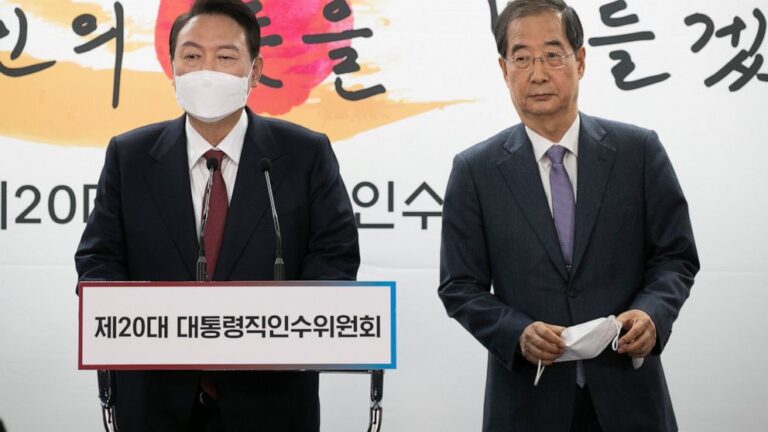
 South Korean President-elect Yoon Suk Yeol on Sunday announced his intent to name a seasoned former prime minister and economic expert to serve as the country’s No. 2 official under his incoming government.

Yoon’s pick of Han Duck-soo for prime minister is the first major nomination in his government, which is set to be inaugurated on May 10.

Yoon is expected to nominate his choices for foreign, defense, finance and other ministers in coming weeks.

South Korea’s executive power is concentrated with the president, but the prime minister leads the country if the president becomes incapacitated. A nomination of prime minister requires parliamentary approval.

Han, 72, held a string of top spots such as trade minister, finance minister and prime minister when South Korea was governed by back-to-back liberal presidents, Kim Dae-jung and Roh Moo-hyun, from 1998 to 2008. During the next conservative government of President Lee Myung-bak, Han was South Korea’s ambassador to the United States.

Six people were killed and 12 were injured in a mass shooting in Sacramento

0

Six people were killed and 12 others suffered “varying degrees of injuries” in a mass shooting in an area of downtown Sacramento, California bustling with nightlife, police said.

Investigators believe multiple shooters opened fire just steps from the Capitol, in the wake of a large fight, after last call early Sunday.

“We know that a large fight took place just prior to the shootings, and we have confirmed that there are multiple shooters,” Sacramento Police Chief Kathy Lester said at an afternoon press conference.

The dead include three men and three women, Lester said.

One of the deceased was identified by his family to NBC News as Sergio Harris. He was 38, according to The Associated Press.

President Joe Biden called on Congress for further action to address gun violence in the wake of the incident.

“Today, America once again mourns for another community devastated by gun violence,” he said in a statement Sunday. “But we must do more than mourn; we must act.”

Mayor Darrell Steinberg called the shooting “a senseless and unacceptable tragedy.”

“Can we not have a sane debate where, on one side of the line, you say that people who want to use firearms for sport or for hunting or, you know, with reasonable self-defense on one side of the line, and on the other side of the line we say there is absolutely no place for rapid-fire assault weapons anywhere, anyhow?” Steinberg asked. “I mean, can we have that? Can we make that distinction?”

City Council member Katie Valenzuela, through tears, said she was “heartbroken” and “outraged.”

His sister, Kay Harris, 32, told the news agency that she had been asleep when a family member called her to say they feared her brother had been killed.

Lester said gunfire had been heard by officers near the scene at around 2 a.m. The officers rushed to the scene, administered CPR and secured the scene, the chief said.

At least one city security video camera captured some of the violence, the chief said, and investigators noted that some area buildings were struck by gunfire.

“The scale of violence that just happened in our city is unprecedented in my 27 years at the Sacramento Police Department,” Lester said.

The injured were being treated at area hospitals. Lester said her detectives would get to the bottom of the attack and hold those who opened fire accountable.

Drug shortages persist in Russia after Ukraine war

0

First came the warnings, in messages among friends and families and on social media, to stock up on vital drugs in Russia before supplies were affected by crippling Western sanctions over the invasion of Ukraine.

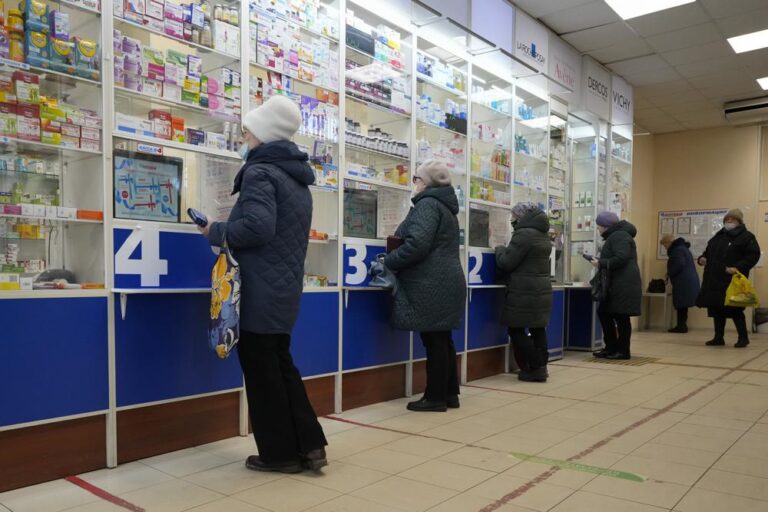
Then, some drugs indeed became harder to find at pharmacies in Moscow and other cities.

“Not a single pharmacy in the city has it now,” a resident of Kazan told The Associated Press in late March about a blood thinner her father needs.

Vrachi.Rf, one of Russia’s biggest online communities for medical workers, surveyed more than 3,000 doctors in mid-March, and they said they had run into shortages of more than 80 medications: anti-inflammatory, gastrointestinal, antiepileptic and anticonvulsant drugs, as well as antidepressants and antipsychotics.

About a dozen people contacted by the AP in different cities in late March said they had spent days searching for certain thyroid medications, types of insulin or even a popular pain-relieving syrup for children. Some said they were unable to find them at all.

“Patients I treat have lost some blood pressure medications,” Erlikh said. “And some doctors I know are reporting problems with certain very expensive, very important medications (used in) certain surgical procedures.”

Experts and health authorities in Russia say the drug shortages are temporary — due to panic- buying and logistical difficulties for suppliers from the sanctions — but some remain worried that high-quality medicines will keep disappearing in the Russian market.

“Most likely there will be shortages. How catastrophic it will be, I don’t know,” said Dr. Alexey Erlikh, head of the cardiac intensive care unit in Moscow Hospital No. 29, and a professor at the Moscow-based Pirogov Medical University.

Reports that Russians could not find certain medications in pharmacies started surfacing in early March, shortly after Moscow unleashed a war on Ukraine, and sweeping sanctions left Russia increasingly isolated from the rest of the world.

Patient’s Monitor, a patients’ rights group in the Russian region of Dagestan on the Caspian Sea, began getting complaints in the second week of March.

Ziyautdin Uvaysov, head of the group, told AP he personally checked with several state-run pharmacies in the region on the availability of 10 most-wanted medications and “they didn’t have a large number of these.”

Uvaysov added that when he asked about when supplies would be restocked, the pharmacies replied that “there aren’t any and it’s unclear when there will be.”

Despite assurances from authorities that hoarding of supplies was to blame for the quickly emptying shelves, reports about shortages persisted throughout March.

Shanghai lockdown triggers complaints as COVID cases rise

0

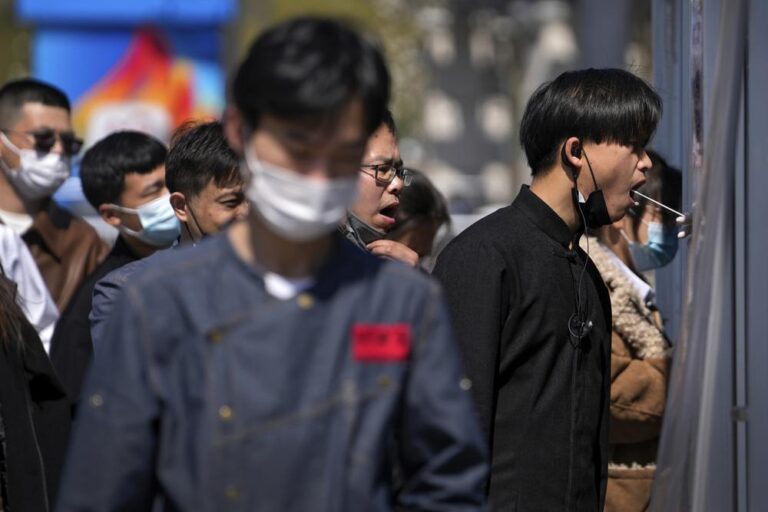
COVID-19 cases in China’s largest city of Shanghai are still rising with millions isolated at home under a sweeping lockdown, as the draconian “zero tolerance” approach to the pandemic increasingly draws complaints from residents fed up with the restrictions.

According to AP, Health officials on Sunday reported 438 confirmed cases over the previous 24 hours, along with 7,788 asymptomatic ones. Both figures were up slightly from the day before, while the northeastern province of Jilin posted a combined 4,455 cases Sunday, also marking an increase from Saturday.

While small by the standards of some countries, the daily increases are some of the largest since the virus was first detected in the central city of Wuhan in late 2019.

State media reports indicate president and Communist Party leader Xi Jinping is directing the continuing tough approach, while seeking to avoid further damage to the sputtering economy and ensure overall stability ahead of a key party congress expected for November.

Despite the spike in infections, China has recorded no new COVID-19 deaths since March 20th, when two were added for a total 4,638. China’s vaccination rate is above 87% — although significantly lower among seniors — and omicron is known to be more infectious while the illness it brings on is typically more mild than with the earlier delta variant.

Shanghai with its 26 million people last week began a two-stage lockdown, with residents of the eastern Pudong section supposed to be allowed to leave their homes Friday, while their neighbors in the western Puxi section underwent their own four-day isolation period.

Despite that assurance, millions in Pudong continue to be confined to their homes amid complaints over food deliveries and the availability of medications and health services.

Notices delivered to residents said they were required to self-test for COVID-19 daily and take precautions including wearing masks at home and avoiding contact with family members — measures not widely enforced since the early days of the pandemic.

While Wuhan endured a 76-day lockdown in 2020 with relatively little complaint, Shanghai residents — many of whom were in isolation even before last week’s lockdown began — appear to be growing increasingly fed up with the measures and methods being used to enforce them.

Although coverage in China’s entirely state-controlled media remains overwhelmingly positive, complaints have been appearing online, including in the form of videos and sound recordings purporting to show heavy-handed practices by officials and volunteers and alleging that sound medical advice has been ignored in favor of political expediency.

“Whereas there was little societal resistance to the lockdown once it was imposed in Wuhan, resistance in Shanghai is palpable now,” Dali Yang, a professor of political science at the University of Chicago tweeted on Sunday.

Given that the vast majority of cases in Shanghai are not life threatening, “it is not surprised that the imposition of the lockdown and forced quarantine of the infected in harsh conditions are meeting resistance,” Yang tweeted.

A city official last week apologized in response to complaints over the government’s handling of the lockdown, and a vice premier made sweeping demands for improvements during a tour of Shanghai on Saturday.

Sun Chunlan, who sits on the ruling Communist Party’s Politburo, urged “resolute and swift moves to stem the spread of COVID-19 in Shanghai in the shortest time possible,” the official Xinhua News Agency reported.

However, Sun stressed “unswerving adherence” to China’s hard-line “zero-COVID” approach, mandating lockdowns, forced isolation of all suspected cases and mass testing, even while acknowledging the social and economic toll that is taking.

“It is an arduous task and huge challenge to combat the omicron variant while maintaining the normal operation of core functions in a megacity,” Sun said.

She called for safeguarding key industries and institutions and the functioning of supply and industrial chains in the commercial hub, along with ensuring “people’s basic living conditions and normal medical needs.”
Social Security’s retirement age is moving to 67

0

Many Americans eagerly look forward to a time when they can stop working and officially set their status to “retired.”

But when asked what age they anticipate that could be, there isn’t a consensus.

The average age when people say they hope to retire is 62, according to one survey.

That is also the age at which people can first claim Social Security retirement benefits, so long as they are eligible based on their work records.

However, according to CNBC, people receive reduced benefits for claiming early. If they wait until full retirement age to claim — generally 66 or 67, depending on when they were born — they receive the full benefits which they have earned. If they wait until age 70, they stand to get an 8% per year benefit increase over their full retirement age.

Meanwhile, the House of Representatives last week approved a retirement bill that would push out the age for required minimum distributions on certain savings accounts to 75, up from the current age of 72. That change, if it passes the Senate, would be gradually phased in by 2032.

The proposal reflects a reality that many people today are generally healthier than generations past and therefore are living and working longer, said Mark J. Warshawsky, a senior fellow at the American Enterprise Institute and former deputy commissioner for retirement and disability policy at the Social Security Administration.

“It should cascade to other official ages throughout the tax code and the government’s programs, Social Security included,” Warshawsky said.

To be sure, no imminent changes to the Social Security program are in the works.

“It has and will continue to be the third rail of politics because of the public sensitivity around the issue,” said Shai Akabas, director of economic policy at the Bipartisan Policy Center.

That does not mean there is no urgency around the issue, however.

The trust funds that the Social Security Administration relies on to pay benefits are projected to become depleted in 2034. At that time, 78% of promised benefits will be payable, the government agency said last year.

To shore up the program, lawmakers have a choice of increasing taxes on benefits, raising payroll taxes or increasing the retirement age. Any enacted changes could include a combination of all three.

Of note, Social Security advocates are staunchly against tweaking the Social Security retirement ages.

“An increase in the full retirement age is just a benefit cut,” said Joe Elsasser, founder and president of Covisum, a provider of Social Security claiming software.

Scientists publish the first complete human genome filling in gaps remaining after previous efforts

0

Scientists on Thursday published the first complete human genome, filling in gaps remaining after previous efforts while offering new promise in the search for clues regarding disease-causing mutations and genetic variation among the world’s 7.9 billion people.

Researchers in 2003 unveiled what was then billed as the complete sequence of the human genome. But about 8% of it had not been fully deciphered, mainly because it consisted of highly repetitive chunks of DNA that were difficult to mesh with the rest, accoridng to Reuters.

Among other things, the new DNA sequences provided fresh detail about the region around what is called the centromere, where chromosomes are grabbed and pulled apart when cells divide to ensure that each “daughter” cell inherits the proper number of chromosomes.

“Uncovering the complete sequence of these formerly missing regions of the genome told us so much about how they’re organized, which was totally unknown for many chromosomes,” Nicolas Altemose, a postdoctoral fellow at the University of California, Berkeley, said in a statement.

A consortium of scientists resolved that in research published in the journal Science. The work was initially made public last year before its formal peer review process.

“Generating a truly complete human genome sequence represents an incredible scientific achievement, providing the first comprehensive view of our DNA blueprint,” Eric Green, director of the National Human Genome Research Institute (NHGRI), part of the U.S. National Institutes of Health, said in a statement.

“This foundational information will strengthen the many ongoing efforts to understand all the functional nuances of the human genome, which in turn will empower genetic studies of human disease,” Green added.

The consortium’s full version is composed of 3.055 billion base pairs, the units from which chromosomes and our genes are built, and 19,969 genes that encode proteins. Of these genes, the researchers identified about 2,000 new ones. Most of those are disabled, but 115 may still be active. The scientists also spotted about 2 million additional genetic variants, 622 of which were present in medically relevant genes.

The consortium was dubbed Telomere-to-Telomere (T2T), named after the structures found at the ends of all chromosomes, the threadlike structure in the nucleus of most living cells that carries genetic information in the form of genes.

“In the future, when someone has their genome sequenced, we will be able to identify all of the variants in their DNA and use that information to better guide their healthcare,” Adam Phillippy, one of the leaders of T2T and a senior investigator at NHGRI, said in a statement.

“Truly finishing the human genome sequence was like putting on a new pair of glasses. Now that we can clearly see everything, we are one step closer to understanding what it all means,” Phillippy added.

Mid-air collision of South Korean trainer planes kills four

0

Two South Korean air force planes collided in mid-air on Friday during a training exercise, killing four pilots, authorities said.

According to Reuters, a total of 130 troops, 95 police officers and 60 firefighters as well as three helicopters have begun a search at the crash site, the Yonhap news agency said, citing local government officials.

The crash happened about 6 km (3.7 miles) south of the KT-1 airplane base in the southeastern city of Sacheon, at about 1:37 p.m.(0437 GMT), the air force said.

The crash site is located in a largely agricultural area, and photos published by Yonhap showed smoke rising from a mountain, and one car shattered by fragments of the aircraft while parked in front of a farmhouse.

The KT-1 is a single-engine basic trainer and light attack aircraft jointly built by the state-run Agency for Defense Development and a contractor, Korea Aerospace Industries.

“Despite their attempts at an emergency escape … all of the two student pilots and two flight instructors aboard the two planes died,” it said in a statement.

President Moon Jae-in offered condolences to the victims’ families.

The air force said there were no civilian casualties but had formed a team to determine the cause of the accident and damage, including on the resident community.