Home Blog Page 56

A member of the Disney dynasty comes out as trans, slams Florida’s ‘Don’t Say Gay’ bill

0

A member of the Disney dynasty has come out publicly as transgender and expressed regret over not doing more about Florida’s recent so-called “Don’t Say Gay” bill.

The “Don’t Say Gay” bill was signed by the Sunshine State’s Gov. Ron DeSantis last month and bars teachers from discussing sexual orientation and gender issues with students below fourth grade. Disney, the company, also recently slammed the law and announced that it stands by members of the LGBTQ community.

Roy P. Disney — the great-nephew of Walt Disney and the co-founder of Walt Disney Co. — disclosed recently in a statement that his child, Charlee, is trans.

Roy revealed the news while also pledging $500,000 to the Human Rights Campaign (HRC) alongside his wife, Sheri.

Charlee, 30, is a high school biology and science teacher who uses they/them pronouns and came out to their family four years ago.

“Equality matters deeply to us, especially because our child, Charlee, is transgender and a proud member of the LGBTQ+ community,” Roy wrote in a statement.

Roy’s sister, Abigail Disney, tweeted her praise and adoration for her brother’s gesture. “Today I am busting with pride at what my brother and his wife have done. So proud so proud so proud!!!’ she wrote in response to his pledge.

Charlee got candid in an interview with the Los Angeles Times and discussed their trans identity, as well as discontent with DeSantis’ signing of the bill.

“I feel like I don’t do very much to help. I don’t call senators or take action. I felt like I could be doing more,” Charlee noted before talking about a previous lack of visible leaders to follow.

“I had very few openly gay role models. And I certainly didn’t have any trans or nonbinary role models,” they continued. “I didn’t see myself reflected in anyone, and that made me feel like there was something wrong with me.”

But Charlee further questioned the merits of the law because of bullying, anxiety and the high risk of suicide in the LGBTQ community.

“To put something like this law on top of that?” Charlee said. “They can’t learn about their community and their history at school, or play sports or use the bathroom they want to use?”

DeSantis previously suggested that Disney “has alienated a lot of people now,” dumping more criticism on the company.

“And so the political influence they’re used to wielding, I think has dissipated,” DeSantis stated during a news conference earlier this month. “And so the question is, why would you want to have special privileges in the law at all? And I don’t think that we should.”

Abigail spoke to CNN on Sunday and responded to what she called the politician’s “absurd” criticism and about her family’s legacy.89

S. Korea’s Yoon invites ex-president he once prosecuted to his inauguration

0

South Korea’s president-elect Yoon Suk-yeol invited disgraced former President Park Geun-hye to attend his inauguration next month, when the two met on Tuesday for first time since Yoon led a corruption probe five years ago that landed Park in prison.

Yoon, a former prosecutor-general and the new standard-bearer of Park’s conservative party, is keen to heal lingering wounds in his party after barely winning last month’s bitterly fought presidential election.

He faces historically low approval ratings as he prepares to take office and his People Power Party will soon face another test at the polls in local elections on June 1, just weeks after his May 10 inauguration, according to Reuters.

The imprisonment of Park, the daughter of former dictator Park Chung-hee, had divided a country in which old Cold War rivalries between right and left still hold sway in politics, while creating a rift within the conservative camp.

Yoon won the March 9 election by a record narrow margin of 0.7%, and a poll released on Monday by Realmeter showed that only 50.4% of respondents said Yoon would carry out his presidential duties well, while 45.3% expected a poor performance. Newly elected presidents in South Korea have typically enjoyed a honeymoon period with much higher approval ratings.

Yoon shot to fame after investigating Park, who was convicted of colluding with a friend to solicit millions of dollars from large corporations, which were then transferred to her friend’s family and several non-profit groups. 

Yoon visited Park, 70, at her home in the southeastern city of Daegu, where she has lived since a pardon last December after serving nearly five years of a 20-year sentence on corruption charges.

“As we have past history … I told her I felt sorry about that,” Yoon told reporters after the meeting. They also talked about her health and daily life, he said.

Kwon Young-se, an official on Yoon’s transition team who had also worked for Park, said in a briefing that Yoon invited the former president to his inauguration during the meeting, and Park promised to try to come despite her poor health.

Yoon, whose advisers include former Park aides, said he would adopt some of her policies so that “she can regain her honour”, Kwon said.

Yoo Yeong-ha, a Park lawyer who also attended Tuesday’s meeting, said Park, who as president promoted strong ties with Washington, stressed that the economy could not develop without a strong foundation in diplomacy and security, and urged Yoon to “build trust” with many countries.

Once a retail giant, Kmart nears extinction after closure

0

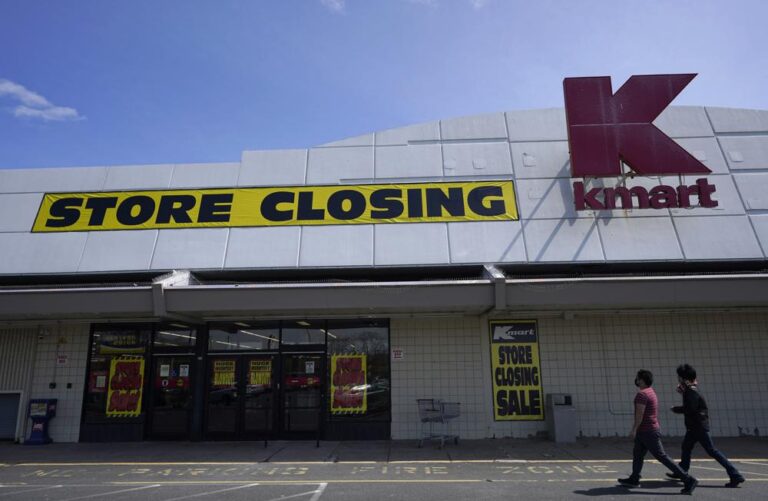
The familiar sights and sounds are still there: the scuffed and faded floor tiles, the relentless beige-on-beige color scheme, the toddlers’ clothes and refrigerators and pretty much everything in between.

There’s even a canned recording that begins, “Attention, Kmart shoppers” — except it’s to remind folks about COVID-19 precautions, not to alert them to a flash sale over in ladies’ lingerie like days of old.

Many of the shelves are bare, though, at the Kmart in Avenel, New Jersey, picked over by bargain hunters as the store prepares to close its doors for good April 16, reported by AP.

Unlike 20 years ago, when news of impending Kmart closures around the country prompted an outpouring of support from loyal shoppers and a Detroit radio station even mounted a campaign to try and save a local store, the closing of the Avenel location was met mostly with an air of resignation.

“It’s maybe a little nostalgic because I’ve lived my whole life in this area, but it’s just another retail store closing,” said Jim Schaber, a resident of nearby Iselin who said his brother worked in the shoe department at Kmart for years. “It’s just another sign of people doing online shopping and not going out to the retail stores.”

The closing packed a little more of an emotional punch for Mike Jerdonek, a truck driver who recalled shopping at Kmart in Brooklyn and Queens in his younger days.

“It’s like history passing right in front of our eyes,” he said as he sat in his car outside the Avenel store. “When I was younger I didn’t have any money, so it was a good place to shop because the prices were cheap. And to see it gone right now, it’s kind of sad.”

Once it shutters, the number of Kmarts in the U.S. — once well over 2,000 — will be down to three in the continental U.S. and a handful of stores elsewhere, according to multiple reports, in a retail world now dominated by Walmart, Target and Amazon.

The demise of the the store in the middle-class suburb, 15 miles (24 kilometers) south of New York City, is the tale of the death of the discount department store writ small.

“You’re always thinking about it because stores are closing all over, but it’s still sad,” said cashier Michelle Yavorsky, who said she has worked at the Avenel store for 2 ½ years. “I’ll miss the place. A lot of people shopped here.”

In its heyday, Kmart sold product lines endorsed by celebrities Martha Stewart and Jaclyn Smith, sponsored NASCAR auto races and was mentioned in movies including “Rain Man” and “Beetlejuice.” It was name-dropped in songs by artists from Eminem to the Beastie Boys to Hall & Oates; in 2003, Eminem bought a 29-room, suburban Detroit mansion once owned by former Kmart chairman Chuck Conaway.

The chain cemented a place in American culture with its Blue Light Specials, a flashing blue orb affixed to a pole that would beckon shoppers to a flash sale in progress. Part of its success was due to its early adoption of layaway programs, which allowed customers who lacked credit to reserve items and pay for them in installments.

For a time, Kmart had a little bit of everything: You could shop for your kids’ back-to-school supplies, get your car tuned up and grab a meal without leaving the premises.

“Kmart was part of America,” said Michael Lisicky, a Baltimore-based author who has written several books on U.S. retail history. “Everybody went to Kmart, whether you liked it or not. They had everything. You had toys. You had sporting goods. You had candy. You had stationery. It was something for everybody. This was almost as much of a social visit as it was a shopping visit. You could spend hours here. And these just dotted the American landscape over the years.”

Kmart’s decline has been slow but steady, brought about by years of falling sales, changes in shopping habits and the looming shadow of Walmart, which coincidentally began its life within months of Kmart’s founding in 1962.

Struggling to compete with Walmart’s low prices and Target’s trendier offerings, Kmart filed for Chapter 11 bankruptcy protection in early 2002 — becoming the largest U.S. retailer to take that step — and announced it would close more than 250 stores.

A few years later, hedge fund executive Edward Lampert combined Sears and Kmart and pledged to return them to their former greatness, but the recession and the rising dominance of Amazon contributed in derailing those goals. Sears filed for Chapter 11 in 2018 and currently has a handful of stores left in the U.S. where it once had thousands.

Kmarts continue to operate in Westwood, New Jersey; Bridgehampton, on New York’s Long Island, and Miami.

It didn’t have to end this way, according to Mark Cohen, director of retail studies at Columbia University in New York and former CEO of Sears Canada. Trying to compete with Walmart on price was a foolish strategy, he said, and Lampert was criticized for not having a retail background and appearing more interested in stripping off the assets of the two chains for their cash value.

“It’s a study in greed, avarice and incompetence,” Cohen said. “Sears should have never gone away; Kmart was in worse shape, but not fatally so. And now they’re both gone.

“Retailers fall by the wayside sometimes because they’re selling things people don’t want to buy,” he continued. “In the case of Kmart, everything they used to sell, people are buying but they’re buying it from Walmart and Target.”

Transformco, which owns Kmart and Sears, did not respond to an email seeking comment and a phone number listed for the company was not taking messages.

Nationwide, some former Kmarts remain vacant while others have been replaced by other big-box stores, fitness centers, self-storage facilities, even churches. One former site in Colorado Springs, Colorado, is now a popular dine-in movie theater.

Employees at the Kmart in Avenel found out last month that the store would close.

At least five people shot at New York subway station

0

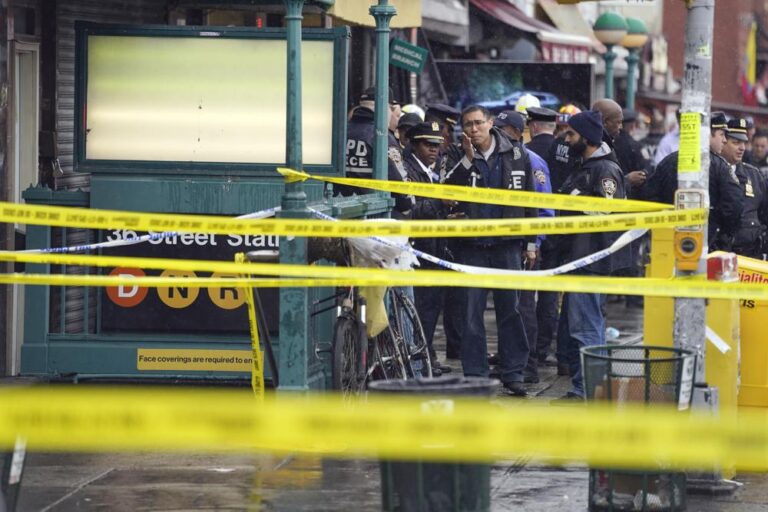
At least five people were shot and injured Tuesday at a New York City subway station during a morning rush hour attack that left wounded commuters bleeding on a train platform and police searching for the shooter, according to AP.

Fire personnel responding to reports of smoke at the 36th Street station in Brooklyn’s Sunset Park neighborhood at around 8:30 a.m. found at least 13 people were hurt, but — aside from the five shot — there were no details on what those injuries entailed.

According to multiple law enforcement sources briefed on the investigation, preliminary information indicated that the suspect who fled was a man wearing a construction vest and a gas mask.

Police officers were canvassing 4th Avenue, the station’s cross-street, asking witnesses whether they were on the train. A sea of emergency lights was visible from at least a dozen blocks away, where a police cordon was set up.

The shootings come as New York City has faced a spate a shootings and high-profile incidents in recent months, including on the city’s subways. One of the most shocking was in January when a woman was pushed to her death in front of a train by a stranger.

Adams, a Democrat a little over 100 days into his term, has made cracking down on crime — especially on the subways — a focus of his early administration, pledging to send more police officers into stations and platforms for regular patrols. It wasn’t immediately clear whether officers had already been inside the station when the shootings occurred.

Photos and video from the scene showed people tending to bloodied passengers lying on the floor of the station and the air filled with smoke. Fire and police officials were investigating reports that there had been an explosion, but the police department tweeted that there were “no active explosive devices at this time.” Multiple smoke devices were found on the scene, said mayoral spokesperson Fabien Levy, who confirmed the initial shooting injury count.

At least 11 people were being treated at two local hospitals.

“My subway door opened into calamity. It was smoke and blood and people screaming,” eyewitness Sam Carcamo told radio station 1010 WINS, saying he saw a gigantic billow of smoke pouring out of the N train once the door opened.

A bystander video shows people lying on the subway platform amid what appeared to be small puddles of blood, as a loudspeaker announcement told everyone on the smoke-hazy platform to get on a train. Inside a subway car, a person lay on the floor, encircled by others. Outside the station, a police officer yelled, “Let’s go! Get out of the way!”

Trains servicing that station were delayed during the morning rush hour.

New York City Mayor Eric Adams’ office did not immediately have more details. Adams was at the mayor’s residence Tuesday morning and was being briefed.

The incident happened on a subway line that runs through south Brooklyn in a neighborhood about a 15-minute train ride to Manhattan. Local schools, including Sunset Park High School across the street, were locked down.

Danny Mastrogiorgio of Brooklyn had just dropped his son off at school when he saw a crush of passengers, included multiple wounded, running up the subway stairway at the 25th Street station in panic. At least two had visible leg injuries, he said.

“It was insane,” he told The Associated Press. “No one knew exactly what was going on.”

Allan Lee was running his business, Cafe Nube, when a half-dozen police cars and fire vehicles suddenly converged on the block.

“Then they started ushering people that were on the block to the adjacent block and then closed off the subway entrance” near the cafe’s door, he told the AP. When he noticed bomb squad officers and dogs, he was certain it was no everyday subway problem.

Gov. Kathy Hochul said in a statement she had been briefed on the situation and said her office would work with the transit authority and police department as the investigation continued. President Joe Biden had also been briefed on the latest developments and White House senior staff were in touch with Adams and NYPD Commissioner Keechant Sewell.

Atlanta is officially the world’s busiest airport again

0

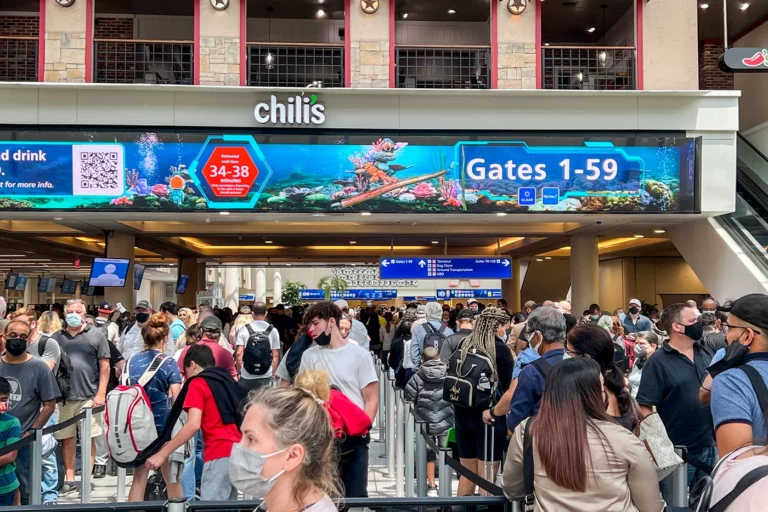
Atlanta is officially the world’s busiest airport again, reclaiming the crown after a pandemic-related shakeup upended the rankings in 2020.

Hartsfield-Jackson Atlanta International Airport (ATL) climbed back into the top spot for 2021 as its passenger count surged more than 76%, according to the initial full-year numbers out Monday from Airports Council International. For the full year, 75.7 million passengers flew through Atlanta.

The highest non-U.S. airport on the 2021 list was Guangzhou, which led the pack in 2020 and then dropped seven spots to No. 8 in 2021. China’s Chengdu Shuangliu International Airport (CTU) ranked ninth, the only other airport outside the United States to make the list this time around.

In a statement, Luis Felipe de Oliveira – ACI World’s director general – said the group’s latest rankings “tell the story of an encouraging trend of recovery, with most of the recurrent busiest airports pre-COVID-19 back at the top.”

“Although we are cautious that recovery could face multiple headwinds, the momentum created by reopening plans by countries could lead to an uptick in travel in the second half of 2022,” he added.

Overall, U.S. carriers dominated the rankings for 2021 – taking eight spots on ACI’s list of the top 10 busiest airports (full list below).

That marked a huge shakeup from rankings in 2020, when Chinese airports accounted for seven of the top 10 spots during the first full year to reflect COVID-19’s effect on air travel.

That came after China – where the COVID-19 crisis first emerged in late 2019 – saw its domestic travel market begin to recover later in 2020 while travel across the rest of the world collapsed as the pandemic took hold elsewhere.

But in 2021, U.S. passenger numbers roared back as Americans began to travel again en masse – especially on domestic itineraries. That propelled Atlanta and other U.S. airports back up the rankings and ahead of airports in other areas of the world – such as Europe – where demand was slower to recover.

For reference, in 2019, before the pandemic’s impacts on travel were largely to be felt, just four of the top 10 spots were held by U.S. airports.

More than 75 million passengers flew through Atlanta in 2021. That’s still a far cry from the 110.5 million counted there in 2019, but it was enough to reclaim the top spot for 2021. The airport recorded just 42.9 million passengers in 2020, when it ranked No. 2 behind Guangzhou.

Dallas Fort Worth International Airport (DFW) rose to No. 2 in the 2021 rankings, where passenger numbers jumped 59% to 62.5 million.

The biggest jump among large airports was at Orlando International Airport (MCO).

Buoyed by the strong and quick return of leisure demand in the U.S., the airport that’s nearest theme park juggernauts Disney World and Univeral Orlando saw its flyer count surge 87% to 40.3 million – enough for it to jump up 20 spots from the year prior and finish as the world’s seventh-busiest airport in 2021.

Chris Rock will not talk about Will Smith slap until he gets paid

0

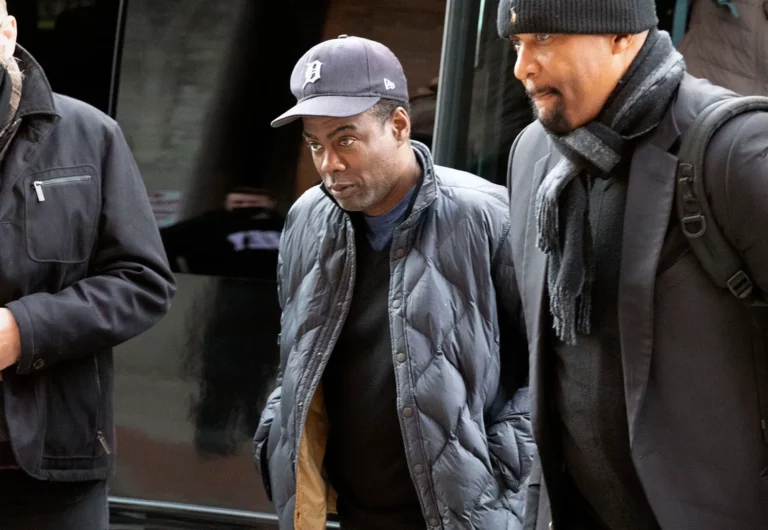
Chris Rock joked that he has no interest in addressing Will Smith slapping him at the 2022 Oscars until he sees some money, according to NYPOST.

“I’m OK. I have a whole show, and I’m not talking about that until I get paid,” Rock, 57, told audience members during his comedy set at Fantasy Springs Resort Casino in Indio, Calif., Friday night, the Desert Sun reported.

He did, however, quip, “Life is good. I got my hearing back.”

Pinkett Smith, who shaved her head last summer, suffers from a hair-loss condition called alopecia.

Minutes after the assault, Smith was awarded the Oscar for Best Actor and made an acceptance speech without apologizing to Rock, though posted a more formal statement to Instagram the next evening.

“I would like to publicly apologize to you, Chris. I was out of line and I was wrong. I am embarrassed and my actions were not indicative of the man I want to be,” the “Hitch” star wrote in part. “There is no place for violence in a world of love and kindness.”

While the comedian did not specify how he wants to be compensated, he declined to press charges against the “King Richard” actor, 53, after last month’s awards show.

Rock has yet to officially discuss the slap heard around the world, telling fans during a surprise set at the Comedy Cellar in New York City last week, “Lower your expectations. I’m not going to address that s–t.”

And at his first show since the incident, he told a Boston crowd that he was “still processing” what went down.

Smith notoriously struck Rock across the face with an open palm on March 27 over a joke about his wife Jada Pinkett Smith’s hair.

Earlier this month, Smith resigned from the Academy of Motion Picture Arts and Sciences, meaning he could no longer vote but could still attend and be nominated. But last week, the Academy banned Smith from all events for 10 years.

“We want to express our deep gratitude to Mr. Rock for maintaining his composure under extraordinary circumstances,” the organization said in a statement. “We also want to thank our hosts, nominees, presenters and winners for their poise and grace during our telecast.”

In response to the ban, Smith told Page Six, “I accept and respect the Academy’s decision.”Chris Rock joked that he has no interest in addressing Will Smith slapping him at the 2022 Oscars until he sees some money.

Ukraine could lose almost half of its economy as a result of Russia’s invasion

0

Ukraine could lose almost half of its economy this year as a result of Russia’s invasion, according to the World Bank.

In a report published Sunday, the bank estimated that the country’s GDP could decline by 45.1% this year, although it noted that “the magnitude of the contraction will depend on the duration and intensity of the war.”, reported by CNN.

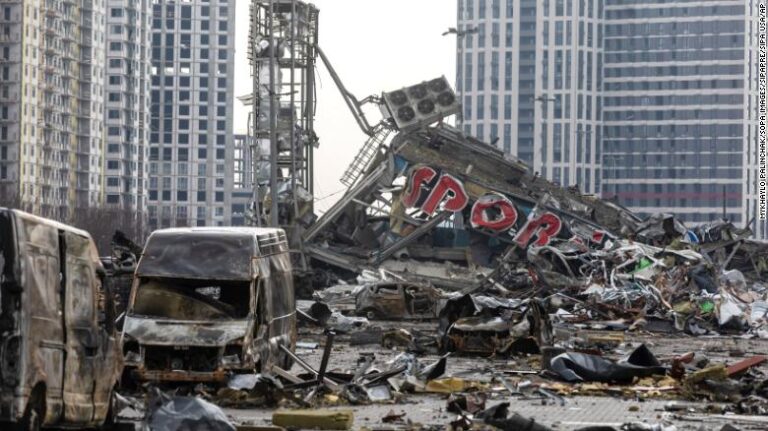
Since the incursion began,vast swathes of Ukraine’s infrastructure have been devastated, with many bridges and neighborhoods damaged or destroyed. Some areas, including ports, have been hit by blockades, while farmland around the country has been turned into battlefields.

As of late March, roughly 3 million people had lost their jobs, and preliminary estimates suggested that the economy may have already lost approximately $565 billion, Marchenko added, noting the massive destruction of Ukrainian infrastructure.

To keep the economy afloat, the government has leaned on war bonds, as well as less traditional avenues, such as fundraising in cryptocurrencies and the sale of non-fungible tokens (NFTs).

“I think that the true figures [of total economic loss] would be clear only after the war,” he said.

“The [best] scenario is to end the war is as quickly as possible.”

Ukraine was a major exporter of wheat and sunflower oil before the war, and this year’s planting season is being disrupted by fighting. Farmers also face difficulty accessing machinery and other essential products that would typically arrive through Black Sea ports.

Russia’s economy has already fallen into recession, with economic output expected to drop by 11.2% this year, the World Bank estimates.

Emerging markets in eastern Europe and central Asia are also expected to be hit hard, with countries including Belarus, Moldova and Tajikistan expected to plunge into recession this year.

“The magnitude of the humanitarian crisis unleashed by the war is staggering. The Russian invasion is delivering a massive blow to Ukraine’s economy and it has inflicted enormous damage to infrastructure,” Anna Bjerde, the World Bank’s vice president for the Europe and Central Asia region, said in a statement.

“Ukraine needs massive financial support immediately as it struggles to keep its economy going and the government running to support Ukrainian citizens who are suffering and coping with an extreme situation.”

Ukraine Finance Minister Serhii Marchenko has emphasized that the government is still functioning, despite the war.

But in a recent interview, he told CNN’s Julia Chatterley that about a third of his country’s economy was no longer functioning as the atrocities continued and millions of people fled as refugees into neighboring countries.

With COVID mission over, Pentagon plans for next pandemic

0

A COVID-19 patient was in respiratory distress. The Army nurse knew she had to act quickly.

It was the peak of this year’s omicron surge and an Army medical team was helping in a Michigan hospital. Regular patient beds were full. So was the intensive care. But the nurse heard of an open spot in an overflow treatment area, so she and another team member raced the gurney across the hospital to claim the space first, denting a wall in their rush.

When she saw the dent, Lt. Col. Suzanne Cobleigh, the leader of the Army team, knew the nurse had done her job. “She’s going to damage the wall on the way there because he’s going to get that bed,” Cobleigh said. “He’s going to get the treatment he needs. That was the mission.”

That nurse’s mission was to get urgent care for her patient. Now, the U.S. military mission is to use the experiences of Cobleigh’s team and other units pressed into service against the coronavirus pandemic to prepare for the next crisis threatening a large population, whatever its nature.

Their experiences, said Gen. Glen VanHerck, will help shape the size and staffing of the military’s medical response so the Pentagon can provide the right types and numbers of forces needed for another pandemic, global crisis or conflict.

One of the key lessons learned was the value of small military teams over mass movements of personnel and facilities in a crisis like the one wrought by COVID-19.

According to AP, In the early days of the pandemic, the Pentagon steamed hospital ships to New York City and Los Angeles, and set up massive hospital facilities in convention centers and parking lots, in response to pleas from state government leaders. The idea was to use them to treat non-COVID-19 patients, allowing hospitals to focus on the more acute pandemic cases. But while images of the military ships were powerful, too often many beds went unused. Fewer patients needed non-coronavirus care than expected, and hospitals were still overwhelmed by the pandemic.

A more agile approach emerged: having military medical personnel step in for exhausted hospital staff members or work alongside them or in additional treatment areas in unused spaces.

“It morphed over time,” VanHerck, who heads U.S. Northern Command and is responsible for homeland defense, said of the response.

Overall, about 24,000 U.S. troops were deployed for the pandemic, including nearly 6,000 medical personnel to hospitals and 5,000 to help administer vaccines. Many did multiple tours. That mission is over, at least for now.

Cobleigh and her team members were deployed to two hospitals in Grand Rapids from December to February, as part of the U.S. military’s effort to relieve civilian medical workers. And just last week the last military medical team that had been deployed for the pandemic finished its stint at the University of Utah Hospital and headed home.

Cobleigh said military medical personnel were not accustomed to caring for so many people with multiple health problems, as are more apt to be found in a civilian population than in military ranks. “The level of sickness and death in the civilian sector was scores more than what anyone had experienced back in the Army,” said Cobleigh, who is stationed now at Fort Riley, Kansas, but will soon move to Aberdeen Proving Ground in Maryland.

She said she found that her staff needed her and wanted to “talk through their stresses and strains before they’d go back on shift.”

For the civilian hospitals, the lesson was knowing when to call for help.

“It was the bridge to help us get out of omicron and in a position where we can take good care of our patients,” Graves said. “I am not sure how we would have done that without them.”

VanHerck told The Associated Press his command is rewriting pandemic and infectious disease plans, and planning wargames and other exercises to determine if the U.S. has the right balance of military medical staff in the active duty and reserves.

During the pandemic, he said, the teams’ make-up and equipment needs evolved. Now, he’s put about 10 teams of physicians, nurses and other staff — or about 200 troops — on prepare-to-deploy orders through the end of May in case infections shoot up again. The size of the teams ranges from small to medium.

Dr. Kencee Graves, inpatient chief medical officer at the University of Utah Hospital, said the facility finally decided to seek help this year because it was postponing surgeries to care for all the COVID-19 patients and closing off beds because of staff shortages.

Some patients had surgery postponed more than once, Graves said, because of critically ill patients or critical needs by others. “So before the military came, we were looking at a surgical backlog of hundreds of cases and we were low on staff. We had fatigued staff.”

Her mantra became, “All I can do is show up and hope it’s helpful.” She added, “And I just did that day after day after day for two years.”

Then in came a 25-member Navy medical team.

“A number of staff were overwhelmed,” said Cdr. Arriel Atienza, chief medical officer for the Navy team. “They were burnt out. They couldn’t call in sick. We’re able to fill some gaps and needed shifts that would otherwise have remained unmanned, and the patient load would have been very demanding for the existing staff to match.”

Atienza, a family physician who’s been in the military for 21 years, spent the Christmas holiday deployed to a hospital in New Mexico, then went to Salt Lake City in March. Over time, he said, the military “has evolved from things like pop-up hospitals” and now knows how to integrate seamlessly into local health facilities in just a couple days.

That integration helped the hospital staff recover and catch up.

“We have gotten through about a quarter of our surgical backlog,” Graves said. ”We did not call a backup physician this month for the hospital team … that’s the first time that’s happened in several months. And then we haven’t called a patient and asked them to reschedule their surgery for the majority of the last few weeks.”

VanHerck said the pandemic also underscored the need to review the nation’s supply chain to ensure that the right equipment and medications were being stockpiled, or to see if they were coming from foreign distributors.

“If we’re relying on getting those from a foreign manufacturer and supplier, then that may be something that is a national security vulnerability that we have to address,” he said.

VanHerck said the U.S. is also working to better analyze trends in order to predict the needs for personnel, equipment and protective gear. Military and other government experts watched the progress of COVID-19 infections moving across the country and used that data to predict where the next outbreak might be so that staff could be prepared to go there.

The need for mental health care for the military personnel also became apparent. Team members coming off difficult shifts often needed someone to talk to.

President Joe Biden was scheduled Monday to introduce new policy measures on firearms.

0

Amid growing concern about gun violence and untraceable “ghost guns” that can be 3D-printed at home, President Joe Biden was scheduled Monday to introduce new policy measures on firearms.

According to NBCNEWS, Biden’s announcement will most likely rely on executive orders on gun control, ghost guns and other facets of firearms regulation as part of an approach to rein in the pandemic wave of firearms-related attacks, two people with knowledge of his remarks said.

As part of Monday’s policy rollout, Biden was expected to name a new and long-awaited replacement nominee to lead the Bureau of Alcohol, Tobacco, Firearms and Explosives.

Biden was also expected to announce new steps to make it harder for people to build and acquire so-called ghost guns.

Many big cities have reported recovering increasing numbers of the weapons. They lack serial numbers, which can allow law enforcement agencies to track them and enforce background checks. And they are essentially available in plastic, which can bypass metal detectors.

The president’s proposed fiscal year 2023 budget provided clues about the expected policy rollout, and it may be at least part of its line of funding.

In September, the White House withdrew its last nominee, 25-year ATF veteran David Chipman, following unanimous opposition from Republicans who say they want to protect the right to bear arms.

Chipman is a senior policy adviser at a nonprofit organization, Giffords, named for former Rep. Gabrielle Giffords, D-Ariz., who was shot in a 2011 assassination attempt. The organization aims to reduce gun violence and save lives. Senate Minority Leader Mitch McConnell, R-Ky., alleged that Chipman was a foe of the Second Amendment.

Gun violence advocates have been furious at the Biden administration for failing to lobby hard enough for Chipman, in their view, and for waiting so long to announce a replacement.

The political wrangling comes amid continued school and workplace shootings and an increase in gun violence in many major cities.

The manufacturing hub of Guangzhou closes to most arrivals as China’s outbreak grows

0

The manufacturing hub of Guangzhou closed itself to most arrivals Monday as China battles a major COVID-19 surge in its big eastern cities.

Shanghai has taken the brunt of the rise, with another 26,087 cases announced on Monday, only 914 of which showed symptoms. The city of 26 million is under a tight lockdown, with many residents confined to their homes for up to three weeks and concerns growing over the effect on the economy of China’s largest city, according to AP.

The financial hub has seen international events canceled because of the crackdown, and local football club Shanghai Port has been forced to withdraw from the Asian Champions League because travel restrictions prevented it from attending games in Thailand.

The capital, Beijing, has seen relatively few restrictions, although the Erjiefang neighborhood including the famed 798 art district has been cordoned off and classified as high risk after eight infections were reported there over the past two weeks.

China is facing one of its worst local outbreaks since the pandemic began. China is still mostly closed to international travel, even as most of the world has sought ways to live with the virus.

No such lockdown has yet been announced for Guangzhou, a metropolis of 18 million northwest of Hong Kong that is home to many top companies and China’s busiest airport. Just 27 cases were reported in the city on Monday.

However, primary and middle schools have been switched to online after an initial 23 local infections were detected last week. An exhibition center was being converted into a makeshift hospital after authorities said earlier they would begin citywide mass testing.

Only citizens with a “definite need” to leave Guangzhou can do so, and only if they test negative for the virus within 48 hours of departure, city spokesperson Chen Bin said in a social media announcement.

China has stuck to its “zero-COVID” strategy of handling outbreaks with strict isolation and mass testing, despite complaints in Shanghai over shortages of food and medical services.

China’s government and the entirely state-controlled media are growing increasingly defensive about complaints over the COVID-19 prevention measures, censoring content online and rebuking foreign critics.

Foreign Ministry spokesperson Zhao Lijian on Sunday said China had “lodged solemn representations with the U.S.” after the State Department advised Americans to reconsider traveling to China due to “arbitrary enforcement” of local laws and COVID-19 restrictions, particularly in Hong Kong, Jilin province and Shanghai. U.S. officials cited a risk of “parents and children being separated.”

China was “strongly dissatisfied with and firmly opposed to the U.S. side’s groundless accusation against China’s epidemic response,” Zhao said.

Despite that, and indications the hardline policy is being dictated by head of the ruling Communist Party Xi Jinping, China has rejected any notion that its response is political in nature. Xi has demanded social stability above all else in the runup to a key party congress later this year at which he is expected to bestow on himself an unprecedented third-term as party leader.

The English-language China Daily acknowledged that Shanghai’s measures are “far from perfect,” and pointed to the firing last week of three local officials for failing in their duties. But it said that shouldn’t become an “excuse to politicize the event and blame China.”

Zhao issued a further defense of China’s virus controls on Monday, saying they have “proven to be effective and in line with its national conditions and needs, and have made an important contribution to the global fight against the epidemic.”

Shanghai has brought in thousands of additional health workers from other cities, provinces and the military. Despite the large number of cases, no new deaths have been reported in the Shanghai wave, possibly because the omicron variant is less deadly than older variants.

City authorities also say they have secured daily supplies for residents, following complaints about deliveries of food and other necessities.

Residents have resorted to group buying of groceries because they are not allowed to leave their buildings, with only partial success in obtaining needed items.

Officials say they will begin relaxing restrictions beginning with areas where no new infections have been detected for two weeks. Residents will be allowed to move around their districts while remaining socially distanced.

A second category will be allowed to move around their neighborhoods, while others will remain isolated in their homes.

Chinese club Shanghai Port has been forced by the city’s COVID-19 lockdown to withdraw from the Asian Champions League, the Asian Football Confederation (AFC) said Monday.

Due to travel restrictions in the city, Port was unable to make the trip to Thailand for six Group J games.

Its first game was scheduled on Saturday against Vissel Kobe of Japan.

“The AFC acknowledged the travel restrictions faced by Shanghai Port FC as a result of the recent lockdown measures enforced in Shanghai,” the AFC said in a statement.