Home Blog Page 47

American family brings unexploded shell to Israel airport

0

According to CNN, an American family caused havoc at Israel’s Ben Gurion airport in Tel Aviv on Thursday when they tried to transport an unexploded shell through airport security.

The tourists found the shell while traveling in the Golan Heights, explained Israel Airport Authorities in a press statement.

Israel Airport Authorities said the incident is “currently under operational investigation.” The injured individual was taken to hospital.

Ben Gurion International Airport has long been considered one of the safest travel hubs in the world due to its multiple layers of security checks.

Israel captured the Golan Heights from Syria in a war in 1967 and annexed the narrow strip of land in 1981. The area is considered occupied territory under international law and UN Security Council resolutions.

Upon arrival at the airport, the American travelers declared the shell to airport security at luggage drop off and airport staff announced an evacuation. Video circulating on social media shows people panicking, running behind pillars, and cowering on the ground.

One person was reported injured in the incident, an Israeli passenger who ran onto the luggage conveyor belt amid the chaos.

“After a security incident was ruled out, the evacuation of the terminal was canceled,” confirmed Israel Airport Authorities.

The American travelers were interrogated by airport authorities but were subsequently allowed to board their flight.

Could there be war between Russia and the West?

0

The saber-rattling and rhetoric between Moscow and the West have become notably more aggressive this week, prompting concerns that a direct confrontation between the two power blocs could be more likely.

In the last few days alone, for example, Russia stopped gas supplies to two European countries and has warned the West several times that the risk of a nuclear war is very “real.”

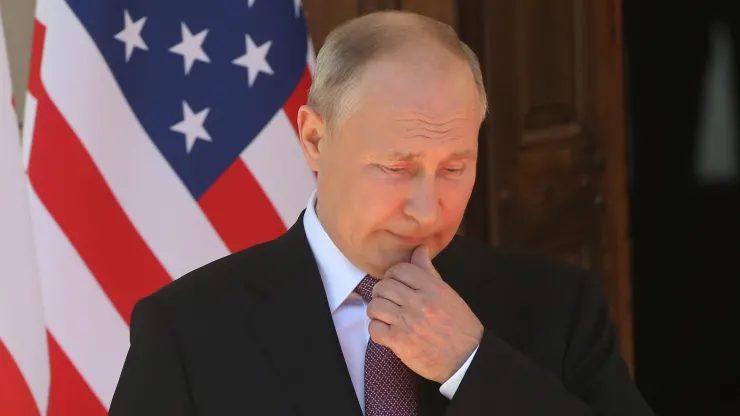
In addition, Russian President Vladimir Putin has said that any foreign intervention in Ukraine would provoke what he called a “lightning fast” response from Moscow, while his Foreign Ministry warned NATO not to test its patience.

For their part, Western officials have dismissed Russia’s “bravado” and “dangerous” nuclear war rhetoric, with the U.K. calling on Western allies to “double down” on their support for Ukraine.

At the start of the week, Russia’s foreign minister warned that the threat of a nuclear war “cannot be underestimated” and said NATO’s supply of weapons to Ukraine was tantamount to the military alliance engaging in a proxy war with Russia. 

Putin doubled down on the bellicose rhetoric Wednesday, threatening a “lightning fast” retaliation against any country intervening in the Ukraine war and creating what he called “strategic threats for Russia.”

He then appeared to allude to Russia’s arsenal of intercontinental ballistic missiles and nuclear weapons when he warned that Russia has the “tools” for a retaliatory response “that no one else can boast of having now … we will use them if necessary.”

But strategists told CNBC that Putin is playing on risk aversion in the West and that the chances of a nuclear war are remote.

“I think it’s outside the realm of possibility right now that there’s going to be a nuclear war or World War III that really spills over that far beyond Ukraine’s borders,” Samuel Ramani, a geopolitical analyst and associate fellow at the Royal United Services Institute, told CNBC.

“If there’s a border spillover right now, we’re still probably most likely looking at something like Moldova being vulnerable to an invasion,” he said.

He noted that Russia has a long history of using “nuclear brinkmanship” as a way of preventing the West from pursuing security policies that it doesn’t like, with the escalation in hostile rhetoric aimed at deterring NATO members from making heavy arms deliveries to Ukraine.

While NATO has shied away from providing any aid to Ukraine that could be misconstrued as a direct attack on Russia, Western allies continue to pile on the pressure on Moscow.

Indeed, the economic punishment on Russia has been increasing by the day, in the form of more sanctions on its businesses, key sectors and officials close to or within Putin’s regime. Russia’s own Economy Ministry expects the economy to contract as a result, by 8.8% in 2022 in its base-case scenario, or by 12.4% in a more conservative scenario, Reuters reported.

For its part, Russia has sought to inflict its own pain on European countries that are, awkwardly, heavily reliant on Russian natural gas imports. This week it suspended supplies to Poland and Bulgaria because they refused to pay for the gas in rubles. Russia’s move was branded as “blackmail” by the EU but defended by Moscow.

While a direct confrontation between Russia and the West remains unlikely, one close Russia watcher said Western governments need to imbue their populations with a “war mentality” to prepare them for the hardships they could face as the economic fallout from the war continues. Those include rising energy costs and disrupted supply chains and goods from Russia and Ukraine, among the world’s biggest “bread baskets.”

Shanghai’s lockdown is driving scores of foreign residents to flee the commercial centre

0

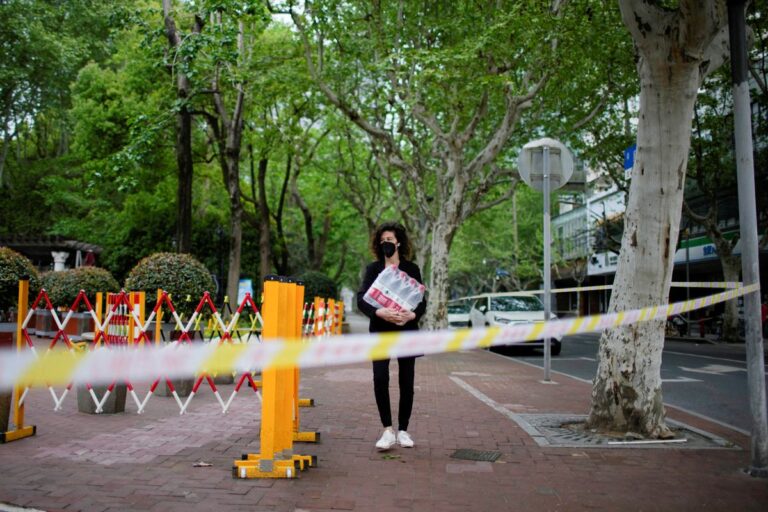
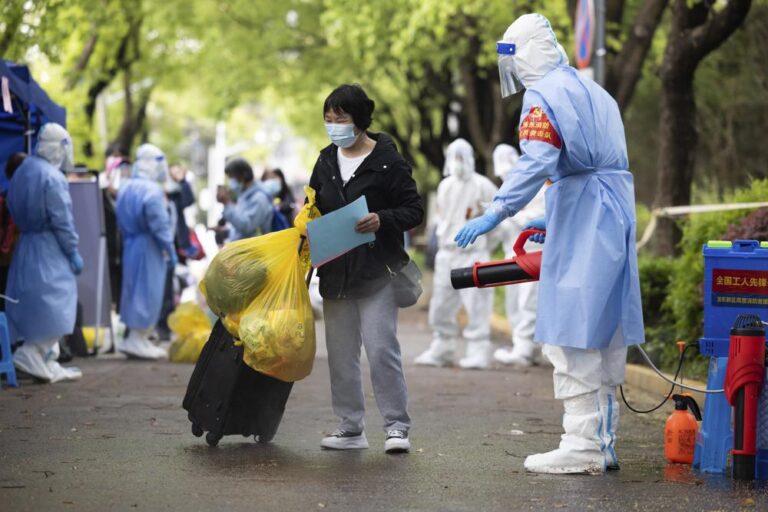
According to Reuters, Shanghai’s heavy-handed COVID-19 lockdown is driving scores of foreign residents to flee the commercial centre, denting the appeal of mainland China’s most cosmopolitan city and prompting others to rethink their futures in the metropolis.

While no official statistics are available for departures in recent weeks, pet movers, property agents and law firms say they are seeing a sharp uptick in departure queries, while online chat groups swapping advice on how to leave the city amid lockdown curbs have swelled.

“Normally we get about 30-40 cases a month but we got over 60 in April,” said Michael Faung, founder of international pet movers Shanghai M&D pet.

Shanghai’s curbs were initally set to last only five days but have stretched into their fourth week with little clarity on when they may lift.

Some of those who managed to leave describe harrowing efforts to reach the airport, from paying $500 for a cab that usually costs $30, battling neighbourhood workers who block departures, to being stranded at the airport after their flights were abruptly cancelled.

One described how she and her five-month old daughter spent nearly a week sleeping on the floor of Pudong Airport, running out of food, when issues with documentation for her baby meant she couldn’t board her flight. The lockdown has shuttered visa offices and many administrative firms in the city.

The woman does not plan on returning to Shanghai, declining to give her name due to privacy reasons.

“With what I have faced, let me just go back to my country and do something there,” she said.

Pudong airport did not respond to a request for comment.

The city of 25 million is the China base for numerous multinational firms and long a magnet for expats lured by the international vibe of areas such as the French Concession, where boutiques and cafes line tree-shaded lanes.

But China has seen a steady drain in foreigners since the 2020 COVID-19 outbreak in Wuhan and subsequent entry restrictions have slowed new entrants to a trickle.

Shanghai was officially home to 164,000 foreign residents last year. That compares to 215,000 work visa holders in 2018, according to government data, which did not count their dependents.

The last straw for many has been the month-long lockdown, 10 foreign residents told Reuters, describing how they had difficulties obtaining food and fears of being separated from family members should they be infected with COVID.

“Until the lockdown I really couldn’t feel the authoritarian government, because you’re more or less free to do what you want and I never really lived oppressed,” said Jennifer Li, a foreigner who is making plans for her family to leave the city that has been their home for 11 years.

The handling of COVID “made us realise how human lives and human mental health is not important to this government,” she added.

The Shanghai government did not respond to a request for comment. China says it must stick with its zero-tolerance approach given the danger the Omicron variant posed to people with underlying health conditions, the elderly and unvaccinated.

Foreign business chambers have warned of foreign talent flight.

The “number of foreigners in China have halved since pandemic began and could halve again this summer,” said Joerg Wuttke, president of the European Chamber of Commerce at a recent forum.

“Europeans, including the Brits, will not even fill the Beijing Bird’s nest stadium, a capacity of 80,000,” Wuttke added.

British international school Wellington College International Shanghai, which charges up to 348,000 yuan ($53,270) a year, sent a letter to parents on April 15 noting that some of its teachers wanted to return home.

It also said it understood that some families were reconsidering their future in Shangahi and extended a deadline for parents to withdraw their children from the school, according to a copy of the letter seen by Reuters.

Wellington College did not respond to a request for comment.

An April American Chamber of Commerce survey found 44.3% of respondents said they would lose expatriate staff if the current COVID restrictions remain in place for the next year.

Much of Europe is facing stagflation

0

The European economy slowed in the first three months of the year due to a combination of soaring inflation and early fallout from the war in Ukraine.

According to CNN, Preliminary first quarter data published Friday showed GDP grew by 0.2% across the 19 countries that use the euro, over the previous quarter. That was weaker than the 0.3% growth recorded in the final three months of 2021.

France is already there.

Europe’s second biggest economy stalled in the first quarter, with GDP flatlining and inflation hitting a new record high. Consumers responded by closing their wallets: household spending fell 1.3% in the three-month period.

Italy fared even worse. Its economy shrank by 0.2% in the first quarter.

It may take a while before the outlook improves, particularly given Europe’s exposure to trade with China.

“Worsening Chinese lockdowns and cautious consumer spending in reaction to high energy and food prices could easily cause a temporary contraction in eurozone GDP in Q2,” the Berenberg economists added.

Consumer price inflation, meanwhile, rose to 7.5% in April — the highest since the European Union began keeping records 25 years ago. Rising costs for energy and food — driven higher by the turmoil in Ukraine and Western sanctions on Russia — were largely to blame.

“Russia’s brutal war against Ukraine has driven up prices for energy and foodstuffs, disrupted supply chains and dealt a serious blow to consumer confidence,” economists at Berenberg wrote in a note Friday. “As the most exposed major region globally, the eurozone has fallen into stagflation as a result.”

Germany, the region’s biggest economy, reported GDP growth of 0.2%. That was an improvement on the contraction seen in the fourth quarter of 2021. But the pace of activity likely slowed towards the end of the January-March period following Russia’s invasion of Ukraine on February 24.

“The economic consequences of the war in Ukraine have had a growing impact on the short-term economic development since late February,” the German statistics office said a statement.

The German government on Wednesday downgraded its growth forecast for this year to 2.2% and it has warned of a recession if Russian gas supply is cut off.

Its huge industrial base is already under enormous pressure from sky-high energy prices and global supply disruptions made worse by the war and sanctions. Manufacturing output contracted this month, falling to its lowest level since June 2020, according to survey data from S&P Global, and slumping confidence could spell a protracted downturn.

Germany, and indeed much of Europe, is now facing stagflation — the nightmare combination of high inflation and weak economic growth.

N. Korea’s Kim calls for stronger military as nuclear test work ‘well underway’

0

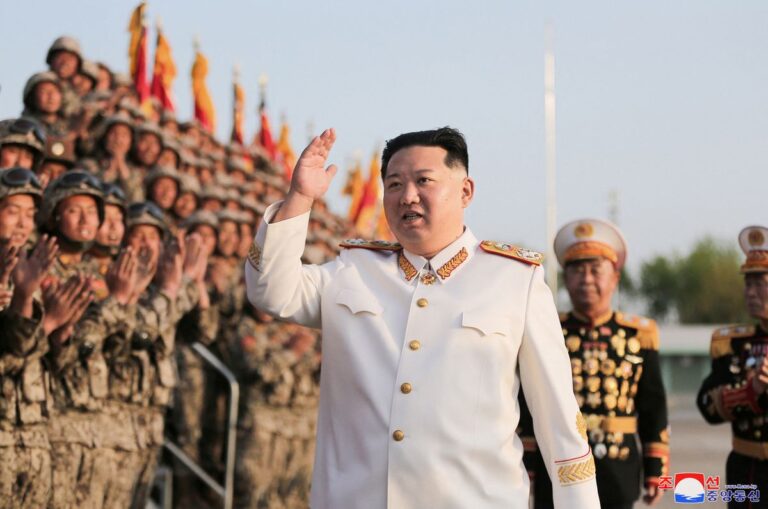
North Korean leader Kim Jong Un called on the country’s military to “bolster up their strength in every way to annihilate the enemy”, state media reported on Friday, as new satellite imagery showed increased preparations for a possible nuclear test.

According to Reuters, Kim made the remarks during photo sessions with troops, state media broadcasters, and others involved in a massive military parade staged on Monday, which marked the 90th anniversary of the army’s founding.

Analysts and South Korean and U.S. officials have said that the North appears to be restoring Tunnel No. 3 at its Punggye-ri Nuclear Test Site, used for underground nuclear blasts before it was closed in 2018 amid denuclearisation talks with Washington and Seoul.

Kim has since said the country is no longer bound by that self-imposed moratorium on tests, but North Korea has not commented on the work or confirmed its purpose.

Commercial satellite imagery from Monday shows construction of new buildings, movement of lumber, and an increase in equipment and supplies immediately outside the new entrance to Tunnel No. 3, CSIS said.

“The date of a seventh nuclear test will undoubtedly depend exclusively upon the personal decision of Kim Jong Un,” the report said.

Photos released by state media showed Kim perched on a white horse and wearing a white, military-style tunic with gold trim as he reviewed the troops.

Monday’s parade had featured several of the North’s latest missiles, including its largest intercontinental ballistic missile (ICBM), the Hwasong-17, and a recently tested hypersonic missile.

The display demonstrated the “modernity, heroism and radical development of the armed forces of the Republic and their matchless military and technological superiority,” Kim told troops at the photo session, state news agency KCNA reported.

North Korea says it opposes war and that its weapons are for self-defence, but at Monday’s parade Kim said the mission of its nuclear force goes beyond deterring war to also include defending the nation’s “fundamental interests.”

Last month North Korea resumed testing its largest ICBMs, and there are signs it could soon test a nuclear weapon for the first time since 2017.

“Current satellite imagery indicates that preparations are well underway and should not be discounted as insignificant activity,” the U.S.-based Center for Strategic and International Studies (CSIS) said in a report on Thursday.

Young S. Koreans dread revival of work dinners as pandemic eases

0

When South Korea announced its decision to lift most COVID-19 restrictions earlier this month, 29-year-old office worker Jang was more concerned than happy.

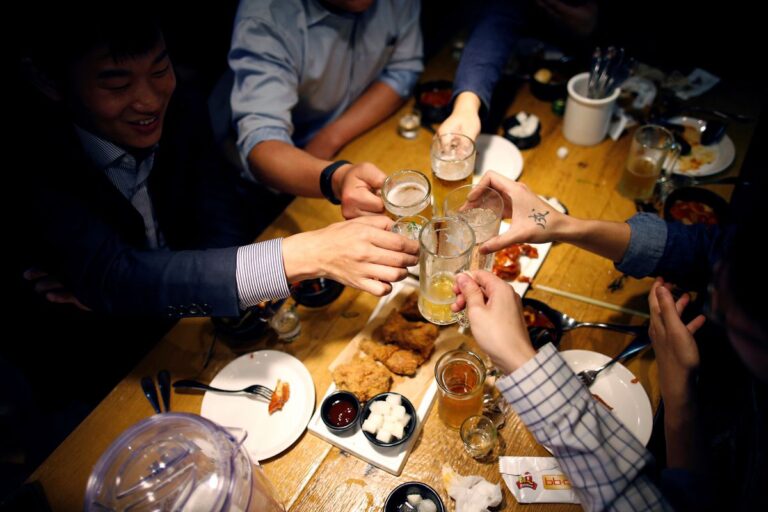
The end of social distancing revived the time-honoured office ritual of after-work meal gatherings, part of a tradition called “hoeshik” in Korean. Jang was among the increasing number of young workers here who consider it an obsolete company culture that intrudes on employees’ personal time.

Despite young employees’ growing displeasure with after-work dinners, many senior workers still believe such gatherings are necessary to build bonds with colleagues, Professor Suh said.

“It will be yet another conflict between the old and new generation,” he said. “But even if the after-dinner and weekend-gathering culture manages to survive, they won’t be able to be held as often as they used to be.”

While many companies are gradually returning to their offices, some are seeking to find a middle ground, opting for hybrid models instead of implementing a full-fledge return-to-office scheme.

SK Telecom Co Ltd (017670.KS), for one, is operating new workspaces to allow its employees to choose whether to work from home, at their head office, or at small dispersed work spaces that the company has opened.

“We don’t have specific guidance on company dinners, but they will be less frequent when many of our employees are working from home,” a company official said, asking not to be named as he was not authorised to talk to media.

“The key is that we don’t mind where our employees work or how often they come to the office, as long as it helps improve their efficiency.”

“Hoeshik is part of your work life, except it’s unpaid,” said Jang, who lives and works in Seoul. She asked to be identified only by her last name in order to speak candidly about her employer.

According to AP, beginning last week, South Korea removed a midnight curfew on bars and restaurants, along with a cap of 10 people for private gatherings. The rules had served as guidelines for companies to adopt remote work policy and rein in non-essential gatherings, such as the off-hours drinking sessions.

“The worst part about the after-work dinners is that you don’t know when it’ll end. With drinks, it could really continue well into the night until who knows when,” Jang said.

Even before the pandemic, an increasing number of South Koreans, particularly younger workers, were already souring on company dinners and similar events, such as company retreats or weekend hiking with co-workers.

The pandemic may ensure that the old hoeshik culture is fading for good, an expert said.

“Now that employees know what it’s like to have off-hours kept for themselves, companies won’t be able to fully restore the old after-dinner and weekend gathering culture,” Suh Yong-gu, a marketing professor at Sookmyung Women’s University in Seoul, said.

According to a recent survey by Incruit Corp, a recruiting website operator, nearly 80% of respondents said their companies’ meal-gathering culture had changed during the pandemic, with 95% of them expressing satisfaction over the change.

The past two years taught Jang what hoeshik-free evenings were like. She spent more time to keep her house clean, make herself a good dinner and work out.

Kim Woon-bong, 30, who began working for a city government last year, said he felt lucky not having had to go through the mandatory hoeshik culture, thanks to the distancing rules.

“I actually liked meal gatherings held during lunch hours, because I knew they would end at 1 p.m.,” he said. “I am cautiously hoping the company dinner culture will change now that it has been almost gone for two years.”

New tests to determine Shanghai reopening as Beijing stocks up

0

Shanghai authorities said new COVID-19 testing over the next few days will determine which neighborhoods can safely start reopening, as residents in Beijing watched carefully for word for whether the capital will lock down.

According to AP, on Wednesday, China reported 14,222 new cases of coronavirus infection, the vast majority in people not showing symptoms.

Demand has soared, with city residents sharing online lists of what to stock. Farms on the outskirts of Beijing told the official Beijing Daily News that April and May are typically when demand peaks. Compared to the same period last year, the number of orders rose 20%, owing to the demand generated by the epidemic, according to one major farm the paper interviewed.

Another farm said it was even more. “Starting from yesterday, the number of orders we’ve received have clearly increased, roughly double the amount at this time last year,” supply chain manager Zhang Xinming told Beijing Daily News.

So far, officials have locked down only specific areas of Beijing where virus cases were found. On Wednesday, the Tongzhou district suspended classes for all its schools from kindergarten through high school.

Given that China for now remains committed to its “zero-COVID” approach, “I do think we will continue to see the use of these lockdowns across the country,” said Karen Grepin, a public health expert at the University of Hong Kong. “If anything, the omicron variant has made it more challenging to control the virus and thus more stringent measures are needed if the goal is to continue to strive for local elimination.”

The “zero-COVID” strategy has worked well against previous versions of the virus, keeping China mostly virus-free for two years as the pandemic spread around the world. Questions are being raised about its effectiveness now, with vaccines protecting most people from serious illness and the immense challenge of trying to contain the more transmissible omicron variant.

Shanghai residents will begin another round of testing over the next few days and areas that have achieved “societal zero COVID” could see some measure of limited freedom, the vice head of the city health committee, Zhao Dandan, said.

China’s zero-COVID strategy is being tested by the country’s largest outbreak of the pandemic, which began in the central city of Wuhan in late December 2019. The phrase refers to new infections being detected only in people already under surveillance, such as those in a centralized quarantine facility or known close contacts of existing patients, and the virus is no longer being spread in the community.

Shanghai’s lockdown began a month ago, taking a toll on residents confined to their homes. While a small, lucky portion of people have been allowed to leave their homes in the past week, the vast majority of people remain confined.

The flow of industrial goods has also been disrupted by the suspension of access to Shanghai, home of the world’s busiest port, and other industrial cities including Changchun and Jilin in northeast China.

Officials reported 48 deaths on Wednesday, bringing the total to at least 238 in the city.

Meanwhile, the capital Beijing is in the middle of mass testing millions of residents after discovering a cluster of cases last week. The city reported 34 new cases Wednesday, three of them in people showing no symptoms.

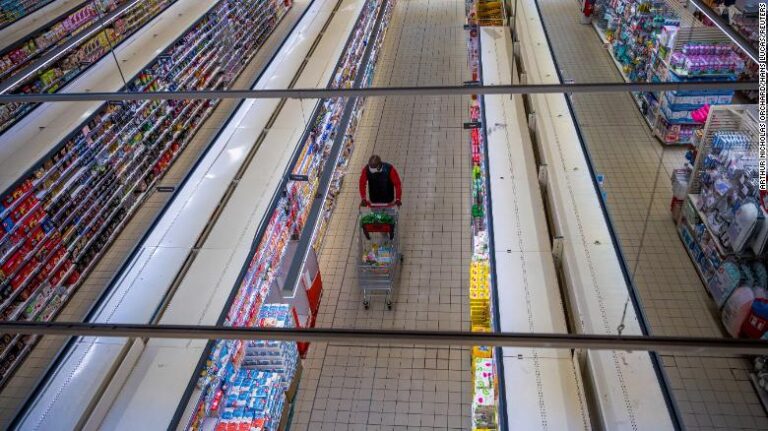
In the last couple of days, nervous Beijing residents had started stockpiling food and supplies, following Shanghai’s troubles where residents struggled to get a continuous and reliable supply of food while under lockdown.

Beijing city officials were quick to promise that they were ensuring grocery stores would be well-stocked. They said they were monitoring the Xinfadi wholesale market, where the city gets the vast majority of its supplies.

Biden will visit S.Korea and Japan next month

0

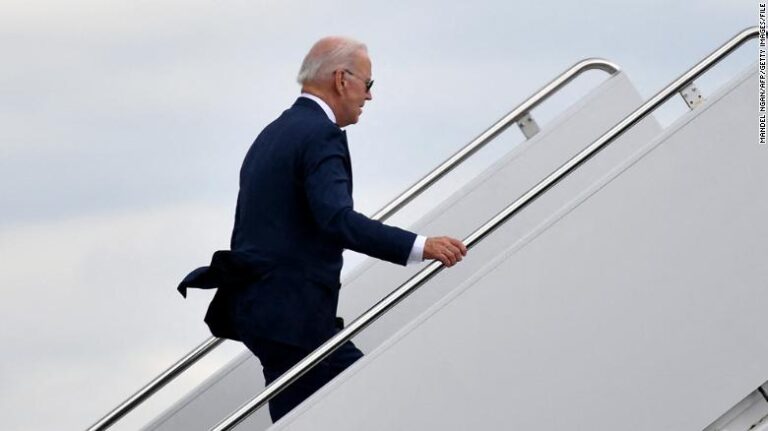
President Joe Biden will make his first trip to Asia as president next month, visiting South Korea and Japan from May 20 to May 24, White House officials told CNN, underscoring his commitment to the region even as international attention is directed toward the crisis in Ukraine.

Biden, the officials said, will hold bilateral meetings with his counterpart in each country: Korean President-elect Yoon Suk Yeol, who is set to be inaugurated on May 10, and Japanese Prime Minister Fumio Kishida. In Tokyo, Biden is also set to meet with the leaders of Japan, Australia and India, in a gathering of the Quad partnership that’s been revitalized at his initiative, according to CNN.

Biden’s visit to South Korea and Japan also comes as US officials are carefully watching China’s actions related to the war in Ukraine. The Biden administration has repeatedly stressed that Beijing would face severe consequences if it were to help the Kremlin’s efforts in Ukraine, and has sternly spoken out against Chinese efforts to help spread Russian propaganda and disinformation about the war.

The Asia trip will come days after Biden hosts the leaders of the Association of Southeast Asian Nations in Washington on May 12 and 13. In announcing that summit, White House press secretary Jen Psaki said the gathering would “demonstrate the United States’ enduring commitment to ASEAN, recognizing its central role in delivering sustainable solutions to the region’s most pressing challenges, and commemorate 45 years of US-ASEAN relations.”

The trip is meant “to further deepen ties between our governments, economies, and people,” press secretary Jen Psaki said in a statement. “This trip will advance the Biden-Harris Administration’s rock-solid commitment to a free and open Indo-Pacific and to U.S. treaty alliances with the Republic of Korea and Japan.”

Looming over the trip will be a spate of weapons tests by North Korea, which have worried US officials and demonstrated the hermit kingdom’s continued threats. The country’s dictator, Kim Jong Un, vowed during a massive military parade this week to “strengthen and develop” his nuclear forces at the “highest possible” speed, offering a glimpse of his ambitions for the coming months.

The four-day trip to Asia comes at a critical moment in Biden’s presidency, as he seeks to keep the US and its allies united against Russia’s unprovoked war on Ukraine amid mounting civilian casualties and intensifying fighting. The conflict in Europe has been a consuming issue of the President’s second year in office, with the US committing billions of dollars in aid for Ukraine and hitting Russia with a slew of economic sanctions. Amid Russia’s attacks in Ukraine, Biden has stressed that he believes the US’ alliances in the Indo-Pacific are key to upholding a “rules-based order” across the globe.

At the same time, the conflict has underscored the continued threats posed by historic foes like Russia, even as Biden works to recalibrate American foreign policy toward Asia in a bid to counter China’s growing influence. Biden is the third consecutive US president to voice a desire to pivot toward the region, but the trip, coming 16 months into his presidency, is later than most presidents have visited Asia. Biden’s travel has been hampered by the Covid-19 pandemic.

White House aides insist they are able to focus on Asia at the same time the world is consumed by the crisis in Ukraine. And officials say they have been pleasantly surprised by the willingness of US allies in Asia, including Japan and South Korea, in joining an international sanctions regime designed to crush Russia’s economy. Japan and South Korea have also diverted some of their supplies of natural gas to Europe as it works to wean itself from Russian energy imports.

Biden spoke with Yoon, a conservative former prosecutor, on the phone last month after he was called the winner of the South Korean election to replace outgoing President Moon Jae In. During that call, the White House said at the time, the pair discussed, among other things, the threats posed by North Korea’s nuclear and missile programs, and other global issues like Covid-19 and climate change.

North Korea, which Biden identified as his greatest foreign policy challenge early in his presidency, has resumed provocative weapons tests ahead of Yoon’s inauguration. The Biden administration has sought to restart diplomacy with Pyongyang, but has received little response. Yoon, meanwhile, has vowed to harden South Korea’s line against the North after Moon made attempts at cultivating diplomacy — including helping then-President Donald Trump arrange a series of summits with Kim.

During Trump’s final visit to Seoul as president, he made a detour to the demilitarized zone, where he shook hands with Kim and stepped over the line of demarcation into North Korea. Previous presidents have also paid visits to the highly fortified border area, but it wasn’t clear whether Biden plans a similar stop.

Biden has already had multiple interactions with Kishida this year after the Prime Minister assumed office last fall. More recently, both leaders attended emergency summits in Brussels, Belgium, in March, convened amid Russia’s attacks in Ukraine. Earlier that month, the four Quad leaders had held a call, during which they had agreed to meet in person in Tokyo later in the year.

Occupied Ukrainian city fears sham Russian referendum plans

0

Ever since Russian forces took the southern Ukrainian city of Kherson in early March, residents sensed the occupiers had a special plan for their town. Now, amid a crescendo of warnings from Ukraine that Russia plans to stage a sham referendum to transform the territory into a pro-Moscow “people’s republic,” it appears locals guessed right.

After Russian forces withdrew from occupied areas around Kyiv in early April, they left behind scenes of horror and traumatized communities. But in Kherson — a large city with a major ship-building industry, located at the confluence of the Dnieper River and the Black Sea near Russian-annexed Crimea — the occupying forces have taken a different tack.

According to AP, mayor Kolykhaiev said that after the warnings about a Russian referendum and mobilization there has been a panicked rush to leave. “The queues of people who want to leave our city have grown to five kilometers,” he said, adding that around a third of the city’s pre-war population of 284,000 has fled.

Following Zelenskyy’s address to the nation, Olga sent a WhatsApp message to the AP: “The situation in Kherson is tense. My family and I want to leave … but now the Russian soldiers don’t allow it at all. It’s becoming more and more dangerous here.”

Late Monday night, Kolykhaiev wrote on Facebook that armed Russian soldiers had entered the Kherson City Council building, took away the keys and replaced the guards with their own.

On Tuesday, the mayor posted again, saying he had refused to cooperate with the new administration appointed by the Russian regional military commander, Oleksandr Kobets.

“I am staying in Kherson with the people of Kherson,” he wrote. “I am with you.”

“The soldiers patrol and walk around silently. They don’t shoot people in the streets,” said Olga, a local teacher, in a telephone interview last month after the region was sealed off by Russian forces. “They are trying to give the impression that they come in peace to liberate us from something.”

“It is a little scary,” said 63-year-old Alexander, who like other residents gave only his first name for fear of reprisals. “But there is no panic, people are helping each other. There is a very small minority of people who are happy that it is under Russian control, but mostly, nobody wants Kherson to become a part of Russia.”

While the city has so far been spared the atrocities committed elsewhere, daily life is far from normal. After Russia occupied Kherson and the surrounding region, all access was cut off. Kherson now suffers from a severe shortage of medicine, cash, dairy and other food products, and Ukrainian officials warn the region could face a “humanitarian catastrophe.”

Russia has blocked all humanitarian assistance except its own, which troops deliver before Russian state TV cameras, and which many residents refuse to accept. With no cash deliveries to Kherson’s banks, the circulation of Ukraine’s hryvnia currency is dwindling, and damaged communication networks mean credit card payments often fail to go through. Access to Ukrainian TV has been blocked and replaced by Russian state channels. A strict curfew has been imposed.

Residents believe Russian troops have not yet besieged or terrorized the city — as they did in Bucha and Mariupol — because they are planning to hold a referendum to create a so-called “People’s Republic of Kherson” like the pro-Russia breakaway territories in eastern Ukraine. Ballots are already being printed for a vote to be held by early May, Ukrainian human rights ombudsman Lyudmila Denisova warned this month.

In an address to the nation on Friday, President Volodymyr Zelenskyy spoke directly to residents of occupied Kherson, accusing Russia of planning an orchestrated referendum and urging residents to be careful about personal data they share with Russian soldiers, warning there could be attempts to falsify votes. “This is a reality. Be careful,” he said.

Kherson Mayor Igor Kolykhaiev joined the chorus of warnings, saying in a Zoom interview on Ukrainian TV that such a vote would be illegal since Kherson remains officially part of Ukraine.

Russia has been silent about any plans to hold a referendum in Kherson, with Deputy Foreign Minister Andrei Rudenko saying this week he knew of no such proposal.

But there is reason for concern. In 2014, a disputed referendum in Crimea amid the Russian annexation was widely believed to be falsified, with results showing nearly 97% of voters supported joining Russia.

A series of Russian actions this week have added to the growing sense of panic in Kherson. The mayor reported on social media on Monday that Russian troops had seized City Hall, where the Ukrainian flag no longer flew. On Tuesday, the Russians replaced the mayor with their own appointee.

A prominent Russian commander, Maj. Gen. Rustam Minnekayev, announced plans to take “total control” of southern Ukraine and the Donbas, eastern Ukraine’s mostly Russian-speaking industrial heartland, with the aim of setting up a land corridor to Crimea. And Ukrainian military intelligence reported that Russia intends to forcibly mobilize the local population, including doctors, in the southern occupied territories to support the Russian war effort.

Kherson is a strategically important city and the gateway to broader control of the south. From Kherson, Russia could launch a more powerful offensive against other southern cities, including Odesa and Krivy Rih.

The occupation of the Kherson region would also maintain Russia’s access to the North Crimean canal. After the annexation, Ukraine cut off water from the canal, which flows from the Dnieper River to Crimea and previously supplied 85% of the peninsula’s needs.

Volodymyr Fesenko, a political analyst at the Penta Center think tank in Kyiv, says the Russian military’s softer behavior in Kherson is because units from Crimea and separatists from Donetsk and Luhansk, who are either ethnic Ukrainians or have close connections to the region, are deployed there. “Therefore, there have been no atrocities,” he said.

The situation in the surrounding Kherson region, however, tells a very different story — with daily reports of kidnappings, torture, killings or rape. Thousands of people have been deprived of electricity, water and gas.

“The situation in the Kherson region is much worse and much more tragic,” said Oleh Baturin, a local journalist. “Kherson is a big city and there aren’t that many soldiers. It is easier for them to take control of the villages; they are defenseless.”

On April 19, Russian forces opened fire on the villages of Velyka Oleksandrivka and Rybalche, killing civilians and damaging homes, the Kherson Region Prosecutor’s Office reported. A week earlier, Russian troops shot dead seven people in a residential building in the village of Pravdyne. “After that, intending to cover up the crime, the occupier blew up the house with the bodies of the executed people” inside, the report said.

Russian soldiers have also kidnapped local activists, journalists and war veterans, according to Kolykhaiev, the Kherson mayor, who said more than 200 people have been abducted.

Among them was Baturin, who was seized near his home in Kakhovka, 60 miles (90 kilometers) east of Kherson. The journalist was meeting an acquaintance from another village when a group of Russian soldiers attacked him at the train station. They held him in isolation for a week, Baturin said, interrogating him every day; the soldiers asked for the names of organizers of anti-occupation protests, as well as local soldiers and veterans. From other cells, he could hear sounds of torture.

After his release he fled the occupied territory with his family.

“If I had stayed, I am absolutely certain they would come for me again,” Baturin said, speaking by phone last week from Ukrainian-controlled territory after his escape.

Fesenko, the analyst, says the referendum plan indicates Russia’s intention to occupy the region long-term.

“In Crimea and Donbas, Russia had the support of the local population, but this is not the case in the south of Ukraine, where Ukrainians want to live in Ukraine. And this means that in the event of a long-term occupation, Russia risks facing a broad partisan movement,” Fesenko said.

During the first weeks of occupation, thousands of protesters gathered daily on Kherson’s main square, draped in Ukrainian flags and holding signs proclaiming, “This is Ukraine.” Videos on social media showed people screaming at Russia’s tanks and heavily armed soldiers. The protests are now held weekly. On Wednesday, Russian troops used tear gas and stun grenades to disperse the protesters.

Olga, the teacher, regularly takes part. Previously a Russian speaker, she now refuses to utter the language. “I will never be able to communicate with Russians ever again. How can I feel about people who bomb maternity hospitals and children?” she said. “We were flourishing — and now they have ruined our lives.”

Fauci “U.S. is transitioning out of pandemic phase”

0

According to NBC NEWS, Dr. Anthony Fauci expressed optimism about the state of the pandemic in the U.S. this week.

“We are certainly right now in this country out of the pandemic phase,” Fauci, the White House’s chief medical adviser and director of the National Institute of Allergy and Infectious Diseases, told “PBS NewsHour” on Tuesday.

Fauci also told The Washington Post on Wednesday that the U.S. had entered the “control” stage of the pandemic, as the coronavirus is causing far lower levels of hospitalizations and deaths than during the winter surge of the omicron variant. But hlater clarified to NPR that he thinks the U.S. has passed the “acute component of the pandemic phase.”

Globally, there are around 674,000 average Covid cases per day, although worldwide cases have declined by 35 percent in the last two weeks, according to data from Johns Hopkins University. The World Health Organization recorded its lowest weekly global death total since March 2020 last week, at just over 15,000.

However, WHO officials said in a briefing Monday that many more Covid deaths could still be prevented. Around 40 percent of the world population has not been fully vaccinated, according to the Our World in Data project of the Global Change Data Lab, affiliated with the University of Oxford.

“We’re in a different phase of this pandemic, certainly, but we are still very much in the middle of this pandemic,” said Maria Van Kerkhove, the WHO’s technical lead on Covid.

The risk of new, dangerous variants persists, WHO leaders said. Insufficient testing and surveillance could make it difficult to spot new variants, they added.

“As many countries reduce testing, WHO is receiving less and less information about transmission and sequencing,” WHO Director-General Tedros Adhanom Ghebreyesus said. “This makes us increasingly blind to patterns of transmission and evolution, but this virus won’t go away just because countries stopped looking for it. It’s still spreading, it’s still changing, and it’s still killing. The threat of a dangerous new variant remains very real.”

“We are now transitioning — not there yet, but transitioning — to more of an endemicity, where the level of infection is low enough that people are starting to learn how to live with the virus, still protecting themselves by vaccination, by the availability of antivirals, by testing,” Fauci said.

Fauci has previously described five phases of the pandemic. The first, a full-blown pandemic, is where the U.S. spent most of the last two years. The second is deceleration, and the third is control, which indicates that the virus is becoming endemic in the population.

After that would come elimination and eradication, although the virus will probably never be eradicated, Fauci told PBS.

Fauci, who is President Joe Biden’s top Covid adviser, told The Post that entering a new phase doesn’t mean the entire pandemic is over.

“The world is still in a pandemic. There’s no doubt about that. Don’t anybody get any misinterpretation of that. We are still experiencing a pandemic,” he said.

Fauci, 81, decided not to attend this weekend’s White House Correspondents’ Dinner because of concerns about his own Covid risk.

The U.S. is recording around 51,000 Covid cases and just under 400 deaths a day on average, according to NBC News’ tally. But the case average has risen by 49 percent in the last two weeks, even as infections go undercounted because of the common use of at-home tests.

Still, many people in the U.S. have some form of immunity that should protect them from severe disease, Fauci said.

“If you add up the people who’ve been infected plus the people who’ve been vaccinated and hopefully boosted, you have a rather substantial proportion of the United States population that has some degree of immunity that’s residual,” he told PBS.

report from the Centers for Disease Control and Prevention on Monday found that 58 percent of the U.S. had evidence of previous coronavirus infections as of February, based on tens of thousands of blood samples. Sixty-six percent of the country has been fully vaccinated, and 46 percent of the population has had booster shots, according to the CDC.