but those who hope in the LORD will renew their strength. They will soar on wings like eagles; they will run and not grow weary, they will walk and not be faint. – Isaiah 40:31, NIV
![[WIB] Isaiah 40:31](https://globalnewst.com/wp-content/uploads/2022/05/이사야-40-31.jpg "[WIB] Isaiah 40:31")
but those who hope in the LORD will renew their strength. They will soar on wings like eagles; they will run and not grow weary, they will walk and not be faint. – Isaiah 40:31, NIV
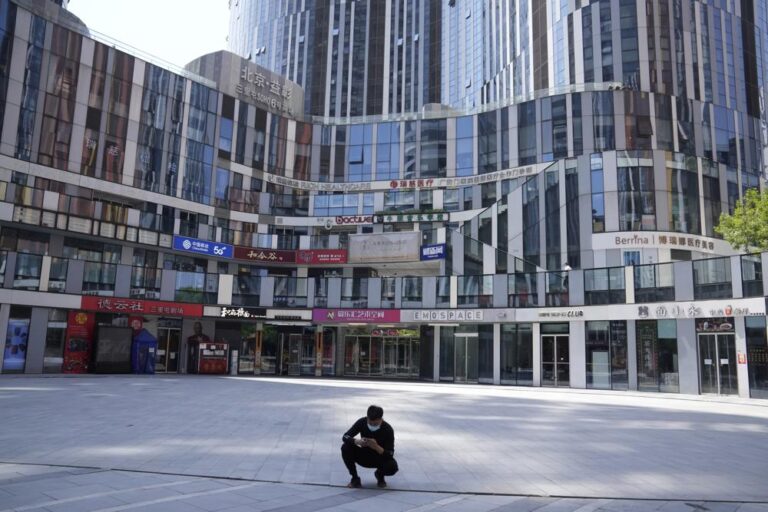
The COVID-19 outbreak that has shut down most of Shanghai appears to be waning, with the number of new cases falling below 10,000 a day over the weekend.
Authorities have begun a limited easing of a citywide lockdown that has disrupted the lives of millions of residents and dealt at least a temporary blow to China’s economy. Many have been confined to their apartments for three weeks or more. They reported difficulty ordering food deliveries in the early days of the lockdown and higher prices for what they could get.
According to AP, the Chinese capital reported 50 new cases, bringing the total to 400 in the 11-day-old outbreak. Restaurants and gyms have been ordered shut for the May Day national holiday that runs through Wednesday. Major tourist sites in the city, including the Forbidden City and the Beijing Zoo, will close their indoor exhibition halls starting Tuesday.
Shanghai has recorded about 400,000 cases in China’s largest outbreak since the start of the pandemic.
Reithinger said a zero-COVID policy is a blanket strategy rather than one driven by epidemiological data. Rather than citywide lockdowns, China should focus on areas where there are clusters of cases, enforce social distancing and other prevention measures and redouble its vaccination efforts, particularly among the elderly, he said.
China’s largest city recorded about 7,000 cases a day on Saturday and Sunday, down from a peak of 27,605 nearly three weeks ago on April 13. Shanghai reported 32 deaths, raising the death toll to 454. Most of the victims have been elderly and many were unvaccinated.
Even as many other countries relax pandemic restrictions, the Chinese government has stuck to a “zero-COVID” approach that restricts travel, mass tests entire cities and sets up sprawling temporary facilities to try to isolate every infected person. Lockdowns start with buildings and neighborhoods but become citywide if the virus is spreading widely.
Many outside experts say it’s time for China to change course. Lockdowns helped buy critical time at the start of the pandemic but zero-COVID no longer makes sense from a public health perspective and imposes socioeconomic costs, said Richard Reithinger, the vice president for global health at RTI International in Washington, D.C.
“Continuing to enforce a zero-COVID-19 policy now, including a lockdown approach and restricting travel, is almost like pretending we have learned nothing over the past two years, now that effective treatment options and various vaccines are available,” he said.
But Chinese officials worry that a major outbreak could overwhelm the health care system and lead to more deaths, particularly among the unvaccinated elderly.
Authorities in Beijing have closed schools, carried out mass testing of more than 20 million people and imposed targeted lockdowns of buildings and neighborhoods to try to prevent what is still a small outbreak from reaching Shanghai proportions and necessitating a citywide lockdown.

New Zealand welcomed thousands of travellers from around the globe on Monday as the country opened its borders to visitors from around 60 nations including the United States, Britain and Singapore for the first time since COVID-19 hit in early 2020, according to Reuters.
Maori cultural performers sang songs at the arrivals gate in Auckland and travellers were handed popular locally made chocolate bars as the first flights came in from Los Angeles and San Francisco.
Friends and family hugged and cried as people were reunited for what was for some the first time in more than two years.
On Monday, 43 international flights were scheduled to arrive or depart from Auckland International Airport (AIA.NZ) carrying around 9,000 passengers.
Air New Zealand (AIR.NZ) Chief Customer and Sales Officer Leanne Geraghty said demand had exceeded expectations with many of the services filling up.
“This is welcome news for the New Zealand tourism industry who has weathered a difficult storm,” she said.
Tourists from a number of countries including India and China continue to be barred with restrictions for them not being lifted until October.
Garth Halliday, who was waiting at the airport for his son, daughter-in-law and grandson to land from London, told local media it made him happy and emotional to see so many families reunited.
New Zealand had some of the toughest curbs in the world during the pandemic and only recently started to ease the increasingly unpopular measures, hoping to boost tourism and ease labour shortages now the Omicron variant is widespread domestically.
Borders were opened to New Zealanders and Australians in February and March. Now visitors from around 60 visa-waiver countries can enter as long as they are vaccinated and test negative for COVID. There are no requirements for isolation.
New Zealand Prime Minister Jacinda Ardern told attendees at the U.S. Business Summit in Auckland that overseas visitors will really “bring back a piece that has been missing from New Zealand and New Zealanders.”
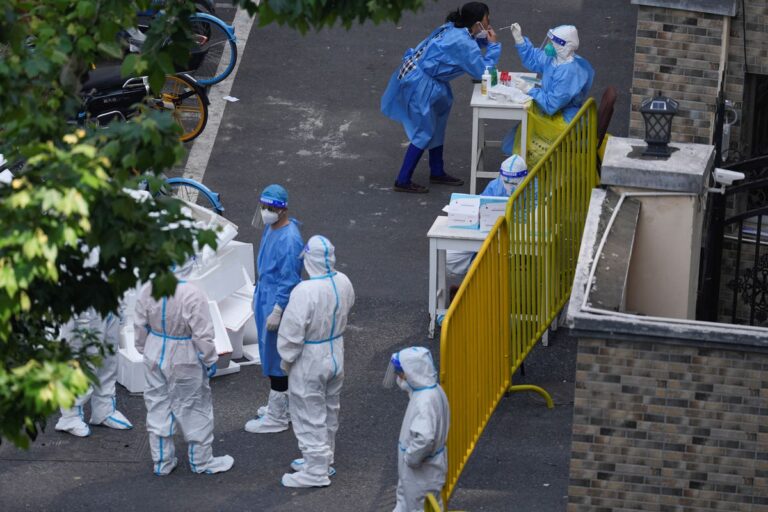
China’s commercial capital of Shanghai was dealt a blow on Monday as authorities reported 58 new COVID-19 cases outside areas under strict lockdown, while Beijing pressed on with testing millions of people on a May Day holiday few were celebrating, according to Reuters.
Tough coronavirus curbs in Shanghai have stirred rare public anger, with millions of the city’s 25 million people stuck indoors for more than a month, some sealed inside fenced-off residential compounds and many struggling for daily necessities.
While Shanghai officials said the situation is improving, images on social media have unnerved the public at a time when hospitals and mortuaries in the city are overwhelmed.
The capital’s restaurants are closed for dining in and some apartment blocks are sealed shut. The streets are quiet and the residents who do venture out have to show negative coronavirus tests to enter most public venues.
Authorities are tracking down close contacts of confirmed cases, warning them to stay at home and contact authorities.
China reported 7,822 new COVID-19 cases on Sunday, down from 8,329 new cases a day earlier, the National Health Commission said on Monday.
All of China’s 32 new deaths were in Shanghai, taking the country’s overall death toll since the virus emerged to 5,092.
India, the only country with a comparable population to China’s 1.4 billion people, has officially recorded more than half a million deaths, though some health experts believe its toll is even higher.
On Monday, authorities said they were investigating five officials after videos showed a local care home transferring an elderly person in a body bag to a mortuary. The person was later found to be still alive.
Shanghai residents breathed a sigh of relief over the weekend at news that no cases had been confirmed outside areas under lockdown for two days, but disappointment came on Monday with the report of the 58 new infections among people who are allowed to move more freely around the city.
Authorities did not comment on the new cases at a media briefing but members of the public weighed in online.
“They announced that they stamped out cases at the community level too early,” one person commented on the Weibo platform.
Still, many people also took heart from data that showed encouraging trends, with 32 new deaths on Sunday, down from 38 a day earlier, and 6,804 new local cases, down from 7,189.
“There is hope for May,” said another Weibo user.
Despite the drop in cases, more fences were erected at some residential blocks in Shanghai on Monday, although authorities said employees of companies the government has put on a production priority list could apply for a pass if the building they lived in had no cases for seven days.
The coronavirus first emerged in the Chinese city of Wuhan in late 2019 and for two years authorities managed to keep outbreaks largely under control with lockdowns and travel bans.
But the fast-spreading Omicron variant has tested China’s “zero-COVID” policy this year, an important one for President Xi Jinping who is expected to secure a precedent-breaking third leadership term in the autumn.
China’s COVID policy is increasingly out of step with the rest of the world, where many governments have eased restrictions, or thrown them off altogether, in a bid to “live with COVID” even though infections are spreading.
New Zealand, which had some of the toughest curbs, finally opened its border on Monday, welcoming thousands of visitors for the first time since the start of the pandemic.
China has given no hint of deviating from its policy despite a mounting toll on the world’s second-largest economy, and ripples of disruption through global supply chains.
Beijing, with dozens of daily infections in an outbreak in its second week, has not locked down, instead relying, at least for now, on mass testing to locate and isolate infections.
Home to 22 million, the capital tightened COVID curbs over the five-day Labour Day holiday that runs through Wednesday, traditionally one the busiest tourist seasons.
Twelve Beijing districts, including the largest one Chaoyang which is home to nightlife and embassies, will carry out a further three rounds of COVID-19 tests between May 3 and 5, a local official said on Monday. Chaoyang district accounts for the biggest share of infections in Beijing’s outbreak.

Demonstrators across the globe seized May Day, also known as International Workers’ Day, as a moment to celebrate working-class contributions as they rallied for better labor rights, immigration overhauls, and other causes around social and economic equality, reported by NPR.
Chinese passed a normally busy national holiday weekend quietly this May Day. Many cities in China are currently under lockdown and travel is restricted due to the government’s “zero-COVID” policy, which has prohibited millions of residents from leaving their homes. On Sunday, some restrictions eased in Shanghai, the country’s largest city, but businesses remained closed and events canceled.
Crowds of activists marched through lower Manhattan to demand worker protections and immigration overhauls on Sunday.
Local chapters of labor organizations affiliated with the AFL-CIO held a “United Against Union Busting” march and rally that kicked off at Union Square. Stopping points on the march’s route included a Starbucks Roastery, a Whole Foods and a penthouse owned by Starbucks CEO Howard Schultz.

The event comes as workers at Starbucks and Amazon (which owns Whole Foods) drive a nationwide push to unionize. Those efforts that have been met with pushback from corporations working to break up the formation of unions.
Elsewhere, Rep. Alexandria Ocasio-Cortez, D-N.Y., spoke at a rally in Foley Square championing immigrant labor. She demanded a full path to citizenship for immigrants.
In Istanbul on Sunday, Turkish police detained at least 164 people for demonstrating without permits and resisting police at Taksim Square, the AP reported, citing the city governor’s office.
In what’s known as the Asian side of Istanbul, thousands of May Day observers gathered in song, chants and banner-waving as part of a demonstration organized by the Confederation of Progressive Trade Unions of Turkey.
Taksim Square is a meaningful site to workers in Turkey, which in 2013 saw anti-government protests and in 1977 where an armed attack left dozens of labor protesters dead.
In France, demonstrators staged more than 200 marches and protests across the country, with a focus on Paris.
Violence broke out in the city, as some people smashed windows at banks and ripped up street signs. Police moved in, firing rounds of tear gas, according to The Associated Press.
Far-left protesters used the day to exercise their opposition to newly reelected President Emmanuel Macron and his plan to raise France’s retirement age from 62 to 65.
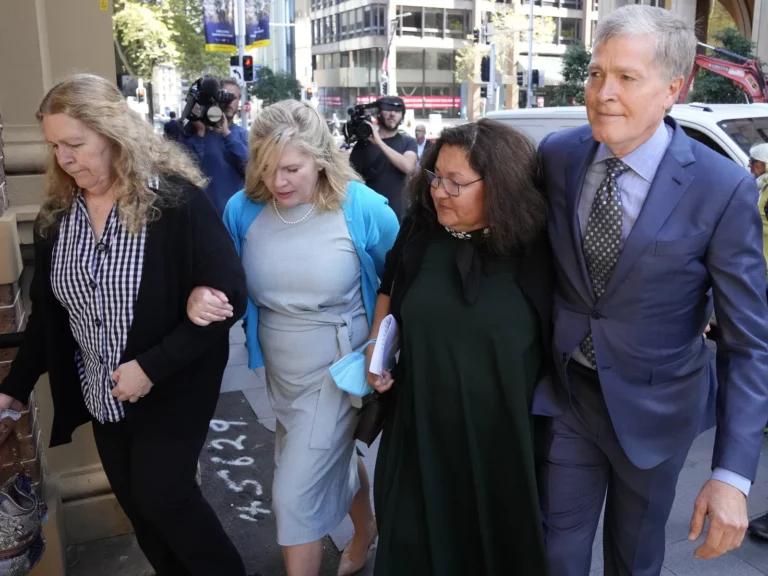
A man told police he killed American mathematician Scott Johnson in 1988 by pushing the 27-year-old off a Sydney cliff in what prosecutors describe as a gay hate crime, a court heard on Monday.
Scott White, 51, appeared in the New South Wales state Supreme Court for a sentencing hearing after he pleaded guilty in January to the murder of the Los Angeles-born Canberra resident, whose death at the base of a North Head cliff was initially dismissed by police as suicide, reported by NPR.
In January, White yelled repeatedly in court during a pre-trial hearing that he was guilty, having previously denied the crime.
His lawyers will appeal that plea in the Court of Criminal Appeals and hope he will be acquitted at trial.
Scott Johnson was a doctoral student at Australian National University and lived in Canberra. He was staying at Noone’s parents’ Sydney home when he died.
White will be sentenced by Justice Helen Wilson on Tuesday. He faces a potential sentence of life in prison.
“I pushed a bloke. He went over the edge,” White said in recorded police interview in 2020 that was played in court.
White said in the interview he lied when he had earlier told police that he had tried to grab Johnson and prevent his fatal fall.
A coroner ruled in 2017 that Johnson “fell from the clifftop as a result of actual or threatened violence by unidentified persons who attacked him because they perceived him to be homosexual.”
The coroner also found that gangs of men roamed various Sydney locations in search of gay men to assault, resulting in the deaths of some victims. Some people were also robbed.
A coroner had ruled in 1989 that the openly gay man had taken his own life, while a second coroner in 2012 could not explain how he died.
His Boston-based brother Steve Johnson maintained pressure for further investigation and offered his own reward of 1 million Australian dollars ($704,000) for information. White was charged in 2020 and police say the reward will likely be collected.
White’s former wife Helen White told the court that her then-husband “bragged” to their children of beating gay men at the clifftop well-known for gay meetups.
Helen White said she read a newspaper report in 2008 about Johnson’s death and asked her husband if he was responsible.
“It’s not my fault,” Scott White allegedly replied. “The dumb (expletive) ran off the cliff.”
“I said, ‘It is if you chased him,'” Helen White told the court. She said her husband did not reply.
Under cross-examination, Helen White denied she had been aware of a AU$1 million reward for information on Johnson’s murder when she reported her former husband to police in 2019. She said she only became aware of a reward when the victim’s brother, Steve Johnson, doubled the sum in 2020.
Steve Johnson said in his victim impact statement that, “With a vicious push, Mr. White took Scott and he vanished.”
“This man (Scott Johnson) who once told me he could never hurt someone even in self-defense died in terror,” the brother added.
Steve Johnson said he appreciated White’s guilty plea.
“If he had turned himself in after his violent action, I would have had a little more sympathy. If he had grasped Scott’s hand and pulled him to safety, I would owe him everlasting gratitude,” the brother said, his voice choked with emotion.
Scott Johnson’s sisters Terry and Rebecca Johnson, his partner Michael Noone and Steve Johnson’s wife Rosemarie Johnson also gave victim impact statements.
Rosemarie Johnson described the initial police failure to investigate Scott Johnson’s death as “indefensible and inhumane.”
Rebecca Johnson, a younger sister, said the police report of suicide “made no sense.”
“How could a community fail so spectacularly that they created boys capable of such horror?” she asked, referring to media reports of gay beatings in Sydney being described as a sport.
Prosecutor Brett Hatfield said the precise details of the murder were not known and that White’s accounts had varied.
White had met Johnson in a nearby bar in suburban Manly and Johnson had stripped naked at the clifftop before he died, Hatfield said. He said the gravity of the murder was significantly elevated because it was motivated by the victim’s sexuality.
White’s lawyer Belinda Rigg said her client was gay and had been concerned that his homophobic brother would find out.

Across metro Atlanta, police departments have seen a rise in dangerous, illegal street racing. Gwinnett County police were able to put a stop to some of that racing with more than 80 arrests on Sunday, reported by WSBTV.
Gwinnett County police say they arrested 68 adults and 20 juveniles. The juveniles were released to their parents and guardians. The adults were taken to the Gwinnett Detention Center by using a transport bus and two vans.
Police say the drivers also surrounded and damaged a pizza delivery driver’s car who was trying to escape the chaos.
Investigators impounded 26 cars and recovered five handguns.
There is no word on what charges those arrested will face.
According to police, they received a call about street racing on Peachtree Corners Circle and Spalding Drive. Officers from Gwinnett County, Lilburn, Norcross, off-duty officers, officers from other patrol districts and other specialized units responded.
They were able to successfully block in 26 cars and all the people inside.

According to Reuters, Israel denounced Russian Foreign Minister Sergei Lavrov on Monday for suggesting that Adolf Hitler had Jewish origins, accusing Lavrov of spreading anti-Semitism and belittling the Holocaust.
“Such lies are intended to accuse the Jews themselves of the most horrific crimes in history that were committed against them,” Israeli Prime Minister Naftali Bennett said in a statement.
“The use of the Holocaust of the Jewish people for political purposes must stop immediately,” he added.
Israeli Foreign Ministry Yair Lapid demanded an apology from Lavrov over his comments, which were made on Sunday in an interview with Italian television, and called in the Russian ambassador for “a tough talk” over the assertion.
Israel has expressed repeated support for Ukraine following the Russian invasion in February. But wary of straining relations with Russia, a powerbroker in neighbouring Syria, it initially avoided direct criticism of Moscow and has not enforced formal sanctions on Russian oligarchs.
However, relations have grown more strained, with Lapid last month accusing Russia of committing war crimes in Ukraine.
However, the Ukrainian president has also run into flak in Israel by looking to draw analogies between the conflict in his country and World War Two. In an address to the Israeli parliament in March, Zelenskiy compared the Russian offensive in Ukraine to Nazi Germany’s plan to murder all Jews within its reach during World War Two. read more
Yad Vashem called his comments “irresponsible,” saying they trivialised the historical facts of the Holocaust.
Lapid said that to claim Hitler was of Jewish descent was like saying Jews had killed themselves, and accusing Jews of being anti-Semites was “the basest level of racism”.
There was no immediate comment from the Russian embassy or Lavrovhimself.
During his interview with Italy’s Rete 4 channel, Lavrov was asked how Russia could say it needed to “denazify” Ukraine, when the country’s president, Volodymyr Zelenskiy, was Jewish.
“When they say ‘What sort of nazification is this if we are Jews’, well I think that Hitler also had Jewish origins, so it means nothing,” Lavrov said, speaking through an Italian interpreter.
“For a long time now we’ve been hearing the wise Jewish people say that the biggest anti-Semites are the Jews themselves,” he added.
Dani Dayan, chairman of Yad Vashem, Israel’s memorial to the six million Jews killed in the Holocaust, said the Russian minister’s remarks were “an insult and a severe blow to the victims of the real Nazism”.
Speaking on Kan radio, Dayan said Lavrov was spreading “an anti-Semitic conspiracy theory with no basis in fact”.
The identity of one of Hitler’s grandfathers is not known but there has been some speculation, never backed up by any evidence, that he might have been a Jew.
Lapid dismissed Lavrov’s assertion that pro-Nazi elements held sway over the Ukrainian government and military.
“The Ukrainians aren’t Nazis. Only the Nazis were Nazis and only they dealt with the systematic destruction of the Jewish people,” said Lapid, whose grandfather died in the Holocaust.
A German government spokesperson said on Monday that Lavrov’s comment on Hitler was “absurd” propaganda.

Elon Musk sold billions of dollars’ worth of Tesla stock this week to help fund his $44 billion Twitter takeover, according to public filings.
He offloaded roughly $8 billion worth of shares on Tuesday and Wednesday, the most recent days for which data was available.
Some of Musk’s acolytes expressed frustration online about the stock dump, pointing to a 2013 tweet about Tesla in which he said, “just as my money was the first in, it will be the last out.”
“No further TSLA sales planned after today,” the billionaire tweeted on Thursday evening, though it is possible he sold shares on Thursday that have not yet been disclosed.
The shares he sold on Tuesday went for an average of $903.58 per share, or about $400 million less than they had been worth on Monday, when the Twitter deal was announced and Tesla closed at $998.02.
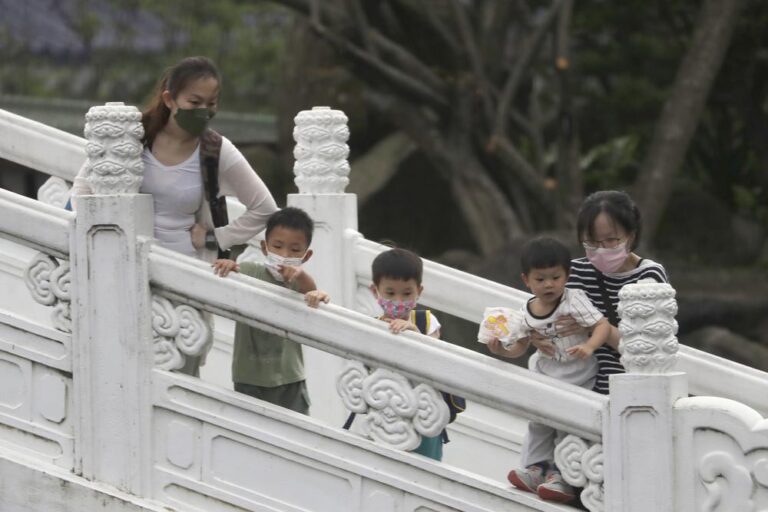
Taiwan, which had been living mostly free of COVID-19, is now facing its worst outbreak since the beginning of the pandemic with over 11,000 new cases reported Thursday.
According to AP, cases have been on the upswing since late March. In April, the island’s central authorities announced that they would no longer maintain a “zero-COVID” policy like the Chinese government’s in which they would centrally quarantine positive cases.
Instead, the government is asking people to quarantine at home if they test positive, unless they show moderate to severe symptoms.
Many of her friends are concerned about the side effects of getting the COVID-19 vaccine, Wang added.
Society’s youngest are also not protected. Some schools have switched back to remote learning based on the number of positive cases each school is reporting. The island is opening up vaccine shots to children ages 6-11 next week.
A 2-year-old boy in New Taipei City died last week, the youngest victim of COVID-19 in Taiwan. His condition deteriorated rapidly after testing positive in a rare case.
Still, officials urged the public to not panic, saying that Taiwan was better prepared with vaccines and ways to ensure moderate and severe cases would get prompt attention.
“We want to tell the public, from the medical world, please rest assured,” said Chiu Tai-yuan, a lawmaker who also heads the Taiwan Medical Association. “Last year’s outbreak situation is not like the one we face today.”
Chen Shih-chung, the island’s health minister, announced Thursday they had found 11,353 new cases, along with two deaths. During the daily press briefing held by the Central Epidemic Command Center, he said 99.7% of the cases in the current outbreak either had no symptoms or had mild symptoms.
Chin Siz-rong, a 24-year-old travel agent in Taipei, isn’t planning to take any extra precautions because he already got a booster COVID-19 vaccine and is used to wearing a mask. He said he switched to takeout when he eats out alone, but still will go to restaurants with friends.
“I already got three shots, and now everyone is saying its severity is like a cold. So I’m not too afraid for myself,” said Chin.
Most of Taiwan’s 858 COVID-19 deaths came from summer 2021. Until this month, it had been the island’s one major outbreak in the pandemic.
Taiwan has been relatively lucky throughout the pandemic, but also has maintained strict border controls with a two-week quarantine on arrival required for all visitors.
Domestically, mask wearing is universal both outdoors and indoors. Masks are legally required on public transportation and in places like shops and theaters.
In the past few weeks, as cases have ratcheted up, people scrambled to buy up rapid tests with stores selling out in just a few hours. Convenience stores across Taipei were unsure where their next delivery would come from.
Difficulty buying rapid tests is likely due in part to the government’s thought throughout the pandemic that there are few benefits to mass testing. The health minister last year said that public funds and medical resources could better be used elsewhere.
That changed with last year’s outbreak.
The central government this month said it would work with Taiwanese companies who manufacture tests to ensure that everyone would have access. A system was rolled out Thursday that limits each person to buying one pack of five tests per trip. Each purchase must be linked to an individual’s national ID to ensure that there is no stockpiling.
Experts are worried about the 5 million people who have not been fully vaccinated against COVID-19.
Those who did not complete a full vaccination course are four times more likely to get moderate or severe symptoms compared to those those who have gotten a booster, said Ho Mei-Shang, a vaccine expert in Taiwan who has also worked for the U.S. Centers for Disease Control and Prevention, according to Central News Agency.
Most vulnerable in Taiwan’s outbreak this time are children and the elderly. The vaccination rate among people over 75 is 72.5%. However, only 59.1% in the same age group received a booster.
Wang Zi-yu, 78, said she overcame her hesitation and got three doses of the COVID-19 vaccine.
“I thought not getting the vaccine is worse. In the beginning with the AstraZeneca vaccine, I was worried,” she said, referring to concerns that the vaccine could cause a rare blood clot. “And then later I got the Moderna shot and didn’t have any negative reaction. It was fine.”