Home Blog Page 44

Musk secures over $7 billion in funding from investors including Larry Ellison

0

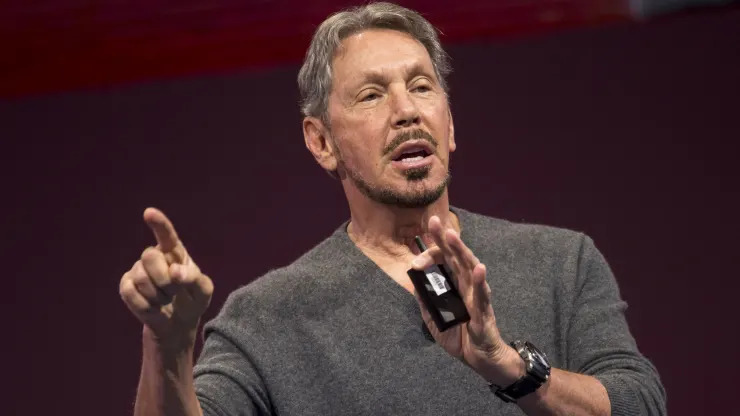
Elon Musk has secured $7.14 billion in funding from a group of investors that includes Oracle co-founder Larry Ellison and Sequoia Capital to fund his $44 billion takeover of Twitter, according to a filing on Thursday.

Saudi Arabian investor Prince Alwaleed bin Talal, who had initially opposed the buyout, also agreed to roll his $1.89 billion stake into the deal rather than cashing out, the filing showed.

Reuters last week reported Musk was in talks with large investment firms and high net-worth individuals about taking on more financing for his Twitter acquisition and tying up less of his wealth in the deal.

Larry Ellison, a board member at Tesla and a self-described close friend of Elon Musk has committed $1 billion for the funding.

Twitter’s shares were up about 2.9% at $50.5 before the bell, still below Musk’s offer of $54.20.

The move comes as Musk’s margin loan was reduced to $6.25 billion from $12.5 billion announced earlier, according to the filing.

Musk’s $21 billion financing commitment was also revised to $27.25 billion.

Musk will continue to hold talks with existing shareholders of Twitter, including the company’s former chief Jack Dorsey, to contribute shares to the proposed acquisition, the filing showed.

Qatar Holding and Dubai-based Vy Capital, also an investor in Musk’s other venture The Boring Company, are also part of the investor group.

Abortion Pills Will Be the Next Battleground

0

 It took two trips over state lines, navigating icy roads and a patchwork of state laws, for a 32-year-old South Dakota woman to get abortion pills last year.

According to AP, for abortion-seekers like her, such journeys, along with pills sent through the mail, will grow in importance if the Supreme Court follows through with its leaked draft opinion that would overturn the landmark Roe v. Wade decision and allow individual states to ban the procedure. The woman, who spoke on the condition of anonymity because she was concerned for her family’s safety, said the abortion pills allowed her to end an unexpected and high-risk pregnancy and remain devoted to her two children.

But anti-abortion activists and politicians say those cross-border trips, remote doctors’ consultations and pill deliveries are what they will try to stop next.

The FDA said a scientific review supported broadening access to the drugs and found complications were rare. The agency has reported 26 deaths associated with the drug since 2000, though not all of those can be directly attributed to the medication due to existing health conditions and other factors.

However, with new legal battles on the horizon and abortion seekers going to greater lengths to obtain the procedure, Donley, the law school professor, worried that state lawmakers may eventually turn their attention toward the women who get the pills.

“Many anti-abortion legislators might realize the only way to enforce these laws is to prosecute the pregnant person themselves,” she said.

“Medication abortion will be where access to abortion is decided,” said Mary Ziegler, a professor at Florida State University College of Law who specializes in reproductive rights. “That’s going to be the battleground that decides how enforceable abortion bans are.”

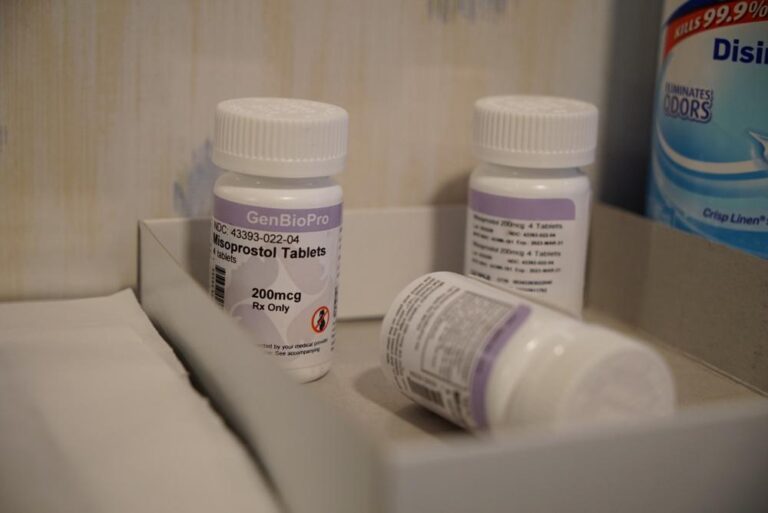
Use of abortion pills has been rising in the U.S. since 2000 when the Food and Drug Administration approved mifepristone — the main drug used in medication abortions. More than half of U.S. abortions are now done with pills, rather than surgery, according to the Guttmacher Institute, a research group that supports abortion rights.

The FDA last year lifted a long-standing requirement that women pick up abortion pills in person. Mail delivery is also now allowed nationwide.

Those moves have spurred online services that offer information on getting abortion pills and consultations to get a prescription. After the woman in South Dakota found that the state’s only abortion clinic could not schedule her in time for a medication abortion, she found an online service, called Just The Pill, that advised her to drive across to Minnesota for a phone consultation with a doctor. A week later, she came back to Minnesota for the pills.

She took the first one almost immediately in her car, then cried as she drove home.

“I felt like I lost a pregnancy,” she said. “I love my husband and I love my children and I knew exactly what I had to say goodbye to and that was a really horrible thing to have to do.”

South Dakota is among several states, including Texas, Kentucky, Arkansas, Ohio, Tennessee and Oklahoma, where Republicans have moved to restrict access to abortion pills in recent months. South Dakota Gov. Kristi Noem said additional, in-person visits for the pills and a ban on them being sent through the mail are needed to protect women and save “unborn children.” A total of 19 states require a medical clinician to be physically present when abortion pills are given to a patient.

Besides crossing state lines, women can also turn to internationally-based online pharmacies, said Greer Donley, a professor specializing in reproductive health care at the University of Pittsburgh Law School. Some women also are having prescribed pills forwarded through states without restrictions.

“It allows for someone to have an abortion without a direct role of a provider. It’s going to be much harder for states to control abortion access,” she said, adding, “The question is how is it going to be enforced?”

Sue Leibel, the state policy director for Susan B. Anthony List, a prominent organization opposed to abortion, acknowledged it’s an issue that “has crept up” on Republican state lawmakers.

“This is a new frontier and states are grappling with enforcement mechanisms,” she said, adding, “The advice that I always give — if you shut the front door, the pills are going to come in the back door.”

Abortion opponents maintain they have no intention of prosecuting women who seek abortions.

Instead, Leibel suggested the next target for state enforcement should be the pharmacies, organizations and clinics that provide the abortion pills. She also said abortion-rights opponents should focus on electing a presidential candidate who would work to reverse the FDA’s decision.

Turkey’s inflation hits two-decade high of 70% in April

0

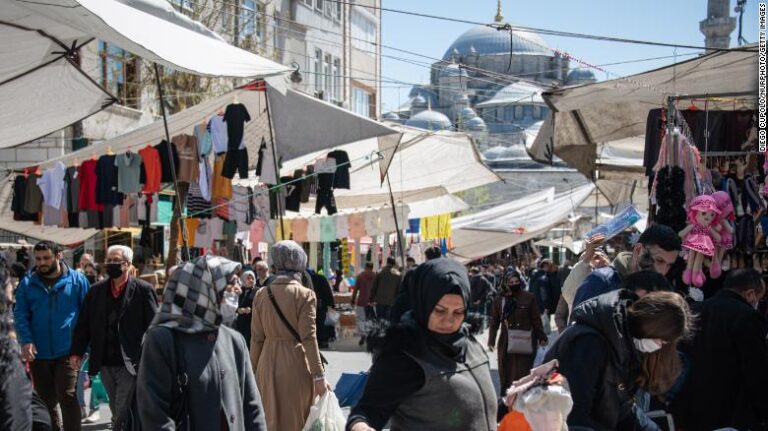
Turkey’s annual inflation jumped to 69.97% in April, above forecast and at a two-decade high, according to data on Thursday, fueled by the Russia-Ukraine conflict and rising energy and commodity prices after last year’s lira crash.

Month-on-month, food and non-alcoholic drink prices rose the most with 13.38% and house prices rose 7.43%.

The government has said inflation will fall under its new economic programme, which prioritises low interest rates to boost production and exports with the goal of achieving a current account surplus.

However, economists see inflation remaining high for the rest of 2022 due to the Ukraine war.

The currency slide was triggered by a 500 basis point interest rate easing cycle which began last September under pressure from President Tayyip Erdogan, triggering the sustained surge in consumer prices.

Month-on-month, consumer prices rose 7.25%, the Turkish Statistical Institute said, compared to a Reuters poll forecast of 6%. Annually, consumer price inflation was forecast to be 68%.

The surge in consumer prices was driven by a 105.9% leap in the transportation sector, which includes energy prices, and a 89.1% jump in food and non-alcoholic drinks prices, the data showed.

North Korea slams South’s new leader as ‘pro-U.S., confrontational’

0

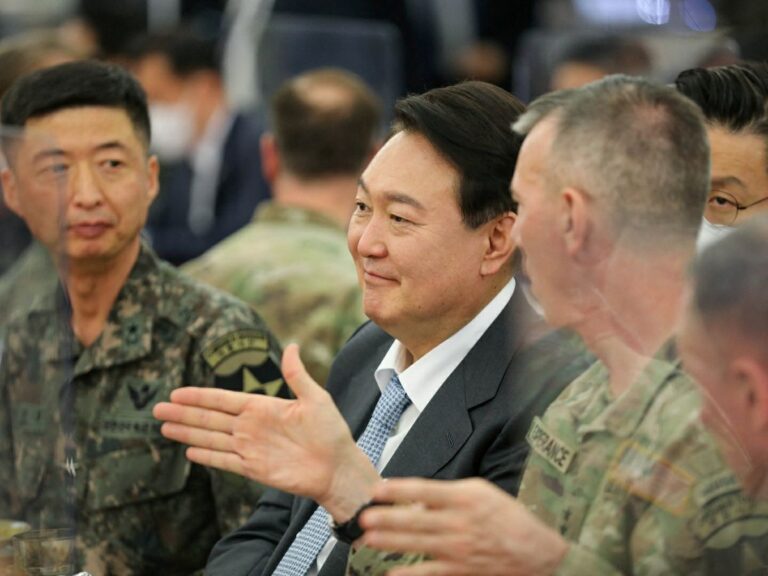
 A major North Korean propaganda website denounced on Thursday South Korea’s incoming president Yoon Suk-yeol, who has vowed to take a tougher line on weapons tests by Pyongyang, describing him as “pro-United States”, and “confrontational”.

According to Reuters, the North’s state media have yet to make formal comments on Yoon, a conservative who is set to take office on May 10, but the website Uriminzokkiri issued scathing criticism ahead of his inauguration.

In March, South Korea said a North Korean intercontinental ballistic missile (ICBM) exploded mid-air soon after liftoff. State media made no mention at the time, but another, presumably successful, ICBM launch took place days later.

“North Korea might not announce failed tests, but it’s too early to say that’s the case, and the latest launch appeared rather successful as it showed some progress,” said Park Won-gon, a professor of North Korean studies at Ewha Womans University in Seoul.

“Yoon Suk-yeol had aroused shock with such preposterous remarks as ‘preemptive strike’ and ‘main enemy,’ and stirred up confrontational madness trumpeting a ‘stronger South Korea-U.S. alliance,'” it said.

It was referring to comments by Yoon that he would allow a pre-emptive strike on North Korea if signs of attack were imminent, and his description of the neighbouring nation as a “main enemy”.

That description of the North has been shunned by outgoing progressive President Moon Jae-in, who had sought to improve relations.

The propaganda site’s remarks are a departure from past practice, when state media have trumpeted news of a missile test by the North on the day following, but have this time kept silent, instead, about Wednesday’s weapons test.

The propaganda site criticised Yoon and his picks for ministers of defence, foreign affairs and the unification portfolio as “pro-U.S. toadies” who had sought confrontation while serving in previous conservative governments.

“There’s nothing strange for him to nominate pro-U.S. toadies seeking confrontation with the same people,” it added.

On Wednesday, South Korea’s military reported the North’s 14th known weapons test this year, which analysts said could aim at testing its reconnaissance satellite technology.

European Union proposes ban on Russian oil imports this year

0

The European Union is proposing to ban all oil imports from Russia by the end of this year and remove the country’s biggest bank, Sberbank, from the SWIFT international payments network.

But the plan immediately ran into opposition from EU countries seeking a longer transitional period, including Hungary, which has already been offered an extra year to ditch Russian oil, reported by CNN.

“The proposal on behalf of Brussels is suggesting that it should be done by the end of next year,” Zoltan Kovacs, spokesperson for Prime Minister Viktor Orban, told CNN’s Eleni Giokos.”The shortest period, we’ve been clear on that, our oil companies have been clear on that, is three to five years.”

Some customers in Asia are reportedly buying more Russian oil but not in sufficient volumes to offset the loss of Western buyers.

“Russia’s ability to redirect all unwanted cargoes from the West to Asia are limited, meaning that, in the case of embargoes, Russia will be forced to cut production further as it lacks storage capacity for extra crude volumes,” analysts at Rystad Energy wrote in a research report on Monday.

The International Energy Agency recently estimated that Russia’s oil supply would fall by 1.5 million barrels per day in April as demand falters, with those losses accelerating to 3 million barrels per day this month.

But the surge in global prices for oil and natural gas means Moscow continues to earn vast amounts of money from its energy exports. Rystad estimates that Russia will collect more than $180 billion in energy tax revenues this year — up 45% on 2021 — despite the oil production cuts.

European Commission President Ursula von der Leyen said earlier Wednesday the measures would form part of a sixth round of sanctions against Russia over its invasion of Ukraine.

“We now propose a ban on Russian oil,” she said during a speech to the European Parliament. “Let’s be clear: it will not be easy. But we simply have to work on it. We will make sure that we phase out Russian oil in an orderly fashion, to maximize pressure on Russia, while minimizing the impact on our own economies.”

Crude oil supply would be phased out within six months, and imports of refined oil products by the end of 2022, she added.

News of the proposal boosted crude oil prices by about 4%. Brent, the global benchmark, was trading at nearly $109 a barrel, while US oil futures were above $106 a barrel at 12.30 pm ET.

Oil prices have risen by about 40% since the start of the year on fears that Russia’s invasion of Ukraine will deliver a supply shock, fueling inflation and piling pressure on European economies.

EU countries have already agreed to phase out Russian coal imports but the bloc has found it much harder to reach consensus on an oil embargo despite weeks of talks.

Hungary said it couldn’t back the proposal in its current form because it was worried about what it would mean for the country’s energy security. Nearly 60% of its imported oil came from Russia in 2021, according to the International Energy Agency.

“The very essence of decision-making in Europe is consensus,” Kovacs said. “We’ve been telling Brussels and all the European states, that on Hungary’s behalf, it simply cannot be done as they require.”

Slovakia — which got 92% of its oil imports from Russia last year — and the Czech Republic have also sought longer transition periods than those envisaged by the EU plan, Reuters reported.

Russia is the world’s second-biggest crude oil exporter, and last year accounted for about 27% of EU oil imports. The United States, Canada, United Kingdom and Australia have already banned imports.

Those sanctions — and a de-facto embargo by some European oil refineries and traders — have hit the price of Russian oil. Its benchmark Urals crude is now trading at a $35 per barrel discount to Brent, compared with less than $1 before the invasion.

Ukraine leader appeals for truce to dig out civilians trapped under Mariupol steel plant

0

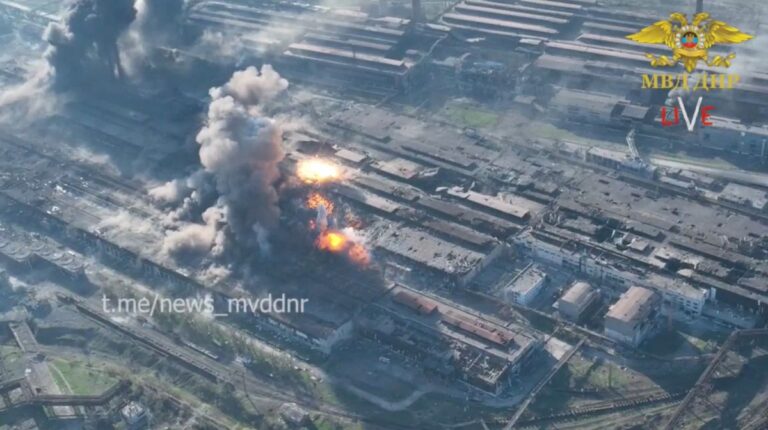
Civilians will need to be dug from bunkers under a steel works that is the last holdout of resistance in Ukraine’s Mariupol, President Volodymyr Zelenskiy said on Thursday, after a Russian bombardment that has littered the area with concrete debris.

According to Reuters, having failed to capture the capital Kyiv in the early weeks of an invasion that has killed thousands and flattened towns and villages, Russia has accelerated attacks in southern and eastern Ukraine, including on the Azovstal steel works in Mariupol.

Ukraine’s resistance at the plant underscores Russia’s failure to capture major cities in a war that has united Western powers in arming Kyiv and punishing Moscow with sanctions. Sweden and Finland are expected to decide very soon whether to join NATO, in what would be a major historical shift.

Pavlo Kyrylenko, governor of the eastern Donetsk region in which Mariupol is located, said at least 25 civilians were wounded as Russian forces shelled Kramatorsk, a town that in April suffered a missile strike on a train station that killed dozens of evacuating civilians.

A school and a kindergarten were damaged in the new attack, the town’s mayor said.

Russian missile strikes in recent days have included railway stations in an attempt to target Western arms transfers and fuel depots.

More than five million Ukrainians have fled abroad since Putin launched the invasion on Feb. 24. Millions more are displaced inside Ukraine.

Russia calls its actions a “special operation” to disarm Ukraine and protect it from fascists. Ukraine and the West say the fascist allegation is baseless and that the war is an unprovoked act of aggression.

Russia’s military promised to pause its activity in Azovstal during Thursday daytime and the following two days to allow civilians to leave, after what Ukrainian fighters described as “bloody battles” prevented evacuations on Wednesday. The Kremlin said humanitarian corridors from the plant were in place.

Ukrainian officials believe around 200 civilians remain trapped along with fighters in the network of underground bunkers at the sprawling Soviet-era Azovstal complex.

In an early morning address, Zelenskiy said Ukraine stood ready to ensure a ceasefire in Mariupol, a port city that after a weeks-long siege Russia controls – apart from the steel works.

“It will take time simply to lift people out of those basements, out of those underground shelters. In the present conditions, we cannot use heavy equipment to clear the rubble away. It all has to be done by hand,” Zelenskiy said.

Ukrainian fighters inside Azovstal are fighting “difficult, bloody battles,” Denis Prokopenko, a commander with Ukraine’s Azov regiment, said late on Wednesday.

Ukraine’s military general staff said the assault on the plant included air support, and pictures released by Russian-backed fighters appeared to show smoke and flames enveloping it.

“God forbid more shells hit near the bunkers where the civilians are,” said Tetyana Trotsak, an Azovstal evacuee among dozens who reached a Ukraine-controlled town this week, describing her two-and-a-half hour walk to get across a short stretch of ground strewn with rubble at the plant.

Mariupol has been an important target in Russia’s efforts to cut Ukraine off from its Black Sea grain and metals export routes, as well as to link Russian-controlled territory in the east of the country to Crimea, seized by Moscow in 2014.

The United Nations and Red Cross evacuated hundreds of people from the city and other areas this week.

Nobody from Azovstal was among more than 300 civilians evacuated on Wednesday from Mariupol and other areas in southern Ukraine, the U.N. humanitarian office said.

We “stand ready to help” any trapped civilians, Jens Laerke, spokesperson for the office, said in an email.

Sweden and neighbour Finland stayed out of NATO during the Cold War, but Russia’s invasion of Ukraine has prompted them to rethink their security arrangements.

Sweden received U.S. assurances that it would receive support during the period that a potential application to join NATO is processed by the 30 nations in the alliance, Foreign Minister Ann Linde said on Wednesday.

Russian President Vladimir embarked on the war partly to counter the expansion of the NATO alliance, which Ukraine also wants to join.

Sweeping sanctions from the United States and its European allies have hobbled Russia’s $1.8 trillion economy while billions of dollars worth of military aid has helped Ukraine frustrate the invasion.

The United States has provided details on the location of Russia’s mobile military headquarters, allowing Ukrainian forces to strike those targets and kill Russian generals, the New York Times reported on Wednesday, citing senior U.S. officials. 

Ukrainian officials said they have killed about 12 Russian generals on the battlefield, the newspaper said. The Pentagon and the White House did not immediately respond to Reuters’ requests for comment on the report.

A source said EU envoys could reach a deal as early as Thursday on a plan to phase out imports of Russian crude oil within six months and refined products by the end of this year. It requires agreement by all 27 EU governments.

The plan also targets Russia’s top bank, its broadcasters, and hundreds of individuals. It would follow U.S. and British oil bans and be a watershed for the EU, the world’s largest trading bloc, which remains dependent on Russian energy.

The Kremlin said Russia was weighing responses to the EU plan, which it said would be costly for European citizens.

Ukraine and Russia said fighting had been heavy across the south and east over the past day.

Ukrainian authorities reported shelling of towns near a frontline that divides territory it holds in the Donetsk and Luhansk regions from land held by Russian-backed separatists.

The Ukrainian air force claimed to have downed three Russian cruise missiles and four aircraft, including two Sukhoi fighter jets.

Russia said it had killed 600 Ukrainian soldiers overnight. Reuters could not independently verify the battlefield reports by either side.
Beijing steps up COVID-19 curbs as virus spreads in China

0

Beijing shut scores of metro stations and bus routes and extended COVID-19 curbs on many public venues on Wednesday, focusing efforts to avoid the fate of Shanghai, where millions have been under strict lockdown for more than a month.

The central city of Zhengzhou earlier also announced restrictions, joining dozens of big population centres under some form of lockdown as China seeks to eliminate a virus believed to have first emerged in Wuhan city in late 2019.

But that uncompromising battle is undermining its growth and hurting international companies invested there, data shows, and has also fuelled rare public outbursts of discontent.

With dozens of new cases a day, Beijing is hoping mass testing will find and isolate the virus before it spreads. Twelve of 16 city districts held the second of three rounds of tests this week.

According to AP, the city of 22 million on Wednesday shut more than 60 subway stations, about 15% of the network, and 158 bus routes, service providers said, most in the Chaoyang district at the epicentre of Beijing’s outbreak.

Beijing officials also said closures of schools, restaurants, gyms and entertainment venues – as well as some businesses and residential buildings – would extend beyond the April 30- May 4 Labour Day break, without giving a timeframe.

Residents were encouraged to work from home from Thursday, rather than return to offices where possible.

Late on Tuesday Zhengzhou, home to 12.6 million people and a factory of Apple’s iPhone manufacturer Foxconn (2354.TW), announced work-from-home and other COVID curbs for the coming week. Foxconn said on Wednesday it was continuing production there.

In Shanghai, meanwhile, a full lockdown remains in force.

Numerous factories were shut after Shanghai went into lockdown from March. While some have started reopening, getting workers back and unsnarling supply chains has proven difficult.

In the city’s Lingang free trade zone area, 252 firms, or 52% of the total, had resumed work as of May 3, the Xinhua news agency reported. Authorities were subsidising the screening of workers for COVID, and providing rent relief, it said.

International trade is also facing disruption.

A Royal Bank of Canada study found a fifth of the global container ship fleet was stuck in ports. 

At Shanghai’s port, 344 ships were awaiting berth, a 34% increase over the past month. Shipping something from a warehouse in China to one in the United States takes 74 days longer than usual, the study said.

After more than a month, most people in mainland China’s biggest city still cannot leave their housing compounds.

Some have benefited from a tentative easing of restrictions since Sunday, with usually just one member of a household allowed out for a stroll and grocery shopping.

Latest data showed Shanghai found 63 new cases outside areas under the strictest curbs, suggesting it has a way to go before reaching the goal of no cases for several days for curbs to ease significantly.

The isolation has led to a cat-and-mouse game between censors and social media users striving to keep evidence of the hardship circulating. Some have turned to blockchain technology to protect videos, photos and artwork on the topic from deletion. read more

Such acts of defiance are awkward for the ruling Communist Party in a year in which President Xi Jinping is expected to secure a third leadership term.

Authorities say their zero-COVID policy aims to save lives, pointing to the millions killed by the virus outside China, where many countries are adopting a “live with COVID” strategy amid spreading infections.

But the policy is hurting domestic consumption and output, disrupting global supply chains and shrinking revenues for international brands including Apple (AAPL.O), Gucci parent Kering (PRTP.PA) and Taco Bell-owner Yum China (9987.HK)

Capital Economics estimated COVID had spread to areas generating 40% of China’s output and 80% of its exports, while Fitch Ratings cut its 2022 GDP growth forecast to 4.3% from 4.8%, well below China’s official 5.5% target.

Pope, Japan prime minister, discuss hopes for nuclear-free world

0

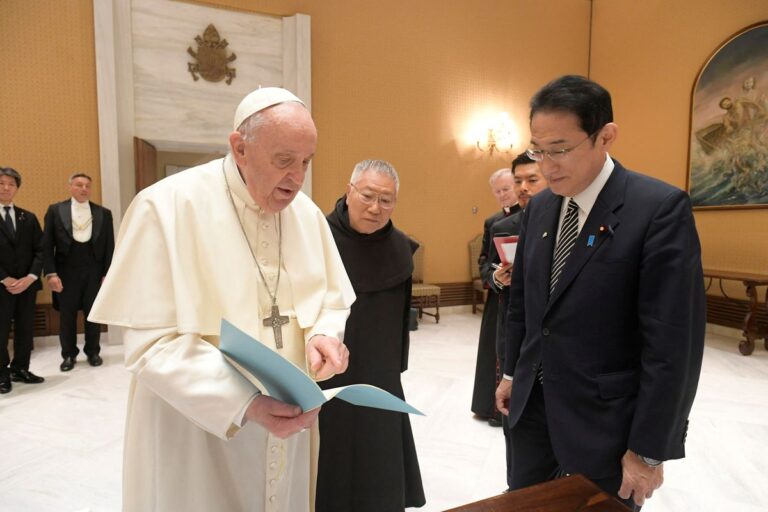
Pope Francis and the prime minister of Japan, the only country to be hit by atomic bombs, met on Wednesday and discussed their common hope for a world free of nuclear weapons.

Francis and Fumio Kishida met for about half an hour in a receiving room of the Vatican’s audience hall just before Francis held his general audience for thousands of people in St. Peter’s Square, reported by Reuters.

“They talked of nuclear weapons and how their use and possession is inconceivable,” Vatican spokesman Matteo Bruni said.

The two met on the same day that Russia’s foreign ministry announced sanctions against 63 Japanese officials, including Kishida, for engaging in what it called “unacceptable rhetoric” against Moscow. 

During his visit to Japan in 2019, Francis visited Hiroshima and Nagasaki, which in 1945 became the only cities ever to be hit by atomic bombs, and appealed to world leaders to ensure that nuclear weapons are never used again.

Francis backs a U.N. treaty aiming to ban nuclear weapons and has said that even their possession for the purpose of deterrence is immoral.

A separate Vatican statement said that in discussions afterwards with top Vatican diplomats, particular attention was given to the war in Ukraine, “stressing the urgency of dialogue and peace and expressing the hope, to this end, for a world free of nuclear weapons”.

Since Russia invaded its neighbour on Feb. 24, Francis has several times spoken of a possible nuclear conflict resulting from the war.

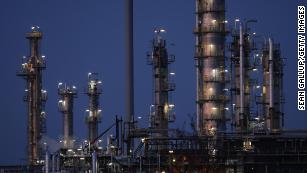
BP profit more than doubles on exceptional oil trading

0

BP took a hit of more than $24 billion from ditching its business in Russia but reported a huge jump in profit for the first quarter.

According to CNN, the UK-based energy giant said Tuesday that its underlying profit soared to $6.2 billion from $2.6 billion in the same period last year, boosted by “exceptional oil and gas trading” conditions.

Oil prices have shot up by nearly 40% since the start of 2022, with benchmark Brent crude trading well above $100 a barrel. Prices for natural gas have also surged. The gains have been driven by fears of a global supply shock following Russia’s invasion of Ukraine.

Prime Minister Boris Johnson’s government has so far resisted those calls, saying it wants companies to invest more in securing supplies of energy, particularly from renewable sources but also oil and gas. But his finance minister, Rishi Sunak, last week hinted at a possible U-turn in government policy.

“What I don’t want to do is put off the investment that’s required to exploit those resources,” Sunak said in an interview with Mumsnet, a website for parents. “But what I would say is that if we don’t see that type of investment coming forward and if the companies are not going to make those investments in our country and in our energy security, of course that’s something I would look at. Nothing is ever off the table in these things.”

BP said it expected to pay up to £1 billion ($1.2 billion) in tax on profits this year from its operations in the North Sea, and is planning to invest £18 billion ($22.5 billion) in the United Kingdom by 2030. That will include investments in the North Sea, offshore wind, electric vehicle charging networks, hydrogen production and carbon capture and storage.

In response to the war, the United States, Canada, United Kingdom and Australia have banned imports of Russian oil, and the European Union could soon join them. EU countries are dramatically scaling back purchases of Russian natural gas, and Moscow has already cut off supplies to Poland and Bulgaria.

On Feb. 27, three days after President Vladimir Putin sent his forces across the border into Ukraine, BP (BP) said it would ditch its stake of nearly 20% in Russian state oil giant Rosneft, and abandon three joint ventures with the country’s biggest oil producer. On Tuesday, it said those decisions led to an after-tax charge of $24.4 billion, and a loss of $20.4 billion.

“In a quarter dominated by the tragic events in Ukraine and volatility in energy markets, BP’s focus has been on supplying the reliable energy our customers need,” CEO Bernard Looney said in a statement. “But it has not changed our strategy, our financial frame, or our expectations for shareholder distributions,” he added.

Shareholders are in line for a windfall. BP announced a first quarter dividend of 5.46 cents per share, up from 5.25 cents last year, and said it would use spend $2.5 billion — or 60% of its surplus cashflow — buying back shares in the next three months.

Shares of BP were up 2.5% in London trading, taking the stock’s gain for the year so far to nearly 22%.

Opposition lawmakers said the bumper earnings reinforced their call for the UK government to impose a one-off windfall tax on excess profits generated by companies producing oil and gas in the North Sea.

They want the proceeds to help fund additional relief for households who are paying sky high prices for fuel and heating in the worst cost-of-living crisis in decades.

“With so many people struggling to pay their energy bills, we should have a windfall tax on oil and gas companies in the North Sea, who have made more profit than they were expecting,” Keir Starmer, leader of the opposition Labour Party told the BBC. “Have a windfall tax on that and use that to help people with their energy bills, up to £600 for those who need it most.”

N. Korea fires ballistic missile amid rising animosities

0

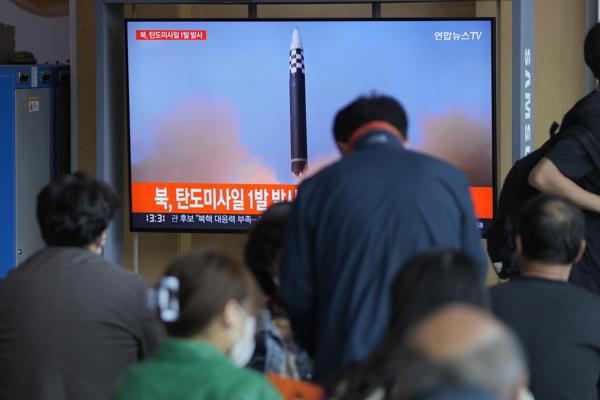
According to AP, North Korea launched a ballistic missile toward its eastern waters on Wednesday, South Korean and Japanese officials said, days after North Korean leader Kim Jong Un vowed to speed up the development of his nuclear weapons “at the fastest possible pace” and threatened to use them against rivals.

The launch, the North’s 14th round of weapons firing this year, also came six days before a new conservative South Korean president takes office for a single five-year term.

South Korea’s Joint Chiefs of Staff said in a statement that the missile was fired from the North’s capital region and flew to the waters off its eastern coast. It called North Korea’s repeated ballistic missile launches “a grave threat” that would undermine international peace and security and a violation of U.N. Security Council resolutions banning any ballistic launch by the North.

North Korea has a history of raising animosities with weapons tests when Seoul and Washington inaugurate new governments in an apparent bid to boost its leverage in future negotiations.

Yoon’s power transition office called the latest North Korean launch “a grave provocation” and urged Pyongyang to stop acts that raise tensions and threaten international peace. It said in a statement that the Yoon government will strongly respond to North Korean provocations in close cooperation with the international community.

Some experts say the Biden administration’s passive handling of North Korea as it focuses on Russia’s invasion of Ukraine and an intensifying rivalry with China is allowing more room for the North to expand its military capabilities.

The Biden administration’s actions on North Korea have so far been limited to largely symbolic sanctions and offers of open-ended talks. North Korea has rejected the administration’s offer for talks, saying it must first abandon its “hostile policy,” in an apparent reference to U.S.-led international sanctions and U.S.-South Korean joint military exercises.

The statement said that Won In-Choul, the South Korean JCS chief, held a video conference about the launch with Gen. Paul LaCamera, an American general who heads the South Korea-U.S. combined forces command in Seoul, and they agreed to maintain a solid joint defense posture.

Japan also detected the North Korean launch and quickly condemned it.

“North Korea’s series of actions that threatens the peace, safety and stability of the international community are impermissible,” Japanese Prime Minister Fumio Kishida told reporters during his visit to Rome.

Kishida said he’ll discuss the launch when he meets Italian Prime Minister Mario Draghi later Wednesday. “Naturally, we will exchange views on the regional situation in the Indo-Pacific and East Asia, and I will thoroughly explain the reality of the region including the North Korean missile launch today, to gain understanding about the pressing situation in the East Asia,” he said.

Japanese Vice Defense Minister Makoto Oniki said that the missile was believed to have landed in waters outside of the Japanese Exclusive Economic Zone. There has been no report of damage or injury reported from vessels and aircraft in the area.

It wasn’t immediately known what missile North Korea launched. South Korea’s military said the missile flew about 470 kilometers (290 miles) at the apogee of 780 kilometers (485 miles), while Oniki of Japan said it traveled about 500 kilometers (310 miles) at the maximum altitude of 800 kilometers (500 miles).

Observers say North Korea’s unusually fast pace in weapons testing this year underscores its dual goal of advancing its missile programs and applying pressure on Washington over a deepening freeze in nuclear negotiations. They say Kim eventually aims to use his expanded arsenal to win an international recognition of North Korea as a nuclear state that he believes would help force the United States to relax international economic sanctions on the North.

One of the North Korean missiles tested recently was an intercontinental ballistic missile potentially capable of reaching the entirety of the American homeland. That missile’s launch broke Kim’s self-imposed 2018 moratorium on big weapons tests.

There are signs that the North is also preparing for a nuclear test at its remote northeastern testing facility. If made, the nuclear bomb test explosion by North Korea would be the seventh of its kind and the first since 2017.

Last week, Kim Jong Un showcased his most powerful nuclear-capable missiles targeting both the United States and its allies during a massive military parade in capital, Pyongyang. During a speech at the parade, Kim said he would develop his arsenal at the “fastest possible pace” and warned that the North would preemptively use its nuclear weapons if its national interests are threatened.

North Korea has previously unleased harsh rhetoric threatening to attack its rivals with its nuclear weapons. But the fact that Kim made the threat himself and in a detailed manner have caused security jitters among some South Koreans. Taken together with North Korea’s recent tests of short-range nuclear-capable missiles, some experts speculate North Korea’s possibly escalatory nuclear doctrine would allow it to launch preemptive nuclear strikes on South Korea in some cases.

Wednesday’s launch came before the May 10 inauguration of South Korean President-elect Yoon Suk Yeol, who has vowed to boost Seoul’s missile capability and solidify its military alliance with Washington to better cope with increasing North Korean nuclear threats.