Home Blog Page 41

Biden is hosting Southeast Asian leaders in Washington

0

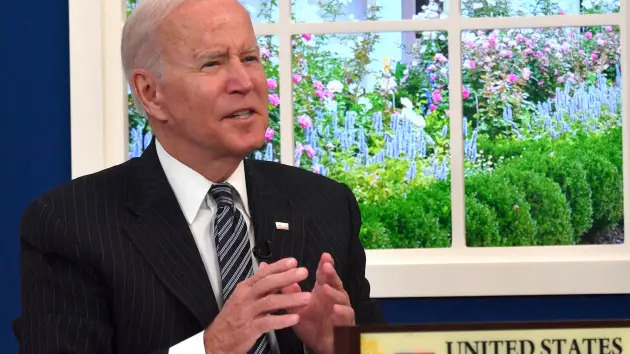
According to CNBC, in the midst of the Ukraine war which is Washington’s top foreign policy priority, President Joe Biden is hosting Southeast Asian leaders in Washington — signaling U.S. commitment to the region where it is engaged in a tussle for dominance with China.

Some critical issues — like the post-Covid economic revival, climate change and the Myanmar coup — will be on the table at the two-day meeting starting Thursday. Leaders from the Association of Southeast Asian Nations (ASEAN), a bloc of 10 countries that together make up the world’s seventh-largest economy, will be there.

Security issues will likely be on the table at the summit, Ong Keng Yong, former secretary-general of ASEAN, told CNBC.

“ASEAN would probably like to see more U.S. support towards its ASEAN-led mechanisms, as opposed to U.S.-led minilateral groupings such as Quad and Aukus,” said Joanne Lin, a lead researcher at the ASEAN Studies Center at the ISEAS-Yusof Ishak Institute in Singapore.

“The U.S. support for the ASEAN Outlook in the Indo-Pacific will be important,” Lin added, referring to the document adopted in 2019 where ASEAN spelled out its geostrategic concept of the Indo-Pacific region after former President Donald Trump released his vision of a free and inclusive Indo-Pacific.

People in many parts of the Southeast Asian region see U.S. interests mostly as a contest between U.S. liberal democracy and Asian conservatism, said Ong, the former secretary-general of ASEAN.

“Sure, we have various forms of autocratic governance in different parts of ASEAN. Yet, there are many areas where mutually rewarding joint initiatives can be undertaken to deepen ties on a broader canvas,” Ong said.

“It is unavoidable that geopolitics and international security matters will be raised and discussed, but in this respect, I do not expect any dramatic moves,” said Ong, adding: “There’s a need for the U.S. to be more present in Southeast Asian countries.”

The White House has said the summit would “demonstrate the United States’ enduring commitment to ASEAN, … and commemorate 45 years of U.S.-ASEAN relations.”

The U.S. has often stressed the “centrality of ASEAN” to its Indo Pacific strategy to contain China. This emphasis provides the region — populated by nations unwilling to openly choose between the U.S. and China — with some bargaining power.

Ong, who is also Singapore’s ambassador-at-large, said Asia offered enough to keep the U.S. engaged despite its pre-occupation with the war in Ukraine. “Since the end of the Second World War, it is obvious that Europe comes first to the U.S. before any other region of the world,” he said.

“Nevertheless, the people of ASEAN believe that American resilience and vitality will find the Asian side of the Pacific Ocean something worthwhile to engage with and to secure U.S. prosperity going into the future.”

“ASEAN would like to see an economic framework with some concessions and a clearer strategy toward regional security, especially involving the South China Sea,” a senior fellow for Southeast Asia at the  Council on Foreign Relations, Joshua Kurlantzick, told CNBC.

Biden’s Indo-Pacific Strategy, released in February, states that Washington will explore opportunities for the Quad to work with Southeast Asian nations. But ASEAN would like to see more U.S. support for initiatives led by the bloc.

Quad, officially known as the Quadrilateral Security Dialogue, is made up of the U.S., Australia, Japan and India in a strategic partnership aimed at countering China’s looming military presence in the Indo-Pacific.

Separately, Aukus is made up of Australia, the United Kingdom and the U.S., an Indo-Pacific security alliance that was launched last September.

How to watch this week’s rare “super flower blood moon”

0

A spectacular full moon is fast approaching, with plans to grace the night sky on Sunday night. It marks not only a supermoon, but also a blood moon — thanks to a lunar eclipse. 

The last total lunar eclipse occurred a year ago, on May 26, 2021. If the weather is clear, millions of skywatchers in the Americas, Europe and Africa will be able to view the total lunar eclipse on the night of May 15-16. 

According to NASA, a blood moon occurs during a total lunar eclipse, when the Earth is positioned directly between the moon and the sun, hiding the moon from sunlight.

Unlike a solar eclipse, which requires special glasses in order to prevent eye damage, a lunar eclipse is safe to view with the naked eye — but binoculars or a telescope would also enhance the viewing experience. 

The visible part of the eclipse will begin around 10:30 p.m. ET on May 15, NASA says, when the moon enters Earth’s shadow. Totality, when the moon is fully covered by our planet’s shadow, follows around midnight, lasting about an hour and a half. 

It will end around 2 a.m. ET. 

According to NASA, viewers in the Eastern U.S. will see the eclipse begin with the moon well above the horizon, while those in the central part of the country will see it start about an hour and a half after dark. On the West Coast, the moon will rise when totality is already underway, so the best views will be to the southeast. 

So, East Coast viewers will be able to see the event high in the sky, but those on the West Coast should look for an unobstructed spot to watch from. According to timeanddate, this will be the longest prime-time total lunar eclipse on the West Coast this century.

But don’t worry if you don’t have an optimal view: NASA will be live streaming the event, showing off views from around the world and answering viewers’ questions about the phenomenon. 

During totality, the moon will be a faint, reddish glow, as red wavelengths of sunlight filter through our planet’s atmosphere onto the moon’s surface. At different moments during the eclipse, it could also appear to take on shades of orange, yellow or brown.

“When this happens, the only light that reaches the moon’s surface is from the edges of the Earth’s atmosphere,” the space agency explains. “The air molecules from Earth’s atmosphere scatter out most of the blue light. The remaining light reflects onto the moon’s surface with a red glow, making the moon appear red in the night sky.”

This month’s full moon is also a supermoon, meaning it appears slightly larger and brighter than usual because it is at its closest point to Earth in its orbit, known as the perigee. 

It’s also the flower moon, one of the names given to May’s full moon due to the abundance of flowers associated with spring in the Northern Hemisphere. It has also been called the corn planting moon and the milk moon. 

Home sales fall in Atlanta as mortgage rises

0

Annah Bailey, a loan officer with Homestar Financial Corp’s Marietta office, said her business slowed down last month.

Bailey’s closings declined in April, and she saw a complete void of activity in new loan applications. Those fell off a cliff, she said.

“It was silent,” Bailey told Atlanta Business Chronicle. “Phone’s not ringing. No applications for a month.”

Falling demand for applications came as the average interest on a 30-year, fixed-rate mortgage in metro Atlanta exceeded 5% for the first time in a decade, according to data from industry analytics firm Black Knight. At the same time, record home values continued to rise. The metro area’s median price plowed through the $400,000 barrier for the first time last month.

With metro Atlanta’s housing market carrying a new level of sticker shock, the number of mortgages written for home purchases declined by 20% from March to April, according to Black Knight. Home sales in April were down 21% compared to the same month in 2021, per data from First Multiple Listing Service.

The combination of eye-watering rates and prices is forcing many would-be buyers to the sidelines.

The U.S. Federal Reserve is jacking up interest rates as it attempts to extinguish inflation that is at a 40-year peak. Earlier this month, the Fed hiked rates half of a percentage point, the largest raise since 2000. It projects more increases over the course of 2022.

Rising interest rates would cool home prices in a normal market due to their effect on demand. That has not happened so far this year because housing inventory is so low. Competition for homes remains high, and listings are consistently going to buyers with the annual incomes or cash in hand to win intense bidding wars.

So far, higher rates are only serving to price out more potential buyers at the bottom of the market. The Federal Reserve Bank of Atlanta deems home ownership to be “unaffordable” locally because annual mortgage payments for the metro area’s median-priced home now cost more than 30% of the median household income.

Beleaguered home shoppers with less-than-pristine credit scores face another hurdle: higher closing costs through lender fees. Someone with a credit score less than 740 — a rating that credit-reporting company Experian considers to be “very good” — likely will pay an extra $5,000 or more up front on a 30-year, fixed-rate loan at closing, Bailey said.

“That is a huge impact, honestly more than the rate,” she said.

Bailey said that the current lull in mortgage demand does not surprise her. Anytime there’s a shock to the economy, such as surging inflation or rapidly rising interest rates, potential homebuyers tend to pause and reassess the situation.

But Atlanta continues to be a hot destination for corporate expansions and individuals relocating from bigger cities and more expensive markets. The cost of owning a home is still cheaper than renting, and monthly rents are rising at an astronomical rate, too.

Bailey believes she could be in for a slower summer, but she expects to make up for it in the second half of the year when demand picks back up.

“I think people will continue moving and buying and doing what they need to do for their families,” Bailey said. “Life goes on.”


A breakdown of metro Atlanta sales by price in April:

  • The number of homes bought for $600,000 or more increased 20% year over year.
  • Home purchases between $350,000 and $600,000 were up 3%.
  • Purchases between $200,000 and $350,000 declined 43%.
  • Purchases under $200,000 were essentially non-existent. They were down 70%. Of nearly 6,000 homes bought across metro Atlanta last month, only 249 were secured for less than $200,000.

Mariah Carey buys $5.65 million Atlanta mansion

0

Mariah Carey has purchased a multi-million dollar Atlanta mansion, according to reports. The celebrity singer, however, has not yet made a statement on the big buy, reported by AJC.

Realtor.com first reported that a management company with ties to the “All I Want For Christmas is You” music wonder purchased the colonial estate in an off-market transaction in November 2021 for $5.65 million. The Atlanta Journal-Constitution confirmed through the Fulton County property records that a real estate company named The Mirage Real Estate Trust purchased the mansion located in Sandy Springs.

According to reatlor.com, the Atlanta mansion was previously rented by Fast and Furious movie star Dwayne “The Rock” Johnson.

Mariah Carey put a multi-million dollar Buckhead home up for sale in 2018, according to Curbed Atlanta. The 7,100 square-foot Mediterranean-style mansion was originally listed for $2.4 million but sold for $2.23 million in early 2019.

The real estate company’s name is notably similar to that of Mirage Entertainment Inc., a talent agency of which Mariah Carey is the CEO, and shares a California mailing address with Carey’s agency.

Buckhead.com describes the location as a 16,202 square-foot home that was built in 1992. It has six bedrooms, five bathrooms and six half bathrooms.

“A noble example of Georgian architecture by renowned architect Stephen Fuller, this beautiful mansion sits atop more than four verdant acres and is as stately as it is welcoming.” The website said. “A relaxing pool, tennis court, and brick pavilion- perfect for al fresco entertaining-create the ideal setting for enjoying the stunning grounds. Regal spaces, elegant finishes and well planned places to relax, entertain and gather make this manse an inspiring place to call home.”

Shanghai maintains ‘zero-COVID’ policy but the U.N. “It is not sustainable”

0

China on Wednesday defended sticking to its strict “zero-COVID” approach, calling critical remarks from the head of the World Health Organization “irresponsible.”, reported by AP.

The response from the Foreign Ministry came after WHO Director-General Tedros Adhanom Ghebreyesus said he had been discussing with Chinese experts the need for a different approach in light of new knowledge about the virus.

“When we talk about the ‘zero-COVID,’ we don’t think that it’s sustainable, considering the behavior of the virus now and what we anticipate in the future,” Tedros said.

The daily number of new cases in Shanghai reported on Wednesday had fallen to less than 1,500, down from a peak of 26,000 in mid-April. Seven more COVID-19-related deaths were reported, raising the toll from the outbreak to 560.

While China says more than 88% of its population is fully vaccinated, the rate is considerably lower among the vulnerable elderly. Questions have also been raised about the efficacy of Chinese-produced vaccines compared to those from Europe and the United States.

In the capital Beijing, residents have been ordered to undergo mass testing in a bid to prevent a major outbreak like that in Shanghai. The city, which reported 37 new cases on Wednesday, has locked down individual buildings and residential compounds, shut about 60 subway stations and banned dining at restaurants, allowing only takeout and delivery.

The vast Forbidden City museum complex, the ancient home of China’s former emperors, will also be closing from Thursday to “reduce the danger of virus transmission in society posed by the circulation of people,” it said in a statement.

Ministry spokesperson Zhao Lijian said at a daily briefing Wednesday, “We hope that relevant people can view China’s policy of epidemic prevention and control objectively and rationally, get more knowledge about the facts and refrain from making irresponsible remarks.”

“The Chinese government’s policy of epidemic prevention and control can stand the test of history, and our prevention and control measures are scientific and effective,” Zhao said. “China is one of the most successful countries in epidemic prevention and control in the world, which is obvious to all of the international community.”

Earlier Wednesday, deputy director of Shanghai’s Center for Disease Control Wu Huanyu reaffirmed the approach’s importance in eliminating a waning outbreak. He told reporters that while progress has been made, relaxing prevention and control measures could allow the virus to rebound.

“At the same time, now is also the most difficult and critical moment for our city to achieve zero-COVID,” Wu said at a daily briefing.

Wu gave no indication he was aware of the comments by Tedros.

Tedros was joined by Mike Ryan, the WHO’s emergencies chief, who said all pandemic control actions should “show due respect to individual and human rights.”

Countries need to “balance the control measures, the impact on society, the impact on the economy. That is not always an easy calibration to make,” Ryan said.

The incident marked a rare public show of friction between China and the WHO, which has been accused of succumbing to Chinese pressure to avoid criticism and awkward questions about the origins of the virus that was first detected in the central Chinese city of Wuhan in late 2019.

China’s ruling Communist Party has strictly controlled all discussion about its controversial approach, which aims to totally stamp out outbreaks, and said it would tolerate no criticism, questioning or distortion of the strategy. The entirely state-controlled media did not report on the comments by Tedros and Ryan and references to them on the Chinese internet appeared to have been removed by censors.

The ruthless and often chaotic implementation of zero-COVID has stirred considerable resentment in Shanghai, where some residents have been under lockdown for more than a month. As of Wednesday, more than 2 million people in the city remained confined to their residential compounds, while restrictions had been slightly relaxed for most of the other 23 million.

However, the easing appears to now be on hold, even as the number of new cases falls in the city that is home to China’s busiest port, main stock market and thousands of Chinese and foreign firms. People in some areas have been ordered to stay home again after having been let out for limited shopping in recent weeks. On Tuesday, service was suspended on the last two subway lines that were still operating.

Complaints have centered on shortages of food and other daily necessities and the forced removal of thousands of people to quarantine centers after having tested positive or having been in contact with an infected person, standard procedure in China’s zero-COVID approach.

Along with the human cost, the adherence to “zero-COVID” as many other countries loosen restrictions and try to live with the virus is exacting a growing economic toll.

However, the party under leader Xi Jinping shows no sign of backing off amid efforts to ensure stability and shore up its authority ahead of a major party congress this fall.

Chinese experts such as Wu have been careful to toe the party line, saying the strategy has been effective in limiting the official death toll in mainland China and that any let-up risks sparking a major new surge.

Trump candidate loses in Nebraska, wins in West Virginia

0

Republican voters in Nebraska picked Jim Pillen as their nominee for governor, siding with the University of Nebraska regent backed by the state’s outgoing governor over a rival supported by former President Donald Trump and accused of groping multiple women.

According to AP, Pillen, a hog farm owner and veterinarian, defeated eight challengers, including Charles Herbster, a businessman who faced groping allegations late in the campaign, and Brett Lindstrom, a state senator and Omaha financial adviser who was generally viewed as a more moderate choice.

“We live in the greatest place on the planet, right here in Nebraska,” Pillen said in a victory speech late Tuesday as a crowd cheered and chanted, “Let’s go, Jim!” He said his opponents had called to concede.

Nebraska Secretary of State Bob Evnen, a Republican who also won renomination on Tuesday, predicted that 35% of registered voters would cast ballots in the primary, the highest percentage since 2006, based on what he had seen so far.

Nebraska Republicans and Democrats also picked their candidates for the seat previously held by Republican U.S. Rep. Jeff Fortenberry, who resigned from office and ended his reelection bid in March after he was convicted of federal corruption charges.

State Sen. Mike Flood, a former speaker of the Nebraska Legislature, won the Republican nomination, while state Sen. Patty Pansing Brooks won the Democratic nod. Flood will enter the race as a strong favorite in the Republican-heavy 1st Congressional District, which includes Lincoln, small towns and a large swath of eastern Nebraska farmland.

While Trump-endorsed candidates won primary races in West Virginia for the U.S. House on Tuesday, the statewide loss in Nebraska was a setback for Trump. He has issued hundreds of endorsements and staged his signature campaign-style rallies in support of his preferred candidates, including Herbster, all in an effort to bend the GOP in his direction ahead of another possible presidential run in 2024.

Herbster’s loss raises the stakes on other high-profile races this month in Pennsylvania and Georgia, where Trump has also intervened in campaigns.

In this Republican stronghold, Pillen will be a favorite in November’s general election against his Democratic opponent, state Sen. Carol Blood. Nebraska hasn’t elected a Democrat as governor since 1994.

Pillen was endorsed by many top GOP leaders in the state, including Gov. Pete Ricketts, former Gov. Kay Orr, and renowned former University of Nebraska football coach and congressman Tom Osborne. Ricketts was prevented by term limits from running again.

In Nebraska, the allegations against Herbster, a longtime supporter of Trump, didn’t stop the former president from holding a rally with him earlier this month.

“I really think he’s going to do just a fantastic job, and if I didn’t feel that, I wouldn’t be here,” said Trump, who has denied sexual misconduct allegations of his own.

Herbster alluded to the groping allegations in a concession speech late Tuesday.

“This is one of the nastiest campaigns for governor in the history of Nebraska,” and may have affected the results, Herbster said, adding that it was “in God’s hands.”

Lindstrom congratulated Pillen on his victory and said he would support him in the general election.

In a story last month, the Nebraska Examiner interviewed six women who claimed Herbster had groped their buttocks, outside of their clothes, during political events or beauty pageants. A seventh woman said Herbster once cornered her privately and kissed her forcibly.

One of the accusers, Republican state Sen. Julie Slama, said Herbster reached up her skirt and touched her inappropriately at the Douglas County Republican Party’s annual Elephant Remembers dinner in 2019. The Associated Press does not typically identify people who say they are victims of sexual assault unless they choose to come forward publicly, as Slama has done.

Herbster filed a defamation lawsuit against Slama, saying she falsely accused him in an effort to derail his campaign. Slama responded with a countersuit against Herbster, alleging sexual battery.

Some voters said the allegations didn’t dissuade them from backing Herbster.

As she voted at an elementary school in northwest Omaha on Tuesday, Joann Kotan said she was “upset by the stories, but I don’t know if I believe them.” Ultimately, the 74-year-old said, she voted for Herbster “because President Trump recommended him.”

Lindstrom faced a barrage of attacks as well, with third-party television ads funded by Ricketts that portray him as too liberal for the conservative state. One digitally altered ad shows Lindstrom standing in front of a rainbow flag with a coronavirus mask superimposed over his face.

Despite Trump’s loss in the Nebraska governor’s race, his influence proved decisive in West Virginia, which also held primary elections Tuesday. In a race pitting two Republican incumbents against each other, Trump’s candidate, Rep. Alex Mooney, defeated Rep. David McKinley, who had angered Trump by voting for President Joe Biden’s bipartisan infrastructure package and the creation of the House committee investigating the Jan. 6 attack on the U.S. Capitol.

US inflation hit 8.3% April but slows from 40-year high

0

Inflation slowed in April after seven months of relentless gains, a tentative sign that price increases may be peaking while still imposing a financial strain on American households.

Consumer prices jumped 8.3% last month from 12 months earlier, the Labor Department said Wednesday. That was below the 8.5% year-over-year surge in March, which was the highest since 1981. On a month-to-month basis, prices rose 0.3% from March to April, the smallest increase in eight months.

Still, Wednesday’s report contained some cautionary signs that inflation may be becoming more entrenched. Excluding the volatile food and energy categories, so-called core prices jumped 0.6% from March to April — twice the 0.3% rise from February to March. Those increases were fueled by spiking prices for airline tickets, hotel rooms and new cars. Apartment rental costs also continued to rise steadily, reported by AP.

On Tuesday, Biden sought to take the initiative and declared inflation “the No. 1 problem facing families today” and “my top domestic priority.”

Biden blamed chronic supply chain snarls related to the swift economic rebound from the pandemic, as well as Russia’s invasion of Ukraine, for igniting inflation. He said his administration will help ease price increases by shrinking the government’s budget deficit and by fostering competition in industries, like meatpacking, that are dominated by a few industry giants.

Still, new disruptions overseas or other unforeseen problems could always send U.S. inflation back up to new highs. If the European Union decides, for example, to cut off Russian oil, gas prices in the United States would likely accelerate. China’s severe COVID lockdowns are worsening supply problems and hurting growth in the world’s second-biggest economy.

The sharp price gains from March to April “make clear that there is still a long way to go before inflation returns to more acceptable levels,” said Eric Winograd, U.S. economist at asset manager AB.

Some individual categories of goods have skyrocketed over the past year. Grocery prices, for example, have shot up 10.8%, the largest year-over-year jump since 1980. The cost of a gallon of gas fell 6.1% in April but is still up nearly 44% from a year ago.

And so far in May, prices at the gas pump have reached new highs. Nationally, the average for a gallon of gas is at a record $4.40, according to AAA, though that figure isn’t adjusted for inflation. The high price of oil is the main reason. A barrel of U.S. benchmark crude sold for around $100 a barrel Tuesday. Gas had fallen to about $4.10 a gallon in April, after reaching $4.32 in March.

Beyond the financial strain for households, inflation is posing a serious political problem for President Joe Biden and congressional Democrats in the midterm election season, with Republicans arguing that Biden’s $1.9 trillion financial support package last March overheated the economy by flooding it with stimulus checks, enhanced unemployment aid and child tax credit payments.

In the meantime, by some measures Americans’ wages are rising at the fastest pace in 20 years. Their higher pay enables more people to at least partly keep up with higher prices. But employers typically respond by charging customers more to cover their higher labor costs, which, in turn, heightens inflationary pressures.

Last Friday’s jobs report for April included data on hourly pay that suggested that wage gains were slowing, which, if it continues, could help ease inflation this year.

Thousands of Ukrainians have died from lack of healthcare

0

 The World Health Organization is warning that thousands of Ukrainians have died from lack of proper medical care since the Russian invasion began in February.

The mass displacement of people and the closure of medical facilities are proving fatal, Dr. Hans Kluge, the head of the WHO’s Regional Office for Europe, said yesterday.

Many of the people remaining in Mariupol, he notes, are elderly who were too frail to flee. He says disease and the collapse of the health care system could lead to another wave of deaths in the coming weeks in the beleaguered city.

And the problem is ongoing. The mayor of Mariupol says thousands more could die in his besieged city alone from lack of access to sanitation, clean drinking water and proper medical care.

At least 3,000 people who needed regular medical treatment already have died in Ukraine because the war made it impossible for them to access adequate health care, he said. The WHO says people needing treatment for cancer and HIV are particularly vulnerable.

A rising K-pop star is the winner of “American Song Contest.”

0


Tulsa native AleXa won the new NBC competition series Monday night with her dance-pop song “Wonderland.” She performed the fairy tale-theme banger throughout the show’s run with the elaborate stage production, colorful costumes, hair and makeup and intricate dance moves that have made K-pop — short for “Korean pop” — a global sensation.  

The 2015 Jenks High School graduate beat out nine other artists — including Grammy winner and Connecticut native Michael Bolton — to win “American Song Contest.” 

“Country music is definitely something Oklahoma is well known for, but there bands like The All-American Rejects and Hanson as well that came from Oklahoma. It’s so more than just country music, and I’m very proud to represent that,” AleXa told The Oklahoman in March.   

In 2018, AleXa, 25, moved to South Korea to pursue a K-pop career. After winning the online talent competition “Rising Legends” — determined through nearly a million fan votes — she was one of the 96 contenders chosen to participate in “Produce 48,” the most competitive audition show in Korea.    

Signed with ZB, a label owned by South Korean video production company Zanybros, AleXa made her multilingual K-pop debut in 2019 with “Bomb.” The song landed at No. 7 on Billboard’s World Digital Song Sales chart and has nabbed more than 23 million views with an action-packed music video.  

A year later, AleXa won top Korean awards for her extended plays “Do Or Die” and “Decoherence.” In the past year, the Oklahoma native has released the Y2K-inspired EP “ReviveR,” featuring the infectious dance track “Xtra,” performed the National Anthem for the Los Angeles Dodgers and made her acting debut with the new Korean horror anthology sequel “Goedam 2” (aka “Urban Myths: Tooth Worms”).  

As the popularity of K-pop has grown worldwide, AleXa has garnered a global following. 

Not only did she earn enough votes to win NBC’s “American Song Contest,” but her song “Wonderland” also has been streamed more than 1.1 million times since the show started.  

“I am a proud Okie — born and raised for 21 years — so I was more than happy to represent my home state and my people for this competition. As a Korean American myself, I really wanted to represent my mother’s Korean heritage … and everything that I’ve been working for these past four years as a K-pop artist and bring that to America,” AleXa told The Oklahoman. 

Devised as America’s answer to the long-running Eurovision Song Contest, “American Song Contest” premiered March 21 on NBC, with AleXa featured as the second of 11 qualifiers on the debut episode.   

Hosted by Kelly Clarkson and Snoop Dogg, “American Song Contest” traveled across the country and spotlighting 56 acts: one for each of the 50 states, five U.S. territories and Washington, D.C.    

The live competition consisted of three rounds as the artists competed in a series of Qualifying Rounds, followed by the Semi-Finals, which aired on April 25 and May 2, and the Monday’s “Live Grand Final.” 

Along with AleXa and Bolton, the top 10 finalists included “The Voice” Season 9 winner and native Kentuckian Jordan Smith; Grammy-nominated singer-songwriter and Washington competitor Allen Stone; Native American songwriter and North Dakota contender Chloe Fredericks; self-taught Texas performer Grant Knoche; Alabama duo and YouTube hitmakers Ni/Co; former “Glee” and “Dancing with the Stars” performer and Coloradoan Riker Lynch; Tennessee musician and firefighter Tyler Braden; and American Samoan songwriter and breakout reggae artist Tenelle.   

In the end, though, the contest’s winner was K-pop singer, dancer and songwriter Alex Christine, known professionally as AleXa.   

Born in Tulsa and raised in Jenks, she was a cheerleader for Jenks High School, took dance lessons and enjoyed riding horses growing up. In 2008, her best friend introduced her to K-pop, with the boy group SHINee and female solo artist Chung Ha becoming lasting influences.  

Shanghai re-tightens on COVID restrictions, frustrating trapped residents

0

The city of Shanghai is doubling down on pandemic restrictions after a brief period of loosening up, frustrating residents who were hoping a more than monthlong lockdown was finally easing as the number of new cases falls in China’s financial center.

On Tuesday, service was suspended on the last two subway lines that were still operating, marking the first time the city’s entire system has been shut down, according to The Paper, an online media outlet.

A constitutional law professor, Tong Zhiwei, posted an article recently calling for Shanghai to end what he called “excessive pandemic prevention measures” such as quarantining residents and forcing them to surrender their house keys, saying the requirements contravene the rule of law.

The article has been removed from the internet as the government censors criticism of its response.

According to AP, the daily number of new cases in Shanghai had fallen to about 3,000 by Monday, down from a peak of 26,000 in mid-April. Six more COVID-19-related deaths were reported, raising the toll from the outbreak to 553.

Thousands of people have been forced into quarantine centers after testing positive or having been in contact with an infected person, standard procedure in China’s zero-COVID approach.

Teams in white protective suits have begun entering the homes of coronavirus-infected people to spray disinfectant, prompting worries among some about damage to clothes and valuables, and about leaving their keys with a community volunteer when they are taken to quarantine — a new requirement so disinfectant workers can get in.

In some areas, people have been ordered to stay in their homes again for a “quiet period” after being let out for limited shopping in recent weeks.

China’s adherence to a “zero-COVID” strategy, as many other countries loosen restrictions and try to live with the virus, is exacting a growing economic and human cost. Evermore extreme measures have been required to bring outbreaks under control because the omicron variant spreads so easily. China’s ruling Communist Party, with an eye on a major party congress this fall, is showing no signs of backing off anytime soon.

Fengxian district, a suburban area in southern Shanghai, entered a “quiet period” on Monday, with permits for residents to leave their compounds suspended and shops and supermarkets closed except for delivery, the Shanghai Media Group reported.

Workers at one supermarket filled bags with celery, cooking oil and other groceries in a designated area, where delivery persons picked them up. Xie Yu, the manager, said the store is also trying to restock goods in high demand. “When offline sales are resumed, customers will be able to buy what they need immediately,” he said.

Escape from Shanghai is all but impossible, but that didn’t stop an unofficial how-to guide — detailing how to navigate lockdown controls and nab a seat on the few trains and planes leaving the city — from circulating widely on social media. Many in the city of 25 million people shared their frustrations over the renewed restrictions in chat groups.

Meanwhile, Beijing began another round of three days of mass testing for millions of its residents Tuesday in a bid to prevent an outbreak in the nation’s capital from growing to Shanghai proportions. The city, which recorded 74 new cases on Monday, has locked down individual buildings and residential compounds, shut about 60 subway stations and banned dining at restaurants, allowing only takeout and delivery.

The outbreak has not exploded but it also has not stopped spreading. Beijing spokesperson Xu Hejian described the situation Tuesday as a “stalemate” and said the city needs to continue its strict measures.

While traffic is sparse in Beijing, it is almost non-existent in Shanghai, where the lockdown has been going on longer and is citywide. AP video shot Monday showed a silent and deserted city, with only a very occasional vehicle and a few food delivery drivers on scooters moving down empty roads. Most people are confined to their apartments or residential complexes, though there has been some easing in outlying suburban areas without new cases in their communities.

But notices issued in several Shanghai districts in recent days ordered residents to stay home and barred them from receiving nonessential deliveries as part of a “quiet period” lasting until Wednesday or longer. The measures could be extended depending on the results of mass testing, the notices said. The sudden re-tightening took residents by surprise.

Shanghai official Jin Chen appeared to acknowledge Tuesday the complaints about the disinfecting of people’s homes, thanking them for their cooperation and saying the government would analyze and fix any problems. He said that residents can inform the teams about any items that need protection.

“Carrying out household disinfection is an important part of the overall epidemic prevention and control,” he told a daily virus news conference.