Home Blog Page 38

Emotional Biden in Buffalo condemns those who push ‘perverse’ replacement theory

0

 President Joe Biden said “white supremacy is a poison” and vowed “hate will not prevail” during a trip Tuesday to Buffalo, New York, where he grieved with family members of 10 victims killed Saturday in a racially motivated mass shooting at a supermarket.

“What happened here is simple, straightforward terrorism,” Biden said. “Domestic terrorism inflicted in the service of hate and a vicious thirst for power that defines one group of people being inherently inferior.”

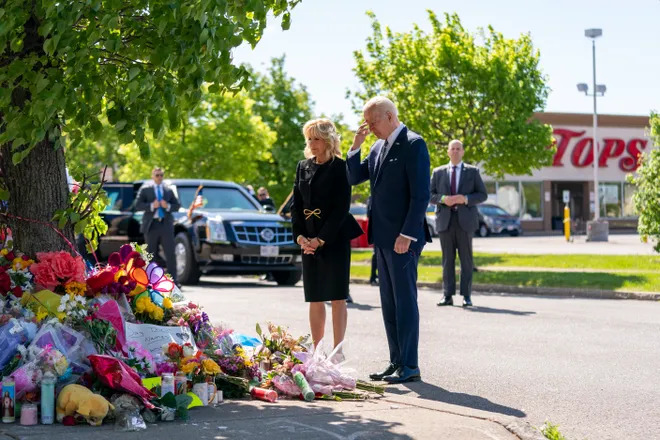
After arriving in Buffalo in the morning, the Bidens visited a makeshift memorial for the shooting victims across from the supermarket. Jill Biden placed a bouquet of white flowers near the base of a tree covered with tributes to the victims. The president crossed himself on his chest as the first couple reflected in silence.

The Bidens then moved to the Delavan Grider Community Center, where they met with families, first responders and law enforcement officials. Jill Biden thanked the families for “opening up your hearts to us and for letting us be with you today.

“God bless you,” she said. 

Biden and first lady Jill Biden met with families of the shooting victims, who ranged from 32 to 86 years old. Most were Black, either shopping or working at a Tops Friendly Market in one of Buffalo’s highest concentrated African American neighborhoods. The slain included a civil rights advocate, a deacon and a heroic security guard. 

The president condemned the gunman’s “hateful, perverse ideology rooted in fear and racism” and called out those who have pushed the “Great Replacement Theory” – the belief that white Americans are being systematically “replaced” by immigrants and minorities.

Biden said that “through the media and politics,” the Internet has “radicalized angry, lost and isolated individuals” into believing the theory.

“I call on all Americans to reject the lie and I condemn those who spread the lie for power, political gain and for profit,” Biden said, though not singling out any names. “We’ve now seen too many times the deadly, destructive violence this ideology unleashes.”

China Eastern crash probe eyes intentional action

0

According to Reuters, investigators looking into the crash of a China Eastern Airlines (600115.SS) jet are examining whether it was due to intentional action on the flight deck, with no evidence found of a technical malfunction, two people briefed on the matter said.

The Wall Street Journal reported earlier on Tuesday that flight data from one of the Boeing 737-800’s black boxes indicated that someone in the cockpit intentionally crashed the plane, citing people familiar with the preliminary assessment of U.S. officials.

Boeing Co (BA.N), the maker of the jet, and the U.S. National Transportation Safety Board (NTSB) declined to comment and referred questions to Chinese regulators. The Civil Aviation Administration of China (CAAC), which is leading the investigation, did not respond immediately to a request for comment.

The Boeing 737-800, en route from Kunming to Guangzhou, crashed on March 21 in the mountains of the Guangxi region, after a sudden plunge from cruising altitude, killing all 123 passengers and nine crew members aboard.

It was mainland China’s deadliest aviation disaster in 28 years. read more

The pilots did not respond to repeated calls from air traffic controllers and nearby planes during the rapid descent, authorities have said. One source told Reuters investigators were looking at whether the crash was a “voluntary” act.

Screenshots of the Wall Street Journal story appeared to be censored both on China’s Weibo social media platform and the Wechat messaging app on Wednesday. The hashtag topics “China Eastern” and “China Eastern black boxes” are banned on Weibo, which cited a breach of laws, and users are unable to share posts on the incident in group chats on Wechat.

The CAAC said on April 11 in response to rumors on the internet of a deliberate crash that the speculation had “gravely misled the public” and “interfered with the accident investigation work”.

A woman who asked to be identified only by her surname, Wen, who lost her husband in the crash, told Reuters on Wednesday that she had not seen the Wall Street Journal report but hoped the results of the investigation would be released soon.

Wen said she and other victims’ family members had signed an agreement with China Eastern that included a point about compensation, but she declined to say how much had been offered.

China Eastern did not immediately respond to a request for comment. The Wall Street Journal said the airline had said in a statement that no evidence had emerged that could determine whether or not there were any problems with the aircraft.

A final report into the causes could take two years or more to compile, Chinese officials have said. Analysts say most crashes are caused by a cocktail of human and technical factors.

Deliberate crashes are exceptionally rare globally. Experts noted the latest hypothesis left open whether the action stemmed from one pilot acting alone or the result of a struggle or intrusion but sources stressed nothing has been confirmed.

The cockpit voice recorder was damaged during the crash and it is unclear whether investigators have been able to retrieve any information from it.

In March 2015, a Germanwings co-pilot deliberately flew an Airbus A320 into a French mountainside, killing all 150 on board.

French investigators found the 27-year-old was suffering from a suspected “psychotic depressive episode,” concealed from his employer. They later called for better mental health guidelines and stronger peer support groups for pilots.

“Is Arirang a World Heritage Site?” Unification Golden Bell, students excited about colorful problems

0

05/17/2022


EstaHosted by NPUACA on May 14

Fun and exciting competition from students in five southeastern states

Grand Prize Yu Joo-hyeon, David Yi

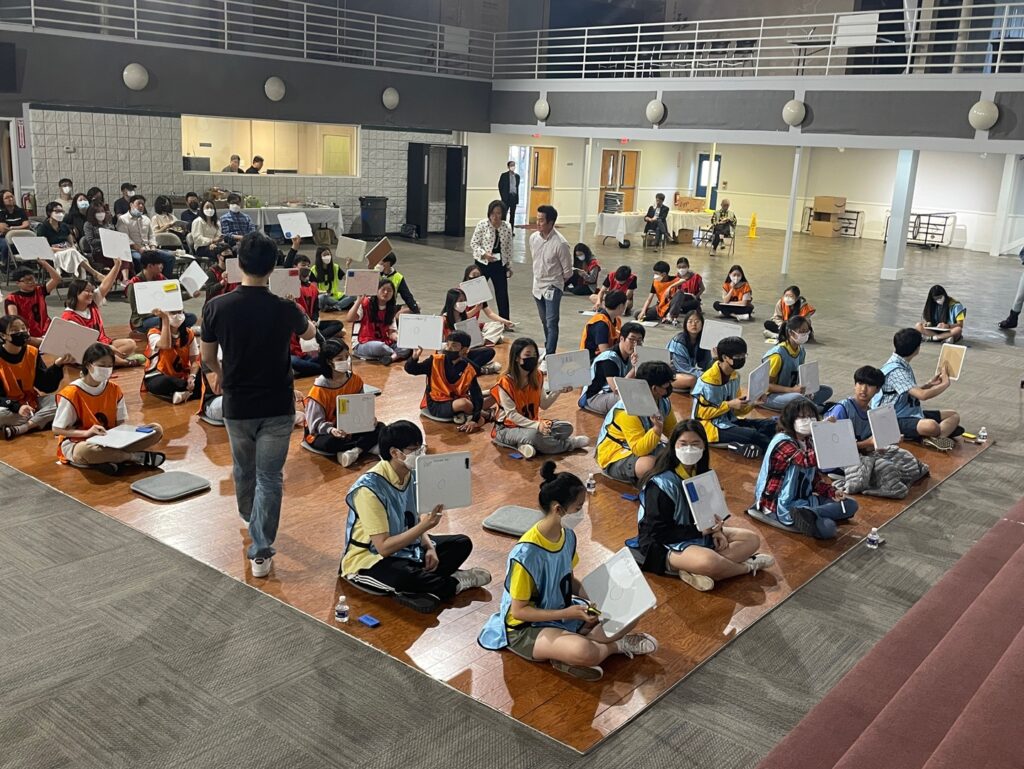
Has Arirang been designated as a UNESCO Intangible Cultural Heritage of Humanity? Am I right? or No?…well.. It’s not an easy answer. The answer is “Yes!”

The super excited exclamation from the students who wrote circles on the small portable whiteboard exploded.

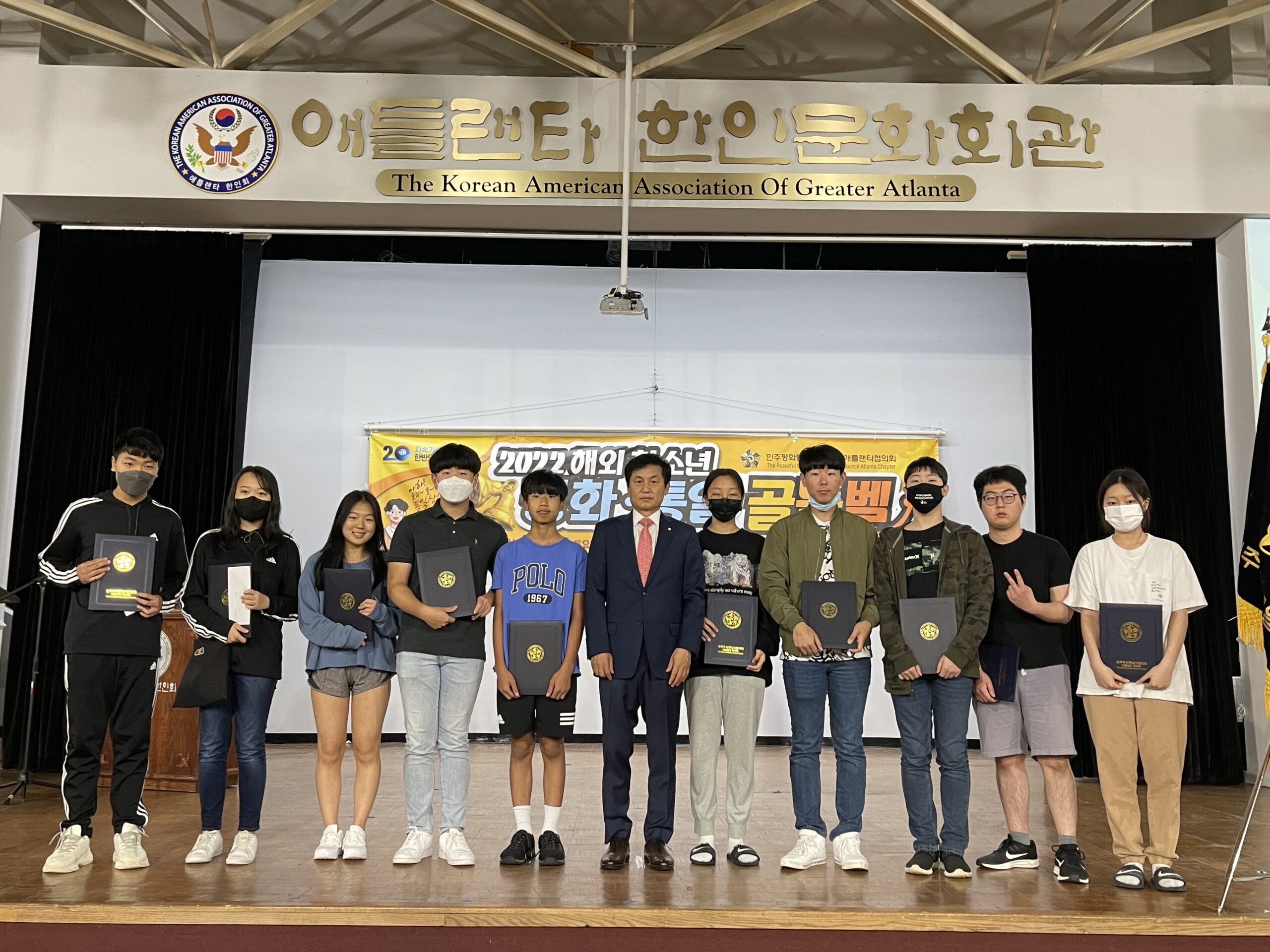
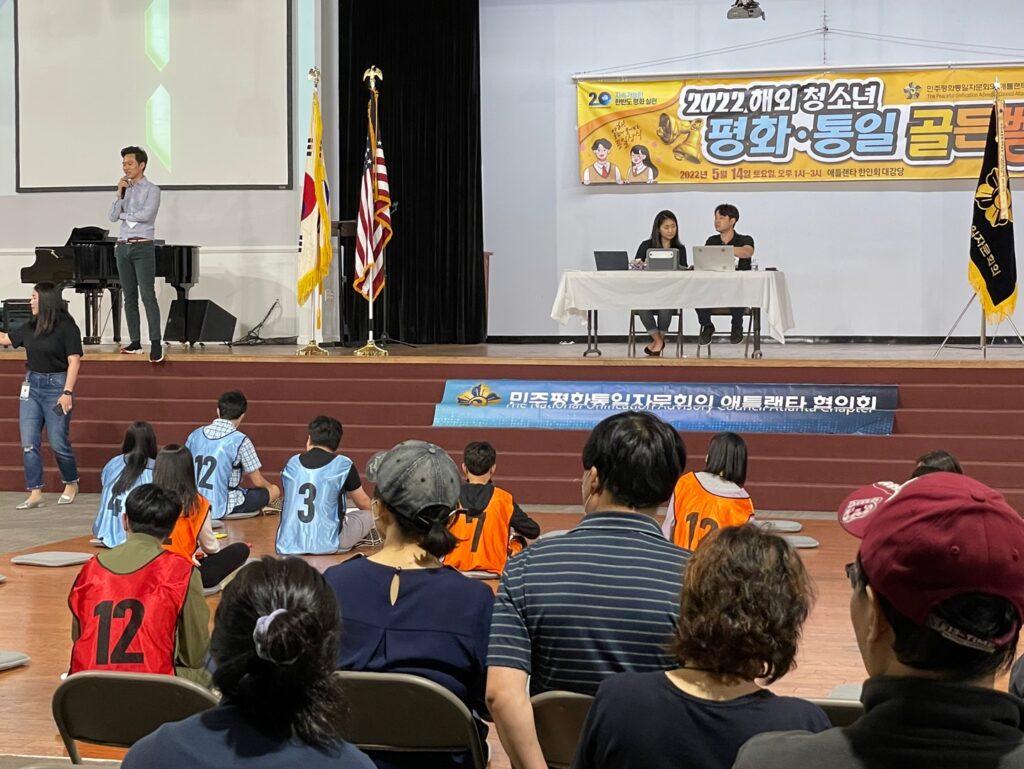
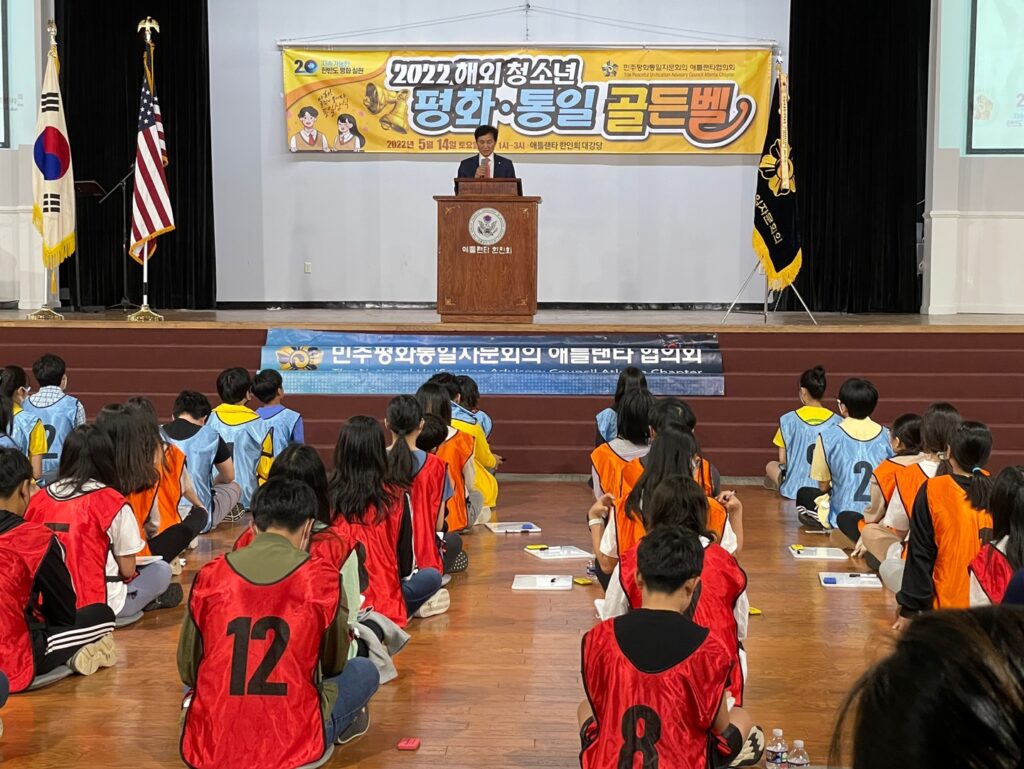
This is the site of the ‘2022 Challenge Unification Golden Bell’ presented by the The National Peaceful Unification Advisory Council Atlanta Chapter (NPUACA, Eric Kim,Chairman) at the Atlanta Korean Center on MAY 14th.

This event, which was held as a face-to-face event for the first time in two years due to the COVID-19 pandemic, was attended by 38 middle and high school students from five southeastern states, including Georgia, competing for knowledge on the topic of peaceful unification and a correct view of the country.

As a result of the quiz contest, the grand prize was awarded to Joo-hyeon Yoo, and the grand prize went to David Yi.

All participants were presented with prizes, and the winners received cashed awards.

Meanwhile, Yoo and Yi, two winners will also participate in the national competition.

Chairman Eric Kim said, “I hope that growing young people will increase their interests in identity and unification as Koreans through this contest and grow into leaders who will lead the future.

<By Eugene Lee>

Winners!
Unification Golden Bell 2022/K News Atlanta
Unification Golden Bell 2022/GNT
Golden bell 2022/GNT

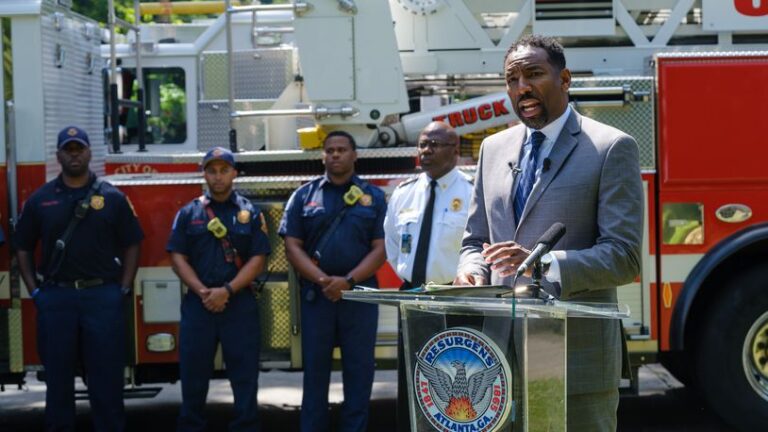
Atlanta mayor approves $1.5 million payment to support Forest Cove tenants

0

Neighbors who live in what they describe as a rundown Atlanta apartment complex will soon get help from the city to move out.

The city is putting up $9.1 million toward relocating people out of the Forest Cove Apartments in southeast Atlanta.

Mayor Andre Dickens signed a bill Monday that authorizes $1.5 million of those funds toward down payments for new housing.

The city says it is trying to relocate all Forest Cove tenants by the summer to help Atlanta Public School students before the school year starts.

Atlanta will pay the relocation costs for the tenants, which the Forest Cove owners will pay back once it reaches a deal for rehabilitation, rebuild or sale of the property.

“Every resident deserves the dignity of safe and quality housing, but that has long been lacking for the families living at Forest Cove,” Dickens said. “While this isn’t a City-owned property, I could not stand by as these residents continued to be left behind. That’s why I have directed the City to step in to take urgent action. Thank you to Councilmember Winston and the entire City Council for their urgent partnership on this issue.”

Channel 2 Action News has reported for years about issues at the complex.

Code Enforcement Unit conducted an investigation in July 2021 and found the apartments had 150 violations of city codes.

Officers found broken windows, open units, vacant units that were improperly boarded, damaged siding, abandoned, inoperable vehicles, severe overgrowth, burned buildings and areas of accumulated debris and trash.

Tenants have consistently complained of mold, water leaks and even ceilings collapsing.

In September, tenants told Channel 2′s Tom Jones that they can no longer live in hazardous conditions.

“The trash is never taken out on time. Maintenance isn’t done on time,” said Monica Johnson with the Housing Justice League.

“I have put in six work orders and they haven’t fixed nothing yet,” Shirlan Beauford told Jones in September. “A 1-month-old baby cannot keep on breathing that mold.”

Dickens says he is working with Atlanta Apartment Association and other property owners to identify housing units that families moving out of Forest Cove can consider.

“We’re asking property owners and managers across Atlanta to reach out to see how they can help close the gap and get these families into safe and quality homes. Taking care of our neighbors at Forest Cove is a chance for Atlantans to show what it means to be a truly inclusive community,” the mayor said in a statement.

Lacking vaccines, N. Korea battles COVID with antibiotics, home remedies

0

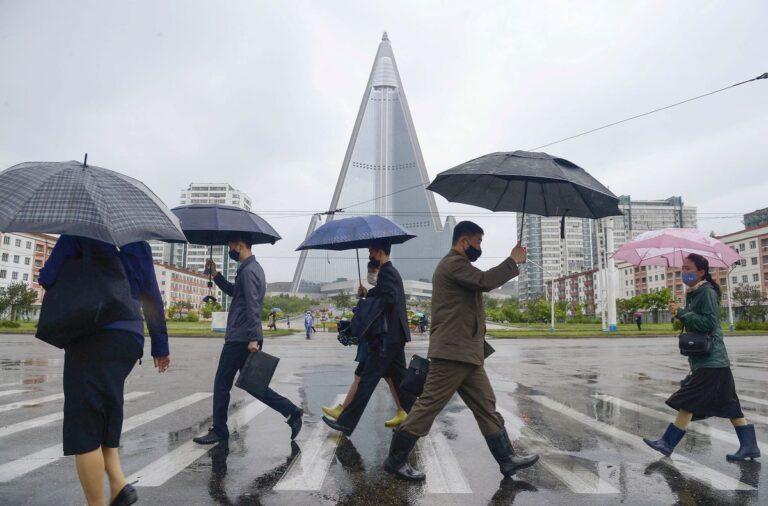
Standing tall in bright red hazmat suits, five North Korean health workers stride towards an ambulance to do battle with a COVID-19 outbreak that – in the presumed absence of vaccines – the country is using antibiotics and home remedies to treat.

The isolated state is one of only two countries yet to begin a vaccination campaign and, until last week, had insisted it was COVID-free.

Now it is mobilizing forces including the army and a public information campaign to combat what authorities have acknowledged is an “explosive” outbreak.

In a March report, an independent U.N. human rights investigator said it was plagued by “under-investment in infrastructure, medical personnel, equipment and medicine, irregular power supplies and inadequate water and sanitation facilities”.

Kim Myeong-Hee, 40, who left the North for South Korea in 2003, said such shortcomings led many North Koreans to rely on home remedies.

“Even if we go to the hospital, there are actually no medicines. There was also no electricity so medical equipment could not be used,” she said.

When she contracted acute hepatitis, she said she was told to take minari – a water parsley made famous by the 2020 film of the same name – every day, and to eat earthworms when afflicted by another, unknown illness.

Home remedies had sometimes failed to prevent loss of life during epidemics in the 1990s, Kim added.

In an interview on state television on Monday, Vice Minister of Public Health Kim Hyong Hun said the country had switched from a quarantine to a treatment system to handle the hundreds of thousands of suspected “fever” cases reported each day.

The broadcaster showed footage of the hazmat team, and masked workers opening windows, cleaning desks and machines and spraying disinfectant.

To treat COVID and its symptoms, state media have encouraged patients to use painkillers and fever reducers such as ibuprofen, and amoxicillin and other antibiotics – which do not fight viruses but are sometimes prescribed for secondary bacterial infections.

While previously playing down vaccines as “no panacea”, media have also recommended gargling salt water, or drinking lonicera japonica tea or willow leaf tea three times a day.

“Traditional treatments are the best!” one woman told state broadcasters as her husband described having their children gargle with salted water every morning and night.

An elderly Pyongyang resident said she had been helped by ginger tea and ventilating her room.

“I was first scared by COVID, but after following the doctors’ advice and getting the proper treatments, it turned out not a big deal,” she said in a televised interview.

According to Reuters, the country’s leader, Kim Jong Un, said on Sunday – when state news agency KCNA reported 392,920 more cases of fever and eight more deaths – that drugs reserves were not reaching people, and ordered the army medical corps to help stabilize supplies in Pyongyang, where the outbreak appears to be centred. read more

KCNA said the cumulative tally of the fever-stricken stood at 1,213,550, with 50 deaths. It did not say how many suspected infections had tested positive for COVID.

Authorities say a large proportion of the deaths have been due to people “careless in taking drugs due to the lack of knowledge and understanding” of the Omicron variant and the correct method for treating it.

The World Health Organization has shipped some health kits and other supplies to North Korea, but has not said what drugs they contain. Neighbours China and South Korea have offered to send aid if Pyongyang requests it.

While not claiming that antibiotics and home remedies will eliminate COVID, North Korea has a long history of developing scientifically unproven treatments, including an injection made from ginseng grown in rare earth elements it claimed could cure everything from AIDS to impotence.

Some have roots in traditional medicines, while others have been developed to offset a lack of modern drugs or as “made in North Korea” exports.

Despite a high number of trained doctors and experience mobilizing for health emergencies, North Korea’s medical system is woefully under-resourced, experts say.

Getting sick from Omicron protects vaccinated individuals against a wide range of variants better than a booster

0

With Omicron subvariants causing COVID cases to jump nationwide, two new studies offer a small consolation for vaccinated individuals who suffer breakthrough infections. The infection leaves you with protections that may be more effective than those offered by a second booster. 

One study was conducted by German biotechnology company BioNTech SE and the second by the University of Washington in collaboration with San Francisco-headquartered Vir Biotechnology. Both studies investigated the immune responses of various groups based on their vaccination and infection status.

Individuals for whom a second booster would deter them from getting further doses in the near future should also consider postponing: “A 2nd booster may be more important in fall of 2022, or if a new vaccine for a future COVID-19 variant becomes available,” the CDC said.  

Dr. Anthony Fauci first commented on the possibility of a fall surge in April. Earlier this month, the White House warned that a surge could double the total number of infections the U.S. has recorded so far. To date, the U.S. has reported over 82 million cases.

Additional federal COVID relief funds are currently locked up in Congress after President Joe Biden’s initial $22.5 billion package for boosters and variant-specific vaccines was whittled to $10 billion. A White House memo from March 15 said that a lack of COVID funding “will have severe consequences as we will not be equipped to deal with a future surge.”

Currently, adults 50 and over are eligible for a second booster shot, according to the CDC, along with immunocompromised individuals over 12 and those who received two doses of Johnson & Johnson’s Janssen vaccine. 

Looking at vaccinated individuals who had a breakthrough Omicron infection, BioNTech found that those individuals showed a better b-cell response than individuals who had been boosted but not infected. B-cells, a type of white blood cell, are a component of the body’s immune system that helps produce antibodies.

The University of Washington’s study compared blood samples of individuals who had been vaccinated and then caught Delta or Omicron with those who had caught COVID first and were then vaccinated, those who had been vaccinated but never infected, and those who were infected and never vaccinated.

The study found that vaccinated individuals who caught Omicron produced antibodies that formed a formidable defense against other variants of the virus. Unvaccinated people who caught Omicron did not have a similarly robust and protective immune response.

However, any protections, no matter how strong, only last so long. The immunity of both boosted and previously infected individuals wears off after several months. 

In preparation for a new, larger surge expected in the fall, the CDC updated its vaccination guidance for boosters last week. It suggested that eligible individuals who’ve been infected in the last three months should consider holding off on getting a booster. “If you are eligible, can you wait?” 

Why are masks still worn in Japan and South Korea?

0

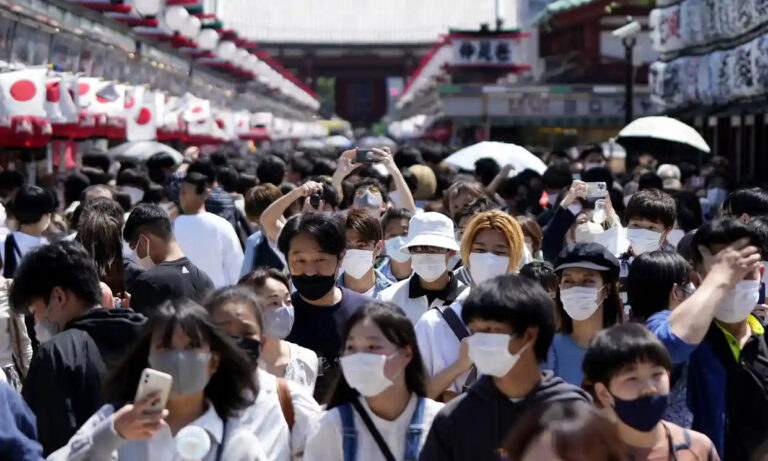
For more than two years, the people of Japan and South Korea have been united by their embrace of little white rectangles. While the US and countries in Europe debated the efficacy of masks at the start of the Covid-19 pandemic, Japanese and South Koreans quickly covered up, uncomplainingly and with few exceptions, reported by theguardian.com

Explanations for the wildly contrasting coronavirus death tolls in developed countries are many and varied, but in north-east Asia – more than anywhere else – mask-wearing has been at the forefront of the public health response to the virus.

According to a survey by Nippon Information, more than 50% of respondents wanted to continue using masks, with 22% saying they would wear theirs “all the time”. Only 13.5% said they wanted to cast them off altogether.

Misae Minami only removes hers during her morning runs, when there are few people around. “I always keep my mask on outdoors if there are people within 2 metres of me,” said Minami, a teacher in Osaka, adding that she had no plans to change her behaviour. “We still feel a lot of pressure to wear masks, and as a teacher I always have to tell my students to keep theirs on. I have to be a role model.”

Kim Ki-kyung, an office worker in Seoul, said he barely noticed his mask, given that it had been an essential accoutrement for so long. “Also, I don’t need to think about grooming or my facial expressions, and it helps protect against pollution such as fine dust. And you have to wear one when you go indoors, so it’s annoying to take it on and off.”

While Japan has a tiny anti-mask movement, peer pressure to stay covered up could be overwhelming, said Yuki Nakagome, a Tokyo-based writer who has started lowering his mask on warm days when no one else is around. “There is a certain pressure to keep wearing masks that may be peculiar to Japanese society, and I don’t see that pressure moving in the opposite direction,” he said. “No one wants to be the first person to remove their mask.”

But with cases stabilising in Japan and South Korea, are people now willing to live without their masks?

This month, South Korea, which has recorded 23,606 Covid-19 deaths in its population of 52 million, ended a requirement for masks to be worn outdoors – except for gatherings of 50 or more people – but kept the mandate for indoors and public transport.

Choi Il-woo, a Seoul office worker, said he had enjoyed removing his mask last week. “With summer approaching, it feels so nice to finally be able to take off my mask when I go for a walk,” he said. “But there are still a lot of people wearing masks on the streets, so I think we still have to be careful.”

Government officials cited a downward trend in daily cases of Covid-19 after its most recent wave, driven by the Omicron variant, peaked in mid-March.

In Japan, where just over 30,000 people have died from the virus, the imminent arrival of a long, humid summer and the increased risk of heatstroke prompted some experts and officials to call for an end to advice to wear face coverings outdoors.

“We recommend that people take off their masks outside as long as sufficient distance is maintained, especially when temperatures and humidity are high,” said Hirokazu Matsuno, the chief cabinet secretary.

Despite the wide acceptance of face coverings in Japan, some have voiced frustration that, more than two years into the pandemic, there are few signs of a return to a largely maskless existence, even as restrictions are eased or abandoned in other countries.

Akino Yoshihara, an interpreter living in Kyoto, said she would feel “much more comfortable” without a mask but would continue to wear hers to prevent the spread of the virus. “Even if the government encourages us to remove our masks, I’m sure many people would still wear them,” she said.

Toshio Nakagawa, president of the Japan Medical Association, suggested face coverings could remain the norm for the foreseeable future. “I believe that the day people can stop wearing masks will never come in Japan so long as the country continues seeing coronavirus cases,” he said.

Japan’s government recommends face coverings at schools and workplaces and in other settings with large numbers of people, and encourages them to avoid the “three Cs” – close-contact settings, closed spaces and crowded places.

The country has depended on high levels of public acceptance for mask-wearing and other anti-virus measures, since its government does not have the legal power to impose lockdowns or make face coverings mandatory.

In a country where mask-wearing is common during the flu and hay fever seasons, few complained about continuing the habit throughout the pandemic. And with summer approaching, there are few signs that people are ready to abandon their masks, however uncomfortable they may be at the hottest time of the year.
Social media reveals suspected gunman spent months planning racist attack at a Buffalo supermarket

0

Social media posts by the 18-year-old White man suspected of shooting and killing 10 people at a Buffalo supermarket Saturday reveal he had been planning his attack for months, reported by CNN.

The 10 people killed on Saturday ranged in age from 32 to 86, police said, among them a former police officer who tried to stop the gunman and a number of people doing their regular grocery shopping.

Sadness and frustration were still palpable among many who came to the supermarket to pay respects and show their support.

Alleged gunman Payton S. Gendron of Conklin, New York, posted that he selected a particular ZIP code in Buffalo because it had the highest percentage of a Black population close enough to where he lived. Police and other officials have described the mass shooting as a hate crime.

In his posts, initially written on the chat app Discord and shared on online forum 4chan, the suspect said he visited the Tops Friendly Markets three times on March 8 to survey the layout, as well as at the times of the day when there were the most customers. He planned his attack for mid-March, the posts say, but delayed it several times.

Of the 13 people shot, authorities say, 11 were Black. The alleged gunman was taken into custody in the immediate aftermath and is under suicide watch after pleading not guilty to a first-degree murder charge, according to authorities.

Putin sees no threat from NATO expansion, warns against military build-up

0

President Vladimir Putin said on Monday that there was no threat to Russia if Sweden and Finland joined NATO but cautioned that Moscow would respond if the U.S.-led alliance bolstered military infrastructure in the new Nordic members.

According to Reuters, Putin, Russia’s paramount leader since 1999, has repeatedly cited the post-Soviet enlargement of the NATO alliance eastwards toward Russia’s borders as a reason for the conflict of Ukraine.

The United States and NATO dispute that such assurances were given explicitly. Kyiv and its Western backers say the claim of persecution of Russian speakers has been exaggerated by Moscow into a pretext for an unprovoked war against a sovereign state.

The West says NATO – an alliance of 30 countries including former Warsaw Pact republics such as Poland and Hungary as well as nuclear powers such as the United States, Britain and France – is purely defensive.

But Putin, who has in recent months rattled Russia’s nuclear sabre at the West over Ukraine, made an unusually calm response to Finland and Sweden’s bids to join NATO, the biggest strategic consequence of Russia’s invasion of Ukraine to date.

“As to enlargement, Russia has no problem with these states – none. And so in this sense there is no immediate threat to Russia from an expansion (of NATO) to include these countries,” Putin told the leaders of a Russian-dominated military alliance of former Soviet states.

Putin, though, laced his newly found tranquillity on NATO with a warning.

“But the expansion of military infrastructure into this territory would certainly provoke our response,” Putin said.

“What that (response) will be – we will see what threats are created for us,” Putin told the leaders of the Collective Security Treaty Organization (CSTO), which includes Belarus, Armenia, Kazakhstan, Kyrgyzstan and Tajikistan.

The Kremlin chief’s remarkably serene response to one of Russia’s most sensitive geopolitical worries – the post-Soviet enlargement of NATO – contrasted to some tougher language from his foreign ministry and senior allies.

Before Putin spoke, Russian Deputy Foreign Minister Sergei Ryabkov said the West should have no illusions that Moscow would simply put up with the Nordic expansion of NATO. Those comments were still being played up on state television.

One of Putin’s closest allies, former President Dmitry Medvedev, said last month that Russia could deploy nuclear weapons and hypersonic missiles in the Russian exclave of Kaliningrad if Finland and Sweden joined NATO. 

Not a Single Car Was Sold in Shanghai as zero-Covid policy hammers activity

0

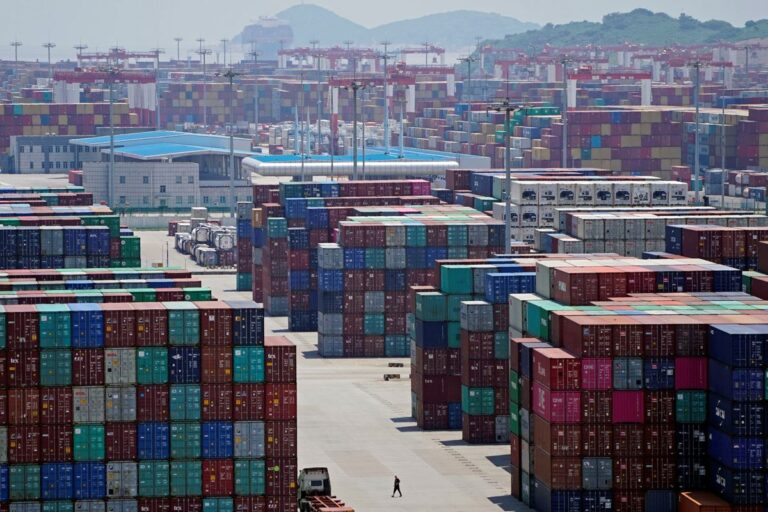
According to CNN, Shanghai posted zero car sales last month as China pressed ahead with its stringent pandemic control measures.

The biggest metropolitan area in China, home to 25 million residents, has been under a strict lockdown for seven weeks. Authorities have ordered people to stay at home and shut down many businesses, as they try to stamp out the city’s worst ever Covid outbreak.

The lockdowns in Shanghai and other cities have caused massive supply chain disruptions and hit consumer spending in the world’s second largest economy.

Tesla’s China sales plunged 98% in April from the previous month, according to data from the China Passenger Car Association. Its production at the Shanghai factory also slid 81%. It’s a stark turn for the US car maker after a strong start to the year in mainland China.

Toyota said last week that it had suspended operations of 14 production lines at eight plants in Japan, because of the parts shortage resulting from the lockdown in Shanghai.

Nissan Motor also reported a 46% drop in China sales from a year ago.

Although authorities announced Monday that they will allow “low levels of activity” in some areas, numerous residents told CNN that they had not been allowed to go outside their residential complexes.

The Covid restrictions had a severe impact on the city’s car market — almost all dealers were closed, and no sales were recorded at all, according to a statement from the Shanghai Automobile Sales Trade Association released on Monday.

Overall, China’s car sales slumped 46% in April to 1.2 million vehicles, compared with March. It was the worst April sales in a decade, the China Association of Automobile Manufacturers said last week.

China has imposed strict restrictions as it battles the largest Covid outbreak in more than two years. More than 30 cities in China are under full or partial lockdown, affecting up to 187 million people across the country, according to CNN’s calculations.

Shanghai is hugely important to China’s auto industry.The city ranks No. 1 in overall car sales — about 736,700 new vehicles were sold in Shanghai last year, the most among all Chinese cities, according to statistics from the country’s main insurance regulator.It’s also a major manufacturing hub, home to auto producers like Tesla (TSLA) and Volkswagen (VLKAF), as well as major parts suppliers Bosch and ZF Group.