Home Blog Page 36

3 Air Force cadets who refused Covid vaccine will not be commissioned

0

Three cadets at the U.S. Air Force Academy who have refused the Covid-19 vaccine will not be commissioned as military officers but will graduate with bachelor’s degrees, the academy said Saturday.

Academy spokesman Dean Miller said that a fourth cadet who had refused the vaccine until about a week ago, decided to be vaccinated and will graduate and become an Air Force officer, reported by AP.

The Naval Academy in Annapolis, Maryland, said Saturday that none of the Navy or Marine Corps seniors there are being prevented from commissioning due to vaccine refusals. That graduation is later this week, and the Air Force ceremony is Wednesday in Colorado. Ahead of that ceremony, the U.S. Air Force Academy Board conducted its standard review of whether this year’s class had met all graduation requirements on Friday.

Defense Secretary Lloyd Austin, who is the scheduled speaker at the Air Force graduation, last year made the Covid-19 vaccinations mandatory for service members, including those at the military academies, saying the vaccine is critical to maintaining military readiness and the health of the force.

Military leaders have argued that troops for decades have been required to get as many as 17 vaccines in order to maintain the health of the force, particularly those deploying overseas. Students arriving at the military academies get a regimen of shots on their first day — such as measles, mumps and rubella — if they aren’t already vaccinated. And they routinely get flu shots in the fall.

In a statement, Miller said that while the three will get a degree “they will not be commissioned into the United States Air Force as long as they remain unvaccinated.” He added that a decision on whether to require the three to reimburse the United States for education costs in lieu of service will be made by the secretary of the Air Force.

As of Saturday, the Air Force is the only military academy, so far, where cadets are not being commissioned due to vaccine refusal. All of the more than 1,000 Army cadets at the U.S. Military Academy at West Point, New York, graduated and were commissioned as officers earlier in the day and all were vaccinated.

[How about here] Georgia’s 7 peach farms – Let’s go picking peaches!

0

05/20/2022

Peach Farm (Photo = ajc)

Georgia’s intense heat is just beginning. What are the best peach farms in Peach State?

Peach season is officially underway in Georgia, with temperatures exceeding 90 degrees and the skin-chilling summer sun.

Juicy and sweet Georgia peaches! Peaches are said to be the only fruit that only heavenly people ate, and it could spread the imagination that the tree of knowledge in the Bible may not be an apple but a peach.

There are direct markets for agricultural products related to peaches all over Georgia: grocery stores, and snack shops on the roadside.

Here are 7 Georgia peach farms worth visiting this summer.

If you type the name in blue below, you will be connected to each website. Details such as address are also provided.

<By Eugene Lee>

Berry Good Farms — Tiffton, Georgia

Want to stretch your legs and unwind while driving south from I-75 to Florida? Consider adding Berry Good Farms to your road trip itinerary. In addition to blackberries, blueberries and strawberries, Berry Good offers ripe peaches suitable for picking. Berry Good is a humble, family-owned business, so call ahead to secure a U-pick spot where you can pick your own peaches.

Dicky Farm – Musella, Georgia

Picturesque Musella’s Dickey Farms brings the Southern proverb to life. The open-air market is lined with rocking chairs and stocked with all the peach products you need. Enjoy fresh peach or strawberry soft serve (strawberry donuts during strawberry season) while watching the assembly lines slowly rotate around the shop. Or head to the CF Hayes and Sons General Store across the street to feel nostalgic and pose for a photo. The farm also has a U-pick option.

Jaemor Farm — Alto and Commerce, Georgia

Weddings, family reunions, and the itching to embrace a more rustic atmosphere have made summer a popular season for a stay in northeastern Georgia. Jaemor Farm is located in Alto, close to Dahlonega and Toccoa. Take Route 23 up to Tennessee or head to the Blue Ridge Parkway, just above the freeway. In addition to the well stocked market, Jaemore also offers U-pick strawberries.

Lane South Orchard – Fort Valley, Georgia

Thanks to its massive size (13,000 acres of peaches and pecans), Lane Southern Orchards feels more like a museum or roadside landmark than a Georgia farm. The main attraction is the extensive gift shop, complete with a cafeteria-style restaurant offering Southern favorites. Watch them diligently hand-pump peaches onto a thumping conveyor belt through the huge window.

Pearson Farm — Fort Valley, Georgia

Even if people have never ventured to Middle Georgia, they will know the name Pearson Farms when they buy peaches from the Atlanta farmers market. Farm peaches are probably the best in Georgia. Pearson Farm has been growing and selling peaches and pecans since 1885, and there’s no better excuse than peach season to plan a day trip to the Fort Valley. The family-owned operation includes an extensive range of farm shops and fresh peach desserts such as Peach Oven, Peach Ice Cream and Peach Pound Cake. The farm also ships peaches throughout the continental United States.

Southern Belle Farm – McDonough, Georgia

Located in McDonough, Southern Belle Farm is the closest U-pick peach farm to Metro Atlanta. It is located 30 miles south of the city. The family-owned institution spans 330 acres and offers year-round attractions. During the summer, Southern Belle Farm also sells U-pick blueberries, blackberries and zinnias. People can purchase an annual U-pick pass. So come back in the fall for a pumpkin patch, a corn maze, and a pig race.

Taylor Orchards – Reynolds, Georgia

Taylor Orchards is located in Reynolds, just off Route 96 from Jeffersonville west to Columbus. The family-owned farm boasts over 3,600 acres and grows over 30 varieties of peaches. The main warm weather on the farm is the U-pick strawberry patch. Taylor Orchards is also adjacent to Silver Dollar Motorsports Park in case people are looking for a memorable Friday night in Middle Georgia.

<by Eugene Lee>

Wisconsin man made Guinness World Record with daily Big Macs for 50 years

0

A man from Wisconsin marked the 50th anniversary of chomping down Big Macs almost every day by landing himself a well-earned spot in the Guinness World Records

Big Mac lover Donald Gorske, 68, who hails from Fond du Lac, Wis., made a routine stop at his local McDonald’s on Tuesday where he celebrated five decades of daily burger-loving fun.

It seemed only fitting for Gorske to have a Big Mac in the same McDonald’s he had his first bite of the iconic burger in 1972.

“In that moment I said ‘I’m going to probably eat these for the rest of my life,’” he told Guinness World Records.

Gorske smashed the record for the most Big Mac burgers eaten in a lifetime in 1999 after wolfing down a whopping 15,490. Guinness last year updated the total to 32,340.

In 2004, Gorske was featured in the “Super Size Me” documentary for his burger-eating efforts. In the docu-film, he said he always orders a cup of Coca-Cola with his Big Mac, and rarely eats the fries.

His portrait is even hung on the wall inside the restaurant he’s been visiting religiously.

“I’ll probably be eating Big Macs every day for the rest of my life,” Gorske told the outlet.

Throughout his half-a-century-long love affair with Bic Macs, Gorske missed only eight days. To make up for lost time, he sometimes eats two of the burgers a day.

“When I like something, I stick with it all the time,” he added.

Since then, he’s managed double the record and then some.

As proof of his unprecedented achievement, Gorske keeps each individual burger carton and receipt each time he locks lips with the buns.

Donald Gorske claims to have eaten over 32,000 Big Macs over his lifetime.
Gorske keeps individual cartons for each burger he eats.

To make the moment as special as can be, Gorske’s local McDonald’s displayed a sign outside the restaurant, which read, “Congrats Don on 50 years of Macs.”

Gorske had his first Big Mac in 1972.

“I’ll probably be eating Big Macs every day for the rest of my life.”

Donald Gorske

Going a step further, the burger fiend boasts a glass case in which he proudly displays McDonald’s burger cartons from various decades.

The Post has reached out to McDonald’s for comment.

Gorske in front of his local McDonald's, which hangs his portrait in the restaurant.
Gorske in front of his local McDonald’s, which hangs his portrait in the restaurant.

War fuels surging prices in Europe

0

Edoardo Ronzoni inspects a construction site near Milan that he shut down in March as costs for materials skyrocketed. He can’t complete a half-built roundabout at an intersection known for fender-benders because asphalt, cast-iron pipes and concrete are too expensive — prices exacerbated by Russia’s war in Ukraine.

According to AP, public works projects in Italy are grinding to a halt just as the European Union is injecting 108 billion euros ($114 billion) in pandemic recovery money meant to launch a construction frenzy.

Back in Milan, the roundabout is just one of half a dozen non-EU-funded sites Ronzoni has had to close in recent months. He finds himself unable to deliver the work at the contracted prices.

High costs mean companies are not bidding to take on public works, including a bridge in Rome that was to be the first project built with EU recovery funds. With bidding stalled, the money earmarked for infrastructure — worth nearly half of the 220 billion euros from the EU — is at risk, along with the jobs it would bring, according to ANCE National Association of Construction Workers.

The government has announced 3 billion euros to help cover increased prices, but builders it’s not sufficient, with costs up an average of 40%, but sometimes much higher. Iron prices, for example, are up 170%, Ronzoni said.

“It’s exponential,″ he said.

Ronzoni laments that his company has already lost its three busiest months and expects the worst is ahead: “We fear we won’t be able to work this year. We are closing all of our sites.”

The war has accelerated inflation across Europe and the world, with prices for energy, materials and food surging at rates not seen for decades. It’s causing sticker shock at the grocery store, gas pumps, electricity bills and construction sites.ADVERT

Soaring oil and gas prices are the key driver of inflation in Europe, which is heavily reliant on Russian energy to generate electricity and power industry. Inflation is expected to hit nearly 7% this year in the 27-nation EU and is contributing to slowing growth forecasts.

Fishmongers and farmers are being forced to charge prices for their catch and crops that even they see as astronomical. High fuel prices threaten to paralyze ground transport of goods. Bread prices are soaring from Poland to Belgium. Protests over price hikes have erupted in places like Bulgaria. While governments have responded with tax cuts and other aid, they face limits in easing the impact of volatile energy markets.

Even the thrifty, with backyard hens, are wondering if the price of feed is worth the eggs they yield. Alina Czernik, a shop assistant in Warsaw, does the math, as she sees prices of grain for her hen go up 150%, to 200 zlotys ($45) per 100 kilograms (220 pounds).

It is spreading a sense of futility, especially for those with low incomes.

“I’ve been a positive person, but for now, I can’t see the light at the end of the tunnel,” said Eva Fuchsova, a mother of three who lives in the town of Touskov in western Czech Republic.

“I have to tighten my belt. I buy fruits and vegetables so my kids have everything, but I don’t touch it,” she said.

Economists are calling it a perfect storm, striking as countries unleashed spending to spur an economic rebound from the COVID-19 pandemic. Surging customer demand overwhelmed factories, ports and freight yards, with resulting shortages driving up prices.

Add to that: The war in Ukraine has blocked exports of raw materials like steel and minerals that kept western Europe humming, as well as commodities like grains and seed oil, accentuating global shortages.

Inflation is running especially hot in central and Eastern European countries nearest the battlefields of Ukraine. Prices in April rose 14.2% in the Czech Republic, 12.3% in Poland and 10.8% in Greece. They’re an eye-popping 61% in Turkey, which saw its currency lose 44% of its value against the dollar last year.

Shop workers from Warsaw to Istanbul say customers are cutting back, buying lower-priced items, giving up on niceties like fresh-cut flowers and items they can delay, like new clothes.

In the Turkish capital, butcher Bayram Koza said he has seen a 20% drop in sales after prices nearly doubled, largely due to the cost of feed. That is making livestock breeding unprofitable, and many farmers are selling and moving to the city, he said.

“Even in (the affluent district of) Cankyaya, people are no longer buying according to their needs, but according to what they can afford. Those who bought two kilos of ground beef are now buying a kilo at the most,” he said.

On the Greek island of Rhodes, fish restaurant owner Paris Parasos gets up at dawn to go out on fishing trips to keep costs down. But he has still had to raise prices at his restaurant in the island’s main town as cooking oil prices quadrupled. Plus, cooking gas and electricity bills are three times higher.

“I could lower the quality and use the oil more, but I refuse to do it. We want customers to return and expect the same quality,” Parasos said.

In Poland, bread prices are up 30%, sending shoppers to discount outlets. Bakers in Belgium are laying off workers, as prices for a loaf rise by 30 cents, to 2.70 euros ($2.85).

“I know bakers who work 13 or 14 hours a day to get out of this and honor their loans,” Albert Denoncin, president of the French-speaking bakery federation, told La Premiere radio. “We can do it for a while, but when I hear from the World Bank management that this will last until 2024, we are not going to make it.”

In Spain, truckers have gotten some relief on diesel prices thanks to government emergency measures, including a small rebate and permission to pass along higher fuel costs to customers.

Still, the burden is high. Óscar Baños, who drives his own cargo trailer out of the central Spanish town of Palencia, said tires have risen from 400 to 500 euros, a new truck cab is up from 100,000 to 120,000 euros, and a liter of diesel has risen from 1.20 to 1.90 euros in the past year. That’s the equivalent of a gallon of gasoline rising from $4.80 to $7.60.

“There is a lot of uncertainty, not just in our sector but across the board,” Baños said.

Europe’s auto market also is facing price hikes as factory shutdowns in Ukraine, sanctions on Russia and an existing global semiconductor shortage crimp supplies of components needed to make cars.

As a result, average new car prices in Europe are expected to rise $500 to $2,000 this year, according to Nishant Mishra, associate director of investment research at Acuity Knowledge Partners.

South Korean chip plant a model for deeper ties to Asia

0

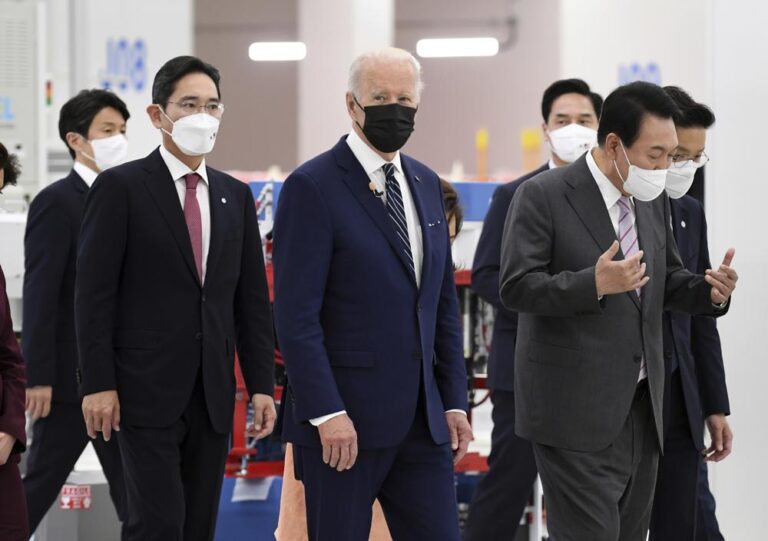
According to AP, President Joe Biden opened a trip to Asia on Friday by touring a South Korean computer chip factory that will be the model for another plant in Texas, offering it as a way to deepen ties with the Indo Pacific and fuel technological innovation and foster vibrant democracies.

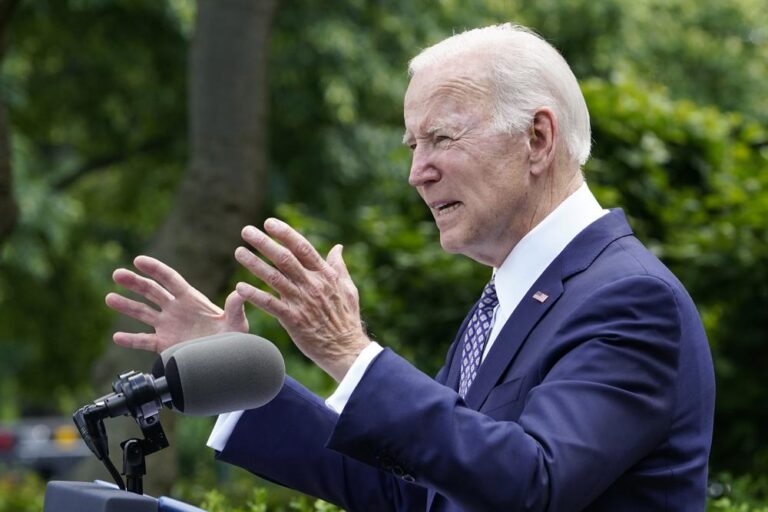
“So much of the future of the world is going to be written here, in the Indo Pacific, over the next several decades,” Biden said. “This is the moment, in my view, to invest in one another to deepen our business ties, to bring our people even closer together.”

Biden’s message was pitched toward the promise of a better tomorrow, yet was also aimed at U.S. voters amid political challenges at home, such as inflation driven higher by the chip shortage, as he tries to show that his administration is delivering on economic growth.

The Democrat’s first visit to Asia as president came as polling released Friday by The Associated Press-NORC Center for Public Affairs Research found Biden’s U.S. approval rating at 39%, the lowest point of his presidency. The survey also found deepening pessimism about the economy and the state of the United States — especially among Democrats.

Global computer chip sales totaled $151.7 billion during the first three months of this year, a 23% jump from the same period in 2021, according to the Semiconductor Industry Association.

More than 75% of global chip production comes from Asia. That’s a possible vulnerability the U.S. hopes to protect against through more domestic production and $52 billion worth of government investment in the sector through a bill being negotiated in Congress.

The risk of Chinese aggression against Taiwan could possibly cut off the flow of high-end computer chips that are needed in the U.S. for military gear as well as consumer goods. Similarly, the hermetic North Korea has been test-firing ballistic missiles amid a coronavirus outbreak, a possible risk to South Korea’s manufacturing sector should the brinksmanship escalate.

In terms of chip production, China leads the global pack with a 24% share, followed by Taiwan (21%), South Korea (19%) and Japan (13%). Only 10% of chips are made in the U.S., according to the Semiconductor Industry Association.

About 2 in 10 U.S. adults say the country is headed in the right direction or described the economy good, down from about 3 in 10 in April. Among Democrats, just 33% say the country is on the right track, down from 49% last month.

Samsung, the chip plant’s owner, last November announced plans to open a $17 billion semiconductor factory in Texas. A semiconductor shortage last year hurt the availability of autos, kitchen appliances and other goods, causing higher inflation worldwide and crippling Biden’s public approval among U.S. voters. The president noted that the Texas plant would add 3,000 high-tech jobs and the construction would include union labor.

“These little chips,” Biden said in remarks after he toured the plant, “are the key to propelling us into the next era of humanity’s technological development.”

Biden was seeking to frame business collaboration and foreign investment in the U.S. as part of his broader economic goals, and also good for him domestically. He was to appear Sunday in Seoul, South Korea, with the chairman of Hyundai Motor Group on Hyundai’s decision to invest in a new electric vehicle and battery manufacturing facility in Savannah, Georgia.

Throughout the five-day visit to South Korea and Japan, Biden will grapple with a multitude of foreign policy issues as he tries to explain their relevance to the American public. In his remarks Friday, Biden did not mention China, which has emerged as a prime competitor with the U.S., yet he stressed the value of alliances that currently exclude that country.

Greeting Biden at the plant was South Korea’s new president, Yoon Suk Yeol, and Samsung Electronics Vice Chairman Lee Jae-yong. Yoon is a political newcomer who became president, his first elected office, just this month. He campaigned on taking a tougher stance against North Korea and strengthening the 70-year alliance with the U.S.

Before Biden spoke, Yoon said in remarks that he hoped the U.S.-South Korea partnership evolves into an “economic and security alliance based on cooperation in advanced technology and supply chains.”

The chip plant showed the unique nature of manufacturing as visitors were required to don white laboratory coats and blue booties to help keep the facility clean. Biden and Yoon, who did not wear protective clothing, saw a demonstration of the machinery.

At one point during his tour, Biden received an in-depth explanation of a KLA inspection system on the Samsung plant floor. The California-based company is a major supplier to Samsung’s semiconductor operations. After a worker named Peter explained the ins and outs of the machinery, Biden quipped, “Don’t forget to vote,” when he returns home to the United States.

In closing, Biden slipped and thanked “Moon,” a reference South Korea’s immediate past president, Moon Jae-in, who held the office for several years before Yoon’s recent election. Biden quickly corrected the slip-up.

“President Moon, Yoon, thank you for everything you’ve done so far,” Biden said.

Part of the computer chip shortage is the result of strong demand as much of the world emerged from the coronavirus pandemic. But coronavirus outbreaks and other challenges also caused the closure of semiconductor plants. U.S. government officials have estimated that chip production will not be at the levels they would like until early 2023.

Samsung announced the plant in Taylor, Texas in November 2021. It hopes to begin operations in the second half of 2024. The South Korean electronics giant chose the site based on a number of factors, including government incentives and the “readiness and stability” of local infrastructure.

The White House said in a fact sheet issued Friday that semiconductor companies have announced nearly $80 billion in U.S. investments through 2025. That sum includes $20 billion for Intel’s plant outside Columbus, Ohio, up to $30 billion by Texas Instruments, a $1 billion expansion by Wolfspeed in North Carolina and investments by Global Foundries and SK Group.

N. Korea hails ‘good results’ on COVID as fever cases pass 2 million

0

According to Reuters, North Korea said on Friday it was achieving “good results” in its fight against its first confirmed COVID-19 outbreak, as the number of people with fever symptoms rose past 2 million.

A wave of COVID infections, which North Korea first confirmed last week, has fanned worry about a lack of medical resources and vaccines in the isolated country heavily sanctioned for its nuclear weapons programme.

North Korea has not responded to offers from its old enemies, South Korea and the United States, to send help, a South Korean official said.

South Korea and the United States have both offered to help North Korea fight the virus, including sending aid, but have not had a response, South Korea’s deputy national security adviser said.

But the allies, who North Korea denounces as its main enemies as it justifies its development of nuclear weapons and missiles, would likely be North Korea’s last resort in seeking help, said South Korean legislators who were briefed by its main security agency on Thursday.

South Korea’s foreign minister, Park Jin, told parliament Yoon and Biden would discuss help for North Korea when they meet on Saturday.

“South Korea and the United States are continuing consultations on providing humanitarian assistance, especially over COVID-19, to the North,” Park said.

South Korea’s new president, Yoon Suk-yeol, and U.S. President Joe Biden, due to arrive in South Korea on a visit later on Friday, are expected to discuss help.

North Korea reported 263,370 more people with fever symptoms, and two more deaths, taking its total fever caseload since late April to 2.24 million as of Thursday evening, including 65 deaths, according to its KCNA state news agency.

North Korea lacks COVID testing capacity and it has not specified how many of those people with fever have been confirmed to have contracted COVID.

Despite the caseload, the North has said farming continues and factories are working. It is also planning a state funeral for a retired general.

“Even under the maximum emergency epidemic prevention situation, normal production is kept at key industrial sectors and large-scale construction projects are propelled without let-up,” KCNA reported.

“Good results are reported steadily in the ongoing anti-epidemic war,” it said.

The U.N. human rights agency has warned of the “devastating” consequences of COVID for North Korea’s 25 million people, while World Health Organization officials worry an unchecked spread could lead to the emergence of deadlier new variants.

But North Korea said on Wednesday its outbreak was taking a “favourable turn”.

Canada to ban Huawei, ZTE 5G equipment

0

According to CNN, Canada on Thursday said it plans to ban the use of China’s Huawei Technologies and ZTE 5G gear to protect national security, joining the rest of the so-called Five Eyes intelligence-sharing network.

“We intend to exclude Huawei and ZTE from our 5G networks,” Industry Minister Francois-Philippe Champagne told reporters in Ottawa. “Providers who already have this equipment installed will be required to cease its use and remove it under the plans we’re announcing today.”

Alykhan Velshi, vice president of corporate affairs for Huawei in Canada, said in an interview with the Canadian Broadcasting Corp that the company is still waiting to hear “what sort of national security threats they think Huawei poses.”

Velshi said that Huawei still has 1,500 employees in Canada, mostly in research and development, and sold products like mobile phones, and would continue to do so.

In 2020, Bell Canada and rival Telus Corp — two of the biggest wireless providers — teamed up with Sweden’s Ericsson and Finland’s Nokia Oyj to build fifth-generation (5G) telecoms networks, ditching Huawei for the project despite using Huawei 4G gear.

In addition to the ban, Public Safety Minister Marco Mendicino said Canada would draft new legislation to protect critical financial, telecommunications, energy and transport infrastructure from cyber threats.
Champagne added that companies will be required to remove their 5G gear by June, 2024, would not be reimbursed. Companies using their 4G equipment must be removed by the end of 2027.

The decision — widely expected — had been delayed amid diplomatic tensions with China. The rest of the Five Eyes network — which consists of Canada, the United States, Britain, Australia and New Zealand — has already banned the equipment.

In September 2018, Canada first announced it would review the possible threats to national security in adopting Huawei equipment.

Then in December of the same year, Huawei Chief Financial Officer Meng Wanzhou was arrested in Canada on a US warrant, creating a long-running dispute with China that finally ended last September with Meng’s release.

After Meng’s arrest, two Canadians were arrested by Beijing and accused of espionage. The two men were released the same day as Meng.

Now diplomatic tensions between China and Canada have eased somewhat. On Wednesday, China removed a three-year restriction on imports of Canadian canola seed, reversing what was considered a retaliatory move for Meng’s arrest.

Thursday’s decision comes after telecom companies in Canada already opted to use other companies’ 5G hardware. ZTE did not immediately responded to requests for comment.

Alykhan Velshi, vice president of corporate affairs for Huawei in Canada, said in an interview with the Canadian Broadcasting Corp that the company is still waiting to hear “what sort of national security threats they think Huawei poses.”

Velshi said that Huawei still has 1,500 employees in Canada, mostly in research and development, and sold products like mobile phones, and would continue to do so.

In 2020, Bell Canada and rival Telus Corp — two of the biggest wireless providers — teamed up with Sweden’s Ericsson and Finland’s Nokia Oyj to build fifth-generation (5G) telecoms networks, ditching Huawei for the project despite using Huawei 4G gear.

In addition to the ban, Public Safety Minister Marco Mendicino said Canada would draft new legislation to protect critical financial, telecommunications, energy and transport infrastructure from cyber threats.

A Russian businessman pay all 62,000 of McDonald’s employees in the country following the fast-food chain’s exit

0

McDonald’s has sold its business in Russia to a local licensee who already runs 25 of the fast-food chain’s restaurants in Siberia, it announced Thursday.

Russian businessman Alexander Govor has agreed to operate all of the restaurants owned by McDonald’s under a new brand.

The burger chain grew its business to nearly 850 locations in Russia after it opened its first outlet in the country in Moscow’s Pushkin Square in 1990. Before its pullout, McDonald’s owned around 84% of its restaurants in the country.

Govor ran his licensed McDonald’s branches through a company he owns called GiD LLC, which is described as being part of the restaurant industry. 

According to Reuters, he is also listed as a co-owner of a rental company called Siberian Distribution Centre and the Anzherkiy Oil refinery. Govor also has stakes in a small forestry company and a fishing and hunting company, the outlet reported, citing the Interfax news agency’s Spark database.

Part of the deal with Govor entails him hiring and continuing to pay all of the employees working for McDonald’s in Russia for the next two years, McDonald’s said. No details of the rebranding have been revealed.

Govor has also agreed to pay the salaries of all McDonald’s corporate staff in Russia until closing and fund existing liabilities to suppliers, landlords, and utility companies, its Thursday statement read.

The fast-food company had around 62,000 employees in Russia when it announced earlier this week that it would exit the country in solidarity with Western sanctions and in response to the “humanitarian crisis in Ukraine.”

Govor and McDonald’s didn’t disclose any of the deal’s financials. The company said on Monday that it would take a non-cash charge of about $1.2 billion to $1.4 billion as a result of its exit from Russia.

North Korea fights COVID with few tools

0

On a recent nighttime visit to a drugstore, a double-masked Kim Jong Un lamented the slow delivery of medicine. Separately, the North Korean leader’s lieutenants have quarantined hundreds of thousands of suspected COVID-19 patients and urged people with mild symptoms to take willow leaf or honeysuckle tea, reported by AP.

Despite what the North’s propaganda is describing as an all-out effort, the fear is palpable among citizens, according to defectors in South Korea with contacts in the North, and some outside observers worry the outbreak may get much worse, with much of an impoverished, unvaccinated population left without enough hospital care and struggling to afford even simple medicine.

“North Koreans know so many people around the world have died because of COVID-19, so they have fear that some of them could die, too,” said Kang Mi-jin, a North Korean defector, citing her phone calls with contacts in the northern North Korean city of Hyesan. She said people who can afford it are buying traditional medicine to deal with their anxieties.

Despite the outbreak, North Korea hasn’t publicly responded to South Korean and U.S. offers of medical aid. World Health Organization Director-General Tedros Adhanom Ghebreyesus said Tuesday that the world body “is deeply concerned at the risk of further spread” in North Korea and the lack of information about the outbreak.

Choi Jung Hun, a former North Korean doctor who resettled in South Korea, suspects North Korea is using its pandemic response as a tool to promote Kim’s image as a leader who cares about the public and to solidify internal unity. He says the country’s understated fatalities could also be exploited as a propaganda tool.

“One day, they’ll say they’ve contained COVID-19. By comparing its death toll with that of the U.S. and South Korea, they’ll say they’ve done a really good job and their anti-epidemic system is the world’s best,” said Choi, now a researcher at a Korea University-affiliated institute in South Korea.

The country’s pandemic response appears largely focused on isolating suspected patients. That may be all it can really do, as it lacks vaccines, antiviral pills, intensive care units and other medical assets that ensured millions of sick people in other countries survived.

North Korean health authorities said Thursday that a fast-spreading fever has killed 63 people and sickened about 2 million others since late April, while about 740,000 remain quarantined. Earlier this week, North Korea said its total COVID-19 caseload stood at 168 despite rising fever cases. Many foreign experts doubt the figures and believe the scale of the outbreak is being underreported to prevent public unrest that could hurt Kim’s leadership.

State media said a million public workers were mobilized to identify suspected patients. Kim Jong Un also ordered army medics deployed to support the delivery of medicines to pharmacies, just before he visited drugstores in Pyongyang at dawn Sunday.

North Korea also uses state media outlets — newspapers, state TV and radio — to offer tips on how to deal with the virus to citizens, most of whom have no access to the internet and foreign news.

“It is crucial that we find every person with fever symptoms so that they can be isolated and treated, to fundamentally block the spaces where the infectious disease could spread,” Ryu Yong Chol, an official at Pyongyang’s anti-virus headquarters, said on state TV Wednesday.

State TV aired infomercials showing animated characters advising people to see doctors if they have breathing problems, spit up blood or faint. They also explain what medicines patients can take, including home remedies such as honey tea. The country’s main newspaper, Rodong Sinmun, advised people with mild symptoms to brew 4 to 5 grams of willow or honeysuckle leaves in hot water and drink that three times a day.

“Their guidelines don’t make a sense at all. It’s like the government is asking people to contact doctors only if they have breathing difficulties, which means just before they die,” said former North Korean agriculture official Cho Chung Hui, who fled to South Korea in 2011. “My heart aches when I think about my brother and sister in North Korea and their suffering.”

Kang, who runs a company analyzing the North Korean economy, said her contacts in Hyesan told her that North Korean residents are being asked to thoroughly read Rodong Sinmun’s reports on how the country is working to stem the outbreak.

Since May 12, North Korea has banned travel between regions, but it hasn’t attempted to impose more severe lockdowns in imitation of China. North Korea’s economy is fragile due to pandemic border closures and decades of mismanagement, so the country has encouraged farming, construction and other industrial activities be accelerated. Kang said people in Hyesan still go to work.

The office of the U.N. High Commissioner for Human Rights expressed worry this week about the consequences of North Korea’s quarantine measures, saying isolation and traveling restrictions will have dire consequences for people already struggling to meet their basic needs, including getting enough food to eat.

“Children, lactating mothers, older people, the homeless and those living in more isolated rural and border areas are especially vulnerable,” the office said in a statement.

Defectors in South Korea say they worry about their loved ones in North Korea. They also suspect COVID-19 had already spread to North Korea even before its formal admission of the outbreak.

“My father and sibling are still in North Korea and I’m worrying about them a lot because they weren’t inoculated and there aren’t many medicines there,” said Kang Na-ra, who fled to South Korea in late 2014. She said a sibling told her during recent phone calls that their grandmother died of pneumonia, which she believes was caused by COVID-19, last September.

Defector Choi Song-juk said that when her farmer sister in North Korea last called her in February, she said that her daughter and many neighbors had been sick with coronavirus-like symptoms such as a high fever, coughing and sore throat. Choi said her sister pays brokers to arrange phone calls, but she hasn’t called recently, even though it’s around the time of year when she runs short of food and needs money transfers via a network of brokers. Choi said the disconnection is likely related to anti-virus restrictions on movements.

“I feel so sad. I must connect with her again because she must be without food and picking wild greens,” said Choi, who left North Korea in 2015.

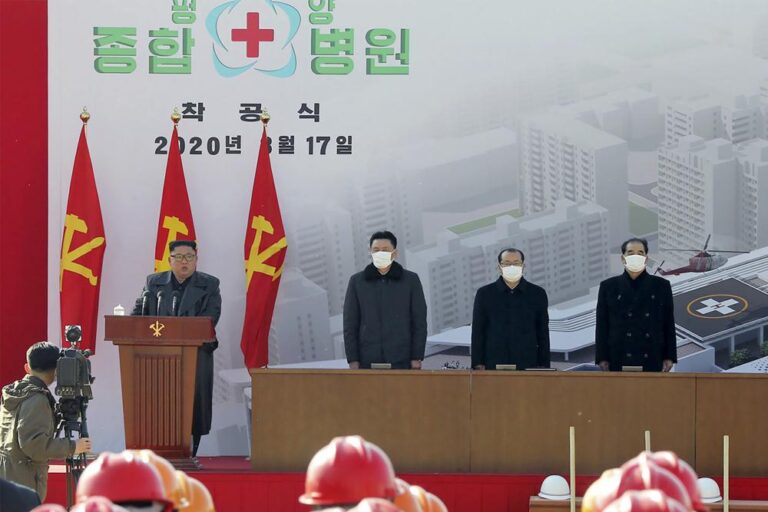
In recent years, Kim Jong Un has built some modern hospitals and improved medical systems, but critics say it’s mostly for the country’s ruling elite and that the free socialist medical service is in shambles. Recent defectors say there are lots of domestically produced drugs at markets now but they have quality issues so people prefer South Korean, Chinese and Russian medicines. But foreign medications are typically expensive, so poor people, who are a majority of the North’s population, cannot afford them.

“If you are sick in North Korea, we often say you will die,” Choi said.

Biden has an eye on China as he heads to S.Korea, Japan

0

President Joe Biden departs on a six-day trip to South Korea and Japan aiming to build rapport with the two nations’ leaders while also sending an unmistakable message to China: Russia’s faltering invasion of Ukraine should give Beijing pause about its own saber-rattling in the Pacific.

Biden departs Thursday and is set to meet newly elected South Korean President Yoon Suk Yeol and Japanese Prime Minister Fumio Kishida, reported by AP. Their talks will touch on trade, increasing resilience in the global supply chain, growing concerns about North Korea’s nuclear program and the explosive spread of COVID-19 in that country.

While in Japan, Biden will also meet with fellow leaders of the Indo-Pacific strategic alliance known as the Quad, a group that includes Australia, India and Japan.

In terms of economic power, the U.S. slightly lags China in the Pacific, according to the Lowy Institute, an Australian think tank. But the institute’s analysis shows the possibility that a trade pact could magnify the combined power of the U.S. and its allies relative to China. Biden’s challenge is that IPEF would not necessarily cut tariff rates or give allied signatories greater access to U.S. markets, something Asian countries seek.

Biden and his fellow leaders also have their own national interests and differences over what it means to strengthen supply chains that have been rattled by the coronavirus pandemic.

The Democratic president says the U.S. must increase computer chip production on American soil. The shortage has fueled inflation by delaying production of autos, life-saving medical devices, smartphones, video game consoles, laptops and other modern conveniences. Yet allies in Asia are talking about the need to expand their capacity for making semiconductors — a valuable export — in their own countries.

The U.S. under Biden has forged a united front with democratic allies that has combined their economic heft to make Russia pay a price for its invasion of Ukraine. That alliance includes South Korea and Japan. But even as Biden is to be feted by Yoon at a state dinner and hold intimate conversations with Kishida, the U.S. president knows those relationships need to be deepened if they’re to serve as a counterweight to China’s ambitions.

“We think this trip is going to put on full display President Biden’s Indo-Pacific strategy and then it will show in living color, the United States can at once lead the free world in responding to Russia’s war in Ukraine, and that at the same time chart a course for effective, principled American leadership and engagement in a region that will define much of the future of the 21st century,” White House national security adviser Jake Sullivan said.

The war in eastern Europe has created a sense of urgency about China among major U.S. allies in the Pacific. Many have come to see the moment as their own existential crisis — one in which it’s critical to show China it should not try to seize contested territory through military action.

Biden’s overseas travel comes as he faces strong domestic headwinds: an infant formula shortage, budget-busting inflation, a rising number of COVID-19 infections, and increasing impatience among a Democratic base bracing for a U.S. Supreme Court ruling that is likely to result in a roll back of abortion rights.

The conundrums Biden faces in Asia are no less daunting.

China’s military assertiveness has grown over the course of Biden’s presidency, with its provocative actions frequently putting the region on edge.

Last month, China held military drills around Taiwan after a group of U.S. lawmakers arrived for talks on the self-governed island. Late last year China stepped up sorties into Taiwan’s air space. Taiwan considers itself a sovereign state, but Beijing views Taiwan as a breakaway province and has not ruled out the use of force to achieve unification.

Japan has reported frequent intrusions by China’s military vessels into Japanese territorial waters around the Senkaku Islands in the East China Sea. The uninhabited islets are controlled by Japan but claimed by China, which calls them Diaoyu.

Chinese Foreign Minister Wang Yi on Wednesday criticized what he called negative moves by Washington and Tokyo against Beijing during a video call with Japanese Foreign Minister Yoshimasa Hayashi.

“What arouses attention and vigilance is the fact that, even before the American leader has set out for the meeting, the so-called joint Japan-U.S. anti-China rhetoric is already kicking up dust,” Wang said, according to China’s Foreign Ministry.

Meanwhile, South Korea could tilt closer to the U.S. under Yoon, who took office last week. The new South Korean president has criticized his predecessor as “subservient” to China by seeking to balance the relationships with Washington and Beijing. To neutralize North Korea’s nuclear threats, Yoon has pledged to seek a stronger U.S. security commitment.

The Biden administration has warned China against assisting Russia in its war with Ukraine. In March, the U.S. informed Asian and European allies that American intelligence determined that China had signaled to Russia a willingness to provide military support and financial backing to reduce the blow of severe sanctions imposed by the U.S. and its allies.

Biden administration officials say that the Russian invasion has been a clarifying moment for some of the bigger powers in Asia as financial sanctions and export bans have been put in place to check Russia.

U.S. Ambassador Rahm Emanuel, Biden’s top envoy to Japan, said the Japanese have stood out by rallying eight of 10 members of Association of Southeast Nations to back a U.N. vote against the Russian invasion.

“Japan has been a pacesetter that has picked up and set the pace for South Korea, Singapore, Australia, New Zealand and others here in the Indo Pacific area,” Emanuel said of Tokyo’s support of Ukraine following the Russian invasion.

Biden, who is making his first presidential trip to Asia, met Kishida briefly on the sidelines of a U.N. climate conference last year shortly after the Japanese prime minister took office. He has yet to meet with Yoon face-to-face. The South Korean leader, a former prosecutor who came to office without political or foreign policy experience, was elected in a closely fought election.

Biden arrives in the midst of an unfolding crisis in North Korea, where a mass COVID-19 outbreak is spreading through its unvaccinated population. North Korea acknowledged domestic COVID-19 infections for the first time last week, ending a widely doubted claim it had been virus-free.

In recent months, North Korea has test-launched a spate of missiles in what experts see as an attempt to modernize its weapons and pressure its rivals to accept the country as a nuclear state and relax their sanctions.

Sullivan said U.S. intelligence officials have determined there’s a “genuine possibility” that North Korea will conduct another ballistic missile test or nuclear test around the time of Biden’s visit to Asia.

To be certain, China will also be carefully watching for “cracks in the relationship” during Biden’s trip, said Scott Kennedy, a China economic analyst at the Center for Strategic and International Studies in Washington.

Sullivan confirmed that Biden will use the trip to launch the long-anticipated Indo-Pacific Economic Framework, a proposed pact to set rules for trade and digital standards, ensuring reliable supply chains, worker protections, decarbonization and tax and anticorruption issues. Known as IPEF, it’s a planned substitute for the Trans-Pacific Partnership that President Donald Trump left in 2017 and that the Biden administration has not rejoined.