Home Blog Page 115

2PM’s Chansung Announces His Upcoming Marriage and Fiancée’s Pregnancy

0

2PM‘s youngest member Chansung will be the first married man and father in the group as he has announced he will be getting married soon and is expecting a child.

In a post shared on his personal Instagram account, he shared the news to his fans around the world.

I’ve been dating someone for a long time. This person has been a source of relief whenever I felt unstable, a friend, a soulmate whom I could really talk to. And while planning and preparing for our wedding since my military discharge, we have been unexpectedly blessed with a baby. So we have decided to tie the knot as early as the beginning of next year. We’re still very cautious as we are in the early stages of the pregnancy, but I decided to share the news with you because I thought you should be the first to know.

At least 20 cars parked at Piedmont Hospital broken into overnight

0

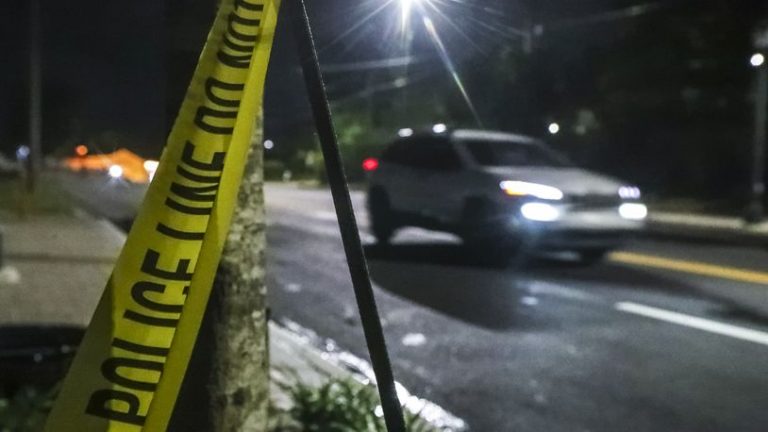
According to AJC, the Atlanta Police Department is investigating after at least 20 cars were broken into overnight at Piedmont Atlanta Hospital on Peachtree Road. Officers arrived about 3 a.m. Tuesday to speak with victims and found at least 20 vehicles parked at the hospital had been broken into, the department said.

The incident occurred as the department warns folks to remain vigilant during the busy holiday season.

“Burglaries are one of the most common crimes and, in many cases, are a result of opportunistic thieves gaining access through open or unlocked doors and windows,” APD said in a social media post.

Other metro Atlanta law enforcement agencies have reported crimes of opportunity this holiday season.

Douglasville investigators are looking for a pair accused of stealing numerous packages from the mailroom of an apartment complex the other day, according to police. The man and woman, who have not yet been identified, stuffed the mail into garbage bags before leaving, police said.

South Korea’s POSCO signed to acquire gas company Senex Energy in $610m deal

0

South Korea’s POSCO International (PIC) has signed a binding scheme implementation agreement (SIA) to acquire all the shares of the Australian natural gas company Senex Energy.

Senex chairman Trevor Bourne said: “Throughout our discussions with PIC, the Senex board has been focused on maximising value for our shareholders.

“The offer announced today, which is recommended by the board, reflects an attractive value for Senex and the opportunity for our shareholders to realise a certain cash price for their shares.”

The move comes a month after PIC proposed an improved takeover offer to acquire the firm.

According to a Senex Energy statement, PIC will buy Senex Energy shares for A$4.60 per share. This gives the deal a value of approximately $610.02m (A$852.1m), reported Reuters.

The scheme was unanimously approved by Senex’s board in the absence of any superior proposals. Senex said that an independent expert is also verifying that the deal is fair and in the best interests of the shareholders.

The completion of the transaction is subject to several conditions, including approval from shareholders, the court, and the foreign investment review board (FIRB).

Once all pre-conditions are met, the deal is expected to be completed in late March 2022.

Asia leads global petrochemical capacity additions increasing from 2,214.9 million tonnes

0

In Asia, the majority of capacity additions are in China, with planned and announced capacity additions of about 245.4Mtpa by 2030. Capital expenditure (CAPEX) for these plants totals $155.2bn by 2030. China Petrochemical Corp is the top company accounting for the major capacity additions in China.

In the Middle East, the majority of capacity additions are in Iran with a total capacity of about 83.26Mtpa by 2030. The country is expected to spend a CAPEX of $52.41bn. Major capacity additions will be from The National Petrochemical Co and Persian Gulf Petrochemical Industries Co.

In the Former Soviet Union (FSU), Russia leads with planned and announced capacity additions of about 82.02Mtpa by 2030. The country is expected to spend a total of $60.48bn by 2030. Gazprom, Oteko and Sherwood Energy Ltd are the top companies accounting for the major capacity additions in Russia.

GlobalData’s latest report, ‘Global Petrochemicals Capacity and Capital Expenditure Outlook, 2021-2030 – Asia Leads Global Petrochemical Capacity Additions,’ states that the global petrochemical capacity is poised to see considerable growth over the upcoming years, potentially increasing from 2,214.9 million tonnes per annum (Mtpa) in 2020 to 3,103.6Mtpa in 2030. Around 1,558 planned and announced plants are slated to come online by 2030, primarily in Asia and the Middle East.

In North America, the majority of petrochemical capacity additions are in the US, with planned and announced capacity additions of about 43.25Mtpa by 2030. CAPEX for these plants totals $26.5bn in the upcoming years.

In Africa, Nigeria plans to spend US$9.7 billion to add a capacity of about 15.64Mtpa, expected onstream by 2030.

In Europe, Belgium has the highest planned and announced petrochemical plants, with a total capacity of 3.3Mtpa by 2030. The CAPEX for these plants is $2.8bn by 2030.

Over 57 million across Asia affected by climate disasters in 2021

0

“For much of this year, millions of families across Asia have been reeling after multiple blows from successive disasters and the devastating impacts of the COVID-19 pandemic.

“From India to Indonesia, in Nepal and Bangladesh, our health and emergency teams are reporting livelihoods shattered by frequent and unpredictable climate disasters.”

(Jessica Letch, IFRC Emergency Operations Manager)

Asia and the Pacific have experienced relentless and unpredictable climate-related disasters in 2021, severely affecting more than 57 million people during the peak of the global pandemic.

In 2021, the International Federation of Red Cross and Red Crescent Societies (IFRC) has launched 26 new operations, 15 of which are climate-related disaster responses. The IFRC is still responding to a further 21 disasters across Asia and the Pacific, from previous years.

South Asia has been the worst hit this year, with millions of people affected by multiple disasters and little time to recover from one to the next.

In India, more than 18 million people have been severely impacted by floods and cyclones this year, according to data from the Indian Government, Disaster Management Division. In Bangladesh, more than half a million people have been swamped by floods, with hundreds of villages marooned for weeks at a time. Around one third of Nepal suffered floods or landslides with many occurring outsides of the traditional monsoon season.

In China’s Henan Province, 13.9 million people were affected by severe flooding in July. In Southeast Asia, Indonesia has been worst affected by disasters, with more than one million people swamped by floods in the past month alone, according to the Indonesian Government Regional Disaster Authority.

Drought, combined with associated economic collapse – which unfolds slowly but with devastating consequences – is affecting more than 22.8 million people in Afghanistan, according to the latest Integrated Food Security data.

Other countries across Asia have also been hit by multiple disasters. Nearly one million people were swamped by flooding in Thailand, more than half a million people affected by floods and typhoons in the Philippines and over 125,000 people hit by floods in Myanmar. Pacific Island countries also faced significant flooding due to storms and rising sea tides.

Young China opera fan sings tenor part during soprano’s Verdi performance

0

When a young Verdi fan noticed his favourite star soprano was without a duet partner, he boldly stood up and sang the tenor part from the audience.

The acclaimed operatic soprano Lisette Oropesa was singing Violetta’s ‘Sempre Libera’ (Always Free) from Verdi’s La Traviata, as an encore for her recital at the Verdi Festival in Parma, Italy.

In the opera’s staging, the tenor playing Alfredo is usually off stage, as if he were singing to Violetta from beneath her balcony outside.

As this was a solo recital, no tenor was present. Liu Jianwei, a student at the Conservatorio Giuseppe Nicolini di Piacenza and long-time fan of the Cuban-American soprano, was there to watch the performance.

Since no male singer responded to Oropesa’s Violetta in the first bar, he decided to join in during the second bar.

Oropesa’s face was a picture, as her young tenor fan lent his voice to her recital. While Violetta’s entranced ‘Oh!’ is written into the original score (watch above), the ‘Grazie’ that Oropesa drops in was an original addition for this surprise moment.

Liu has been called a “hero” on Chinese social media for offering the tenor part from the back of the hall.

After his performance went viral, Liu took to Weibo to say: “I stood up to sing because Lisette Oropesa is a musician I love very much and I happened to have learned this opera before.”

However, he added he would not risk pulling a singing stunt like this again. “It is definitely not something worthy of pride, nor something worthy of being advocated,” Liu stated in a video.

“Please don’t interrupt singers when they are singing on stage. It’s impolite behaviour,” he added. “Don’t imitate me and I will never do this again in the future.”

After the concert, Liu went to apologise to Oropesa, who appeared entirely grateful to her impromptu duet partner – giving him her autograph and taking photos with him (see below).

Treasury releases $8.7B to help increase small and minority-owned businesses

0

Black Americans represent 13.4% of the U.S. population, yet Federal Reserve figures show they control just 4.3% of household wealth. More than half of Black household wealth is in the form of pension entitlements, which cannot be passed along to future generations. This inequity makes it harder for people living in predominantly Black communities to qualify for business loans and mortgages in ways that could help build their net worth.

According to AP, the U.S. Treasury Department announced Tuesday the release of $8.7 billion to help increase lending to small and minority-owned businesses and people living in poorer communities with limited access to banking.

The funds from the Emergency Capital Investment Program, which was created this year, will go to 186 community-based financial institutions. Vice President Kamala Harris and Treasury Secretary Janet Yellen will discuss the investments in remarks Tuesday morning at the Freedman’s Bank Forum.

The $8.7 billion will be going to institutions headquartered in 36 states, as well as Guam and Washington, D.C. Roughly 54% of the funds are going to banks and 46% to credit unions. The distributions will range from more than $200 million for the largest institutions to less than $100,000 for smaller ones.

Firefighters rescue Panther, a local cat stuck on top of a 36-foot-high light pole

0

According to AP, the cat went missing earlier this week and was first spotted atop the pole on Wednesday.

“Everybody’s been just like, ‘Put food down and it’ll come down eventually,’” said Aurora resident Jessica Meadows on Friday morning, when the city received its first snow of the season. “That’s not going to happen.”

Meadows said she and other neighbors called Aurora animal control and Xcel Energy for help.

For at least two days and maybe more, residents of a suburban Denver neighborhood worried about the fate of a black cat called Panther who was perched atop a 36-foot (11-meter) utility pole.

Panther stayed put despite efforts by his co-owner, Alexis Soberanis and others to coax him down in Aurora. Neither pleading nor the enticement of food did the trick, Sentinel Colorado reports.

“Everyone says they can’t do anything,” Meadows said.

Standard practice, according to another utility is to give cats time to make their way back down on their own, Sentinel Colorado reported.

News of Panther’s plight reached Aurora Councilmember Curtis Gardner and city officials dispatched a ladder truck Friday afternoo. After getting the truck into place, firefighters rescued the cat. Panther seemed eager to step into a pet carrier.

Kimberly Medina, another Panther co-owner, said he had always been allowed outside.

No more, she said: “Never.”

In Southern states, redistricting maps lock out communities of color

0

Despite strong advocacy, congressional and legislative redistricting continue to leave minorities unrepresented. Litigation is expected before the 2022 primaries

By: Jenny Manrique

20 states in the country have completed congressional redistricting and 22 states have done so with respect to legislative district maps.

Although communities of color in southern states are pushing for more equitable representation, partisan mapmakers aim to undermine their influence and legislators are passing laws to restrict their access to vote.

If there’s a silver lining, advocates say, it’s growing public awareness about what’s at stake and what needs to be done to protect the democratic process.

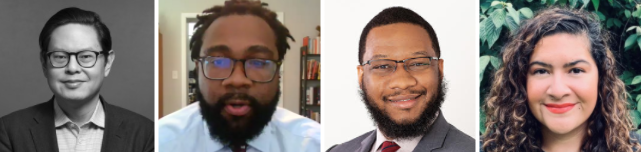
“This cycle of redistricting is one of the most complicated ever,” said Michael Li, Senior Counsel, at the Brennan Center’s Democracy Program during a press briefing hosted by Ethnic Media Services and moderated by Jennifer Farmer, author. and founder of Spotlight PR.

“In part because the census data came out later than expected…and we’re also doing maps with COVID, so there’s less opportunity for the public to participate.

” In normal times, the census numbers would have been released in February but they were ready just in August, leaving less time for advocates to litigate maps while candidates prepare for the 2022 primaries.

In Texas mail-in ballots will go out in less than 40 days and in North Carolina the filing period ends on December 17th.

“There’s a possibility that we will see primaries move as a result of litigation,” said Li, stressing that drawing mapping remains a political process done through legislatures, and usually subject to gubernatorial veto.

As in the Southern states, where one party controls everything, whether it’s Democrats or Republicans, “that is a recipe for abuse and racially and politically discriminatory maps,” Li said. The two exceptions are the states of Louisiana and Virginia: the first because it is the only southern state with a Democratic governor and a Republican legislature, and the second because the commission that draws the maps is bipartisan.

While the census shows that communities of color (Black, Latino, and Asian) accounted for the largest increase in the country’s population (in fact, eight out of ten of the new voters this decade are people of color), in the last 10 years the White population fell for the first time in the country’s history.

That’s why in demographically diverse states like Texas and Georgia, these communities are the focus of map drawing.

In the Dallas-Fort Worth area, Asian and Latino voters were displaced from Congressional Districts 4 and 6 respectively to more rural counties, creating not only division between communities but political advantages for Republicans, Li explained. “Redistricting is a much more potent form of voter suppression,” the expert observed. “Even if you’re able to vote, your vote really doesn’t matter because the result has already been predetermined.

 Because of these maps, people of color will be locked out of power for the course of decades.

” Civic participation Activists insist that fair maps that have a lens towards racial equity will only happen if there is a process that provides access and education opportunities for people to participate.

Governments and legislatures don’t seem very interested in it. Kyle Brazile, Director of Civic Engagement for the NC Counts Coalition, said locals had only three business days to prepare for a public hearing on the criteria the legislature would adopt for the redistricting process, a hearing that was scheduled in the middle of the day so only a handful of people showed up.

“For this cycle, we had just 13 public hearings compared to the last decade, when there were over 60 public hearings throughout the state of North Carolina,” Brazile said.

At the largest event in Durham, local organizations had to provide PPE and translation services.

Despite the short time, 200 people registered and 150 attended a training session on these maps even though they did not have the drafts of what their representatives wanted to draw.

The General Assembly set up a portal for people to make public comments, and received almost 4,000.

 “We’re not excited about maps. There’s clear political gerrymandering in a state where we are split 30% unaffiliated, Democrat and Republican.

We now have maps that are 11 to 3 leaning Republicans,” said Brazile.

 “Folks now want an independent redistricting commission in NC and stop spending $11 million every cycle on litigation against the legislature.

” As a result of the census, North Carolina now has an additional seat in Congress which represents more votes in the electoral college.

The state saw an increase of about 40% within the Latino community in the last 10 years and today represents 10.7% of the entire population, with great growth in counties such as Mecklenburg, Wake, Forsyth and Guilford. Despite this, Hispanics are the ones who least understand the process, they are not familiar with the places where the hearings are held and lack interpretation services, said Iliana Santillán, Executive Director of El Pueblo in North Carolina. Her organization created a Spanish website and illustrative material to help Hispanics understand redistricting.

“We have one Latinx legislator at the NC General Assembly (Ricky Hurtado), maybe a couple of City Council members and a couple of school board members.

 So it’s not that we have representation, and with the way that maps are drawn, this is not going to happen, ”said Santillan. “We need to elect our officials, not the other way around.

” In Alabama, a coalition of 28 civic engagement groups began meeting months before the census data was released in order to participate in the first round of redistricting in the state since the 2013 Shelby County decision.

This decision ended section V of the Voting Rights Act that gave the Department of Justice the power to review any proposed legal changes in states with a history of discrimination against voters of color.

“We wanted people of color living in the state empowered to go to the public hearings,” said Evan Milligan, Executive Director of Alabama Forward.

“We’re trying to make sure that messaging pervades everything we’re saying about redistricting and voter registration – it’s not just about the mechanics of civic institutions, but about the survival of our values and our democratic traditions.

” As it is still unknown whether federal laws such as the For the People Act (S1) and the John L. Lewis Voting Rights Advancement Act, will pass in Congress, activists believe that nothing can be left to chance in what happens locally.

 If you want to know more about the redistricting process, follow these links:

https://www.lwv.org/voting-rights/redistricting https://www.commoncause.org/our-work/gerrymandering-and-representation/gerrymandering-re districting/ https://redistricting.lls.edu/


DeKalb accepted another $14.8M for rental assistance

0

“We are continuing to support our citizens who need support in maintaining safe, affordable housing,” (DeKalb CEO Michael Thurmond)

According to AJC, DeKalb County has accepted another $14.8 million in federal rental assistance funds.

The new funding, provided through the second version of the federal Emergency Rental Assistance program, was approved Tuesday by DeKalb commissioners. The vote came shortly after the county exhausted the more than $21.6 million it originally received in rent and utility assistance funds.

Thurmond and county COO Zach Williams said Tuesday the new funding would go primarily to the existing Tenant-Landlord Assistance Coalition, which they said has thus far helped more than 2,600 families during the COVID-19 pandemic.

It was not immediately clear if applications for the TLAC program would be reopened. The county paused new applications last month as the first batch of federal funding began to run out.

Officials said at the time that more than 5,700 applications remained outstanding.

For more information on DeKalb’s TLAC program, visit www.dekalbcountyga.gov/renthelp or call 404-371-3201.

Residents can also apply to a statewide rental assistance program by visiting www.georgiarentalassistance.ga.gov or calling 833-827-7368.