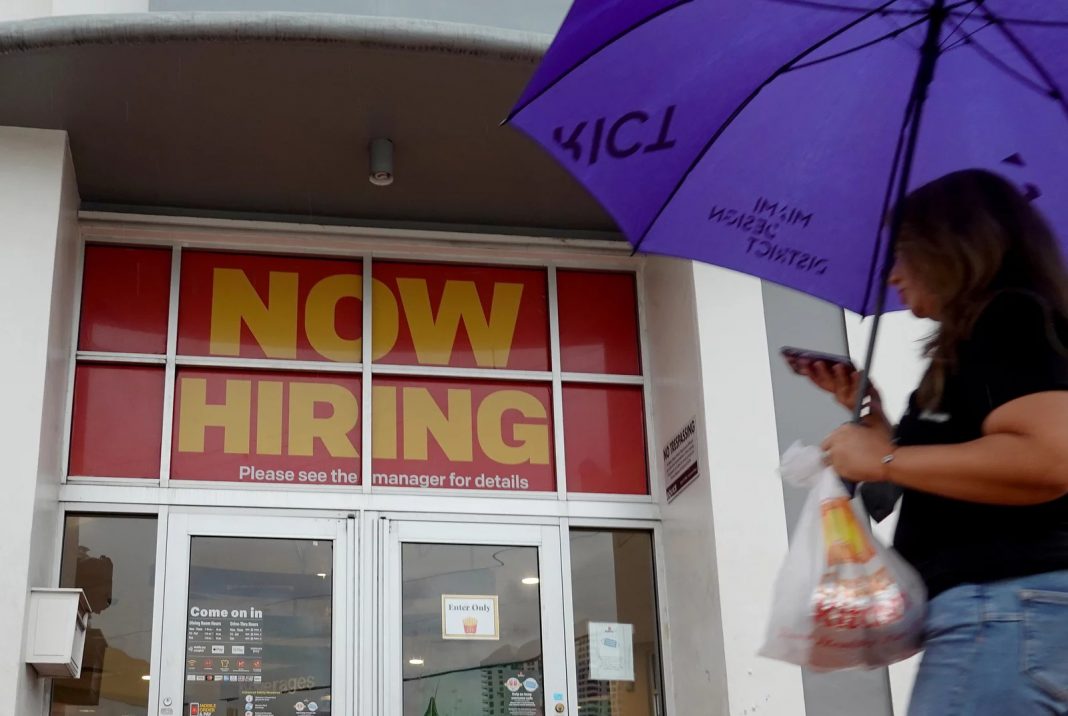
Hiring slowed dramatically last month as COVID-19 cases rose, even before the arrival of a new and and even more worrisome coronavirus variant, which could put another speed bump on the road to labor market recovery.
Employers added just 210,000 jobs in November, according to a monthly snapshot from the Labor Department. Job growth appeared to lose momentum after stronger hiring in September and October. Hiring figures for those months were revised upwards.

However, a separate survey used to the calculate the unemployment rate paints a different picture. It shows more than half a million people rejoining the workforce last month, while over a million found jobs. The unemployment rate fell sharply to 4.2%, from 4.6% in October.

The mixed signals show just how unpredictable the labor market is in the pandemic economy. And the new variant adds to that uncertainty.
“We all thought there would be a significant increase in labor supply and it hasn’t happened. So you ask, ‘Why?'” Federal Reserve chairman Jerome Powell told a Senate Committee this week. “There’s tremendous uncertainty around that, but a big part of it is clearly linked to the ongoing pandemic.”
Powell said he doesn’t expect the omicron variant to do anywhere near as much damage to the job market as the first wave of the pandemic, in the spring of 2020. But it could drag out the recovery.
Many employers complain they would like to hire more people but don’t have enough applicants. Powell warned that persistent labor shortages could worsen the supply-chain bottlenecks that have already pushed inflation to its highest level in more than three decades.
Many observers now think the central bank may raise interest rates earlier than expected next year, in an effort to keep a lid on rising prices.